Evolution of a (certain corporate) mouse.

By William Stout and Jim Steinmeyer, via Fresh Photons, via Jimmy Tyler.

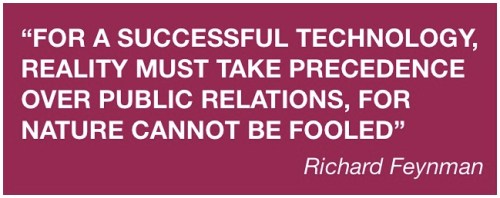
Via “What Do you Care What Other People Think?” by Richard Feynman.
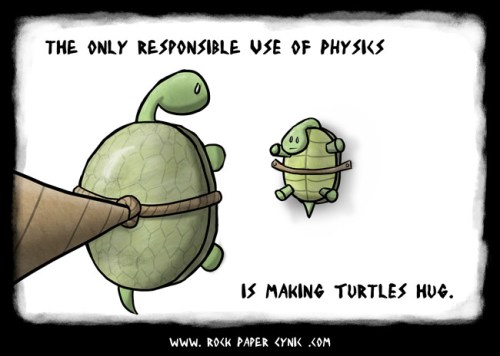
Perhaps a commentary on how sometimes science (and esp. some aspects of physics) is not obviously applicable?
Via Rock Paper Cynic.
As the senior alderman of the East Chemply, Pennsylvania, Town Board of Overseers, I, Walter K. Heblinger, would like to apologize to my constituents, and most especially to my family and my beloved wife, Kirsten, for sexting a nude photograph of myself to various citizens, and I would particularly like to apologize for circling my genitals, in the photograph, with red lipstick and adding vibrating exclamation points, thunderbolts, and the word “Yowza!”
Believe me, this piece by Paul Rudnick just gets better and better as you keep reading. Plus (if I can be serious for a moment), this might actually be a good thing for folks to read so that they learn some of the nuances of social media. i.e. Digital means forever, and often out of your control. (link)
“When jostled, each organism (warmwater phytoplankton Lingulodinium polyedrum) will give off a flash of blue light created by a chemical reaction within the cell. When billions and billions of cells are jostled — say, by a breaking wave — you get a seriously spectacular flash of light. ~Professor Peter J. Franks of the Scripps Institution of Oceanography”
Via Scuttlefish.
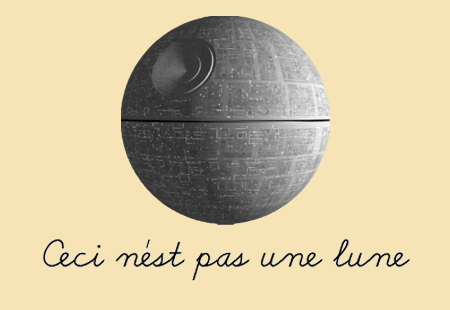
First: the context – “Astronomers using the Hubble Space Telescope discovered a fourth moon orbiting the icy dwarf planet Pluto. The tiny, new satellite – temporarily designated P4 — was uncovered in a Hubble survey searching for rings around the dwarf planet.”
Next: the funny: (although note that technically, number of moons don’t actually have anything to do with “planet” designation)
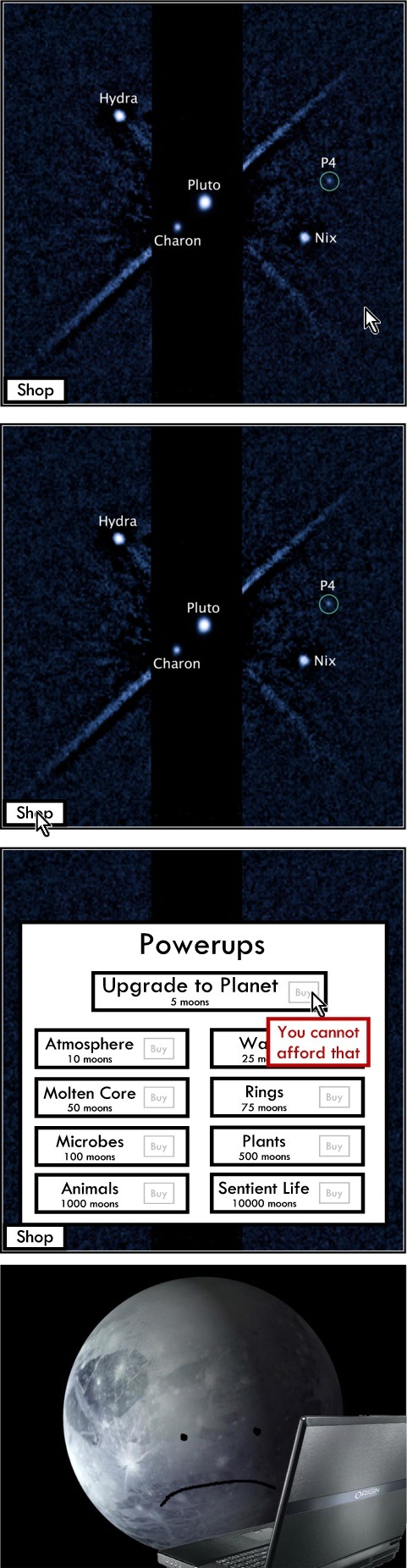
Via Defective Yeti.
I especially love the fact that there is a devoted wikipedia entry for this. It notes:
“In reality, cats do possess the ability to turn themselves right side up in mid-air if they should fall upside-down. The cat righting reflex is made possible in large part through being able to independently rotate the front and back sections of the body. This allows them to rotate without violating conservation of angular momentum by tucking in the front paws to lower the front section’s moment of inertia and extending the back paws to increase the back section’s moment of inertia. Thus, a cat can turn the front half of its body through a considerably larger angle than the back half.”


What if Smurfs were real? The Smurf is actually the result of a symbiotic relationship between two organisms. We believe that Smurfs put their ’embryos’ in the button of a developing mushroom. From a distance, Smurfs seem like they are wearing a hat and pants but as you can see this is a fallacy. The fungus provides camouflage and protective epidermal layers for the creature, while the creature provides nutrients and mobility for the spreading of spores.
Via Nate Ethallinan.
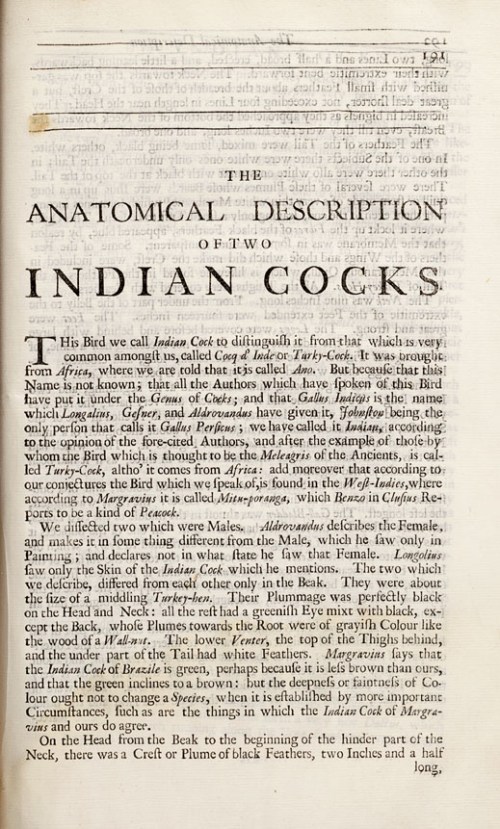
From Memoir’s for a natural history of animals : containing the anatomical descriptions of several creatures dissected by the Royal Academy of Sciences at Paris
By Claude Perrault, 1688.; hat tip to Fresh Photons.
A place of mostly science, art, writing and occasionally Chewbacca, all lovingly archived by Dave Ng. For recent highlights just scroll down, but also note the handy tag system (for finding that piece of media for your next science talk) just below. Enjoy!
anatomy, astronomy, biochemistry, biodiversity, biology, botany, cell biology, chemistry, chewbacca, climate change, data, dinosaurs, energy, entomology, environment, evolution, food, fossil fuels, genetics, geography, geology, graphs, laboratory, marine life, math, medicine, microbiology, molecular biology, neuroscience, ornithology, paleontology, physics, planetary science, quantum physics, science careers, science history, science literacy, scientific method, scientist, solar system, space, strange paper, sustainability, technology, zoology



 popperfont.net