
.


August 24, 2012
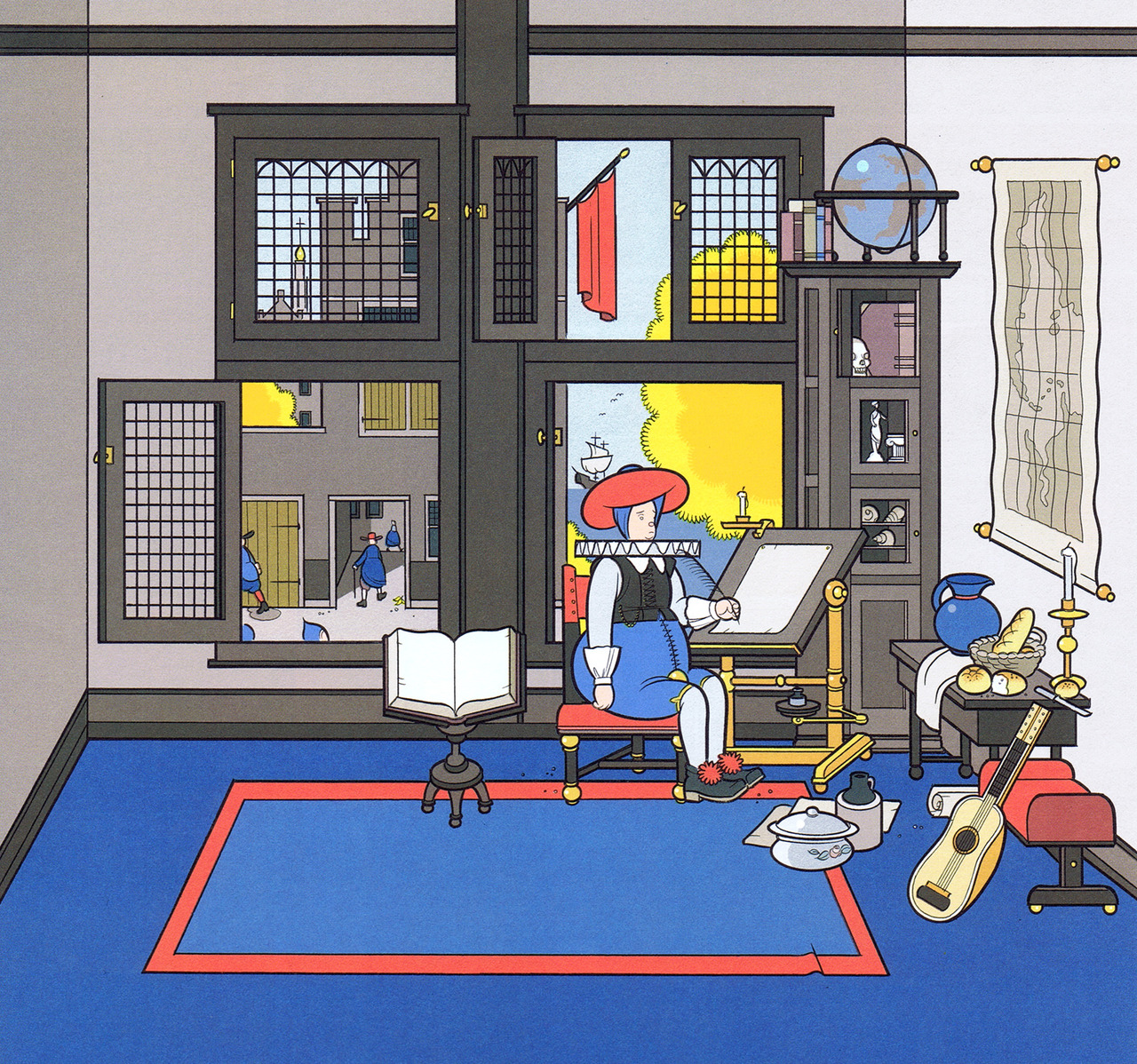
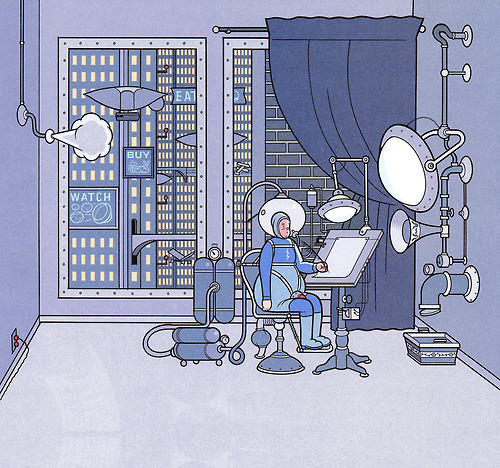
Raccoon versus Pikachu: Who would win?
(Procrastinating again)

Available here as a tshirt, and an obvious nod to phylogame.org
Comments below on who you think would win…
August 24, 2012
In case you’re wondering how an oil spill can turn into a theme park.
By DAVID NG
Ever since the Keystone XL Pipeline (originally slated to transport Tar Sand bitumen from Alberta to Nebraska) was stalled, the attention on finding a new route has focused around my own neck of the woods – namely through British Columbia which is currently viewed as a portal for shipping to China. And it seems like every time I open the paper, there’s some new story about big oil shenanigans. Here, Enbridge is the company, and the varying reports of spinning include allegely censoring a newspaper cartoonist, producing a promo video that conveniently leaving out islands in the challenging shipping routes, being quiet on the omission of particularly nasty environmental reports in certain due processes, the somewhat positive downplaying of a spill that happened only a few weeks ago, and finding out that the required “scientific review” won’t really happen because the government recently gutted the department that would have been responsible for that job..
All of this, of course, makes you wonder what a meeting in an oil company’s PR division is really like, and here, I thought I’d have a little fun with this: Seriously, though, at the rate we’re going, I wouldn’t be surprised if memos like the fictitious one below are being passed around:
– – –
Memo: Turning pipeline leaks into something positive!
Alright everyone, it’s time for some major spin control. We managed to plug that pipeline up, but now we seem to be losing the public relations fight what with the freaking amount of bitumen that spilled out. Seriously, the bad press is everywhere, and we are, quite frankly, getting crucified out there. So what can we do about this? How can we turn this PR nightmare into a PR fairytale?
Well, we in the spin department think that we’ve got an idea that can’t lose. Let me explain. Basically, when we thought about the idea of a PR fairytale, we thought about castles. And when we thought about castles (stay with me here), as vanguards of the capitalist world, of course we didn’t think about real historic castles – no, we thought about pink stucco creations, like the kind you might associate with movie studios and animated versions of Cinderella. And then (like magic, we did this all at once, I swear) we said to ourselves, “THEME PARK!” And then we wondered, how much energy is in this leaked tar sand product anyway?
Well, it turns out (with some very speedy back of the envelope calculations) that the amount of energy we can get from it might be good enough to explore the running of our own magic kingdom! Well, at least if we can count on a few more leaks along the way. But how cool would that be? Anyway, here’s the gist. We just pull that energy from our happy accident(s), redirect it, and then run this baby! It’ll be like the leaks happened on purpose! Awesome!
But we digress. Let’s not bore you with talk of energy and leaks, let’s talk THEME PARK!
Now this is just preliminary brainstorming, but we’re thinking a great name would be something like “Slick City!” Nice, right? Maybe even add to that a catchy tagline – something like The Family Friendly Pipeline Spill! We can even have animal characters wandering around the park, with maybe some kind of funky gel-like oil in their fur and feathers so it looks all cool and shiny like. There will be a Fossil Fuel Palace, made out of shiny coal! I can even envision a theatre area where an oiled down animal mascot version of the musical Grease is performed. Is it just me, or are people going to pay some serious coin to see that?
And the rides? How about a ride like “Shutting down the science!” You can have these carts that go around a track, and the riders have these light guns that shoot at things for points. For instance, they can shoot at all the nasty scientists who want to report on their work, or shoot at research centers that might be making inconvenient discoveries. Ha ha, just kidding – I’m just throwing ideas out there, but you get the picture right?
We also need a giant slide ride of somesort. What if we design the slide so that it followed the same curve as the hockey stick graph? And what if we call it the Carbonator or something cool like that?
And the big ticket item? Obviously, this will be an epic roller coaster. Perhaps one made to look like a big old pipeline. We could even make it from real pipeline parts! Don’t we get discounts for those kinds of things? As well, this ride is going to be amazing: it’s going to be the future of log rides. Instead of logs, the folks could sit in oil barrels, and instead of traveling through water, maybe those barrels would even go faster in a petroleum based fluid. Extra bonus if we get to light it on fire!
This is totally a goldmine of an opportunity. It’s like the ideas are just flowing and the theme park is creating itself! FRIED FOOD! Whoa. That one came out of nowhere! Seriously folks, we’ve hit oil here and it’s a gusher!
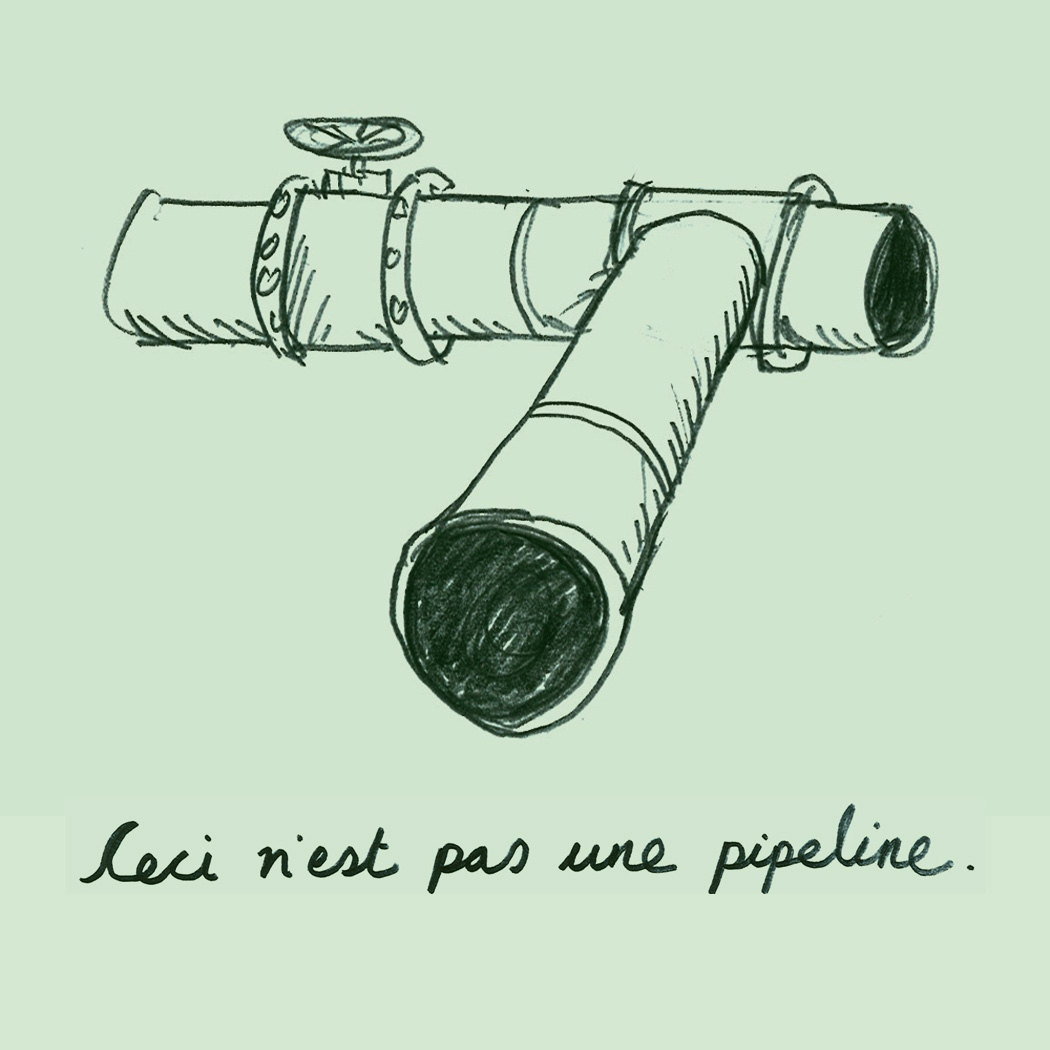
(Image by D.Ng, text originally published at Boing Boing)



August 23, 2012
Gorgeous infographic of space exploration.

Click on the image for full size

Here’s a close up of the trips to our moon and two closest neighbours
August 23, 2012
This is what a paper engineer can do with a bit of mathematics. #beautiful
“Matthew Shlian works within the increasingly nebulous space between art and engineering. As a paper engineer, Shlian’s work is rooted in print media, book arts, and commercial design, though he frequently finds himself collaborating with a cadre of scientists and researchers who are just now recognizing the practical connections between paper folding and folding at microscopic and nanoscopic scales.” (From Ghostly International)


By Matthew Shlian, via Colossal.



August 22, 2012
“FAQ: The Snake Fight Portion of your Thesis Defense” via @mcsweeneys
The full piece by Luke Burns is at McSweeney’s, and it’s awesome. I especially liked this bit:
Q: Are the snakes big?
A: We have lots of different snakes. The quality of your work determines which snake you will fight. The better your thesis is, the smaller the snake will be.
Published at McSweeney’s. Via Brian Switek.
August 22, 2012
Some writing (with a nod to thermodynamics) that didn’t make the cut in my book proposal.
So, I’m just finishing up a non-fiction book proposal for my agent and initially I had the below text as an entry point. In the end, I ditched it because I decided to instead use a personal anecdote about a child and her unicorn questions. Anyway, I still kind of like the below, so it seemed a shame not to show it off somewhere.
– – –
By DAVID NG
THIS IS NO (AN) ORDINARY BOOK
1
The book you are holding in your hands follows the laws of thermodynamics. This is possibly something you take for granted, or more likely, it is something you are not familiar with – maybe because of the use of terminology foreign to you. Nevertheless, it is a reality that informs some of your expectations of this book. You assume, for instance, that the book will not spontaneously turn into an elephant – no matter how fond you might be of elephants. You also assume that the book will not leap away from your hands, unless, of course: (1) you hurl it away yourself; or (2) you are surprised by an errant gust of wind; or (3) you are accosted by an excitable neighbour (perhaps an elephant?) who physically snatches it from your hands and throws it across the room. Although all of these silly assumptions sound obvious, it is the laws of thermodynamics that encapsulate some fundamental science necessary to translate them into elegant conceptual and mathematical descriptions. Furthermore, these elegant laws work everywhere. More importantly, the moral of our fable (and we can call it a fable because of the involvement of our elephant) is that often we find that obvious assumptions can also be obviously explained by robust scientific concepts.
2
But what if the assumptions are not so obvious; what if they are confusing even? What if you are getting information from a variety of conflicting places? What if someone you trust told you that there is value in eating this book. They tell you that ingestion of this book will cure cancer, or that it will make you rich, or that it might even earn you a pet elephant. What if they tell you that they know this to be true, because they have “seen it with their own eyes?” At this point, a person might use a variety of different criteria to judge this assumption. How much do I trust this individual? Is the individual knowledgable? What is the evidence involved? How good is the evidence? How badly do people want the assumption to be true? Should this matter?
All of these criteria sound reasonable, and presumably if you use them, you would come to the conclusion that maybe eating this book isn’t such a good idea. Yet, interestingly, when people are poised with numerous day to day claims about the world, they don’t always think to use all of these criteria. In fact, sometimes decisions are often made by quickly skimming through these criteria, or focusing on only one of them. In particular, many people evaluate these assumptions without looking deeply at things like the expertise of the source, or the soundness of the evidence. Which is unfortunate, since this is really an ignorance of the scientific process, a way of obtaining knowledge that has fundamentally changed the course of human history, and has provided us with information to make sense of the physical world around us. This process isn’t always the best way to evaluate claims – religion and philosophy may have more pertinent roles in questions about how the book might move your soul, or what the purpose of this book is – but for many scenarios, where there are empirical things you can measure and see, it’s a pretty decent way to evaluate your options and make good important decisions.
3
Then, of course, there is the issue of forgetting the roles that science plays in almost everything you do and everything you have. This is something you already know, but don’t really think about: that the vast majority of your activities and objects past have been historically informed by both scientific concepts and the scientific process; and that the vast majority of your activities and objects future will be informed by new scientific concepts and society’s continued participation in the scientific process. This book, for instance, didn’t materialized magically. Intellectually, the words were recorded on a computer, and an author’s health is maintained by medical research. Physically, there were players from biodiversity (the pulp from the trees, the dyes to create the ink) and advances in publishing technology involved (the printing press, distribution mechanisms). But these science-centric things are, in the best case scenario, often forgotten, and in the worst case scenario, are deliberately hidden from us. It’s as if science literacy isn’t worth acknowledging. The scientific way of thinking is being ignored. The world is crying, “Sciencegeek down” without an afterthought.
This book’s assumption is that this isn’t a good thing. And that, dear reader, is the real elephant in this room.


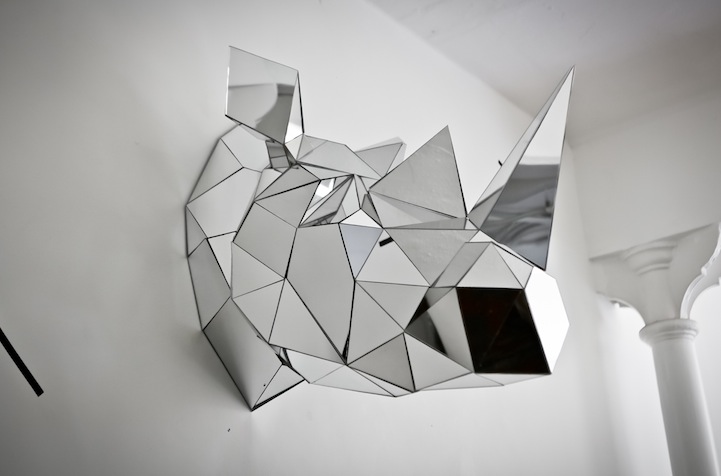
August 22, 2012
My kids thought this was the funniest thing ever. I think I see several physics equations.
Specifically ones concerning vectors, angular momentum, law of the lever, gravity, friction, and general force calculations.
August 22, 2012
Lamp powered by 300 live apples and other great photographs of science in action
Check out these amazing photographs by Caleb Charland.
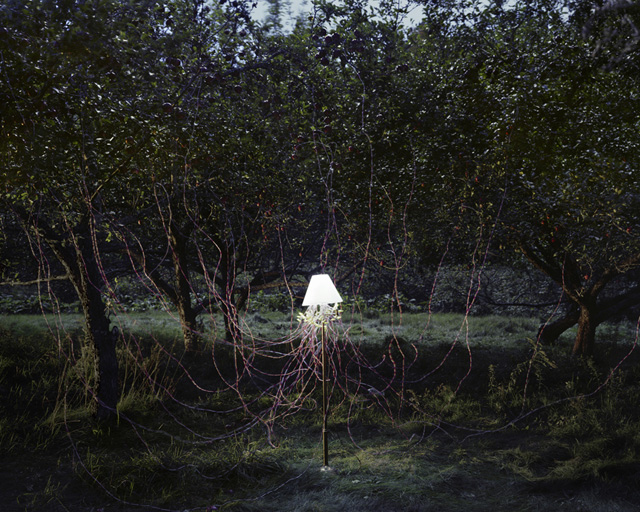

And the remainder here from a collection called “Demonstrations”

Skeleton Key with Copper Wires

Atomic Model

Bouncing Pen Light

Solid Liquid Gas

North Pole with Needles and Water
By Caleb Charland, via Colossal.
August 20, 2012
Superhydrophobic carbon nanotube water droplet bouncing GIF goodness.

“Superhydrophobic surfaces are those which repel water to such a degree that droplets roll right off. The forces of surface tension actually overtake the friction of the surface the droplet rests on, and this is what keep the droplets from wetting.”
From itsokaytobesmart, via Fresh Photons. Original paper by Adrianus I. Aria and Morteza Gharib here.


August 17, 2012
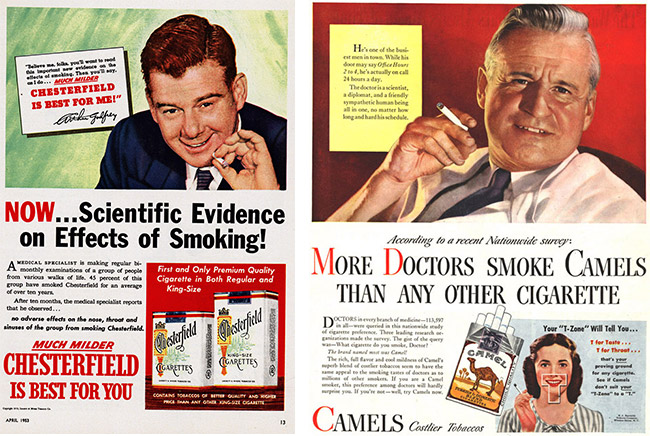
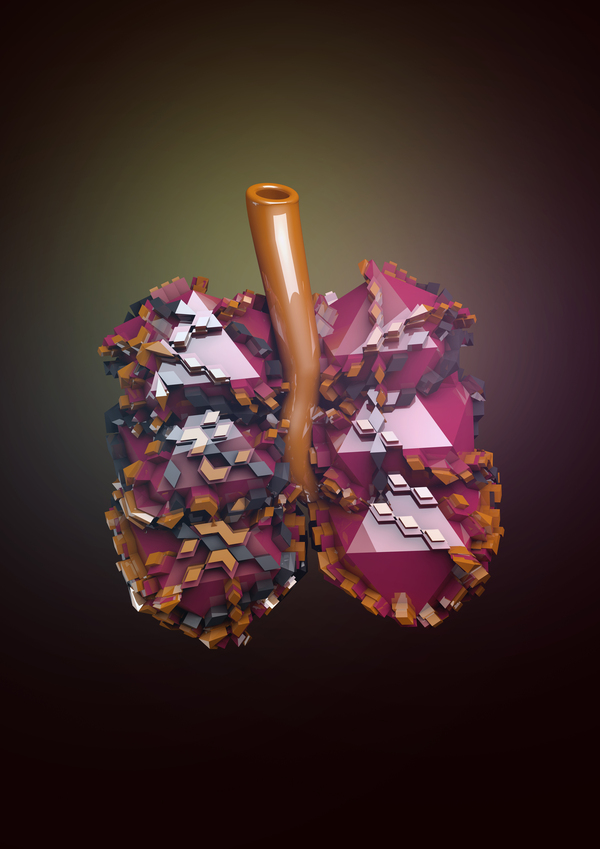
Clever Anti-Cigarette Ads
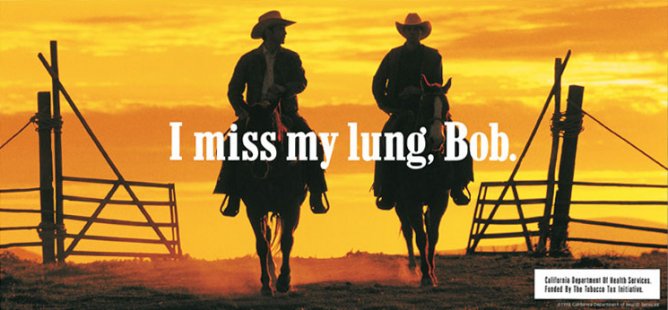
I miss my lung, 1998. California Deparment of Health Services.

Joe Chemo, 1996. Concept: Scott Plous. Illustration: Ron Turner.
Via Adbusters.
August 16, 2012
Dan Winters’ amazing photos of a space shuttle launch
“The work begins the day before launch, when he [Dan Winters] positions up to nine cameras as little as 700 ft. (213 m) away from the pad. Each camera is manually focused and set for the particular shot it is meant to capture, and the wheels of the lens are then taped into position so that they can’t be shaken out of focus when the engines are lit. Electronic triggers—of Winters’ own devising—that do react to the vibrations are attached to the cameras so that the shutter will start snapping the instant ignition occurs.
To prevent the cameras from tipping over on their tripods, Winters drills anchoring posts deep into the soil and attaches the tripods to them with the same tie-down straps truckers use to secure their loads. He also braces each leg of the tripod with 50-lb. (23 kg) sandbags to minimize vibration. Waterproof tarps protect the whole assembly until launch day, when they are removed and the cameras are armed. Throughout the launch, they fire at up to five frames per second. Only after the vehicle has vanished into the sky and the pad crew has inspected the area for brushfires, toxic residue and other dangers, are the photographers allowed to recover their equipment. (Text from Time)


Photos by Dan Winters, also soon available in book form. (Via My Modern Met)

 popperfont.net