.

Category: writing

The Nude Mouse: An Exclusive Interview

Ben Cohen and I wrote this one a few years back. The Nude mouse (image from wiki) has always been one of those things that is almost always misunderstood by the general public. Consequently, we decided to write something that could also work as a pinup. Hey, these mice also need some validation – they have feelings too…

(CLICK HERE FOR PIN-UP POSTER – pdf file ~250k)
– We suggest photocopying at 129% – LTR to 11×17 –

Earlier this week, we had the chance to sit down with a member of a growing army of naked bubble mice. In thousands of biology labs around the globe, these lab mice quietly do their part in the pursuit of science and medicine. Called Nude Mice, these striking creatures are a result of spontaneous inbreeding, natural genetic freak shows if you will. More importantly, they are bereft of both hair and immunity – things that would normally protect them from the elements of the sky and the cooties of the world. And lucky for us, traits that not only afford some big advantages in the research arena but make for a great interview. The nude mouse we interviewed was just finished with a talk biopsy, so we met in his lab while he worked through his lunch.

– – –I want to shoot straight from the hip here: On having no hair. How is it?
It can get cold sometimes, but generally it doesn’t bother me. Besides, most females prefer it that way.

Okay, okay. Then I’ll stay on this pattern: On having no immune system. Your thoughts?
Well, I have to say that as bad as it sounds, I love it. I mean – it’s who I am. If anything, the part I hate is having to explain what having no immune system actually means. If you go into B cells, T cells, antibodies and the like, people just glaze over. It can really kill a conversation.

I’m with you on that.
In the past, I’d talk about being like the bubble boy. Nowadays, I usually just say rent the movie Fantastic Voyage – yes, that Fantastic Voyage, with Raquel Welch in the tight suit – and watch out for those bad ass white cells eating the spaceship. I tell them that not having an immune system means stuff like not having any of those bad ass white cells.

Sort of After-School Special-ish, no?
Don’t judge me, ‘kay?

Of course not. How about, Give us your reflections on the media.
You’re asking me?

Yep.
The media I can live without. We’re fairly private creatures, so the whole publicity thing is not cool. Besides, they almost never get it right. One time, my uncle had a human ear prosthetic grow on his back, and well, Christ, with all the press that ensued, you’d think he was sleeping with Jennifer Anniston. Not only that, but if you picked up a newspaper, you’d see this picture of poor naked Uncle Orv with a huge human ear on his back, and you’d be totally thinking that he could hear out of this thing. Which, of course, is not at all true. A shame really – that experiment was pretty elegant in my view.

You’re kidding me, right?
Not at all. Engraft a hollow polymer scaffold (shaped like an ear) on Uncle Orv’s back, infiltrate it with tissue cells from a burn victim needing an ear prosthetic, and wait for growth. Unky Orv ends up doing good because he has no hair, and he also doesn’t have the biology to reject the foreign ear tissue. How brilliant is that?

Point taken. Let’s move on. On stem cell research. React.
Basically, and to quote a GREAT movie, “bring it on!” Although to be honest, my opinion is pretty biased. They do a lot of bone marrow research on types like me, since having no immune system means I’m great as a clean slate. Just put some stem cells in my spleen and hey, you just might reconstitute my immune system. That’s awesome when it happens, because then I can actually leave my bubble for a while. I hate living in a fucking bubble.

On scientists playing God, creationism and intelligent design.
Seriously, do I look like something that is a result of intelligent design? And I don’t care much for those creationism types either. Did you know that only humans get to enter the gates of heaven? What’s up with that?

I have no problem with that, if you’re asking. But let’s keep this one-way. On the ethical treatment of animals. Everyone’s always bitching about that.
Look, it’s really not so bad. I get nice living quarters, and plenty of food. And every once in a while, they bring in a wheel or a bunch of females, sometimes both. Plus, I know I’m doing some good in this world – the experiments they carry out can actually help people. Really, what more could you ask for?

The Evolutionary Biology of the Unicorn.

By DAVID NG

Unicorns are great. Seriously.

And here I’m going to think out loud and think of them in a conventional biology sort of way. You know – have a little fun evolution wise.

In many respects (except for the magical powers bit) I don’t think this is necessarily too hard to do. i.e. you have something that looks like a horse, but hey what’s this – there’s also a horn there.

I guess the question I’m pondering is whether a unicorn could occur from a realistic evolutionary biology point of view – you know, given the right circumstances and the right timescale. And if so, exactly what sort of things, biologically and genetically, would need to happen?

Anyway, here’s a couple options to sift through.

One possible way to get the whole horn thing started on a poor horse is through a condition known as “cutaneous horn” formation. In this situation, you essentially have an abnormal, sometimes cancerous growth, that results in a keratin structure protruding from the skin.

(Here’s a picture of a cutaneous horn – it’s kind of ugly)

“Cutaneous horns usually arise on sun-exposed skin but can occur even in sun-protected areas. The hyperkeratosis that results in horn formation develops over the surface of a hyperproliferative lesion. Most often, this is a benign verruca or seborrheic keratosis; or it could be a premalignant actinic keratosis. A malignancy has been reported at the base of a cutaneous horn in up to 20% of lesions. More than half of all cutaneous horns are benign.Benign lesions associated with cutaneous horns include angiokeratoma, angioma, benign lichenoid keratosis, cutaneous leishmaniasis, dermatofibroma, discoid lupus, infundibular cyst, epidermal nevus, epidermolytic acanthoma, fibroma, granular cell tumor, inverted follicular keratosis, keratotic and micaceous pseudoepitheliomatous balanitis, organoid nevus, prurigo nodularis, pyogenic granuloma, sebaceous adenoma, seborrheic keratosis, trichilemmoma, and verruca vulgaris. Lesions with premalignant or malignant potential that may give rise to cutaneous horns include adenoacanthoma, actinic keratosis, arsenical keratosis, basal cell carcinoma, Bowen’s disease, Kaposi sarcoma, keratoacanthoma, Paget’s disease, renal cell carcinoma, sebaceous carcinoma, solar keratosis, and squamous cell carcinoma.” (From eMedicine)

So you have something producing horn-like features, and whilst not exactly common, is still within the realm of possibility.

However, this possibility of unicorn evolution is kind of weak, because often the base of the “horn” structure is not at all stable, and in fact it looks like these horn structures can often be quite easily removed surgically. As well, this is not really a heritable trait in the usual sense – i.e. normally these structures are formed due to abnormal growth coming from a one cell, possibly mutated from exposure to a some mutagen (the sun is often sited for example). In other words, whilst susceptibility to the abnormal growth is likely genetic, the act of it always occuring on the horses head is less so (or something like that).

In other words, let’s move on.

One thing I can say is that it’s interesting to note that both the horse ((Equus ferus caballus) and the rhino (Rhinocerotidae) both belong to the Perissodactyla order, also often termed the odd-toed ungulates. This suggests that in the grand scheme of things, these two types of creatures are not so far apart. Whilst obviously interbreeding isn’t an option (since the species barrier would presumably be more than sufficient to disallow the formation, as well as the propagation, of hybrids unicorn like rhino-horses), it does present the idea that however the horn formed on the rhino, this could still be in the realm of reality with something like a horse.

Which actually makes all the more sense when you look through a paper published in the Journal of Morphology in 2006, which did CT scanning of rhinoceros’ horns to get a better sense of their anatomy. Here, the suggestion is that the horn of rhinos are markedly different from a horn of, say, a sheep. Specifically:

“The horns of most animals have a bony core covered by a thin sheath of keratin, the same substance as hair and nails. Rhino horns are unique, however, because they are composed entirely of keratin.”

This might fit a little with the “cutaneous horn” angle, but then another observation came about from the CT scans. The lead authors goes on to say that:

“The horns most closely resemble the structure of horses’ hoofs, turtle beaks and cockatoo bills. This might be related to the strength of these materials, although more research is needed in this area.”

And this nugget of information brings up a delicious possibility.

That is – maybe a unicorn could develop initially from a mutation within a hox gene, resulting in a hoof like structure coming out of the animal’s head. And in case, you’re wondering what a hox gene is all about, it’s essentially:

(From wiki) “A group of related genes that specify the anterior-posterior axis and segment identity of metazoan organisms during early embryonic development. These genes are critical for the proper number and placement of embryonic segment structures (such as legs, antennae, and eyes).”

In plain speak, this simply means that the hox family of genes are the grand controllers of body architecture – as in your arms go here, your head here, and this is about right for your big toes.  In other words, for our unicorn, we really just need a mutational event where something meant to be coming out at the limbs is inadvertently coming out of the wrong part of the general body plan.

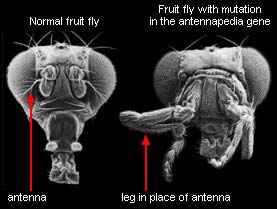
Classic examples of hox mutants occur in fly embryogenesis, and here are two of many examples of mutations that result in something along the lines of a foot/leg like structure coming out of the head area.

This is an image of a fly with a mutated proboscipedia gene: basically the labium develops into a pair of legs (image link)

Here’s another:

(Image link)

All to say that I’m wondering if the hox idea might actually have some (pardon the pun) legs to it.

Of course, even so, the hox idea would only be part of the story. Natural selection and the whole epic time scale stuff would still need to do its thing. Here, I must admit that I am curious to see what readers would think are the best environmental conditions (serious and funny ones) to produce the right selecting pressures for unicorn morphology. Maybe a few suggestions in the comments section would be cool?

And what about those magical powers? Well, how about we let the Intelligent Design folks debate over that one…

Human Gene Commonly Associated with Cancer or Droid from Star Wars?

By DAVID NG

1. p21RAS
2. C-3PO
3. CD45
4. p53
5. C-SRC
6. RIC-920
7. FOS-JUN
8. R2-D2
9. 8D8
10. C-MYC

1345710 are oncogenes: 2689 are droids from Star Wars.

Revisiting the Nagoya (Biodiversity) Conference: With References to Star Wars

(Originally published at Boingboing.net in 2010, a few months before the actual Nagoya COP10 conference.  It’s also a general primer on how the United Nations do these sorts of things)

By DAVID NG

Image: Nagoya Congress Center plus Millenium Falcon reworked from original photo byPaula Pedrosalink.

So what is up with this Nagoya thing? Well, it’s a big international meeting that is happening in Nagoya’s Congress Centre (see the picture above), starting on October 18th and lasting until the 29th. No doubt, you weren’t necessarily lured into finding out more by the conference’s bouncy theme song. You certainly weren’t intrigued by the reams ofofficial documents, frequently released, yet all stoically written.

The problem is, is that there is a lot of jargon in how all these meetings go down. You have a “Conference of the Parties” (or COP), you have “Conventions,” and you have “Secretariats.” I chose not to mention the “Subsidiary Body” part, because I believe that would have formally made the previous sentence the most boring in the universe. And as if that wasn’t bad enough, a lot of these documents have been written in a painful policy speak/legalese type of language, seemingly in an effort to make readers endorse the extinction of the writers responsible. Worse still, Nagoya isn’t getting a ton of media coverage, and that means you don’t tend to have needed public commentary like you did with similar recent outings (for instance, Copenhagen comes to mind).

Lucky for us, there seems to be a lot of similarities between these United Nations’ affairs and how planetary politics appear to be run in the world of Star Wars. In any event, the similarities are good enough to warrant having a go at bridging the two. This might be simplifying things a bit, but the analogy would basically work a little like this…

Convention (and specifically the Convention on Biological Diversity): I’ll write more on this later, but the CBD is what all the fuss in Nagoya will be about. It’s essentially an international agreement currently supported by a whole bunch of countries, which is basically up for review as well as a reboot. Also, because it’s classified as a “Convention” this agreement is bound by international law. It’s not like participating in a vote where the majority wins – you’re either in or you’re out. The goal, of course, is to come up with a document that everyone, or at least, almost everyone, is good with – understandably, not an easy thing to do. In Star Wars, this would be analogous to some sort of galactic treaty being mulled over (except that obviously the words galactic treaty are way cooler thanconvention).

Conference of the Parties (COP): This is a collective term for all the countries who are technically already “on board” with the Convention – this has a variety of meanings including the act of signing the convention, and then managing to get your national governments to back it up (this would technically be called “ratifying” the convention). In all, there are currently 193 countries who are in the Conference of the Parties.” In Star Wars terms, the COP would be analogous to all of the members of the Galactic Republic who have agreed to follow the laws bound to said galactic treaty.

Secretariat: In UN affairs, the term Secretariat more or less refers to a smaller group of individuals who comprise the administrative core of a particular department or convention. This sounds very close in structure to the role of the Galactic Senate. You might also remember that in Star wars, there was a Supreme Chancellor, who headed this Secretariat. In the CBD’s case, this would be the Executive-Secretary, a fellow by the name of Ahmed Djoghlaf.

Nagoya-COP10? In Star Wars, the movies anyway, a lot of the political stuff happens in that great big black room with all of the fancy floating balconies. This was the Senate Building on the planet Coruscant, which to me, is a little like the General Assembly hall in the United Nations New York headquarters. However, for these sorts of Convention meetings, (this being the tenth one for this particular COP – hence it being called “COP10”), they tend to get held in big conference centers, and in suspiciously nice locales. In other words, for our Star Wars analogy, the members of the Galactic Republic involved in the treaty probably wouldn’t meet in Coruscant: instead, they would find another host planet. As well, it would be unlikely for such an analogous meeting to be held at a place like Hoth(too cold) or Tatooine (too dusty), but rather a planet like Alderaan (before it was destroyed anyway) or Naboo, since both are apparently beautiful.

SBSTTA: Of course, throughout all of this, you’re probably wondering where the Jedi fit in. In Star Wars, members of the Jedi Order were essentially “keepers of the peace in the Republic.” Furthermore, the Jedi Council was often key in providing objective information and advice. This means that they were valued for being a source of knowledge and wisdom, and also a sort of a police force to ensure that folks follow the laws of the treaty. In our Convention on Biological Diversity context, there is something known as the SBSTTA (which unfortunately is not a droid name but a busy mess of an acronym for “Subsidiary Body on Scientific, Technical and Technological Advice.”) This, I guess, can be thought of as a group of “Jedi except without lightsabers plus no cool special powers.” In other words, while this SBSTTA aims to play an objective advisory role, in particular, helping the COP on the scientific and technological nuances of biodiversity, they have no part what-so-ever in enforcing the convention itself. Kind of like a bunch of Jedi’s who will tell you their expert opinion on the issues being discussed, but are unfortunately incapable of kicking ass on members who choose to disregard intergalactic law. This is actually one of the big problems in these international environmental treaties – there isn’t really a decent mechanism in getting COP members to follow through.

It’s also worth noting that the SBSTTA is analogous to what the IPCC (Intergovernmental Panel on Climate Change) does in Climate Change matters, except in a much smaller and some say slighter way (more on this later).

The Emperor? In Star Wars, this was of note, being the bit about the Senator and then Supreme Chancellor Palpatine managing to scheme his way into creating the Galactic Empire. In the CBD world, there really isn’t such a person or country member in the COP, but there are factors where different countries have different influences. Probably the best example is to think of something like the Trade Federation in Star Wars. This was an alliance based on economical clout – somewhat similar to how one might view the countries of the G8 or G20 these days. As well, you can imagine that countries in less fortuitous economic standings (i.e. developing countries) have an interest in making decisions together, which is what does happen in these affairs. As a side bar, I should note that, ironically, the Nagoya conference does “technically” have an Emperor involved – this would be Emperor Akihito, the head of the Japanese Imperial Family and monarch of the host country.

Anyway, this should set the scene a bit. Later on, I’ll write a primer on what the actual Convention on Biological Diversity is all about, how it currently kind of sucks, and why this meeting in Nagoya in particular is very very important.

My own short illustrious collaboration with Francis Crick

By DAVID NG

CRICK: Is that your Ford Escort?

ME: Yes it is.

CRICK:  It’s in my parking spot.  Can you move it?

ME: Yes, definitely.  Sorry about that.

CRICK:  No worries.

– – –

I met Dr. Crick at San Diego’s Salk Institute during a summer trip in my graduate student days – although “met” is perhaps a verb with too much significance in this case.  I was actually there to touch base with some old friends of mine and was told to park in his spot since we would only be 15 minutes or so.  In truth, we were en route to Anaheim, Disneyland specifically, and bumping into scientific legends was the last thing on our minds.

Dr Crick, of course, is well known for his discoveries in the world of DNA, being one of the individuals responsible for figuring out how the A, T, C and G’s of genetic code stacked up.  But later in life, he took an interest into the mysteries of consciousness.  In particular, he was intrigued at how the brain so quickly generates visual awareness upon viewing a scene (or something like that).  It’s an interesting biological question, in that I know I’m curious to understand what goes on when you look upon the world – or perhaps in more profound instances, what happens when a child first sees the Magic Kingdom, when a soldier stares down the barrel of a gun, or when you first meet the person with whim you will, unbeknownst to you, fall in love with.

Almost the minute we parked our Ford Escort, Dr. Crick pulled up in a large stately white car, a Mercedes or a Cadillac I think.  He got out, dressed I can only describe in a manner that approximated most perfectly his vehicle, and politely asked that I move.  I obliged immediately.

Looking back, I often wondered what his consciousness was telling him when he saw me that day.  It’s probably quite different from what my own brain was experiencing: I just thought it was cool that his license plate read “ATCG.”

When Celebrities, Who Have Been Cloned in the Movies, Get Together For a Coffee

I wrote this waay back in 2005. Could do with a bit of an update (I’m sure there’s a lot more in the cloning genre now…)

– – –

By DAVID NG

SETTING: A Starbucks in L.A. – three celebrities are sitting at a table with their coffees and sharing a newspaper, a fourth is walking towards the table with his coffee.

FADE IN

MICHAEL KEATON
(Approaching the table)
Man, I really need this now.

(Sits down, whilst the others nod or wave).
Is there a free section of paper?

ARNOLD SCHWARZENEGGER
You vant the sports section?

MICHAEL KEATON
Sure.
(Takes the paper and starts looking at the front page)

(A few minutes of silence as everyone reads their newspaper)

HITLER
(Slams his paper down and stands up).
Dis ist terrible! As Fuehrer of the German people and Chancellor of the Reich, I cannot agree with dis. Vee must fight. Neither force of arms nor lapse of time vill conquer Germany. It ist infantile to hope for the disintegration of our people. Mr. Bush may be convinced that America vill win. I do not doubt for a single moment that Germany vill be victorious. Destiny vill decide who is right. One thing only ist certain. In the course of world history, there have never been two victors, but very often only losers.

MICHAEL KEATON
Whoa easy there Adolf. Is that de-caf you’re drinking there buddy?

PIKACHU:
Pikachu! Pikachu!

MICHAEL KEATON:
Hey, look at this, Governor Arnold. Looks like you’re in the paper today.

ARNOLD SCHWARZENEGGER
I know, isn’t it swell? My biceps looked especially good on that day.

MICHAEL KEATON
(sipping his coffee)
Yeah, pretty cool, pretty cool. I’ve got to ask though, what’s it like being a Governor of California anyway?

ARNOLD SCHWARZENEGGER
Oh, you know, nothing special really. Besides, what makes you so sure that it is me and not my clone.
(Everyone chuckles).

HITLER
Hey, I saw Spider Man 2 yesterday – it vas really good. Hey Michael, do dat funny thing I like.

MICHAEL KEATON
You mean this.
(Grabs Arnold by the shirt lapels and pulls him close to his face)

I’m Batman!

ARNOLD SCHWARZENEGGER
(Laughing)
Ya, that kills me too.

PIKACHU
Weeeeeeeeeeeeeeeeeee!

(Darth Vader, the Lord of Sith then approaches the table)

DARTH VADER
Hello Arnold, may I join you?

HITLER
(Standing up and cutting in)
I’m sorry Mr Vader, but dis table ist reserved only for celebrities who have been cloned in zee movies.

DARTH VADER
(Facing Arnold)
Your destiny lies with me Schwarzenegger. Obi-Wan knew this to be true.

(Turning to Hitler, with two raised fingers and speaking very deliberately)
I am welcome to join you for coffee.

HITLER
(In a sort of trance)
You are velcome to join us for coffee.

DARTH VADER
Here, please have my seat.

HITLER
Here, please have my seat.

ARNOLD SCHWARZENEGGER
Darth! Stop that now!
(Hitler shakes his head)

The ‘cyborg’ coffee group doesn’t meet until tomorrow morning.

DARTH VADER
(Turning to Arnold)
Impressive. Most impressive. Obi-Wan has taught you well. You have controlled your fear. Now, release your anger. Only your hatred can destroy me.

MICHAEL KEATON
(Tapping his finger on Darth Vader’s arm)
Umm, buddy, I think Arnold told you to get lost.

DARTH VADER
(Looking at everyone)
Hmmmpph, very well.

(Turns away and leaves)

MICHAEL KEATON
(Quietly)
Loser.

PIKACHU
Pffffsssstttt!

FADE OUT
.

* Michael Keaton was in “Multiplicity,” Arnold Schwarzenegger was in “The Sixth Day,” Hitler was in “The Boys of Brazil,” and Pikachu was in “Pokemon, the First Movie: Mew vs MewTwo”

A calculation to see how many cups of coffee you would need to drink in order to kill yourself.

By DAVID NG

I’m in full on marking mode right now, which also means my uptake of coffee has increased significantly. Consequently, I’m procrastinating and thinking about strange things – such as lethal doses – especially for things we scientists particularly indulge in (like coffee, alcohol and, yes – the free cookies at Departmental seminars). So let’s look at the fatality of coffee drinking? And yes, for the scientist, the first place to look a little deeper is the vaulted MSDS (or Material Safety Data Sheet).

For those not initiated in this lingo, MSDS are those documents that provide risk assessment and health considerations for any and all reagents, compounds, molecules, chemistries you might care to use in a laboratory setting. Of course, the most press worthy value it often provides is the “lethal dose.” Which, according to wiki is:

the median lethal dose, LD50 (abbreviation for “Lethal Dose, 50%”), LC50 (Lethal Concentration, 50%) or LCt50 (Lethal Concentration & Time) of a toxic substance or radiation is the dose required to kill half the members of a tested population.

Anyway, I thought it might be interesting to do some back of the envelope calculations to bring to you, some information on how many cups of coffee to avoid drinking, so as to not kill yourself.

However, this calculation is not as easy as it sounds, because there’s a certain amount of kinetics that needs to be taken into consideration. So, let’s first start with a few facts and figures to get the ball going.

To begin with, if we’re going to focus on coffee, probably its most potent chemical component from an oral lethal dose point of view is the caffeine. However, from a purely empirical perspective, it might actually be its water content that will kill you in the end. In other words, if you drink lots of coffee and plan on doing it to induce a fatality, it might be interesting to see what scenarios are necessary for that death to be caused by too much caffeine versus too much water.

In any event, here are the numbers to concern ourselves with:

1. Average weight of a human: From wiki:

In the United States National Health and Nutrition Examination Survey, 1999-2002, the mean weight of males between 20 and 74 years of age was 191 pounds (86.6 kg, 13 st 9 lb); the mean weight of females of the same age range was 164 pounds (74.4 kg, 11 st 10 lb)

Let’s use 80kg as an average.

2. A single cup of coffee on average contains about 250ml of water, and about 135mg of caffeine (link).

3. Lethal dose (oral intake for a rat, which has similar metabolism – although we should note, not identical metabolism) is about 192 mg/kg for caffeine and 90 mL/kg for the water.

4. However, the other part of the equation is we need to evaluate involves rates of elimination.

The half-life of caffeine–the time required for the body to eliminate one-half of the total amount of caffeine–varies widely among individuals according to such factors as age, liver function, pregnancy, some concurrent medications, and the level of enzymes in the liver needed for caffeine metabolism. In healthy adults, caffeine’s half-life is approximately 4.9 hours.

And for water – this was a little harder, because water turn over rates I found, tended to revolve around the idea of an individual not imbiding in crazy amounts of fluids. So, for the sake of our calculations, I’ll go with the following piece of information:

It’s Not How Much You Drink, It’s How Fast You Drink It! The kidneys of a healthy adult can process fifteen liters of water a day! You are unlikely to suffer from water intoxication, even if you drink a lot of water, as long as you drink over time as opposed to intaking an enormous volume at one time. As a general guideline, most adults need about three quarts of fluid each day. Much of that water comes from food, so 8-12 eight ounce glasses a day is a common recommended intake. You may need more water if the weather is very warm or very dry, if you are exercising, or if you are taking certain medications. The bottom line is this: it’s possible to drink too much water, but unless you are running a marathon or an infant, water intoxication is a very uncommon condition.

O.K. so let’s do the math.

First, an oral lethal dose for an 80kg human would extrapolate to 15,360mg of total caffeine. This technically is equivalent to the amount of caffeine absorbed from drinking 113 cups of coffee really really really quickly. However, the reality is that this figure would instead result in a fatality due to water intoxication since 113 cups is close to 30 litres of water.

So let’s try a different tact: by focusing on a safe water ingestion figure (i.e. 15 litres per day when spread reasonably). This works out to 60 cups of coffee over a full day, or approximate one cup every 24 minutes. Anyway, this is some pretty nasty math to figure out (since it’s a half life calculation with continual replenishing going on). Anyway, if you do the math, what you find is that at the end of a 24 hour period, that average body would have retained a little less than 2500mg (this is based on some very rough back of the envelope calculations). Not even close to the 15,000 or so milligrams needed to reach the lethal dose. Presumably still not a healthy thing to do, but within the context of our LD50, it sounds doable.

And the funny thing is, by the next day, that 2500mg would have been metabolized or cleared itself and only about 50mg of this is left behind. Which means that the net total amount of caffeine still in a person’s system if he or she were to continue drinking a cup of coffee every 24 minutes for a 48 hour period is 2550mg (2500mg + 50mg).

It turns out that your body is potentially quite capable of dealing with such a heavy coffee dosage, because that new 2550mg level becomes 53mg by the next 24hours – therefore three days of drinking a cup of coffee every 24 minutes will result in a net retention of 2553mg (2500mg + 53mg) and so on.

I haven’t had a chance to extrapolate this over the full year (365 days), but I’m pretty sure that even a constant coffee drinking regime (1 cup every 24minutes for the full year) wouldn’t work out to a retention amount above the lethal dose.

All to say that your body pretty much kicks ass in its remarkable metabolism. Now, it’ll be interesting to maybe dig a little deeper with regards to how messed up a person gets with that base 2500mg inside them (as I’m sure the case will be). As well, not sure what the deal would be with 15 litres of expresso shots per day – that may just about be enough!

(This is partly reprinted from a post I wrote in good old Scienceblogs.com).

Notes from Mattel’s “Future of Barbie®” Brainstorming Session (including Stem Cell Barbie and others…)

I always thought the Stem Cell Barbie’s slogan would make an interesting t-shirt. Note that this was originally published at Yankee Pot Raost.

By DAVID NG

ConceptStem-Cell Barbie®

Description: Produce a plastic mesh form in the shape of a Barbie doll. Seed this mesh with embryonic stem cells. Culture in bio-chambers until cells infiltrate and coat the plastic form.
Pro: This Barbie might get pregnant.
Con: This Barbie might get cancer
Potential slogan: “Feels like real skin because it is real skin.”

ConceptHybrid Barbie®

Description: Barbie doll powered by both conventional gasoline engine, as well as an electric motor.
Pro: Barbie is emissions-compliant.
Con: No one can figure out a good place for the gas nozzle to go in. It always ends up looking dirty.
Potential slogan: “This baby gets up to 40 miles per gallon.”

ConceptSchrödinger’s Barbie®

Description: Interactive Barbie doll placed inside a thick lead box, containing a mock cyanide canister, and mock Geiger counter. The Geiger counter may or may not release one decaying mock atom, which in turn, may or may not break the canister releasing the cyanide. Therefore, child would be uncertain as to the fate of the Barbie doll (who could be pretend-dead or pretend-alive) until the lead box is actually opened.
Pro: This is fun way to illustrate an aspect of quantum law, which suggests that due to the superposition of states, Barbie is both dead and alive until the box is opened.
Con: Huh?
Potential slogan: “Schrödinger’s Barbie—be the first to give a shit.”

ConceptSuper Malleable Barbie®

Description: Produce Barbie dolls using the Dow Corning 3179 dilatant compound (a mixture containing silicone oil and boric acid, commonly known as Silly Putty).
Pro: Barbie can bounce.
Con: When Barbie pretend-falls asleep whilst pretend-reading a newspaper, the newsprint will show up on her face.
Potential slogan: “Ken will thank you.”

ConceptFlame-Retardant Barbie®

Description: Coat existing doll product with copious amounts of the common flame retardant, polybrominated diphenyl ether.
Pro: Excellent opportunity for accessories (fireworks, matches, flame throwers, etc).
Con: Excellent opportunity for accessories (fireworks, matches, flame throwers, etc).
Potential slogan: “Throw the Barbie on the barbie!”

ConceptSupercomputer Artificial-Intelligence Robot Barbie®

Description: Multiple clusters of high-powered processors networked to a Barbie doll mainframe. 2 USB ports standard. CD/DVD burner drive optional.
Pro: No more stupid brainstorming sessions—send Barbie instead.
Con: Small chance of total world domination and destruction of the human race as we know it.
Potential slogan: “Kicks ass at chess!”

Here is a song I wrote about thermodynamics. Be nice…

By DAVID NG

Lyrics as follows:

THERMODYNAMICS OF LOVE (demo mp3)

First you have one
It says a ton
Basically saying that something can’t come from nothing

Gives you the sum, of things to and from, making it all – total up – all working out

CHORUS
I should have you all figured
With a law like this in mind
Listen to my reasoning
You should know by now

The thermodynamics of love.

Then you have two
Messing with you
Telling you life is a journey full of disorder
Giving off heat, ordinary feat, and telling you work a bit harder – figure it out.

CHORUS

ITS very simple
very rational
really excerptional
just universal

absolute zero
not moving on
stuck in a standstill
we’re not responsible.

FADE TO END

Grimace speaks to a Geneticist

Some more silliness I wrote a few years back. Originally published at McSweeney’s.

By DAVID NG

GRIMACE: What am I?

GENETICIST: That is a very interesting question indeed. And we should begin by briefly discussing your known history. According to your records, you were born as “Evil Grimace,” with four deft arms, and a penchant for amusing yourself by stealing milkshakes from small children. Then, in 1974, you experienced a change of heart, a loss of two arms, and a metamorphosis into what is your current incarnation—a supposedly warm, gentle, and seemingly living representation of the “embodiment of childhood.”

GRIMACE: Is that why I have only one orifice?

GENETICIST: Perhaps so, as childhood is a period marked by the most basic of bodily functions. In truth, it is that kind of interesting nuance that makes me suspect your being a genetically modified organism. Furthermore, the timing of your appearance coincides perfectly with a social phenomenon during the ’70s. A time when discussing human cloning was culturally fashionable, when books like The Boys From Brazil and In His Image appeared on bestseller lists.

Also, you are purple like a giant areola.

GRIMACE: How can I find out more?

GENETICIST: A promising course of action is to try genetic counseling. Which, in the conventional sense, suggests that we investigate your network, both in family and in friendship. This is to help construct a more complete picture of your being and, more importantly, your past. From this, we will have a firm starting point from which to build.

GRIMACE: But I have no family, no real friends, and Ronald, frankly, scares me. What other alternatives do I have?

GENETICIST: Ronald scares us, too, but that is for another interview. Under those restrictive circumstances, one possible alternative is to contact nonacquaintances with similar traits. Perhaps someone like Barney the Dinosaur, who is also big, purple, and waves a lot like an idiot. Similarly, we could simply forge ahead and arrange for a genetic test. This is a process that will allow us to peer at your very own genetic code, and is something that will surely resolve the mystery that surrounds you.

GRIMACE: Like why I am so popular with the ladies?

GENETICIST: Yes, exactly! In some respects, you could be the perfect metaphor for what is both wonderfully right and terribly wrong about genetic manipulation. Due to the marvels of this technology, you appear to have luxury, wealth, fame, as many women as you desire, and yet you have no identity, no origin. If ever there were such a thing, you are an organic black box.

GRIMACE: I think it’s because the ladies like my massive tongue.

GENETICIST: Which is magnificent indeed! In fact, seeing it now, I am struck by how similar your appearance is to that of a tongue, a taste bud, to be specific. To entertain this avenue, I ask that you take a moment to study and answer these five carefully designed questions:

(1) Do you find that you sweat profusely such that you are always, to a certain degree, moist?

(2) Do you find yourself a constant victim of paper cuts, specifically when handling your letters of correspondence?

(3) Do you find you enjoy bathing in scented waters but are repelled by thoughts of swimming in the sea, perhaps fearing that the salt will further constrict your already-tender skin?

(4) Do you notice that when you are jumping on a trampoline, the consonant sounds “l,” “n,” “d,” and “t” appear as if by magic?

And (5) Do you, during the winter season, always find yourself inexplicably and inconveniently stuck to cold metal structures?

GRIMACE: Hmmm, maybe the trampoline one, but otherwise, no.

GENETICIST: Ah, well, it was only a hypothesis. It appears that we will order that genetic test after all. But first, I feel compelled to present this stern warning: these tests can be excruciatingly accurate sometimes. You may, quite frankly, be disappointed with the result. You see, I cannot control the outcome of the test. I do not possess that power. I am not God. I am, sadly, only a geneticist.

Sciencegeek Fundamentals #5: In which an inflatable pool shows us why media often gets science wrong.

Section No. 1 | 2 | 3 | 4 | 5

By DAVID NG

O.K. so maybe my language was a little harsh in the previous section.  But in many ways, it’s true – let’s just say that getting information via media, and getting information via science is best described as a complete and utter contradiction.

How so? Well, it’s a bit like what you see when you look at this image:

If you are thinking that that is one kick-ass inflatable pool, then you would right: and that is partly the point.  But first, a little context might help.

In the summer of 2009, my hometown of Vancouver experienced a small heat wave.  It got very hot and humid, and not surprisingly my two young kids (Hannah and Ben) were quite miserable. Consequently, I had the brilliant idea of getting an inflatable pool for our backyard. This appeared to be a genius move; and to my kids I gained more than a few notches on the cool scale. So before we knew it, we were hunting for inflatable pools, which naturally led us to a local toy store, where lo and behold, marketing geniuses that they are, the store had conveniently placed all of their inflatable pools front and centre.

In this selection, we saw the pool that you see in the picture above. It looked, quite frankly, awesome, and, if you can believe it, it was also priced at only twenty dollars. Needless to say, we bought it immediately and full of excitement, took it home to set up. It was here that something odd happened. In essence, when the pool was inflated, it looked a little different from the box. In fact, this is how it turned out:

Of course, being a scientist and all, my rational mind was racing and trying its hardest to come up with hypotheses that could explain what was going on. Why did the pool look so tiny?

Was it because my children are massive?

Was the photograph on the box taken in a land of hobbit-like people?

Did I not blow hard enough and inflate my pool properly?

It was all very bizarre, but at the end of the day, the explanation was simple.  Apparently, in the world of advertising, it is permissible to use misleading images as long as the object’s dimensions are clearly printed on the box, and as long as a fallback statement, “object in box may not be as appears,” is included.

For our discussion of science, the sentiment “object may not be as appears” happens to perfectly encapsulate how science is viewed by the general public. What one finds, is that what you see, hear, and read tends to be a modified version of reality. In other words, “science” reporting is often not altogether right, usually with a tendency to be exaggerated, sensationalized, and missing much needed context. More worrying, it can even be deliberately false, as any example of pseudoscience can attest to. However, when you look at how day to day media generally works and the caveats it has in place, it’s really not that surprising that this is what happens. Indeed, let me repeat:

Getting information via media, and getting information via science is best described as a complete and utter contradiction.

Why is this? Well, to begin with, in the arena of media, time is of the essence. The soundbite is key. This means that in the world of audio and video, something that is quick and attention grabbing is paramount to attracting your audience. In the world of writing, this means that an over indulgence in space or word count is often a rare sight. Furthermore, strong loud voices are coveted. Unfortunately, when you think about it, how scientific research is done is neither quick nor generally dependent on loud strong voices. Science moves at a pace that is either wildly unpredictable, or just excruciatingly slow. The data speaks for itself.  As well, most of the research is punctuated by things that aren’t necessarily exciting to the average person – it’s not at all attention grabbing – and yet those elements are often key to fully understanding and appreciating the merits and fallacies of a particular discovery. In other words, to fully understand the research, you need to look at the increments involved.  It’s like what Sir Isaac Newton might say: “You are standing on the shoulders of giants…”  And in a perfect world, we would not place limits on how many shoulders we reference, despite the word count involved.

Another thing that makes media and science different, is that one prefers to have obvious endings, whereas the other technically never really ends. You can call this a form of narrative bias, where media prefers to express itself in friendly and familiar structures – like a story. Perhaps this is why we read about science in ways that suggest a finality. This is also why we see so many headlines that proclaim “Cancer is Cured!” so much so that we begin to distrust such proclamations and indeed become suspect of the science behind it. The thing is: the scientific method is fluid process with a narrative that considers the gradual attainment of information in a continual twisty turny fashion. What occurs in the process of science is maybe closer to a Choose Your Adventure book that never ends badly or happily.  It just never ends.  Consequently, forcing an ending on acts of discovery doesn’t really work, and further contributes to an inaccurate picture.

Then, there is the issue of validity. Is what you are hearing or reading actually reliable and trustworthy? With science you have the awesome power of expert peer review in your corner.  It’s very democratic, objective, and inclusive: or at least it sincerely tries to be. I say try because it’s not perfect: it can be slow, it can still be influenced by various pressures, and it hardly ever reaches a complete consensus; but overall, there’s probably not a better way to figure out whether a piece of knowledge is valid or not.  In fact, when all things are considered, the process of expert peer review is just an incredibly sensible way to do things.

However, in media, things can be very different. With traditional media, where journalistic integrity and ethics is upheld, the writer may still be prisoner to the soundbite mentality. This is not necessarily the fault of the writer: but such a beat may mean that the writer has no time to be familiar with the science, meaning that they may miss important parts of the research that provide the context.  They may also have to write in certain ways so that publishers and audiences are satisfied. Furthermore, objectivity is key in journalism in that there is always pressure to try to present “both sides of the story.” However, this can also translate to equal billing for viewpoints that expert peer review would normally consider marginal, inconsequential or even discredited.

Worse, however, are “unconventional” forms of media.  This is where journalistic ethics may be missing, either through ignorance or perhaps deliberately.  This doesn’t apply to all users of this medium, and it’s not really fair to categorize them all in sweeping terms, but the existence of communicators that seriously harm scientific discussion is more common than you would think. More so, in today’s world of social media, and portals of self expression.  Nowadays, it’s not inconceivable for anyone with the right delivery and a bit of luck to become a communicator of significant clout (as in numbers of readers or viewers) – this, irrespective of their credibility and their expertise.  And without these credentials, their message could be inadvertently error prone, or in a more cynical take, their message could be distorted to fit within biased influences. Examples of this can be easily seen in some celebrity endorsements, in various cases of corporate lobbying, political discussion, or simply in the rantings of an influential but biased blogger.

Plus, with such voices in the media, and the ever expanding glut of these voices, more and more individuals (including you and I) become trapped in the path of corrective bias. This is where you inadvertently limit yourself to the “news” that you agree with anyway.  You read certain newspapers, you like certain television stations, you follow the links of your like-minded friends, and so on. It’s always easy to find someone who provides a viewpoint you agree with.  Language is great at reworking any piece of information so that the proverbial inflatable pool can always look kick ass.

A lot of this has to do with the fact that most people really do have a problem with the idea of absolute “truth.”   In other words, if there are so many things that have yet to be discovered, then how do will really know that our current knowledge base is the “truth.” Most people might surmise that because the scientific community is not 100% certain about anything, it is then, by default, deeply flawed in its thinking and perhaps not to be believed.  You see this type of mentality in climate change discourse in particular, especially when future modeling is involved.  Obviously, science that attempts to predict the future for something as complicated as climate is not without a degree of uncertainty.  But even with the smallest of error margins, it’s as if people assume that a paradigm shift is looming just around the corner.  Worse still, it only takes a few phrases to entice these doubts.

Here is one of the more common ones: “There are some scientists who are skeptical of the data.”

You see this a lot because of noble journalistic desires to be even handed, and because biased commentators are very good at twisting such statements around. Unfortunately, this type of messaging can easily be destructive to science.   In short, this style of narrative would ask that we should ignore the scientific consensus, since there is always some doubt and therefore some chance that it could all be false.

But of course, there are skeptical scientists! This is why it is so important that everyone knows that such scientific skepticism and such reluctance to talk about “truth” is a normal facet of the philosophy of science.

In any event, let’s end things here for now. All of these considerations simply mean that it is worth being scientifically minded when you take in your media.  That there is value in the rational approach.  It might take more effort, is possibly more boring, is often too complicated, is reliant on the expertise of others – but it is the process that will actually arrive at the best approximation of the truth, or at least the kinds of truths that relate to questions about the physical universe.

Awareness of this, I think, is what makes a true sciencegeek.  A true sciencegeek understands that there is a great disconnect between how science is done and how it is represented.  And a true sciencegeek is aware of how this can lead to a dangerous lack of scientific literacy, which in turn is negatively affecting our society.  In short, we need more sciencegeeks, and I say this because without them, the hypothetical future is looking very bleak indeed.

(3rd draft)

Harper is (scientifically) disappointing to say the least…

With this important piece over at the Globe and Mail, it seems timely to reprint this commentary I wrote and published over at Chris’ Intersection Discover blog (May 3rd).  Don’t even get me started on the pipeline business…

– – –

Why the Harper Majority is a Step Back for Science – Let Us Count the Ways

By DAVID NG

In case you missed it, last night saw the Canada election deliver a Conservative majority. It was aninteresting and historic vote for a variety of reasons, but the bottom line is that now the Harper government is in a position to do pretty much as it pleases, given its position of majority power in both the House of Commons and the Canadian Senate.

As is the norm for any democratic action, this is good and bad depending on your perspective and ideals. Those who make their homes in the business or economic front generally see the result as a positive; whereas those who value fairness, ethical government practices, and social issues tend to look upon the election as a daunting and frustrating setback. In this mix, however, is the scientific point of view. And speaking as a Canadian scientist, I want to use this space to make the case that all things being considered, this is a fundamentally bad moment in history for Canadian science.

To do this, let’s access how the Harper government (not the “Government of Canada” as it was once officially called) has performed so far (in the science context anyway).

And let’s argue for this in a rational way. We are after all scientific folk. In fact, let’s apply the good old rubric of looking at the claim, providing a reason, and then presenting the evidence for this stance.

First up is our claim: let’s just go with something direct:

The Harper Government is bad for Science.

As for coming up with a reason, it’s actually fairly straightforward. Here, we’ve seen repeated examples that would demonstrate a clear lack of understanding science culture, as well as actions that often undermine the very notion of scientific literacy. Sometimes, you get the sense that science just isn’t important to this government, and on occasion it even feels downright inconsequential.

But, of course, this wordy reason can’t stand on its own verbiage. We need concrete evidence for our claim, and to do this, it’s probably easiest to focus on a number of key points that demonstrate Harper’s modus operandi.

Point 1. The Harper government is not terribly scientifically literate.

There’s a few examples of this (also see point 2), but let’s simply draw attention to the appointment of a Minister of Industry, Science and Technology who waffles on the science of evolution. In case you don’t know his name, it’s Gary Goodyear: and in essence, his role in government is meant to be the primary driver on pushing and representing how science is funded, courted, guided, and basically done in Canada. Although an architect of many a cut to science funding in times that arguably need more scientific innovation (see 4 for more), he was and still is noted as a controversial figure when in 2009, the Globe and Mail asked him to share his stance regarding evolution. To this, he replied, “I’m a Christian, and I don’t think anybody asking a question about my religion is appropriate.

Now from a scientific point of view, this type of statement is mildly troubling – you would hope that at least the Minister representing science would have more eloquent words to say on this subject. Unfortunately, this wasn’t the case as illustrated with his further comments on the matter when pressed again during a television interview. During this incident, he chose to proclaim his belief in evolution, but continued with this very odd and ludicrous description of what evolution is:

“We are evolving, every year, every decade. That’s a fact. Whether it’s to the intensity of the sun, whether it’s to, as a chiropractor, walking on cement versus anything else, whether it’s running shoes or high heels, of course, we are evolving to our environment.”

2. The Harper government has managed to make Climate Change science an ideological issue.

You’ve actually seen a lot of this already in American politics, but nowadays there’s also a Canadian version. Here’s how it works:

In general, science is fairly particular about the way it is done. The method is built to thrive on objectivity and it is ultimately based on the things we see, record, and analyze. It isn’t perfect, since the concept of a paradigm can exert influence, but the evidence it builds on still has to meet some pretty tough criteria – certainly much more stringent than other epistemologies, or other ways of knowing. Put another way, scientific evidence is not suppose to be swayed by ideological or partisan lines.

Despite this, Harper’s politics have warped the science of climate change into one of partisan debate. All other Canadian political parties take the science at face value, and build from it. Not so with the Conservatives. This is inherently disrespectful to the scientific community, as it suggests that we can make decisions concerning climate change in a place where scientific literacy has no currency, whereby the overwhelming scientific consensus is treated as nothing more than an interesting and suspicious footnote.

As a result, Harper runs the country on the pretense of whether one can trust or distrust the scientific evidence, without actually debating the actual technical strengths and weaknesses of the climate science data currently presented. Harper runs the country based on messages that economically sound promising, but are environmentally unsustainable, and have strong repercussions which conveniently will take form long after he is retired. Above all, he places an emphasis on nurturing a subtle form of climate change denialism and has made it part of the conservative ideology. From a scientist’s point of view, this is probably not the best way to formulate important policies – on “feelings” as oppose to concrete evidence. In essence, we can say that I may not be a betting man: but if I was, I’m pretty sure that the scientific community is the best place to get our odds.

Now, one might argue that this is not Harper’s stance at all. It would appear that the official take would proclaim the government’s official backing of the “fundamentals of climate change science.” However, as always is the case, actions speak louder than words. As evidence of this, you only need to keep track of the Harper’s record on climate change. Since obtaining its first minority government in 2006, the Conservatives have essentially moved away from Canada’s commitment to Kyoto, and has repeatedly undermine climate change talks (to the point of being consistent winners of the “Fossil of the Day” award), part of which involves the continual setting up of disappointing emission targets.

In 2009 the goal was to cut carbon emissions by 20% below 2006 levels by 2020; an equivalent of 3% below 1990 levels by 2020. The goal was later changed in early 2010 to 17% of 2005 levels by 2020; an equivalent of 2.5% above 1990 levels.

The three most populous provinces disagree with the federal government goal and announced more ambitious targets on their jurisdictions. Quebec, Ontario and British Columbia announced respectively 20%, 15% and 14% reduction target below their 1990 levels while Alberta is expecting a 58% increase in emissions. (Wikipedia, April 2011)

More troubling, is that Harper appears to not have any qualms about pushing his agenda in any way possible, and does so in a way that draws clear distinctions between party lines. In particular, is his flagrant misuse of Senate power to go against the democratic passing of a Climate Change Bill (Bill C-311).

Here, a quick lesson in Canadian government procedures might help. Essentially, when Canadian laws or Bills are put on the table, they need to go through a vote in the House of Commons. This is represented by elected members of government, such that the voting here is inherently meant to represent the “will of the people.” However, if passed, the law then needs to go through the Canadian Senate. This level of government is suppose to reflect a place of “sober second thought,” but historically, the Senate very rarely goes against the decisions made in the House of Commons. This is because Senate members are appointed, and therefore in principle are there to still respect the democratic underpinning of the House of Commons’ vote. However, in December 2008, Harper filled 18 vacant Senate spots with Conservative appointments, and has used this Senate majority in undemocratic ways – including the killing of the Climate Change Bill.

Still, there are other ways to force an ideology along: which brings us to point number three.

3. The Harper government has demonstrated a willingness to “muzzle” science.

In 2010, the release of Environment Canada documents showed that new media rules introduced by the Harper Government in 2007, with the aim to control the ability for Federal climate scientists to interact with media, had been responsible for what many of these scientists have called a “muzzling” effect.

“Scientists have noticed a major reduction in the number of requests, particularly from high profile media, who often have same-day deadlines,” said the Environment Canada document. “Media coverage of climate change science, our most high-profile issue, has been reduced by over 80 per cent.”

The analysis reviewed the impact of a new federal communications policy at Environment Canada, which required senior federal scientists to seek permission from the government prior to giving interviews.

The document suggests the new communications policy has practically eliminated senior federal scientists from media coverage of climate-change science issues, leaving them frustrated that the government was trying to “muzzle” them. (Montreal Gazette, March 15, 2010)

This facet of Harper’s strategy is especially troubling. Science, as a whole, is a venture that best works when there is fluidity and an openness in how information is shared. Whether that is within the scientific community in the form of expert peer review, or back and forth between scientists and the general public or the policy makers as a dialogue of civic consequence, there is simply no commendable reason for this form of control. It should be obvious that discussions on Climate Change, which has obvious public importance, things shouldn’t be run like a corporation protecting its secrets and/or hiding information that veers away from the desired message.

4. The Harper Government is out of touch with science culture: scientists are driven by many things, and not always by the industry/business/corporate mentality.

Over the last couple years, we’ve seen examples where the Harper Government has consistently pushed research towards a heavy emphasis for applied sciences and industry, often at the expense of basic science. Whether this is via funding cuts to granting agencies such as the Natural Sciences and Engineering Research Council (a bastion of basic science research), diverting such monies towards projects where business-related objectives are encouraged, or via restructuring of the National Research Council such that industry-related projects are given priorities, there’s definitely a method to his ways. Overall, this indicates a general ignorance of how scientific progress works – that is, it is almost always the discoveries born from basic research that fuel the future innovation necessary for applied benefits. Put another way, if Harper continues on this track to give himself quick political gain, he does so at the expense of future Canadian science. Even a small lull in basic research in the present could result in a significant lull in applied and economic potentials in the future.

As well, this constant patronage towards the business side of science also doesn’t necessarily reflect the intentions of the scientists themselves. Money and economics may be desirable things for scientists, but most often there are other stronger motivations at stake – including an aspiration to bring about positive change in the world, as well as plain old intellectual curiosity.

An example of Harper’s willingness to always give credence to the corporate line, is his Government’s poor handling of the recently diposed Bill C-393. Essentially, this is an episode where bad politics trumped good science. The good science in this case is the fact that there are very effective antiretroviral drug out there, which make HIV/AIDS a treatable disorder. Unfortunately, these are mostly priced too high for individuals in developing countries – countries where unnecessary death from HIV/AIDS is catastrophically high. The bad politics concerns a frustrating series of events that saw a Bill (C-393), designed to fairly and with monitoring facilitate production of generic drugs, get passed in the House of Commons (i.e. democratically given the green light); then was taken to Senate, where it was deliberately stalled for five days, in an atmosphere where misleading information provided by the pharmaceutical industry was being distributed to the Tory Senators; such that it was ultimately killed by default when the new election was called. The fact that the reason for this was ultimately because of the Harper’s Government willingness to patronize Big Pharma is extremely galling, especially when so many lives were literally at stake.

Conclusion

It’s important to note that science culture isn’t the only thing that drives a civil society. However, as a conduit for reasoned discourse and relevant information that affects local and global concerns, it’s obvious that science must not be taken for granted. Based on last night’s election results, we have every reason to worry about the Conservative majority, as the Harper Government has repeatedly demonstrated past activities that not only take science for granted, but treat it with a form of contempt. The Harper government has consistently ignored whatever sound utility the scientific endeavor can provide, and by doing so, has put the future of Canadian science at risk, as well as the elements of society that would have otherwise benefited from it.

In the end, this means that we must watch the actions of this Harper Government more closely; and to be vocal, to be active, and to do our best to hold them to account for their actions. Democracy has given Harper a mandate to govern as he sees fit, and for this there should be an element of respect as well as an element of opportunity. However, Harper should not forget that Canadian democracy is ultimately driven by the people of Canada. For that reason, I will be watching you closely. Scientists will be watching you closely. Canadians will be watching you closely.

Assorted Rays, Ranked According to Coolness.

An old silly piece of mine originally published at MonkeyBicycle. (Yes, I know Ray Charles wasn’t included, but he’s the one Ray I respect too much to make fun of)

By DAVID NG

6.
Ray Romano

Is it just me or is this guy too funny? I mean, that thing he does with his TV mom and wife just cracks me up. Plus, he once made $50 million bucks in one season, which is totally cool, and is in no way the reason for putting him on this list. Too bad about the TV kid twins, though – I mean, what’s up with their foreheads being so massive? It doesn’t look natural.

5.
Cosmic Rays

These are the rays that gave the Fantastic Four their powers. But even cooler – in astrophysics, they are basically high-energy outer space particles that make their way to the Earth. How awesome is that! It’s like they’re all around all the time. Plus, I did some reading on them and found out that the most energetic recorded was 1020 eV! I don’t even know what an eV is, but its got to be pretty cool. Also, 1020 is one big number – that’s a one with 20 zeros behind it. Once in my car, I even tried counting to it, but only made it to 214. I think I could have made it all the way but True by Spandau Ballet came on the radio and I hate that song.

4.
Ray Bans

These sunglasses are as cool as it gets. Unfortunately, I already wear prescription glasses. This means that when I put on a pair of Ray Bans, I either have to put them right on top of my prescription glasses, or alternatively I take my prescription glasses off first, put the Ray Bans on, and then put my prescription glasses on top of them (I can’t see without them). Anyway, I don’t think this is how Ray Ban intended it, but I suppose this is why it’s not at the number one spot.

3.
Stingrays

How awesome are these fish? They swim with those kick ass pectoral fins and have a nasty serrated sting that – get this – is coated with toxic venom. I’m a bit surprised there’s no TV show for them – you know, like Flipper, except when you piss it off, it might kill you. I mean, if that’s not prime time then I don’t know what is. Or it could even be like a comedy because, did you know a Stingray’s eyes are on the top side and its mouth is on the bottom side? That’s right, people; the poor fish can’t see what it’s eating! Man, that kind of comedy just writes itself.

2
The “Re” in “Do Re Mi”

O.K. so not technically a “ray” – but this one rocks! First, am I the only one who thinks Julie Andrews was pretty hot back then? More so, when you realize that she’s playing the guitar for real in the movie – double score! On top of that, there the whole “drop of golden sun” line, which I’m guessing is in reference to that whole quantum physics wave-versus-particle thing – it’s a shame that whole subplot was edited out of the movie. Some nuclear explosions would have really taken that movie to whole different level.

1.
(Tie) Gamma Rays and X-Rays

I’ve decided that these two rays are tied for first place, because you know what? Sometimes, in physics land, they are actually the same thing! Although, you could probably care less since maybe that, in itself, is not that cool. But how awesome are x-rays? You can see your teeth and bones, for Christ’s sake! Plus, you have to wear lead aprons when you work with the stuff, and nothing say’s “ladies man” like a kicking lead apron. And gamma rays – did you know these are the babies that gave us the Incredible Hulk? Although what’s up with his shirts always ripping to shreds and his pants always staying together? I thought your gluteus muscles are supposed to be the biggest in the human body. Anyway, I’m not actually complaining – it’s not like the Hulk is hot like Julie Andrews or anything, although he does look like the sort of dude who would also have a problem with Spandau Ballet.

Sciencegeek Fundamentals #4: In which a puzzle is not a puzzle, and instead illustrates scientific revolutions.

Section No. 1 | 2 | 3 | 4 | 5

By DAVID NG

About five years ago, a colleague (Ben Cohen) and I decided to conduct a little online experiment. Essentially, we thought it would be fun to host a puzzle.  This would involve the sequential release of some fairly bizarre pictures. The goal, of course, was to see if we could entice the denizens of the internet to play along – in other words, could they figure out what was the unifying connection between all of these strange things that they were seeing?

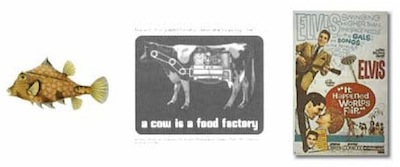
The formal start to this process involved the presentation of three images (shown above). This included: (1) a gorgeous picture of a fish, specifically one drawn by Ernst Haekel; (2) a picture of a robot masquerading as a cow masquerading as commentary on industry; and (3) the front cover of an Elvis Presley VHS tape (remember those?) called “It Happened at the World’s Fair.” We then gave this whole exercise the snazzy title, PUZZLE FANTASTICA, which was the sort of thing that precariously walked that strange line where it was simultaneously awesome and stupid. Next, we added the tag line, “Do not click unless you are of reasonable intelligence,” and then we basically just sat back and waited [1].

What happened next was pretty amazing. Immediately, we got a lot of feedback and a lot of attempts at solving the puzzle. And, I should add, a lot of it was very sophisticated and, well, remarkable. But despite this ingenuity from our readers, Puzzle Fantastica did not get solved.

And so, we released another clue… and then another. The fourth clue was a short movie of someone’s lawn covered with a few of those plastic climbing things that one purchases for small children, as well as about 100 European Starlings mulling through that same patch of grass. The fifth was some text, about a hundred words, which read as if it was the start of a strange children’s novel.

For each of these new clues, we saw new wonderful attempts at solving the puzzle, which interestingly enough, were often modifications of previous attempts. We also saw a huge increase in the number of participants, significantly fueled by traffic from other websites [2]. By the end of the exercise, we had managed to court several hundred different answers for our puzzle. However, despite this outpouring, none of these fine attempts had found the “official” answer.

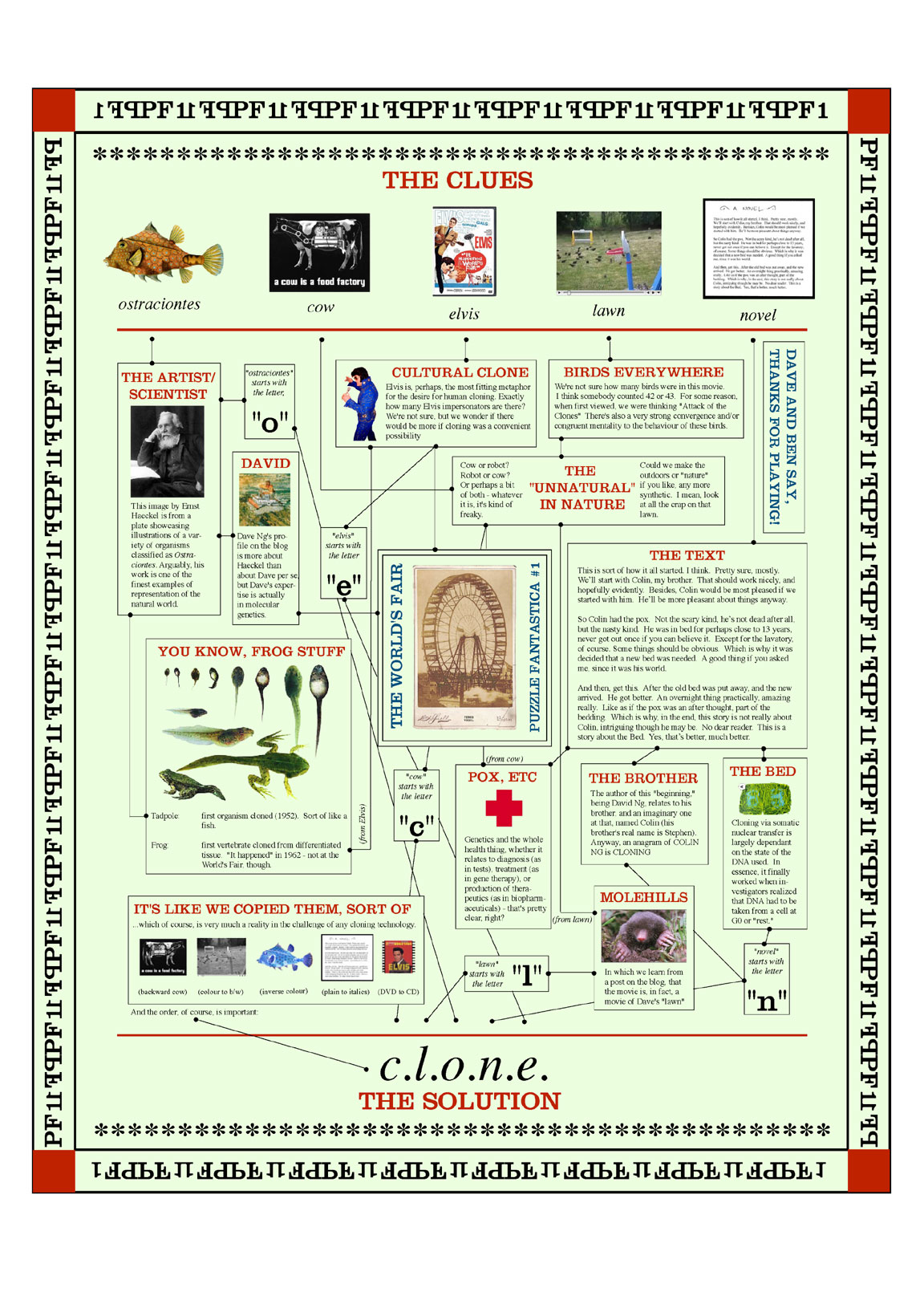
Still, we were so impressed with the effort and the diversity of what we saw, that we made a fancy graphic of the totality of solutions presented to us.


Click on image to see larger version.

As well, at the time, Ben and I were a little worried. When all was said and done, we realized that when we put up our “solution” (a play on the word CLONE), we would also need to recognize the fact that many of the readers’ answers were far more elegant.

Still, the whole process was sublimed. It was in many ways, a microcosm of the scientific method in action. What happened was that folks “saw something interesting” (our clues), and then they tried to fathom from these observations, a reasonable “reason why?” In other words, they were coming up with hypotheses: and their manner of testing them was waiting to see if the next clue would support or contest them. The participation was truly brilliant, and it was a testament to how creative a person’s mind can be, when driven to the prospect of trying to understand something mysterious. It was also turning into a great analogy that we could use for teaching purposes: “Look, it’s like the scientific method!” we both said.

Except that the analogy had one completely mind boggling, over-the-top, truly delicous kink, which actually made it all the more richer. You see (and here’s the thing): in truth, there was no solution.

That’s right. The whole puzzle was, in actual fact, a complete ruse. We were simply interested in seeing how a community can seemingly find wonderfully intelligent ways to connect odd disparate observations. And it worked like a charm. Too well, actually: we hadn’t expected such large numbers of participants which was a little stressful and also the reason why we decided to fabricate a answer that fitted but also one that hadn’t already been mentioned. It was as if we were forcing ourselves into a paradigm of sorts.

Which is fitting given what paradigms are in the world of scientific discourse. Here, Thomas Kuhn, the American Historian and Science Philosopher, famous for the publication of “The Structure of Scientific Revolutions,” says it best. He wrote that science “is a series of peaceful interludes punctuated by intellectually violent revolutions.” Furthermore, it is during those revolutions where, “one conceptual world view is replaced by another.”

What he was referring to was the idea that scientific discovery tends to work within paradigms. This is where there is an existing framework of knowledge that comfortably guides how observations are made, questions are asked, and how hypotheses are formed. However, history has also shown that on very rare occasions, these paradigms can change, and because they are so fundamental, such change can seriously rock the boat. We’re talking the Sun being at the center of the Solar System not the Earth; Einstein’s work on relativity over Newtonian physics; Darwin’s Natural Selection over all of that God stuff.

Our Puzzle Fantastica, admittedly by accident, actually illustrated how consequential a paradigm shift can be. In that our participants would have obviously acted in a completely different manner and would have provided completely different responses, had they known that there was never an answer in the first place. That particular change in our framework of knowledge for the puzzle was, suffice to say, revolutionary.

I bring this up, because it is yet another part of the scientific method.  It is in many ways, the ultimate example of why Popper’s “You can’t ever prove the Truth” statement is so important.  You just never know. Paradigm changes are actually implied with our scientific method flowchart, except without the intensity.  In fact, it might be worth changing our flowchart to reflect this:

1. See something.
2. Think of a reason why.
3. Figure out a way to check your reason.
4. And?
(very very very rare chance of a WTF in font 100 times larger!)*
5. Now, everyone gets to dump on you.
(people actually freaking out!)*
6. Repeat, until a consensus is formed.

(* these grey bits refer to this paradigm business).

So there you have it:  The scientific method in all of its glory.  Although, hopefully, after reading through this material, you realize that this flowchart is still a gross simplification.  Indeed, there are many who would prefer we not even call it the Scientific Method anymore. Instead, we should refer to it as the Scientific Process [3], as a way to highlight its fluidity and nuances, and that the flowchart should probably look a lot more busy and complicated with many criss crossing lines.

I personally like all of these , with maybe a secret desire to introducing a new term, Modern Baconian Method [4] – but that is just me.  What might be most important from of all of this, is to just “get it.”  It is just for everyone to have a certain degree of familiarity on how science can provide us with knowledge, and how that knowledge came to be.

Why?  Because when you do, you’ll finally understand why the usual way we get our scientific information – that is, television, newspapers, the web and the like – is often completely fucked up.

NOTES
[1] Puzzle Fantastica #1: “Fish-Cow-Elvis” [do not click unless you are of reasonable intelligence]. Scienceblogs.com. (Assessed January 7th, 2012)

[2] Introducing Puzzle Fantastica. Boingboing.net (Assessed January 7th, 2012)

[3] Like these folks at Understanding Science.

[4]  The Baconian Method, referred to earlier in part 1, is described here.

(3rd draft)

Sciencegeek Fundamentals #3: In Which We Discuss Expert Peer Review with a Bit About a Panda Named Steve.

Section No. 1 | 2 | 3 | 4 | 5

By DAVID NG

On a cold and miserable evening sometime during the fall of 2006, I found myself sneaking into a 4 star hotel and gate crashing an international science philosophy conference. Yes… I am that wild.

O.K. admittedly, this might not sound like the most thrilling of endeavours, and certainly not something that would beckon a Hollywood screen writer, but it was nevertheless quite exciting to me. Not the least of which was because this act of rebellion led to meeting a minor celebrity. This is someone, who if you took the time to google, you would discover in various photo-ops posing with folks as varied as Steven Pinker, President Jimmy Carter, and even Martha Stewart. As well, the word “posing” doesn’t actually do these photos justice: rather, these well known individuals are literally holding him up.

Specifically, the celebrity I’m referring to goes by the name of Prof. Steve Steve, and the reason why he is always held is because he is, in actual fact, a small stuffed toy panda. True, he not necessarily a well known celebrity, but, he is definitely an inspiration in certain scientific communities for reasons related to an interesting decade long battle of words.

Specifically, these words:

“We are skeptical of claims for the ability of random mutation and natural selection to account for the complexity of life. Careful examination of the evidence for Darwinian theory should be encouraged.”

The above is a statement crafted by the Discovery Institute, a Seattle based think tank that primarily acts as a front to push the concept of “Intelligent Design” into public school science curricula. This is essentially the idea that elements of life were consciously “designed and/or created” by something with intelligence (for instance, a God or a tinkering alien, etc).  It is more or less a supposed counterpoint to the science of evolution.

Since the statement’s release in 2001, the institute has also maintained a list of signatories, who are collectively referred to as A Scientific Dissent From Darwinism[1]. In other words, this is a list of folks with advanced degrees who insist that evolution is a scientifically weak concept. As of December 2011, 842 signatures had been collected, and the Discovery Institute has often claimed that this exercise is evidence that evolution is, indeed, highly debatable as science; and that other views, specifically views that ultimately include intelligent design (and ergo creationism) should be entertained and validated within science education.

This, of course, is rather silly – if not altogether disturbing to those who are scientifically inclined. And so in response, the National Centre for Science Education (NCSE) decided to launch its own statement to counter this awkward pseudoscience babble. Released in 2003, this one read:

“Evolution is a vital, well-supported, unifying principle of the biological sciences, and the scientific evidence is overwhelmingly in favor of the idea that all living things share a common ancestry. Although there are legitimate debates about the patterns and processes of evolution, there is no serious scientific doubt that evolution occurred or that natural selection is a major mechanism in its occurrence. It is scientifically inappropriate and pedagogically irresponsible for creationist pseudoscience, including but not limited to “intelligent design,” to be introduced into the science curricula of our nation’s public schools.”

And like the other statement, signatures were courted, where as of April 25th, 2012, the total number had reached 1208 individuals [2]. Apart from the empirically obvious fact that the Scientific Dissent from Darwinism has fewer signatures, it is also worth pointing out two other significant differences between the two opposing lists.

First, many have questioned the credibility of the Discovery Institute signatures. For instance, some argue that over the years, the signatures have often been inconsistently attributed (many titles are vague, university affiliations may be absent, current involvement in scientific activity suspect), and often signatories were not necessarily aware of the agenda behind the vague statement [3]. In addition, one also notices that only a small proportion of them actually have relevant biology backgrounds. In fact, in an analysis done in 2008, this was calculated to be just shy of 18%. In contrast, the same analysis determined that the robustly labeled NCSE list scored a much higher 27% [4].

Still, it is the second difference that is most noteworthy (in fact, it’s also brilliant).  This is where every signatory in the NCSE list is named Steve… Or Stephen, or Stephanie, or Stefan, or some other first name that takes it root from the name “Steven.”  Yes, even Stephen Hawking is on the list.  Put another way, the list would obviously be much much larger without this restriction [5].

This is why the NCSE list is also known as Project Steve (an affectionate nod to noted evolutionary biologist and author, Steven Jay Gould), and this was also why it was very exciting to meet with Prof. Steve Steve. You see – he is the project’s official mascot, and he is a great reminder of why it is important to invalidate those who would be inclined to create controversy around the science of evolution, be it for political or religion reasons.

He is also a lovely reminder of the importance of another aspect of the scientific method. Specifically, this concerns the part where everyone gets to dump on you, or perhaps more accurately, the part where everyone – who’s an expert – gets to dump on you. It refers to the idea of how “proof” is accessed and validated. In science terms, we call this part of the method, “expert peer review.

This is important because it dictates that scientific knowledge gets to be critiqued in a very particular manner. It gets examined in such a way, where one is left with a scientific opinion that:

(1) is based on the examination of tangible evidence, which is not only made publicly available for all to see, but is also described in enough excruciating detail so that anyone has the option to try to reproduce it (hence the existence of peer reviewed journals);

(2) is formulated by those who actually know what the hell they are talking about;

(3) is backed by the most numbers of people who actually know what the hell they are talking about; and

(4) did I mention the bit about people actually knowing what the hell they are talking about?

In other words, this idea of expert peer review is really really a good way of critiquing evidence and thereby evaluating the claims and the hypotheses they contend to support.  Moreover, it is especially important because it provides a mechanism for general society to check things out – since not everyone in society has the necessary background to evaluate scientific claims and evidence. For instance, a non-geneticist may be hard pressed to fully assess DNA sequencing data; a non-computer scientist may be hard pressed to appraise the relevance of a climate model – but that’s o.k. since this is what expert peer review is set out to do.  It sets out to gather the required community of scientists to check things out for you.

Such a review process is all the more pertinent because the reality is that it’s not that difficult for anyone to be convincing and still disingenuously utter the phrase, “and we have proof!”  A Scientific Dissent From Darwinism is a good example of this.  Which is why the rational protect themselves from such scams by relying on these communities of experts, who in turn are vested in the scientific method, and who strive to objectively and publicly analyze such sentiments for validity.

Which is to say, that clearly, the list of Steves win hands down.


Me (and Janet, John, John, and Ben) with Prof. Steve Steve at an international science philosophy conference.

– – –

NOTES:

[1] A Scientific Dissent from Darwinism. (Assessed January 7, 2012)

[2] Project Steve Website. (Assessed January 7, 2012)

[3] Doubting Darwinisms Through Creative License. (Assessed January 7, 2012)

[4] Project Steve: 889 Steves Fight Back Against Anti-Evolution Propoganda. Science Creative Quarterly. (Assessed January 7, 2012)

[5] For instance, on quick examination of the December 2011 edition, there are 10 individuals on the Dissent list who names would fit under the Project Steve criteria (all Stevens or Stephens). Given that this represents 1.19% of all the names on that list, we could then, by analogy, project that the NCSE could have easily produced a list of close to 100,000 names, had they not included the name restriction.

(3rd draft)

None of my Science Piñatas are Appropriate for Children.

By DAVID NG

(I always thought that this piece would have been great as a pictorial. First published at McSweeney’s)

– – –

1.
Hydrochloric-Acid-Filled Piñatas

Good: Have the sturdy construction required to ensure no unintended leakage of contents.

Bad: Possible severe burning. Brings the party down.

2.
Endangered-Animal Piñatas

Good: Kids love animals. High potential for very cute-looking piñatas, like baby seals, for instance.

Bad: Beating with a stick sort of sends the wrong message.

3.
Particle-Accelerator Piñatas

Good: Built full-scale and often several miles in dimension. Therefore, young children find them easy to hit.

Bad: Each one worth several billion dollars. Parents generally not keen on damaging them.

4.
Smallpox (Variola major) Piñatas

Good: Cool virus shape.

Bad: Highly contagious and high mortality rate. Would also bring party down—as well as everyone else within a 100-mile radius.

5.
Infinity-Symbol Piñatas

Good: Possibly a way to address the often reported decline of mathematics education.

Bad: Thinking about infinity makes my head hurt. Now imagine having to explain it to a child over and over again.

6.
Piñatas in the Shape of the USA and Filled
With the Greenhouse Gas Carbon Dioxide

Good: Sort of works as a metaphor for the United States’ role in the global-warming crisis.

Bad: Unfortunately, the irony would be totally wasted on a 5-year-old.

A Scientific Proposal to the Executive Program Directors of the ABC, CBS, Fox, and NBC Networks

By DAVID NG

Dear Sirs,

I know an omen when I see one, and it needn’t even involve a two-headed goat. As a scientist with a background in cancer research, the revelation I’m referring to is a bit of homework I did on the average yearly amount of money spent on programming by your television networks (about $1.5 billion). A number which strangely mirrors the average amount of money given last year to each of the 18 institutes within the National Institutes of Health, an organization that is the U.S.’s backbone of publicly driven medical research. Clearly, this is a call to merge the two enterprises together. So in the interest of public health, and given the pervasiveness of reality TV, I wish to expound to you four possible examples that demonstrate the feasibility of this union.

i. Real Science, Real People:
In the early 90s, studies were conducted whereby a single male mouse was presented with a plethora of different female mice. What was discovered was that the most desirable females had immune system genes that were most distinct from the male suitor. In other words, the female picked had a particular genetic background. Such a mechanism of mate selection would please Darwin since the offspring produced would inadvertently benefit from the most diverse, or most advantageous, immune system. More pressing, however, is the question of whether this decidedly unromantic notion pertains to mate choice in humans? Fortunately, we can now answer this question by asking the participants of programs like The Bachelor or The Bachelorette to provide a blood sample along with their video profile. This way, research can finally circumvent the sticky ethics of conducting such experiments on humans. On the plus side, this research opportunity should also generate its own built-in funding infrastructure as it can be easily applied to beat Vegas odds.

ii. Save Money:
Currently, every drug used for medicinal purposes in the United States needs to navigate through the strict and often precarious guidelines imposed by the Food and Drug Administration. This is an extremely long and expensive process, averaging 15 years and upward of $300 million in financing from discovery to product. Inevitably, most of this arduous process is due to the proper design and delivery of human clinical trials that examine drug efficacy and safety. Why not incorporate these trials into television shows like Fear Factor or Survivor? If contestants are willing to drink the seminal fluids of cattle or eat squirming maggots the size of your thumb, wouldn’t these same individuals revel in an opportunity to eat untested drugs? We could even have a “totally untested” and a safer “well, the mice survived” version of the same contest! In any event, millions of dollars would be saved.

iii. Promote Technology Development:
Medical research is largely driven these days by the ingenious design of equipment that can do new things or do old things better, faster, bigger, cheaper, safer. This to me is an invitation to incorporate medical technology development into reality TV. Why can’t Junkyard Wars showcase a competition to build the fastest DNA sequencer. Or viewers watch an episode of BattleBots that pits equipment used for insulin production. If Extreme Home Makeover can build a whole new environment in seven days, then why can’t you “fix that genetic mutation” in the same seven days. It’s no surprise that ingenuity often percolates under tough situations, and I can think of no tougher than a scenario where contestants only have 48 hours and a $1000 budget to meet their objective.

iv. Fostering Interest in Science Careers:
If we can have programming that features Donald Trump searching for a skilled apprentice, why can’t we use the same template to attract top graduate students. It should be simple enough to invite a feisty Nobel Laureate with an ego big enough to oversee the process. Just think of the entertainment value generated by having a team of young researchers told “Your project is to work together and come up with a cure for cancer in three days. And don’t forget—if you fail, you will meet me in the seminar room where somebody will be fired!” I mean, really—this stuff sells itself!

To conclude, I hope these four simple examples illustrate the opportunity at stake. It would be a great shame to not utilize these two great charges for the benefit of all. Now if we can only get the Food Network on board—maybe an episode of The Iron Chef with two-headed goats as the special ingredient?

Sincerely,
Dr. David Ng

Via Yankee Pot Roast, 2005.

Sciencegeek Fundamentals #2: In Which We Learn That the Alien Hypothesis is Worthy, Though Not Necessarily Valid.

Section No. 1 | 2 | 3 | 4 | 5

By DAVID NG

You see something interesting…

This little phrase is often the start of the scientific process. In that it all begins when someone, possibly you, has noticed something intriguing. This doesn’t mean that it has to be interesting to everyone – just as long as it’s interesting to someone. In fact, sometimes, the science will stop right there. In other words, the act of just “observing” might be good enough – think about how everyone would feel if you were the first to discover a certain kind of creature.

Still, most conventional views of science would assume that you’ve seen something curious enough to merit the question “why?” And it is in that inspired act of asking a question, where arguably the most important part of the scientific method takes form.

We are, of course, referring to the notion of the hypothesis: which according to the Oxford Dictionary is defined as:

“A supposition or proposed explanation made on the basis of limited evidence as a starting point for further investigation”

For us, in less eloquent terms, we say that this is the part where you try very hard to “think of a reason why.” Furthermore, when you do this, you inadvertently set the scene for the next stage of the method by defining how a person might “figure out ways to check your reason why.” To a scientist, this last phrase is a colloquial way of talking about experiments.

For fun, let’s explore these concepts by using an example. Here, we’ll focus on some interesting observations that were noted in China during the early 1980’s. Essentially, what folks observed was that there was a discernable decline in Chinese stork numbers [1]. As well, there was also a drop in fertility rates [2]. In other words, storks in China were disappearing and the Chinese appeared to be having less babies.

But why?

At one level, we might suppose that the two are not at all related.  It could simply be a correlation and nothing more. But for the purposes of our discussion, let us suppose that we are trying to surmise whether the two are ultimately connected – whether there was truly a causative element involved.

Here, some of the hypotheses might assume that there is a continuum involved, in that one of the observations is actually directly responsible for and logically leads to the other observation. For instance, if we play into the stork/baby mythology, where storks do indeed deliver babies, perhaps we can say that the decline in stork numbers was in turn causing the baby effect. Others, however, might ponder whether there is a more central reason for the two trends. In this case, we might talk about a hypothesis that suggests one prominent thing at play that is simultaneously responsible for both outcomes.

Here, we can try to distinguish the two scenarios by looking at the evidence more closely. Does the stork decline happen before or after the baby decline? What exactly are the numbers associated with the declines? Important, because even with the drop taken into account, the actual numbers of storks might still be more than enough to cover the number of babies born. In any event, as you can see, a hypothesis can be quite nuanced and is really only a small step in a much longer path.

For amusement’s sake, let’s take this idea of nuance even further and look at the three potential hypotheses presented below [3]. Here, they all focus on a core reason (environment, economics, or aliens) that could explain our observations.

Looking at these flowcharts more carefully, you can see that when accessed logically, they all work. Even with the somewhat interesting inclusion of aliens, the fact remains that all three could be considered acceptable, worthy even. However, this is very different from a hypothesis being valid. Validity, which aims to make sure that what you say is indeed true, or at least true under every logical interpretation, is a much higher bar to meet. It is something that needs to be earned through the critical examination of evidence.

Now this is an especially important word, so we’ll once again invite the gravitas of the Oxford Dictionary to provide a definition:

Ground for belief; testimony or facts tending to prove or disprove any conclusion.

But such grounds can take several different forms, constituting strong or weak evidence.  If we focus on the alien claim in particular, evidence might look a little like this:

1. We found an alien! And we have proof!

Here, we have important evidence from the point of view of addressing one critical question: are aliens real? It is crucial because it could be said that this detail is a major stumbling block in the alien hypothesis. However, proof of the existence of aliens isn’t in of itself strong evidence to support the hypothesis. This is because it doesn’t address any of the specific ideas and mechanisms put forth to explain our stork and baby narrative. Ideally, you would want to see data that demonstrated the involvement of our said alien with either storks or babies – actually, you would like to see both.

2. We found an alien eating a stork! We also found an alien with a baby on a leash! And we have proof!

This type of evidence is better, but it is still technically weak. This is because just having this data isn’t necessarily conclusive. What if the stork you see is, in actual fact, American? What if the pet baby is not Chinese? What if it is Chinese, but not in fact, from China? What if it is a result of alien cloning techniques? As you can see, the scientific mind will take what might otherwise appear convincing, and deconstruct it skeptically. A scientific mind will continually probe, and continually look for flaws in the evidence.

3. We found an alien eating a stork, and we have biochemical proof that the stork is from China! We found an alien with a pet baby, and we even saw the alien take the baby from a family in China! And we have proof!

Now, we’re getting closer, but now the issue is in the matter of whether this evidence represents an impactful occurrence. In other words, this particular data is really only good for showing the loss of one stork and of one baby. Obviously, this can hardly validate the observation that whole populations have dropped, which means that better evidence would also provide a better sense of the numbers involved. This particular stork and this particular baby could represent a simple coincident.  Furthermore, what if this data was flawed for other reasons? Perhaps, if we had decided to observe the baby a little longer, we would have noticed that the baby was in fact being kept for food! This doesn’t change the fact that aliens may still be responsible for the drop in numbers, but it does nevertheless alter the sentiment of the current hypothesis significantly.

Of course, this type of review can go on and on. And the thing is: it does. What we have here is this continual cycle of coming up with hypotheses, coming up with ways to address the hypotheses, coming up with evidence, and then reevaluating everything over and over and over again.

Hopefully, you can see why this can very easily become an arduously slow process, although that’s not to say that it is always slow. More importantly, you should be able to appreciate how the process can lead to varying outcomes.  It could lead to revisiting old ideas.  It could naturally result in conflicting views.  It could even cause your explanation (and also possibly the scientific discipline) to change directions dramatically. Imagine, if you will, that the real answer to our stork and baby scenario was a little bit about everything – a little mythology, a little environment, a little economics, and even a little bit about aliens. If this were the case, you could probably appreciate how difficult that complete story might be to tease out.

Here’s another thing to note:  if you think about this process carefully, you will soon realize that the continual acquiring of scientific evidence never actually proves anything to be one hundred percent certain. It can only modify or support an existing hypothesis, although by supporting it relentlessly, a hypothesis can get stronger and stronger and perhaps one day rise to the rank of a scientific theory or scientific law. But even there, there is no certainty that there won’t be something that comes along to discredit that idea in a single stroke. This is Karl Popper’s take on the philosophy of science: that at the end of the day, you cannot prove something to be true: you can really only prove something to be false.  This might take a moment to ponder, but if you do so with our alien example, you’ll note that this description does fit.

On the whole, our little alien discussion hopefully provides a window into how the scientific method works. But if we are honest with ourselves, we should also admit to glossing over something very important. Specifically, it’s in the parts where we have very nonchalantly uttered the phrase, “And we have proof!”

This bit, we will spend some more time on in the next section, as it considers how we distinguish strong evidence from weak evidence. Which is all the more daunting these days, since it’s quite likely you might not even understand the technical details of the evidence. Indeed, it might even be completely alien to you.

Notes:
1. Ma, Ming; Dai, Cai. “The fate of the White Stork (Ciconia ciconia asiatica) in Xinjiang, China”. Abstract Volume. 23rd International Ornithological Congress, Beijing, August 11–17, 2002. p. 352.

2. S Horiuchi. “Stagnation in the decline of the world population growth rate during the 1980s.” Science 7 August 1992: Vol. 257 no. 5071 pp. 761-765

3. Pollution and economic scenarios via personal communication with Hadi Dowlatabadi.

(3rd draft)

If Orbitals were to play Acids in a game of basketball – yes, you read that right.

I wrote this years ago, when my friend Ben Cohen and I, cohosted a SCIENCE SHOWDOWN during the 2007 NCAA. We had many folks play along, writing some really excellent creative science pieces – you should check them out, to see which scientific term won in the end.

* * *

By DAVID NG

Welcome folks, to this here what we’ll call the beautiful game (at least we’ll say that for the molecular level). This game really had it all, it was dynamic, it had equilibrium, it had fluid transition, and it was catalytic. It involved freakishly large chemical sounding words, and also a wierd scoreboard that looked something like this:

But hey, whatever, right?

The game started off slowly enough, with Team Acid moving the ball well. Their game plan was fairly straight forward, and with a play by play that looked a little bit like this:

But then the d-orbitals stepped it up in strides. Moving with both precision and with uncanny diffuse footwork that was seemingly hard to defend. Full of spark and basically responsible for a lot of the colour of the game, their floor plan followed a few extravagant patterns. Such as:

this,

this,

this,

and every now and then, even this:

But the coaching staff for the Acids were a smart bunch, and soon realized that the d-orbital gameplans were essentially all similar. That for all of their flash, (as well as support from the well resourced transition metals), they were (as the coach was heard to say), “just moving about in the same f**king four way formation – any sh*thead should be able to mess that up!”

So, newly motivated, they countered with:

and on ocassion this,

So for a while, it looked like Acids had it in the bag. That they would advanced to the final eight. That it was all over for Team d-orbitals, who would then have to delocalize and do other things that incorporated some kind of sad chemistry pun.

But then, in the last ten minutes, something happened. Something beautiful, something different, but not something entirely unexpected – because let’s face it, it’s easy enough to google this sort of thing these days.

And so, here’s how it happened. This, my friends, is what the game will be remembered for:

Where really all we can say is, SWEET JESUS!

And then it was basically all over – Acids were all but destroyed from that point on. And this, here, is the final result – d-orbitals takes the game. In style some would say, and by a score of 98 to 86.

* * *

Later that evening, I caught up to the Acids, with some questions. But they had no answers, just a few sorrow shrugs and some parting words.

FIN

Revisiting the Candy Hierarchy 2010

Remember this

(pdf of article as well as all comments downloadable here).

Heads up that a new edition is coming this monday.