
.
Category: *



June 11, 2012
Welcome to Science: Great comic on Phil Plait’s lovely words about science

By Gavin Aung Than at Zenpencils.com. Words by Phil Plait.
June 11, 2012
Alessandro Gottardo strangely compelling images: sweet, and in these cases, a little sciencey
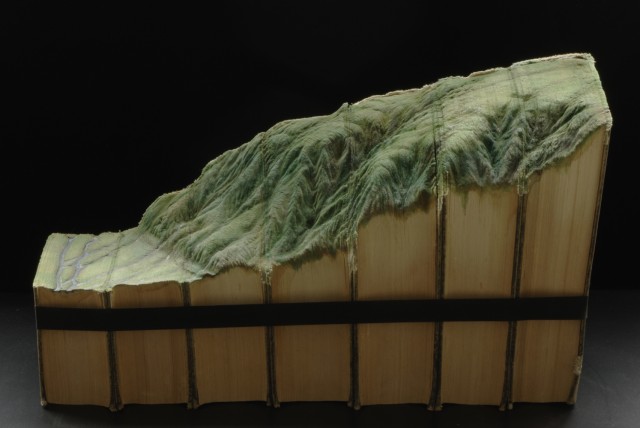
Here’s a few great illustrations that could segue into discussions on green roofs and space programs.

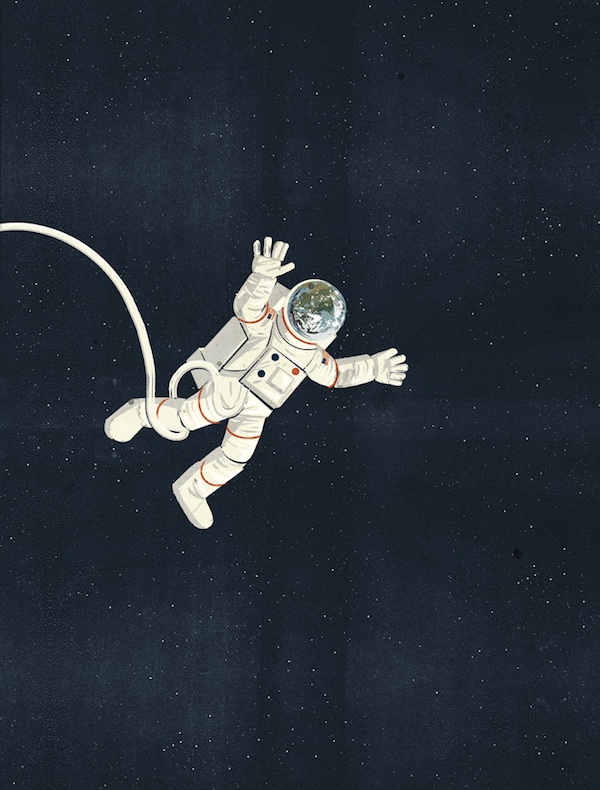
By Alessandro Gottardo via My Modern Met.
June 6, 2012
“If something bores you, dig deeper.” Wise words in the case of cell theory, and science history generally..
Brilliant TEDEd animation on the origins of cell theory, which also stands as a lively reminder of how wonderful science history can be.
June 6, 2012
If you missed it, then too bad: at the very least you can learn why it was a big deal. #venustransit
First, for your calendar, you can note that the next one is in 2117.
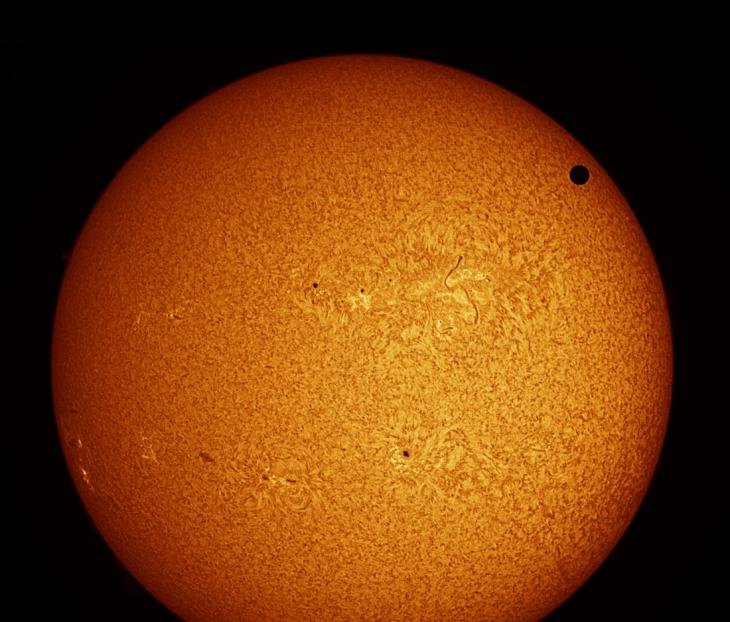
(Via spaceweather.com).
Second, read this lovely piece by Amy Shira Teitel, as she tells you why it was such a big deal yesterday (and throughout history).
Here’s a bit to whet your appetite (and in doing so, illustrates what is arguably the first example of an international scientific collaboration):
“Halley died in 1742, 19 years before he could try his method on the 1761 transit. But a host of astronomers took up the challenge in his stead. European expeditions set out to India, the East Indies, Siberia, Norway, Newfoundland, and Madagascar to get the best and most spaced out views of the event. From the whole worldwide network, more than 120 transit observations were recorded, but most were of poor quality stemming from optical problems and inexperienced observers. For the 1769 transit, more than 150 observations were recorded from Canada, Norway, California, Russia, and famously Tahiti as part of Captain James Cook’s first expedition. But the results were only marginally better.
The state of technology in the 17th century made it impossible to record the exact moments of the start and end of the transit because of the so-called black drop effect. As Venus crossing in front of the Sun, a haze obscured the planet making it impossible for astronomers to make clear observations. But even poor results are results. In 1771, French astronomer Jérôme Lalande combined the observations from the 1761 and 1769 transits and calculated that 1 AU was 95 million miles (153 kilometers) give or take a half million or so miles. It was a start, but it wasn’t the precise value astronomers had hoped for.”
June 6, 2012
The Wristwatch of Death.
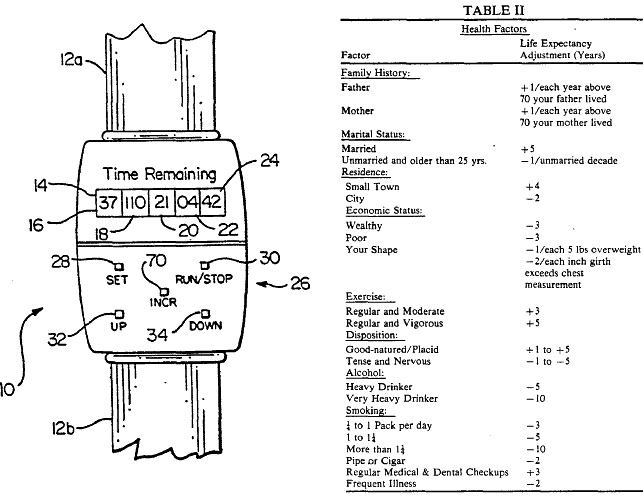
Patented by David Kendrick (officially called a “life expectancy timepiece”), this device provides a running countdown to your calculated time of demise. There also exists a version that elicits the odd audible signal, just in case you forget you’re technically getting closer to death all the time.
Via Futility Closet.
June 5, 2012
Enceladus passing Dione: Just another day in Saturn’s neighbourhood. #beautiful
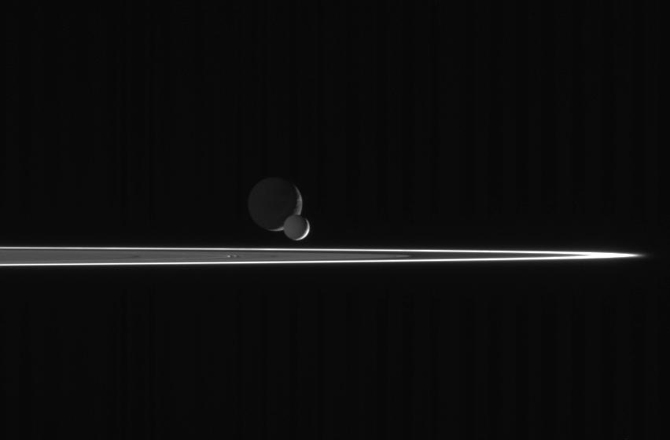
More about Enceladus at Wired.com. Also wikipedia.
“Enceladus is one of only three outer Solar System bodies (along with Jupiter’s moon Io and Neptune’s moon Triton) where active eruptions have been observed. Analysis of the outgassing suggests that it originates from a body of sub-surface liquid water, which along with the unique chemistry found in the plume, has fueled speculations that Enceladus may be important in the study of astrobiology.”
June 5, 2012
Using Heineken as a high efficiency solvent. #chemistryisawesome
Curious whether the water/5% ethanol mix was done first (and therefore leading to the beer and wine experiments), or whether it was the other way around.

From Org. Lett., 2008, 10, 4557, via Fresh Photons.
June 5, 2012
In which North Carolina attempts to make sea level rises illegal. (Or let’s make climate change against the law)
This is breathtaking in its stupidity. Below: Replacement House Bill 819, section 2, paragraph e.

Read the full story at Scott Huler’s epic takedown, but here’s a small taste:
“There is virtually universal agreement among scientists that the sea will probably rise a good meter or more before the end of the century, wreaking havoc in low-lying coastal counties. So the members of the developers’ lobbying group NC-20 say the sea will rise only 8 inches, because … because … well, SHUT UP, that’s because why.
That is, the meter or so of sea level rise predicted for the NC Coastal Resources Commission by a state-appointed board of scientists is extremely inconvenient for counties along the coast. So the NC-20 types have decided that we can escape sea level rise – in North Carolina, anyhow – by making it against the law.”
June 4, 2012
Dear Canada: this is long, but it is utterly important. @ElizabethMay steps up and tells you all that is wrong with Bill C-38.

Read Elizabeth May’s full speech here. It is not only important, but downright impressive, regardless of your political leanings. Please share with others.
“I recall the words of the late journalist, a great Canadian, James Travers. We were both on CBC Sunday Edition in the spring of 2009, discussing the threats to our institutions. He commented that we really no longer have democracy in Canada. He said (and I am paraphrasing) “you can visit Ottawa and what you’ll see is a democracy theme park. The buildings are still there. You can tour Parliament, but you will no longer see democracy.”
I refuse to accept that such is the case. I acknowledge that democracy is not a permanent state of existence. It can be won, as in Arab Spring. And it can be lost. It can be lost through violence; it can be lost through neglect.
It does not survive without the constant application of checks on abuse of power. It needs openness. Those things done by stealth invariably breed an unhealthy loss of respect in our democratic institutions. Sunlight is a great antiseptic. The myriad, unrelated pieces of legislation under cover of C-38, should, to respect Westminster Parliamentary democracy, be brought out of the shadows, and be tabled separately, and studied on their own merit.”
(Image by Jason Wilde)
June 4, 2012
Urban city landscapes “peeled” from the Earth.
Lovely concept used primarily to metaphorically show how searching through directories sometimes leads to that one thing that you wanted to find. For me, this image might fit into the idea of urban density or maybe even eco-footprint discussions.
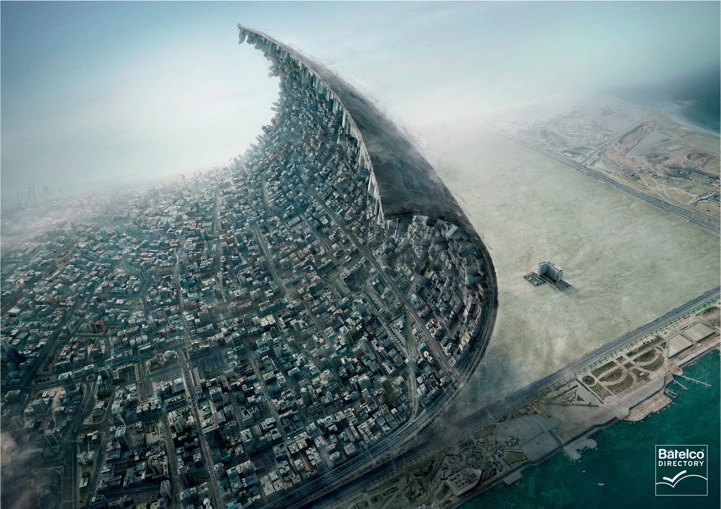
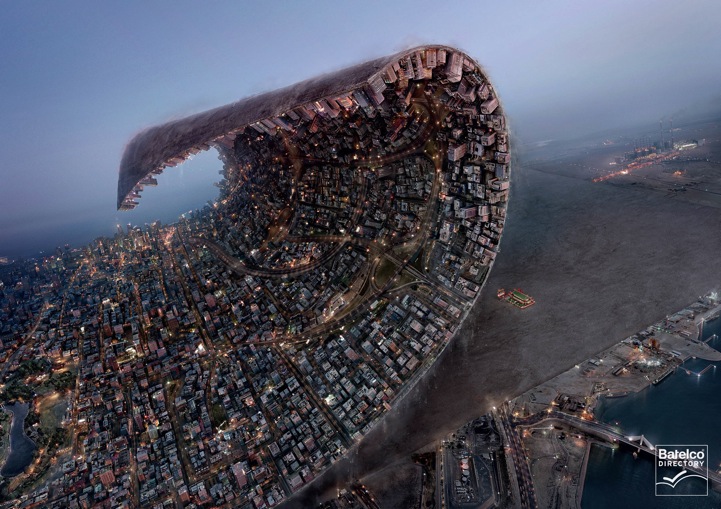

By FP7/BAH advertising agency for Batelco, a Bahrain telecommunications company (via My Modern Met)
June 1, 2012
His genetic make-up only allows him to be alive for one day.
I find this strangely poignant, as well as a possible visual aid if I need to talk about senescence.

By Matt Forsythe over at Supermutant Magic Academy, via Drawn.
June 1, 2012
Solar powered cremation (a.k.a. funeral with a death ray)
Look at the schematic carefully, and you can just picture the proceedings. First you have the service in the room with the seats; then the casket would ceremoniously rise to the roof; whereupon a crane would lift it into the path of concentrated solar energy.

“A temperature of about 1,700° F. is required to provide incineration and a total of about 3,000,000 BTU’s is required to consume a corpse. Thus, at a supply rate of about 1,000,000 BTU/hour, cremation would take about three hours. A concave mirror-reflector bowl similar to the steam-producing Crosbyton hemisphere in Lubbock, Texas is considered a suitable collector. At 65 ft. diameter, a bowl of this type can produce approximately 1,000,000 BTU/Hr. under full sunshine conditions from mid-morning to mid-afternoon.”
Design by Kenneth H. Gardner, via Futility Closet.
May 30, 2012
Photos of invisible bicycles.
No sign of Wonder Woman though…
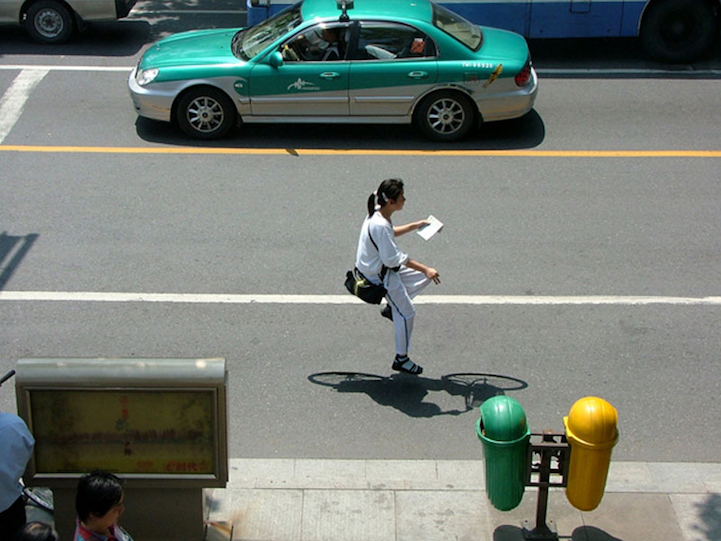
“If you look closely, you’ll notice a pretty key element is missing from these photographs! China-born photographer Zhao Huasen created this fun collection of images where bicyclists float along city streets, pedaling and steering invisible bikes. For the project, entitled Floating, the artist captured hundreds of cyclists going about their every day lives and he then digitally removed the bicycles from the images. The bicycle seats, position of the riders, and the shadows on the streets remain intact, allowing viewers to easily fill in the gaps and understand the story.”

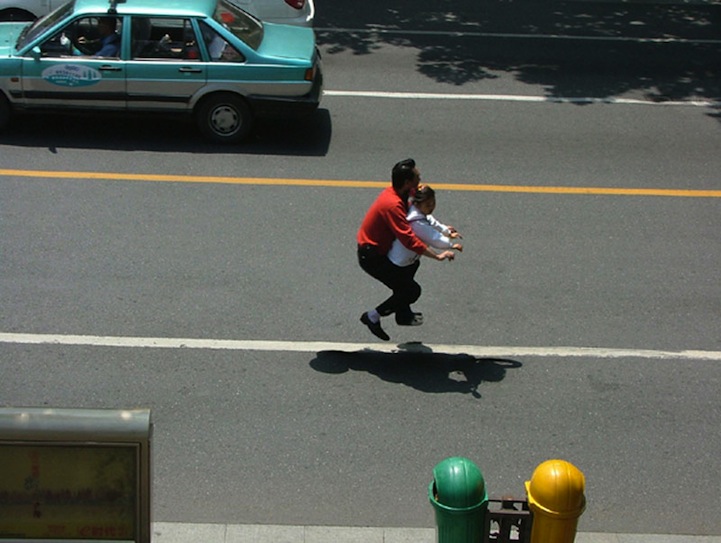
By Zhao Huasen, text from
 popperfont.net