
.
Tag: technology





September 7, 2012
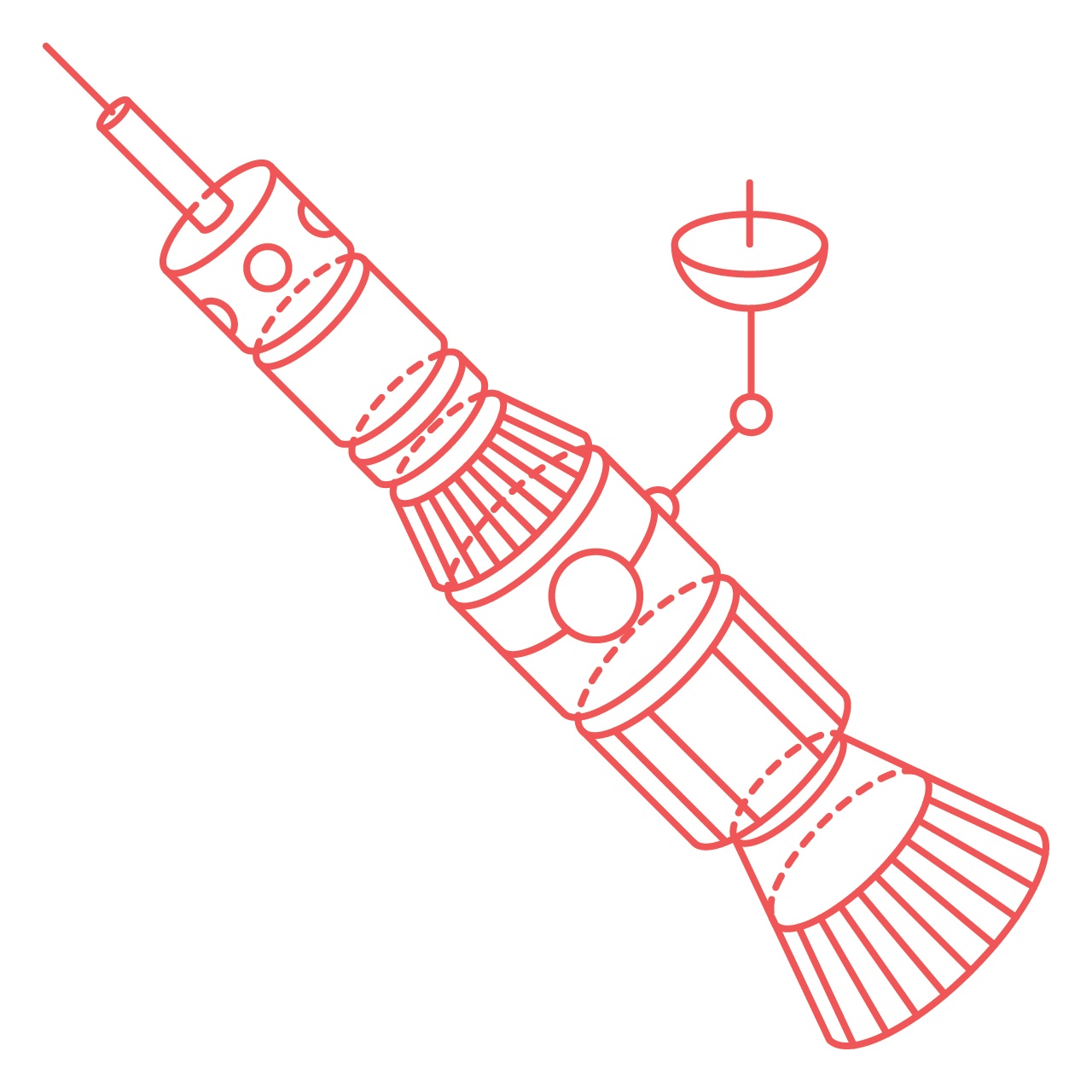
This space exploration themed animation is mesmerizing to watch.
By Théo GUIGNARD, Nöé LECOMBRE, Hugo MORENO from GOBELINS, l’école de l’image. Note that that link is generally good for some great procrastinating (esp. if you admire great animation).
Via Drawn
September 7, 2012
Fantasy Creature X-Rays (Or Are They?)

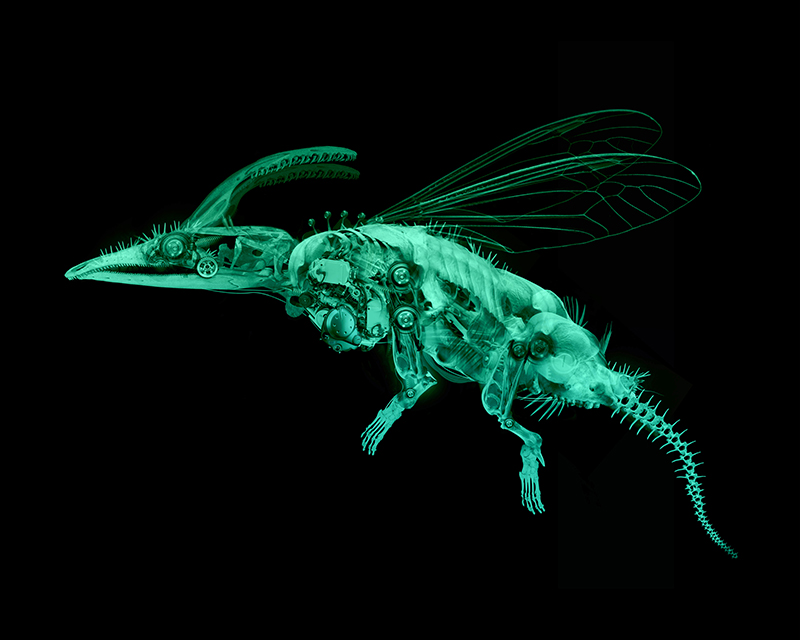
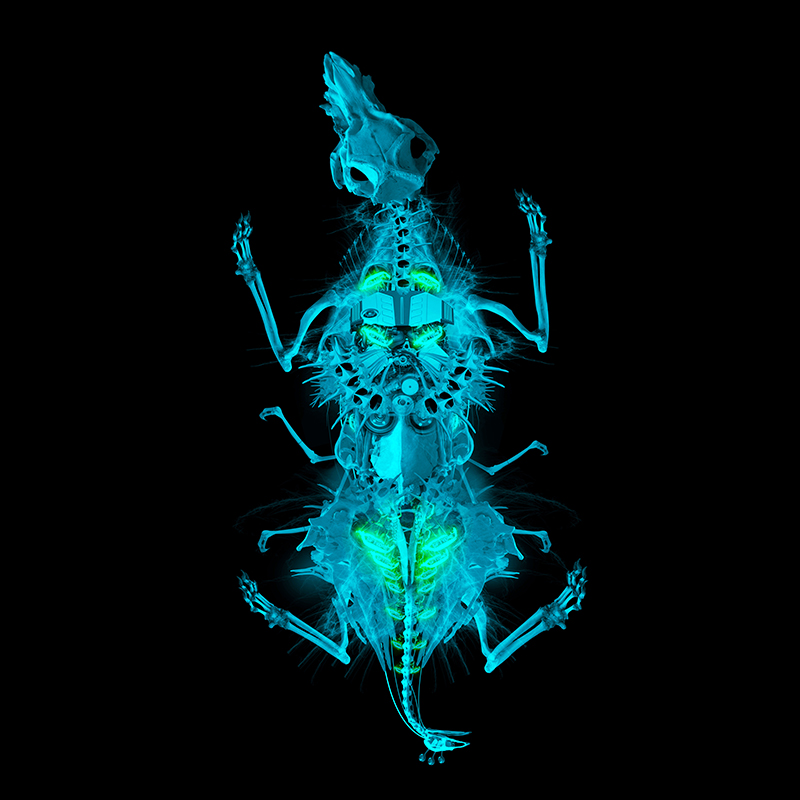
“Korean artist Wonman Kim, aka Curt Man, is a graphic designer and illustrator who recently held his first solo exhibition, titled Trinity, for his intriguing digital works. The colorful mix of puzzling images depict what appear to be x-ray scans of different animals. Although, these are no ordinary x-rays.”
Art by Wonman Kim.
Text via My Modern Met.
September 4, 2012
Clips of animals falling produced in the 1800s

Technically called chronophotographs. These are pre cinema and made by Étienne-Jules Marey
And here is the camera he used

“Marey’s chronophotographic gun was made in 1882, this instrument was capable of taking 12 consecutive frames a second, and the most interesting fact is that all the frames were recorded on the same picture, using these pictures he studied horses, birds, dogs, sheep, donkeys, elephants, fish, microscopic creatures, molluscs, insects, reptiles, etc. Some call it Marey’s “animated zoo”. Marey also conducted the famous study about cats landing always on their feet. He conducted very similar studies with a chicken and a dog and found that they could do almost the same.” (Wikipedia)





August 23, 2012
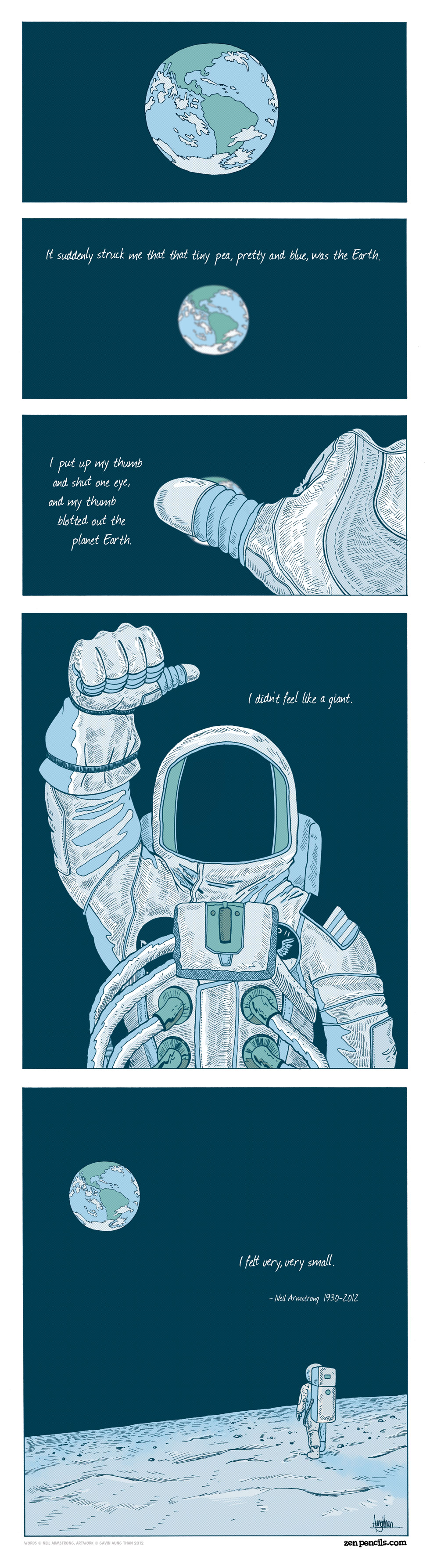
Gorgeous infographic of space exploration.

Click on the image for full size

Here’s a close up of the trips to our moon and two closest neighbours

August 16, 2012
Dan Winters’ amazing photos of a space shuttle launch
“The work begins the day before launch, when he [Dan Winters] positions up to nine cameras as little as 700 ft. (213 m) away from the pad. Each camera is manually focused and set for the particular shot it is meant to capture, and the wheels of the lens are then taped into position so that they can’t be shaken out of focus when the engines are lit. Electronic triggers—of Winters’ own devising—that do react to the vibrations are attached to the cameras so that the shutter will start snapping the instant ignition occurs.
To prevent the cameras from tipping over on their tripods, Winters drills anchoring posts deep into the soil and attaches the tripods to them with the same tie-down straps truckers use to secure their loads. He also braces each leg of the tripod with 50-lb. (23 kg) sandbags to minimize vibration. Waterproof tarps protect the whole assembly until launch day, when they are removed and the cameras are armed. Throughout the launch, they fire at up to five frames per second. Only after the vehicle has vanished into the sky and the pad crew has inspected the area for brushfires, toxic residue and other dangers, are the photographers allowed to recover their equipment. (Text from Time)


Photos by Dan Winters, also soon available in book form. (Via My Modern Met)
August 9, 2012
Awesome illustration of Mars’ Curiosity

By Ciaran Duffy (who incidentally, also drew the awesome whale image for this)


August 3, 2012
Micromachines: a lovely crayon animation piece
Micromachines (2012) from Nicolas Ménard on Vimeo.
By Nicolas Ménard. Best watched in full screen.
July 25, 2012
Inner Space: Photography of iconic space craft in liquid containers.
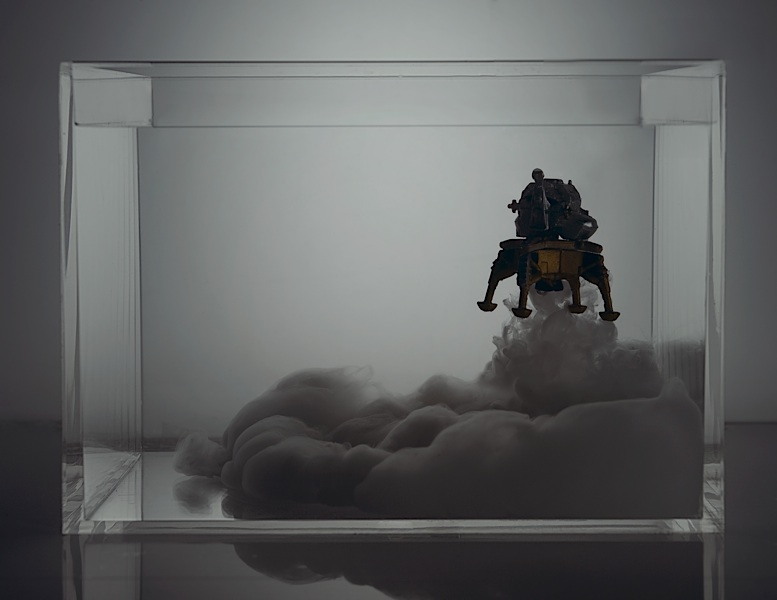
By Owen Silverwood. (More at the link).
July 20, 2012
When humanity disappears, a ring of dead spacecraft will remain as evidence of our existence.
Trevor Paglen – The Last Pictures from Creative Time on Vimeo.
“In September 2012, the television satellite EchoStar XVI will lift off from Kazakhstan with the disc attached to its anti-earth deck, enter a geostationary orbit, and proceed to broadcast over ten trillion images over its fifteen-year lifetime. When it nears the end of its useful life, EchoStar XVI will use the last of its fuel to enter a slightly higher “graveyard orbit,” where it will power down and die. While EchoStar XVI’s broadcast images are destined to be as fleeting as the light-speed radio waves they travel on, The Last Pictures will continue to slowly circle Earth until the Earth itself is no more.”
By Trevor Paglen.

July 10, 2012
Here’s one way to adapt to climate change: Build underground ski resorts.

“In order to simulate actual outdoor skiing conditions, provisions are made to vary the steepness of the slope from place to place. In addition, facilities are provided to produce random simulated moguls or an entire mogul field. Thus, during one run of the slope, most, if not all, of the conditions encountered on natural outdoor slopes may be simulated and incorporated into the run”
By Nobuyuki Matsui, via Google Patents, via Futility Closet.
 popperfont.net