.

Tag: scientific method

Sciencegeek Advent Calendar Extravaganza! – Day 8

day8

IS THERE A SANTA?
By Paul Clarkson, via The Science Creative Quarterly.

santa

Being a scientific investigation of a cultural conundrum

Soon it will be Christmas Eve, and once more children will be divided into distinct factions. Here, Cyr [1] described younger children (12 years) who have ditched this ‘childish’ belief. But he fails, by excluding from his questionnaire, to describe a third group who aren’t really sure – the undecided voters if you like. And as the eldest child, I have spent a large part of my life in this group. Moreover, being scientifically minded even at the age 7, I of course approached this problem according to well-established techniques of investigation.

My first stop was to consult the authorities. My parents (beneficiaries of a liberal arts education and a liberal dosing of 1960’s psychotropic compounds) reassured their young child by explaining that Santa, like all beliefs, was a social construction and as such was true to all who believed in him. When I asked how I would prove that, Mum told me that all truth was relative and that the concept of proof was no more than a projection of hegemony by the dominant culture. Which I thought was a load of old bollocks.

Disappointed but not discouraged I proceeded to a literature search (It wasn’t until much later in my career that I realised this was only ever done after at least 9 months of laborious investigation, although I was naive then, so give me a break). My little red bookshelf contained several volumes referring to Santa Claus. Most were personal accounts [2], and as such counted as no more than Level V evidence (expert opinion). Other styled themselves as authorities [3,4], but lacked references to definitive investigations.

Modern children of course have Pubmed, and conducting a search today for “Santa Claus Existence” gave 5 results, of which one was relevant. In 2002 Cyr surveyed whether paediatric inpatients still believed in Santa Claus. While a good and noteworthy study, this would still have not fit my purposes. I didn’t care if other children believed in Santa, and besides this was still only Level IV evidence (case-series). The author also declared his bias as a continuing believer, throwing all his conclusions under a cloud.

I realised I would have to abandon epidemiological techniques in favour of direct experimentation. I proceeded with the null hypothesis “Santa Claus does not exist”. I designed a trap to snare him in my bedroom, but after two failed years I realised the fault in my experimental design. The only way to reject the null hypothesis was to catch him, but not catching him left me unable to either accept or reject the null hypothesis. Unfortunately we hadn’t studied Karl Popper in reading room at that stage.

I decided to approach things in a more indirect manner. His ability to tell if children have been naughty or nice has been well-described [5]. More specifically, I decided to adjust my behaviour, the independent variable A, and observe the number of presents, the dependent variable B. If he did exist, then B would vary with A, but if my parents were bringing the loot then A should not cause B to vary, as I was an overindulged and spoilt child. Furthermore, being nice and still getting presents regardless would prove little, and besides naughty was much more fun.

So I was as naughty as possible on Christmas Eve. I threw tantrums, messed my room, pulled my sister’s hair and hid my brother’s toys. I interrupted my father and refused to eat my dinner. The next morning I awoke with eager anticipation of my results. I got pretty much the same presents as usual. I then realised with horror that I had no reference standard! What if I was going to get more and had been reduced? How would I know? My brother and sister served as case-controls, but this was wholly unsatisfactory. Was a Barbie doll worth one or two toy cars? Had they been naughty or nice, thus confounding the results?

In any event, I am sorry to report that despite having now reached adulthood, I have still been unable to establish a satisfactory experimental design for this problem. The levels of evidence in this field continue to be amongst the poorest in the literature, and anecdotal evidence abounds. However, there will be a bear-trap at the bottom of my chimney again this year. While Popper may maintain that it is impossible to prove that something does not exist, the truth is that I’ve only got to catch the bastard once to get my answer.

References

1. Cyr C. Do reindeer and children know something that we don’t? Paediatric inpatients’ beliefs in Santa Claus. CMAJ 2002 Dec 10; 167(12): 1325-1327

2. Moore CC. ‘Twas the Night Before Christmas. The Sentinel 1823. Heirloom edition available from Running Press Book Publishers.

3. Apple M, Baum LF, Riley, MO. The Life and Adventures of Santa Claus. Signet Classics

4. Perkes A. The Santa Claus Book. Lyle Stuart Publishing.

5. Coots JF, Kellogg S. Santa Claus is Comin’ to Town. HarperCollins

(see more of Popperfont’s Sciencegeek Advent Calendar Extravanganza here)

Another example of why you sometimes can’t trust your first impressions. The Leaning Tower Illusion. #whoa

“These images are identical, yet the tower on the right appears to lean more. Why?

Frederick Kingdom, Ali Yoonessi, and Elena Gheorghiu of McGill University discovered this effect in 2007. Normally parallel towers viewed from below appear to converge with distance; because that doesn’t happen here, the brain infers that the towers are diverging.”

Text via Futility Closet, image from Wikipedia.

Here’s another song I wrote: This one is about climate change, the first law of thermodynamics, and the awesomeness of science.

I don’t know what it is about marking papers, but my brand of procrastination seems to lead to silly creative science pursuits.

And so, here is a song I quickly wrote and laid down some tracks last night. It’s kind of amazing what you can do with the average computer and a decent microphone these days. Hope you enjoy!

Lyrics:
10/3/5/Em
Listen, things are getting warmer
You can call it climate, climate that is changing
Simple in that science, science is the reason
We should take a stand, come up with a plan, listen to

It’s like this, living in a greenhouse
throwing in the air now, burning in the air now
warmer radiation, holding at the station
models add it up, heat is going up.

G A Dm G
CHORUS
Don’t you know It’s science, showing us the numbers
showing us a truth, something we can trust,
Something that we must take hold and move on forward

10/5/7/3
BRIDGE

It’s like this, following the first law
Which is all to say that, that everything is bookkept
Counted and accounted. Following the heat
Following the work, following the state of things

Heat up, means it getting warmer
And with work a storming, moving air and water
Also changing states, melting ice to liquid
Averaging it out, causing thing to shout

CHORUS
Don’t you know…

BRIDGE
Science: it’s not opinion, it’s not like fiction, and not religion. It’s rational, and looks at facts, mistakes are tracked, it looks at evidence.

In case you missed it: The 2012 Candy Hierarchy

This went up last week at Boing Boing, and is reprinted here in case you missed it. If you want to weigh in on the peer review, you can leave a comment here, or you can leave one at Boing Boing. Cheers ~Dave

– – –

By David Ng and Ben Cohen

Candy culture plays a particularly prominent role during Halloween, especially in terms of providing what we describe as “joy induction.” Consequently, the “Candy Hierarchy” is a concerted effort to provide systematics that define a candy taxonomy in order of desirability and with the expressed idea of maximizing such joy. Each year, through the tireless efforts by teams of researchers, the ranking receives peer review in the form of comments left. This brings new data that are then tabulated and incorporated into each revised edition.

The Candy Hierarchy has been a work in progress since 2006 when initiated by B.R. Cohen, an environmental historian over at Lafayette College, and has since been published in a variety of venues.  In 2010, with collaboration from David Ng, a geneticist based at the University of British Columbia, the hierarchy established an exclusive relationship with the highly reputable journal Boing Boing. This then allowed a significant increase in feedback from the peer review community due to the journal’s high citation index.

We, the authors, have greatly profited from this peer community feedback. That is to say, we almost got rich — the Hierarchy was optioned by a few Hollywood types and months were spent in writers’ rooms hammering out a pilot for NBC, before having the whole thing axed once it became clear NBC was not a thing anymore. But we got to keep the money.  And we bought candy with it. And now here we are.  So on with it already.

Discussion: There comes a time, when we heed a certain call. When the world. Must come, together as one.  That time is now. We can’t go on, pretending day by day, that someone, somehow will make a change. Therefore, presented within is the newly reformulated Ng and Cohen Candy Hierarchy. This taxonomy updates the 2011 edition, which culled massive peer review in the form of several hundred comments, and by including the latest research findings.

As with prior iterations, we placed a high value on this process, since past attempts (see previous versions 2006 | 2007 | 2008 | 2010) produced noteworthy revelations, including establishment of reference samples, now understood as index candies, as well as the discovery of the importance of caramel in defining the upper tiers.

Along with minor adjustments, two new broadly defined features stand out this year.  One is the discovery through spectral analysis of a mint-based layer (you can almost taste it just by reading it, right?); two is the demotion of American chocolate products from their prior (and erroneous) exalted placement near the top.  Clearly, that earlier placement was a remnant of North Ameri-centric cultural commitments that somehow (damn you post-modernism!) snuck in to the lab. We’d prefer to blame the children for this flaw, those doing the grunt work of tricking and treating, though we shouldn’t — colleagues in biology recently confirmed that they are our future — but come on, it had to be their fault. So chocolate is all in a tizzy and the tectonic shift this year comes from a groundswell of new research coming from our international contributors, the basic thrust of which is that European chocolates embarrassHershey’s. (This does open things up to a probable adjustment next year to account for a global account, not just Western.) Hershey’s Dark Chocolate stands a chance, but all in all, the Cadbury’s, the Lindt’s, the Nestle’s, the Ferroroses of the world are the aristocrats to Hershey’s proletarians, the hoities to American toities, the Prince Williams and Harrys to our Prince Fielders and Bonnie Prince Billys. Having said that, it sort of doesn’t matter that much anyway.  Kids still won’t snag a Lindt Truffle before a Hershey’s Kiss, so what can you do.

Interestingly, this particular discourse led to heated discussions on the overall reliability of our peer review process.  If we could so easily miss the contrasting nature of North American and European perspectives, then might there be larger biases at play?    And then, literally at the very moment when our voices had reached an ugly and angry crescendo and fingers were pointing with blame, LIKE AN OMEN FROM THE HEAVENS (or at least somewhere approximating a breathtaking view of the Milky Way from Mars), we received word of a most relevant piece of research.

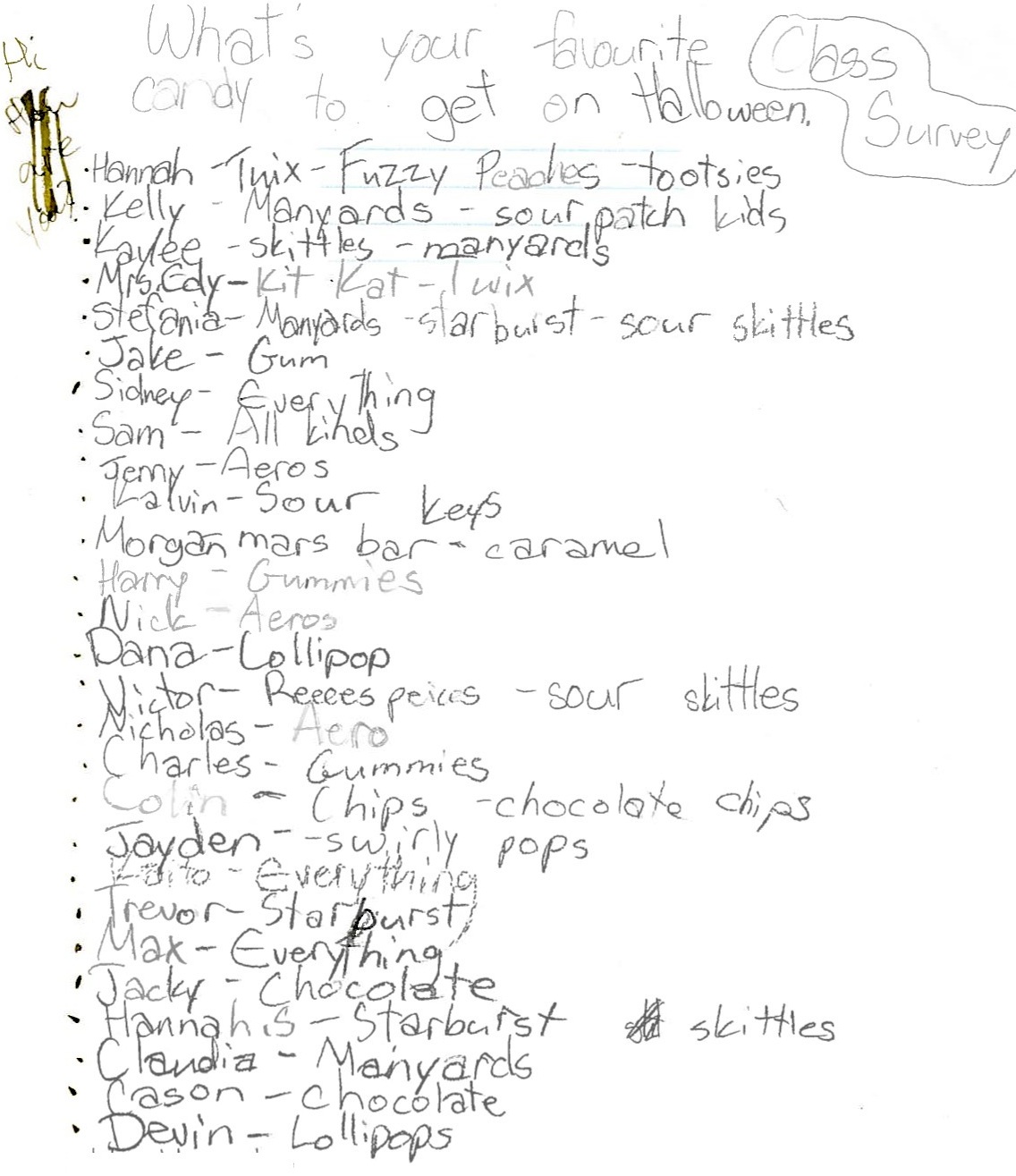
Yes, it was research with real data, collected from real children.

And not only that, it clearly laid out, in a sort of pencilly scientific table kind of way, that only a paltry third of the participants queried even bothered to single out chocolate as a preference!

Of course, we should note that these were Canadian children, so one could argue that the data is hardly what you might call trustworthy.  Nevertheless, if taken at face value, it would suggest that this Candy Hierarchy is a potentially invalid piece of work.  Or put another way, might we be witnessing a paradigm shift, perhaps?

And so, let us also apply some caution to this current Candy Hierarchy, as well as offer a plea for more children-centric candy data.   This will be good for candy, good for science, good (dare I say) for the world, and certainly good for our continued search for a TV pilot since Disney or Nickelodeon might now take note.

And please, please remember that we do this because this here is relevant stuff.  It affects the mindset of our planet, truly.  Indeed, it was only recently, that we learned that our Hierarchy has been applied to broader research programs.  Although we were not cited in this report, recent studies by Franz H. Messerli, M.D., show that those countries receiving more Nobel Prizes also eat more chocolate.  [from Chocolate Consumption, Cognitive Function, and Nobel Laureates (October 10, 2012DOI: 10.1056/NEJMon1211064), New England Journal of Medicine.]  But now in light of our new observations (albeit observations recorded with shaky handwriting and some minor spelling mistakes), we are forced to ask whether this research was performed under a chocolate bias paradigm and subsequent flawed methodology.

In conclusion, then, and as we present this year’s hierarchy, we can honestly say, without hyperbole, that this is the biggest, most significant categorization that has ever been created. Big and significant because there is so, so much at stake.  So remember, it’s not your father’s candy hierarchy.  It’s your kids. Sort of.

The hierarchy is also available in PDF format for easy printing

1. Because like, score! (Bcsizemo, 2010)

2. a.k.a. God’s Candy

3. These may be rolled to a friend.

4. Not sure if this should be included. Systematics are still on going – denomination appears to be key.

5. Appropriate ranking may depend entirely on date of purchase versus date of opening. Experts in this field often refer to this dichotomy as “fresh CCE” versus “stale CCE,” or FCCE versus SCCE (Beschizza, 2011). Note that its interior has also been described as “pustulent.” (Petersen, 2010)

6. Sometimes spousal influence forces these placements as with, ahem, this primarily southern delicacy.

7. Includes comparable Commonwealth version of “Smarties.” (Devo, Legionabstract, gadgetgirl  et al, 2011)

8. Although has also been classified as packing material (Cunning, 2010)

9. This and the Lindt one are higher quality, which makes it strange that trick-or-treaters just don’t want them.

10. Whoppers blow.

11. The authors are curious as to which neighborhoods you belong to.

12. Admittedly an outlier – like that fish you’ve seen on television. You know – the one which looks like it can breathe air and stuff.

13. Whose value comes as payoff to parents, as children do not rank this highly.

14. Still a contentious subject with a rich history of controversy. Briefly: Candy Corn, as of 2006, remained unclassified, but as of 2007 had been tentatively placed in the Upper Chewy/Upper Devonian. 2008: no sighting. In recent years, we have elected to leave in the same tier as consensus has yet to be determined.

15. The discontinued candy, not the equally rankable discontinued board game.

16. Oh smack, can you even imagine if you got Fritos?

17. Unless it’s something caramel, pronounced “caramel.”

18. By some accounts, these two are actually one and the same (Gadgetgirl, 2010)

19. Yet some would be just as well to be left off. Bit-o-Honey, for example, might be called a lower tier member, but why bother? It says to your trick-or-treaters, “Here, I don’t care, just take this.” The lesson of Bit-o-Honey is: you lose. Doorstep offers of lectures in civics, too. You’re making a social statement–“I hate you and everything you represent”– when you give these out.

20. Yes, we really meant fruit that is healthy, clean-cut upstanding fruit that takes time from its gym membership and all the demands that come with it to contribute a positive message of citizenship and camaraderie to the community.  This isn’t a typo of healthy for healthful. (see U.M.H. 2011)

21. Research has further defined this relationship. Currently, it has been suggested that Blackwing Pencils > Hugs > Creepy Hugs > Pencils. (Lobster, Prufrock451, and Warreno, 2010)

22. Unless you eat them properly. To quote Anonymous, 2010: “The trick to realizing how brilliant and delicious Now ‘n Laters are is a two step process. The first step is to carefully read the name of the candy. “Now ‘n Later.” What does it mean, you ask? Well, it implies that the candy will be different “now” (when you put it in your mouth) and at some point “later” in time. A small leap of logic takes us to the second step: be patient. You need to suck on it for a while until it softens. If you skip this step, the Now ‘n Later will be an inedible, rock-like colorful brick quite worthy of the low end of the hierarchy. But if you are patient in your candy-eating process, oh the rewards you will reap!”

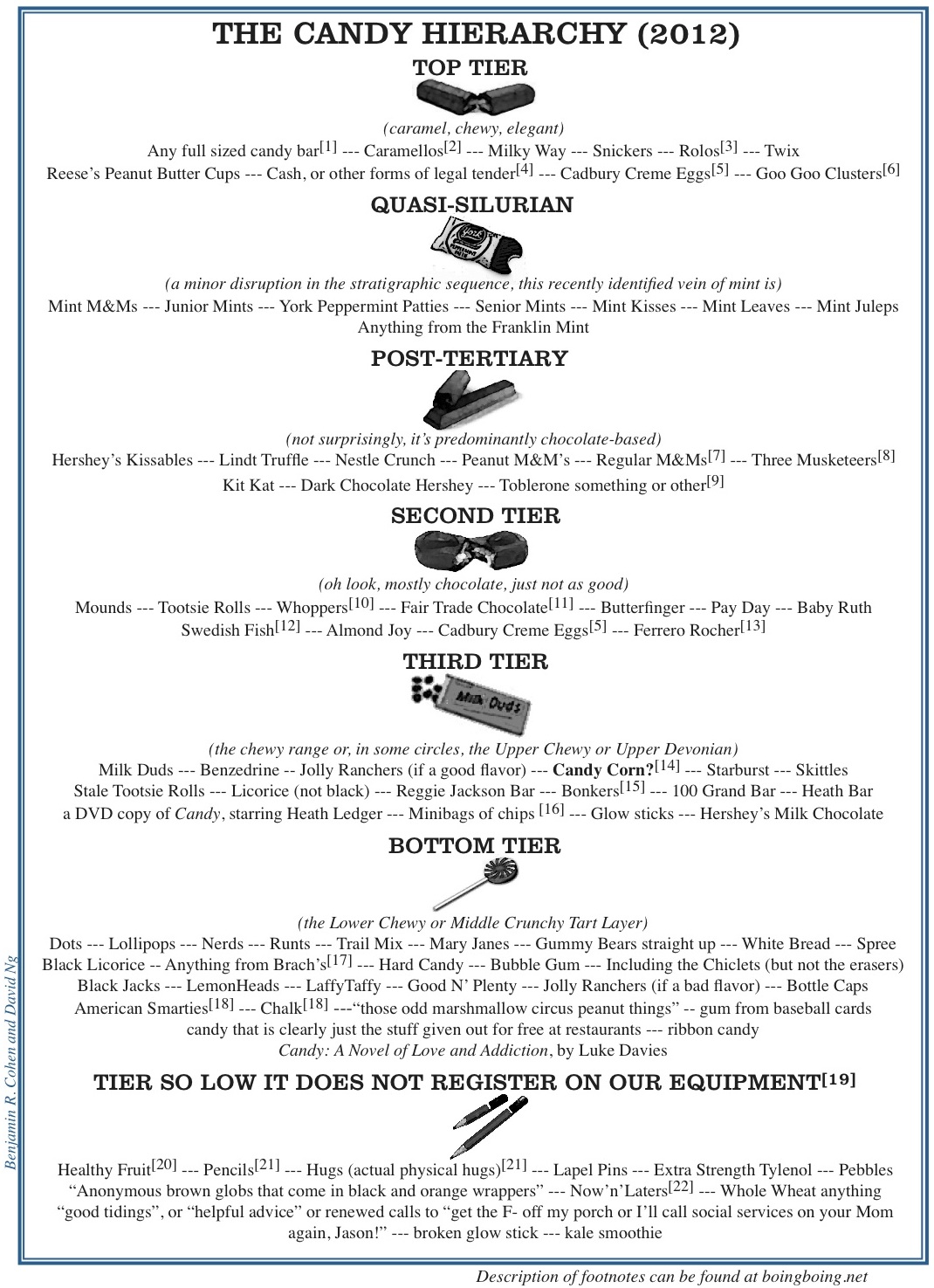
Examples of glorious peer review and also paradigm shifts. Sciencegeeks, we present the 2012 Candy Hierarchy.

If you really think this sucks, then please leave a comment here.

(Click for larger version)

Remember the Candy Hierarchy? It sure did make a lot of folks angry! Ben and I are working on the 2012 edition right now…

Here is the 2011 version (see original 2011 link for footnotes here).

Had a chance to read over 500 comments (from various places where the ranking was reposted, etc), and we’re working hard to change things accordingly (i.e. the power of peer review in action!) Stay tuned…

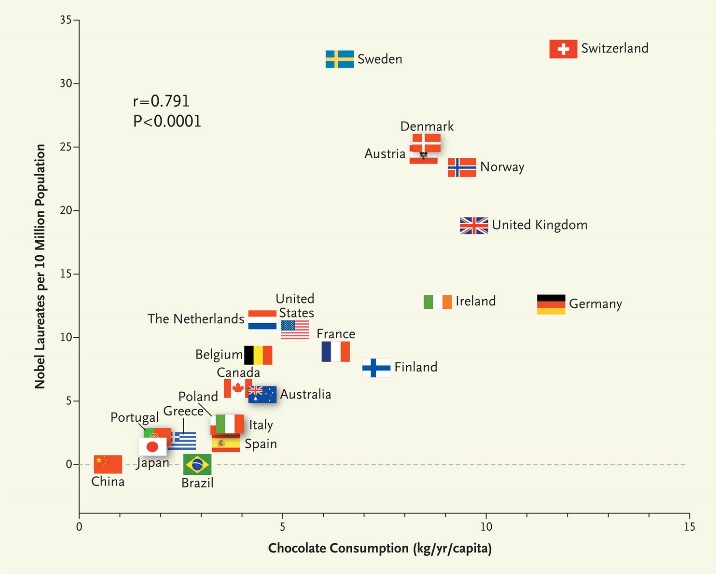
Graph: In which chocolate consumption strongly correlates with likelihood of getting a Nobel Prize.

Well… by way of the country the Nobel Laureate belongs to… (p.s. this is tongue in cheek, but good as a slide to talk about the old correlation versus causation issue)

Abstract:
“Dietary flavonoids, abundant in plant-based foods, have been shown to improve cognitive function. Specifically, a reduction in the risk of dementia, enhanced performance on some cognitive tests, and improved cognitive function in elderly patients with mild impairment have been associated with a regular intake of flavonoids. A subclass of flavonoids called flavanols, which are widely present in cocoa, green tea, red wine, and some fruits, seems to be effective in slowing down or even reversing the reductions in cognitive performance that occur with aging. Dietary flavanols have also been shown to improve endothelial function and to lower blood pressure by causing vasodilation in the peripheral vasculature and in the brain. Improved cognitive performance with the administration of a cocoa polyphenolic extract has even been reported in aged Wistar–Unilever rats.

Since chocolate consumption could hypothetically improve cognitive function not only in individuals but also in whole populations, I wondered whether there would be a correlation between a country’s level of chocolate consumption and its population’s cognitive function. To my knowledge, no data on overall national cognitive function are publicly available. Conceivably, however, the total number of Nobel laureates per capita could serve as a surrogate end point reflecting the proportion with superior cognitive function and thereby give us some measure of the overall cognitive function of a given country.”

By Franz H. Messerli, M.D. from Chocolate Consumption, Cognitive Function, and Nobel Laureates (October 10, 2012DOI: 10.1056/NEJMon1211064), via New England Journal of Medicine.

This is really quite hilarious: The Führer video re-dubbed to illustrate peer review.

Note: not appropriate for children.

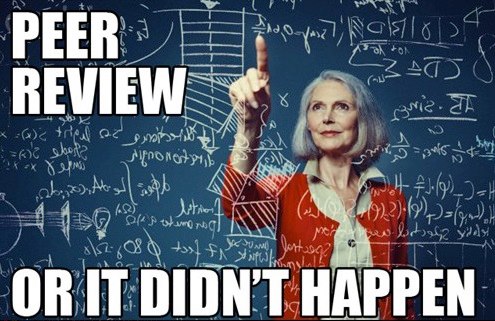
Peer Review: Or it didn’t happen… #scie113

Via IFLS.

In case you’re wondering: Lemmings are not made of cloud. (via @mwand)

Good Ole Worm (a.k.a. Olaus Wormius)

From Rocketboom, via @mwand

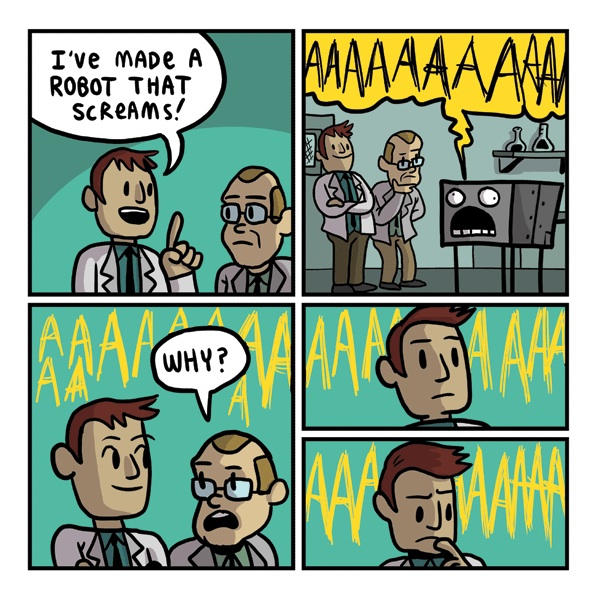
A robot that screams? Seems like an appropriate image to talk about the nuances of basic vs applied science.

By KC Green at Gunshow.

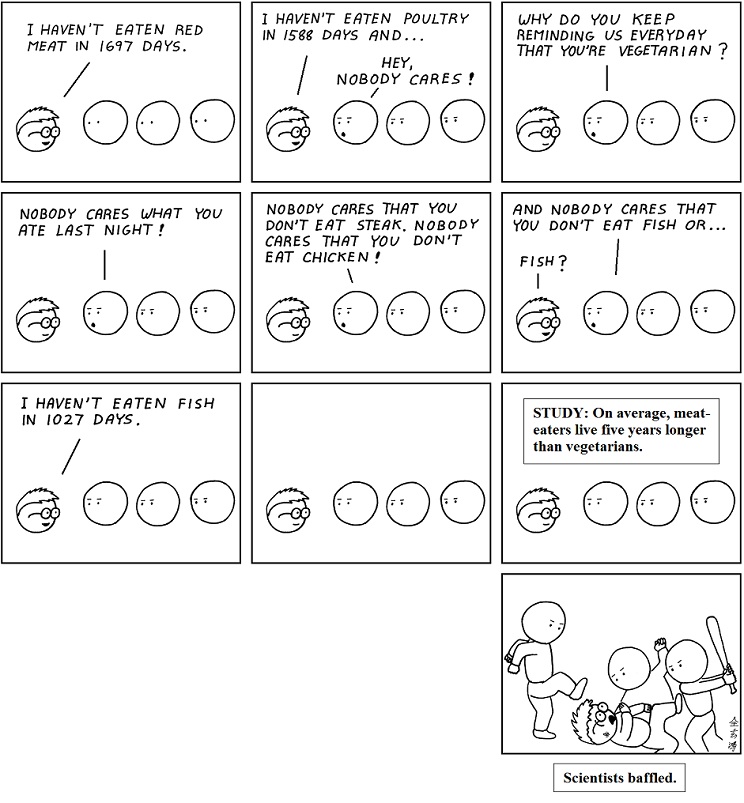
On the importance of meta-analysis and why bacon might make you live longer.

Love this, and sooo gonna use it in class to discuss the importance of meta-analysis (i.e. the reasons for a correlation aren’t always obvious, so you need to compare multiple studies which happen to provide insight into multiple variables).

From Abstruce Goose.

O.K. rate the validity of this: There are only three reasons why a man carries flowers.

I’m seeing this as a potential visual to talk about obvious and non-obvious facets of making claims, generating hypoetheses, and things you can do to test them.

By dont fret, via Hey Oscar Wilde!

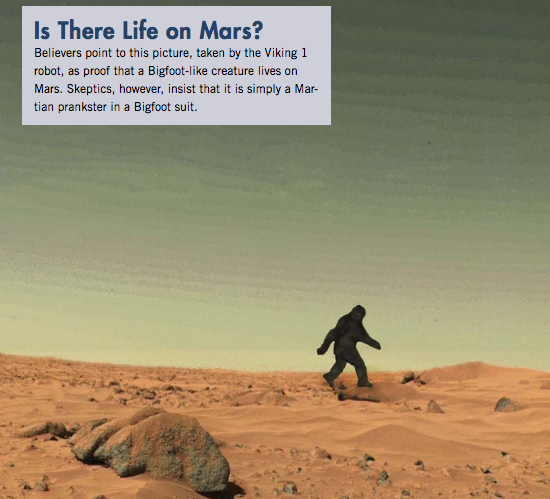
Is there life on Mars?

From the pages of Fake Science 101.

Great Quote: “Science is not a sacred cow. Science is a horse. Don’t worship it. Feed it.”

Picture taken at the California Science Center. Quote by Abba (Aubrey) Eban. Interestingly, throughout the web, this quote seems to be misattributed to a mysterious “Aubrey Eben.”

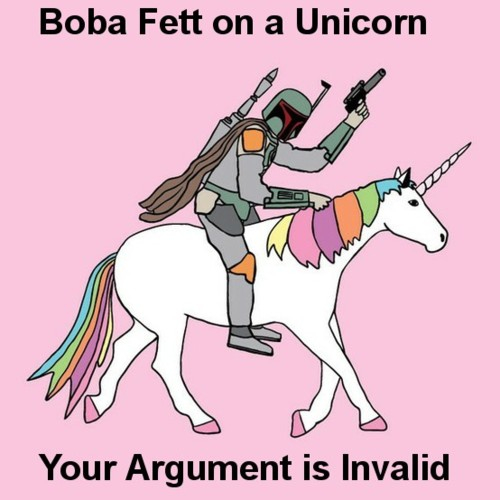
Boba Fett on a Unicorn: Your Argument is Invalid

Not sure why, but I think this is really funny. Plus, I can use it when discussing things like rhetoric, arguments, and validity.

Not sure of the source. Do let pass along if you happen to know.

A very VERY strong correlation. #funny

By Saturday Morning Breakfast Cereal.

Mother Goose and the Scientific Peer Review Process

By DAVID NG

Jack and Jill went up the hill.
To fetch a pail of water.
Jack fell down and broke his crown.
And Jill came tumbling after.

First of all, we are not sure there’s enough clarity in this text. Scientific literature, in particular, should leave little room for confusion. Where exactly did Jack fall down? Into the well? A little ways down the hill? All the way down the hill? It’s just too vague. Worst still, we’re not convinced that the science conducted is of high enough caliber. I mean really, who would be stupid enough to put a well on the top of a hill? In conclusion, we feel that this manuscript should be rejected in its current state, but are not opposed to viewing a revised version in the near future.

Twinkle twinkle little star.
How I wonder what you are.
Up above the sky so high.
Like a diamond in the sky.
Twinkle twinkle little star.
How I wonder what you are.

Initially, we were quite intrigued by your work, especially since it appeared to contain several elements that merit genuine excitement. However, it was then brought to our attention that this body of work had remarkable similarities to a previously published report (The Alphabet Song). It was upon further investigation, that our worst fear was confirmed to be true – that this manuscript constitutes an act of plagiarism. We must state that we feel this to be a serious breach of scientific ethics, and must therefore strongly decline your manuscript.

Humpty Dumpty sat on a wall.
Humpty Dumpty had a great fall.
All the King’s horses and all the King’s men.
Couldn’t put Humpty together again.

Although otherwise promising, the reviewers felt that the research in its current state is incomplete. Quite frankly, it was agreed that your principle subject needed to be put back together again. Several of the reviewers suggested courting the expertise of a mathematician who could perhaps create an appropriate algorithm to solve this problem. Alternatively, one reviewer suggested glue. As a final note, questions were also raised regarding the treatment and well being of Mr. Dumpty. Why exactly was he made to sit on the wall? And why exactly would you allow horses (of all things) to put him together again. No matter, the reviewers overall impression was that if you were able to address each and every one of these issues, they would see no problem entertaining a revised version.

Hey diddle diddle, the cat and the fiddle.
The cow jumped over the moon.
The little dog laughed, to see such a sight.
And the dish ran away with the spoon.

The reviewers felt that not enough data was presented to support your claims. For example – how many times did your group observe the cow jumping over the moon? From the text and supporting figures, it would appear that you base this conclusion on one data point as no calculations regarding standard deviations were presented. As an analytical journal of high repute, the reviewers felt that this is simply not acceptable. In addition, several of the reviewers felt that the word ‘diddle’ was inappropriate, and should have been replaced by the more scientifically correct, ‘Hey fornicate fornicate.” Because of these, and other problems, we are sorry to inform you that your manuscript has not been accepted for publication.

Rub a dub dub, three men in a tub.
And who do you think they’d be?
The butcher, the baker, the candlestick maker.
Turn’em out, knaves all three.

Thank you most kindly for allowing us to see this marvelous manuscript. We feel that it is a great privilege that you and your colleagues decided to submit it to our journal. We truly feel that it represents seminal work that could even one day lead to a Nobel prize. To be frank, we were quite surprised to receive your submission, in that we all felt it could have easily been accepted by the more high profile publications (The Nature and Science journals for instance). In any event, we are very pleased to inform you that, we, the reviewers are unanimous in our decision to accept your manuscript.

(Originally published at the Science Creative Quarterly)

“Scientists do it repeatedly” bumper sticker

From Blah3, via Fresh Photons.

Our sliver of perception: a great image to segue on the importance of perspective in science issues.

As well as the fine art of observation in the scientific method.

By Abstruse Goose.