Nice graphic of a great Einstein quote.
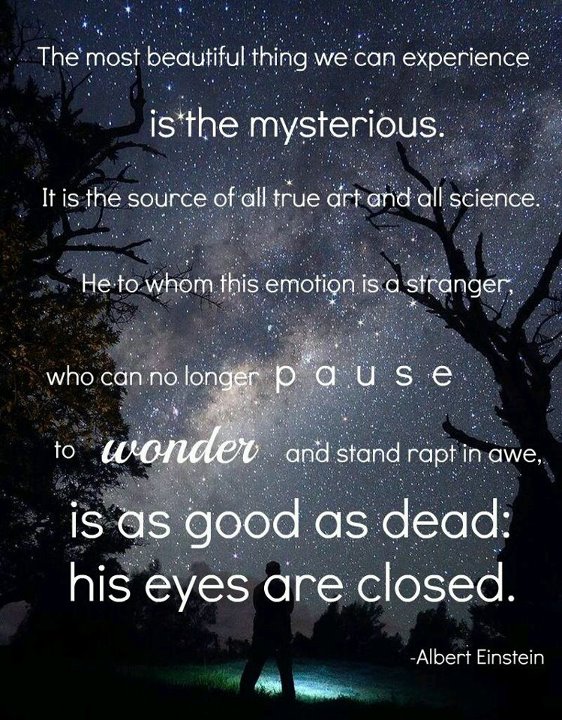
Quote by Einstein. Image source unknown.

Quote by Einstein. Image source unknown.
By DAVID NG
He makes exploitative
prime-time-television cameos
Darwin appears as the “man in need of a haircut” in an episode of Gossip Girl, and is the first contestant voted off Survivor: Galápagos. Eventually makes Barbara Walters’s list of most fascinating people of the year. Cries during interview.
He sells Darwinian fashion accessories
Darwin takes advantage of the current interest in natural fashion products. Begins marketing items like organic-cotton neckties and honey-flavored lip gloss. Darwin-sanctioned “stylish feces beads” appear soon after.
Reviews movies
Darwin becomes a staff writer at Rolling Stone. Is asked to critique animal-related movies. Loses credibility when caught gushing over Catwoman.
Hosts free holiday cruises
Moonlighting as an authority on nature and boats, Darwin takes advantage of free holiday cruises. His cruise talks are very successful and Darwin becomes the No. 1 hit when Googling the words “lido deck.”
Guest-stars on The Dog Whisperer
Memos to the effect of “He sailed on a boat called the Beagle. Isn’t a beagle a dog?” begin to circulate. Capitalizing on this attention, Darwin joins The Dog Whisperer as a dog-anatomy expert. Wins Emmy for segment on comparative dog-tail structure. In acceptance speech, cites the fact that “dog” spelled backward is “god” as evidence of a Christian conspiracy.
Joins the Ice Capades
Darwin is hired for small part in a Lion King–themed ice show. Takes skating lessons and practices hard. Soon nails both the triple axel and the triple lutz. Is fired from the show when he tests positive for performance-enhancing drugs.
Loses his mind
Darwin endorses Scientology.
Dresses up as Santa Claus during holidays
Sporting his full white beard, Darwin is hired to impersonate Santa Claus at the local mall. He initially does well in this job, looking the part, being punctual, amicable, and knowledgeable about reindeer. However, he soon begins to insist on teaching children words like “invertebrate.” He also starts giving out stylish feces beads instead of candy canes. Later, he gets in an argument with another Santa Claus in another mall over biologically sound explanations for Rudolph’s glowing nose. The “Darwin vs. Santa Claus” fistfight goes viral on YouTube.
(Originally published at McSweeney’s for Darwin’s bicentennary)
Brilliant TEDEd animation on the origins of cell theory, which also stands as a lively reminder of how wonderful science history can be.
First, for your calendar, you can note that the next one is in 2117.
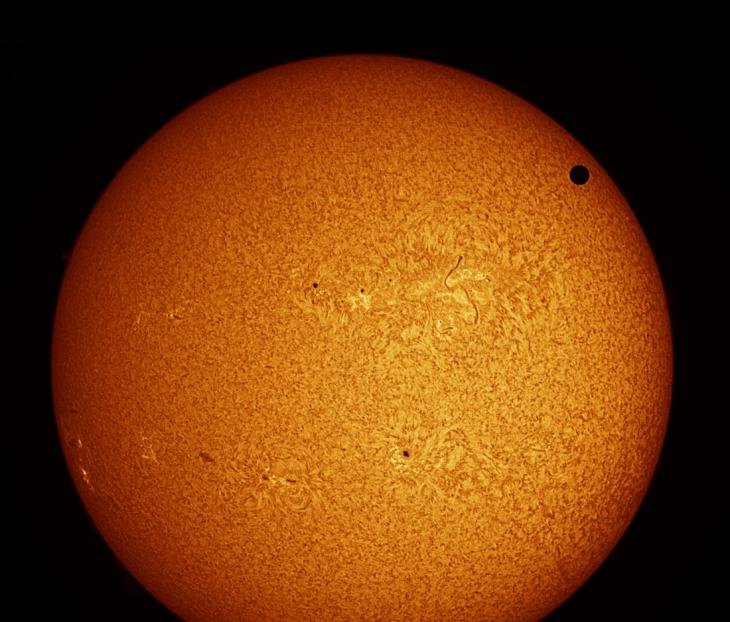
(Via spaceweather.com).
Second, read this lovely piece by Amy Shira Teitel, as she tells you why it was such a big deal yesterday (and throughout history).
Here’s a bit to whet your appetite (and in doing so, illustrates what is arguably the first example of an international scientific collaboration):
“Halley died in 1742, 19 years before he could try his method on the 1761 transit. But a host of astronomers took up the challenge in his stead. European expeditions set out to India, the East Indies, Siberia, Norway, Newfoundland, and Madagascar to get the best and most spaced out views of the event. From the whole worldwide network, more than 120 transit observations were recorded, but most were of poor quality stemming from optical problems and inexperienced observers. For the 1769 transit, more than 150 observations were recorded from Canada, Norway, California, Russia, and famously Tahiti as part of Captain James Cook’s first expedition. But the results were only marginally better.
The state of technology in the 17th century made it impossible to record the exact moments of the start and end of the transit because of the so-called black drop effect. As Venus crossing in front of the Sun, a haze obscured the planet making it impossible for astronomers to make clear observations. But even poor results are results. In 1771, French astronomer Jérôme Lalande combined the observations from the 1761 and 1769 transits and calculated that 1 AU was 95 million miles (153 kilometers) give or take a half million or so miles. It was a start, but it wasn’t the precise value astronomers had hoped for.”
By DAVID NG
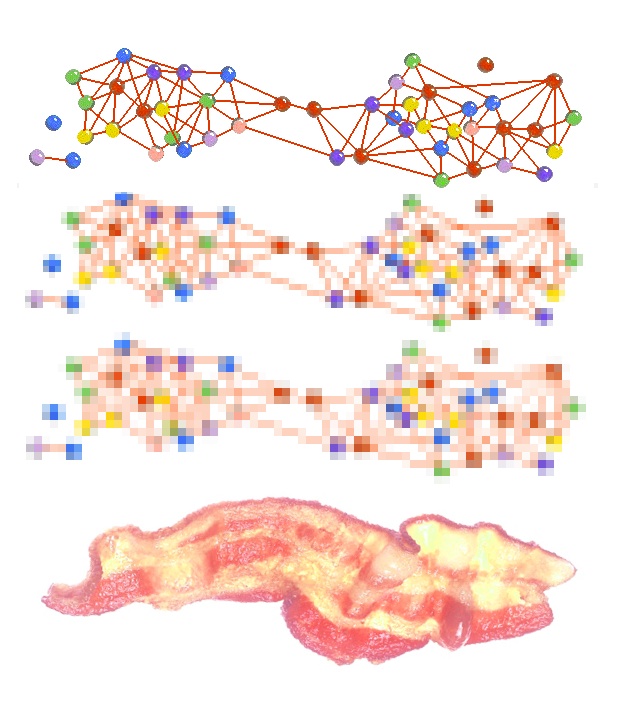
Lately, I’ve been doing a little writing on the philosophy of science, and a consequence of this, is my mind pondering the plight of Bacon. Not the food, but rather Sir Francis Bacon, who as you may or may not know, is the renown writer and gentlemen of the 16th and 17th centuries – famous for being a member of Parliament, friend to the British Monarchy, and (most important to me) often referred to as the “Father of the Scientific Method.”
Such thinking then naturally led to Kevin Bacon, who in turn, reminded me of the “Six Degrees of Kevin Bacon.” Which is also to say that inevitably, I landed at entertaining the specifics of the “Six Degrees of Sir Francis Bacon.”
This refers to the phrase, “The Six Degrees of Separation,” which submits that you are less than six “friend of a friend” steps away from everyone else on the planet. In other words, it suggests that mankind is more connected than you would think. Interestingly, this calculation has never been formally proven, and there might even be some evidence to suggest that social media has brought it down to four degrees, but despite all this technical wrangling, it is nevertheless obvious that it probably only works well if the people involved happen to be alive.
Which is to say that the “Six Degrees of Sir Francis Bacon,” a man who died in 1626, are probably all dead.
With this in mind, we need to return to the “Six Degrees of Kevin Bacon.” Whilst, this originally concerned itself with connections in the entertainment industry, the phrase nowadays is kind of symbolic of humanity’s interconnectedness. Put another way, Kevin Bacon is a little like an unofficial figurehead of this game.
But figureheads are usually transient. Indeed, the fact of the matter is that Mr. Bacon is no longer the sprightly young man that danced into our hearts in Footloose. Nor is he, despite the fact that he played an “invisible” character in Hollow Man, capable of hiding from the debilitating onward march of time. In essence, he should be fully aware that as he ages, the concept and the mathematics of the “Six Degrees of Kevin Bacon,” will no longer be practical – indeed, it will no longer even be relevant. Consequently, you might suppose that one day, there will need to be a proper discussion about a “six degrees” successor.
And why not start that discussion now? Namely, how would one decide on such a successor? Of course, this would come with a few rules. For instance, whoever is chosen should, at the very least, be younger than Kevin Bacon. Perhaps Mr. Kevin Bacon should even have a role in this process. Anyway, as I continue to procrastinate from doing whatever it is I am supposed to be doing, I’d like to put forth the following scenarios and then maybe see if the procrastinating community at large has any thoughts on the matter:
—
1. The British Monarchy model.
This is where the weight of responsibility is passed on to the first born. Furthermore, since we’re being thematic and all, this option should totally include a throne and also a crown that can be worn on special occasions. Maybe a fancy sword as well. Yes, a sword would be totally awesome – “The six degrees of so and so and his/her sword” has a nice ring to it.
—
2. The Democratic Model
Why not do this with an open election? This would certainly be entertaining to watch, and would no doubt fuel some interesting discussion. Although the mind boggles at how the nominees will be decided upon, and how exactly they would present themselves (more so, since the principle of the Six Degrees, hypothetically is meant to be immune from the nuisance of ideology).
—
3. The “So You Think You Can Dance” model.
This would be the obligatory “how can we turn this into reality TV” option. Furthermore, as Mr. Bacon, himself, is no stranger to the entertainment industry, it is perhaps the most logical model to find a successor. A dance off, moreover, would be nothing less than magical. Think of the how fun this might be, think of the spectacle, think of the press, and think of the Kevin Bacon themed So You Think You Can Dance stationary. As well, each time a successor is chosen, the theme of the next reality show could be tweaked according to the accomplishments of the new figurehead. Imagine different contests each time around, ranging from cooking to planning a wedding, to a full on Hunger Games styled competition.
—
4. The Kevin Bacon as an Eternal Deity Model (and the similar themed “Kevin Bacon Reincarnate Model”)
Let’s face it – maybe Kevin Bacon would rather keep all the glory to himself, and also keep it forever. If so, there is another option out there. Both Jesus of Nazareth and Kim Jong-il of North Korea used it. Basically, it’s where Kevin Bacon declares himself the reference point, and instead of looking for a successor, the actual number of degrees changes with time. In other words, in a few years, we can call it “The seven degrees of Kevin Bacon,” and then “The eight degrees…” and so on and so on. Alternatively, it could be like the Dalai Lama, and every time you pass on, there is a reincarnated version of you being born elsewhere. I am not sure how this would work exactly (how would we identify this reincarnated Kevin Bacon?), but it seems to me a reasonable idea. Plus, the thought of an organized religion with the word “bacon” in it has great appeal.
—
Anyway, it would be interesting to hear of any other ideas, or even better, to hear a successor suggestion or two. As well, let me just end by saying that if this all sounds a little too complicated, then let’s simplify things and just pick me. I would totally be down with being next in line – especially if I can somehow score a throne, crown and a sword out of the deal.
(Originally published at boingboing.net With apologies to Kevin Bacon and Sir Francis Bacon)

“The death of a public figure of Albert Einstein’s stature is the sort of event that, literally and figuratively, stops the presses. No scientist has been more famous, no antiwar activist’s voice has carried more conviction, no exemplar of genius has ever been as frequently invoked (albeit in language often dripping with sarcasm: “Nice going, Einstein!”) than the German-born father of modern physics. So when word came on a Monday morning in April 1955 that Einstein had died, at age 76, at New Jersey’s Princeton Hospital, the victim of an aortic aneurysm, the scramble was on to recount the story of his life and, as urgently, his death.
LIFE photographer Ralph Morse was among scores of journalists who descended on Princeton that day, hoping to find and report on something, anything, that might offer insight into what Einstein’s passing meant to his friends, family and peers as well as strangers around the world. No one but Morse, however, finagled his way into Einstein’s office. No one but Morse came away with a photograph that, six decades later, serves as a haunting reflection of both the man and his life’s work: a seemingly simple picture of Einstein’s desk, cluttered with notebooks, journals, a pipe, a tobacco tin; behind the desk a blackboard covered with equations and formulas that, to the untrained eye, possess an almost runic power.”
Photograph by Ralph Morse, via LIFE
(Do check out the link – the text above is pulled from that source, which tells the remarkable story of how Ralph managed to get this picture).
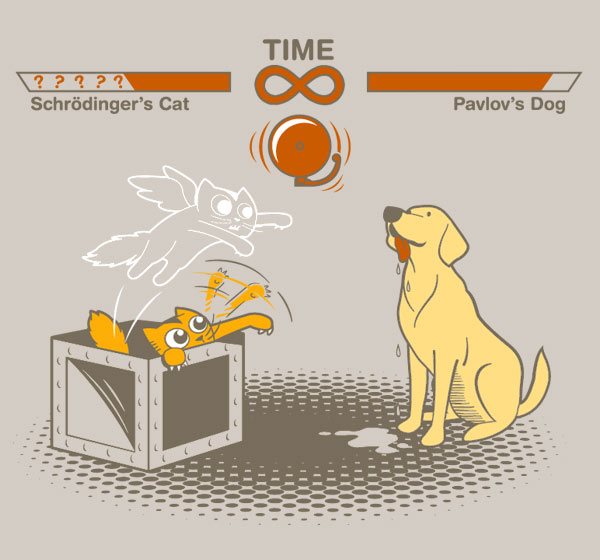
I suppose, technically, the fight is over (one way or another) once the dog takes a look at the cat…
Also available as a t-shirt – link.
I’m thinking with Tesla and Franklin, we could add Marie Curie and be well on our way to an awesome new Superheroscientist team a la Avengers.

By Travis Pitts, via Hey Oscar Wilde!

Some science trivia from wikipedia to go with this awesome picture:
“In 1750 he published a proposal for an experiment to prove that lightning is electricity by flying a kite in a storm that appeared capable of becoming a lightning storm. On May 10, 1752 Thomas-François Dalibard of France conducted Franklin’s experiment using a 40-foot (12 m)-tall iron rod instead of a kite, and he extracted electrical sparks from a cloud. On June 15 Franklin may possibly have conducted his famous kite experiment in Philadelphia, successfully extracting sparks from a cloud. Franklin’s experiment was not written up with credit until Joseph Priestley’s 1767 History and Present Status of Electricity; the evidence shows that Franklin was insulated (not in a conducting path, where he would have been in danger of electrocution). Others, such as Prof. Georg Wilhelm Richmann were indeed electrocuted during the months following Franklin’s experiment.”
Also this:
“Franklin was, along with his contemporary Leonhard Euler, the only major scientist who supported Christiaan Huygens’ wave theory of light, which was basically ignored by the rest of the scientific community. In the 18th century Newton’s corpuscular theory was held to be true; only after Young’s famous slit experiment (1803) were most scientists persuaded to believe Huygens’ theory.”
Image by Dik Pose, via Hey Oscar Wilde!
Really quite amazing if you consider how the medium needs to applied, since it grows (changes) over time.

In addition to working as a scientist, and well before his discovery of antibiotics, Fleming painted. He was a member of the Chelsea Arts Club, where he created amateurish watercolors. Less well known is that he also painted in another medium, living organisms. Fleming painted ballerinas, houses, soldiers, mothers feeding children, stick figures fighting and other scenes using bacteria. He produced these paintings by growing microbes with different natural pigments in the places where he wanted different colors. He would fill a petri dish with agar, a gelatin-like substance, and then use a wire lab tool called a loop to inoculate sections of the plate with different species. The paintings were technically very difficult to make. Fleming had to find microbes with different pigments and then time his inoculations such that the different species all matured at the same time. These works existed only as long as it took one species to grow into the others. When that happened, the lines between, say, a hat and a face were blurred; so too were the lines between art and science.
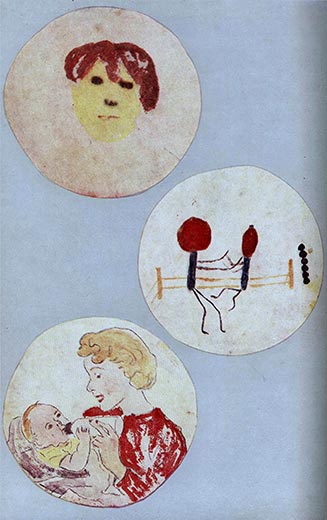
Via smithsonianmag.com.
Plus, “Science” makes an appearance! From the Futility Closet.

On the $2 note, Science presents Steam and Electricity (as children) to Commerce and Manufacture. The reverse bears portraits of Robert Fulton and Samuel Morse.

The almost impossibly glorious $5 note depicts Electricity Presenting Light to the World. She is flanked by Strength, Fame, and Peace. The New York Times wrote, “The arrangement of this composition, the grace of pose in each figure, and the idea connected with the designs of this artist entitle it to a place beside the finest allegorical designs in the world.”
Unfortunately, the Treasury got a new secretary the following year, one who favored simple, clear designs, and he canceled more than $54 million in certificates as they came into the Treasury. “It can be said authoritatively … that no more of the so-called ‘new certificates’ will be printed,” the Times reported sadly in May 1897. “Neither will fresco painters be called in to make designs for the substitutes.”
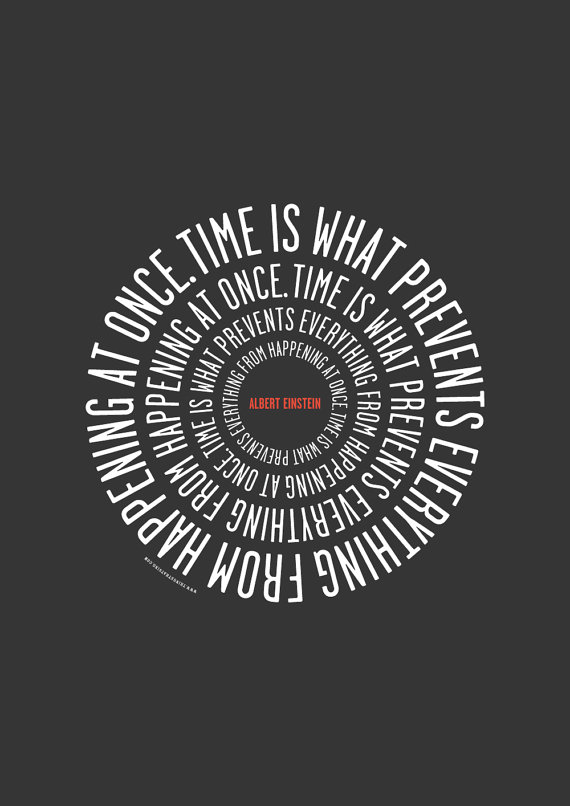
By Melissa Alaverdy , available at Etsy.
First, the real one:

The “to-do” list, translated, reads: “On the Utilities. Spectacles with case, firestick, fork, bistoury [a surgical knife], charcoal, boards, sheets of paper, chalk, white wax, forceps, pane of glass, fine-tooth bone saw, scalpel, inkhorn, penknife.
“Get hold of a skull. Nutmeg.
“Observe the holes in the substance of the brain, where there are more of less of them.
“Describe the tongue of the woodpecker and jaw of a crocodile.
“Give measurement of the dead using his finger [as a unit].
“Get your books on anatomy bound. Boots, stockings, comb, towel, shirts, shoelaces, penknife, pens, a skin for the chest, gloves, wrapping paper, charcoal.” (Guardian)
And the cartoony one (although I actually find the real one much more amusing):
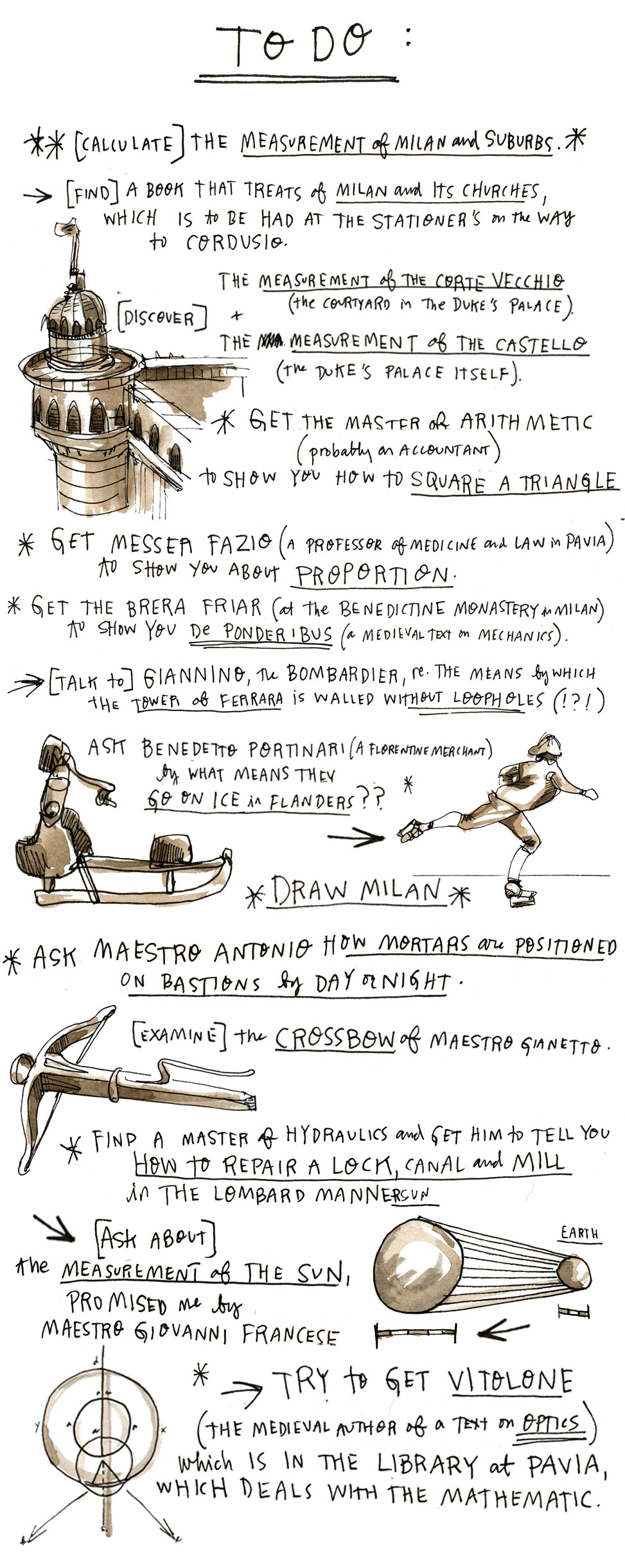
Real one via the Guardian, and the cartoon, by Wendy MacNaughton at NPR.
By DAVID NG
CRICK: Is that your Ford Escort?
ME: Yes it is.
CRICK: It’s in my parking spot. Can you move it?
ME: Yes, definitely. Sorry about that.
CRICK: No worries.
– – –
I met Dr. Crick at San Diego’s Salk Institute during a summer trip in my graduate student days – although “met” is perhaps a verb with too much significance in this case. I was actually there to touch base with some old friends of mine and was told to park in his spot since we would only be 15 minutes or so. In truth, we were en route to Anaheim, Disneyland specifically, and bumping into scientific legends was the last thing on our minds.
Dr Crick, of course, is well known for his discoveries in the world of DNA, being one of the individuals responsible for figuring out how the A, T, C and G’s of genetic code stacked up. But later in life, he took an interest into the mysteries of consciousness. In particular, he was intrigued at how the brain so quickly generates visual awareness upon viewing a scene (or something like that). It’s an interesting biological question, in that I know I’m curious to understand what goes on when you look upon the world – or perhaps in more profound instances, what happens when a child first sees the Magic Kingdom, when a soldier stares down the barrel of a gun, or when you first meet the person with whim you will, unbeknownst to you, fall in love with.
Almost the minute we parked our Ford Escort, Dr. Crick pulled up in a large stately white car, a Mercedes or a Cadillac I think. He got out, dressed I can only describe in a manner that approximated most perfectly his vehicle, and politely asked that I move. I obliged immediately.
Looking back, I often wondered what his consciousness was telling him when he saw me that day. It’s probably quite different from what my own brain was experiencing: I just thought it was cool that his license plate read “ATCG.”
From Futility Closet.
Deluged with mail after his discovery of the double helix, Francis Crick began sending a printed card in response to invitations:

The “cure your disease” part is priceless.
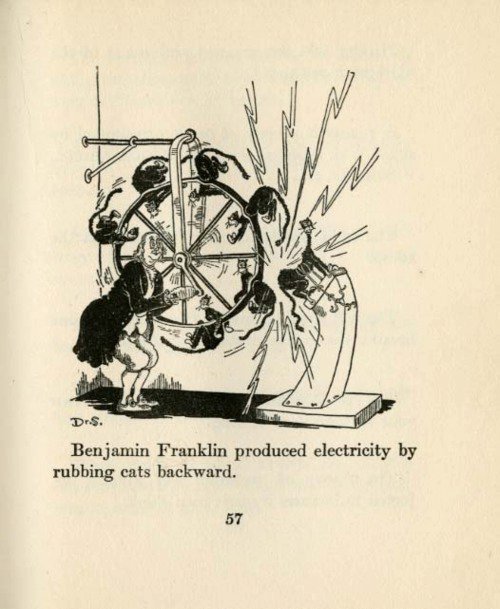
The phrase is all over the internet (and the picture is by Dr. Seuss!). Via Fresh Photons.

In reference to Nobel Laureate and founder of Quantum theory, Max Planck, and to the act of “planking,” a sort of fad. Note that Max Planck did not start the planking phenomenon.


 popperfont.net