Hello, Hello Everyone, and welcome to the Special Christmas Edition of The Sean Connery Show. I’m your host. You know, of course, me as the star of Zardoz and Dragonheart, but my friends just call me Sir Sean Connery. Thank you, thank you – please hold your applause.
On today’s Special Christmas Edition of The Sean Connery Show we have a real treat for you Yanks…it’s the First Ever U.S. Public Debate Among Candidates for the Next Director of the National Institutes of Health. Please hold your applause.
Now many of you might be thinking: Hey, wait a minute Sean, the NIH Director is an appointed position, not an elected one. But that’s what makes our field of candidates so special: these driven and committed men and women don’t let little facts like this get in their way, no, they drive around them – and that’s what makes America the great nation that it is – and that’s why I love America. Now, without any further ado, let’s meet your candidates for the next Director of the NIH.
Leia: Governor, I thought it was you, I recognized your stench.
Darth Governor: It is a pleasure to see you again, too, Professor Leia. You’re looking particularly fetching today. Perhaps you’d care to join me for a drink after I finish destroying the Foreign Languages programs.
Leia: In your dreams, Governor.
Darth Governor: Perhaps a candy cane, then? (he holds out a candy cane). Oh, I forgot your hands are tied! Too bad, maybe next time.
Leia: Release me Governor. You have no conflict with the Biological Sciences department.
Darth Governor: On the contrary, Professor Leia, you and your colleagues continue to annoy me with your incessant support for the theory of evolution.
NARRATOR: Every Who
Down in U-ville
Liked their research a lot…
But the Pinch
Who lived just North of U-ville
Most certainly, did not.
The Pinch hated Research, the whole Academic season
Now please don’t ask why. No one quite knows the reason.
It could have been the investment firms
Or maybe the banks
Perhaps the subprime loan terms
That made fools of Goldman Sachs,
But whatever the reason, or perhaps due to them all,
The result was his budget was two sizes too small.
Dr. Farrell: I used to sing a song in lab. A very special song. To cheer me up. I think have a copy of it with me. (She reaches in her pocket and pulls out a piece of paper and gives it to Annie). I had it published in the Journal of Biological Kinetics. You can use it whenever you feel sad or blue, just don’t forget to reference it properly. Why don’t you go ahead and try it now?
Annie: Should I?
Dr. Farrell: Sure, Annie, sure. Sing the bloody song, I could use the citations.
Annie: (sings, with music)
I’m gonna get grants
Tomorrow
Bet your bottom dollar
That Tomorrow
There’ll be funds…
(She sings to the tune of “It’s beginning to look a lot like Christmas)
It WAS …. beginning to look eukaryotic!
Instead of slimy goo.
The bacteria soon will grow, into a Jane or Joe
And all my Christmas dreams will soon come true.
It’s beginning to look eukaryotic!
Mutant DNA.
But the prettiest sight to see, is the human that she’ll be
At the end of the day.
GEORGINA: (enters her lab, there is no one there) Hello? Hello? Is there anybody here? Well, isn’t this a wonderful lab? Where is everybody? (shouting) Hello? Hello? (she walks around) Look at this, a bunsen burner just left on, spewing gas without a flame! (She turns off the bunsen burner) And the pH probe just hanging in the air, drying out! (She puts away the pH probe). Hello? If you’re not going to be here could you all at least turn off the bunsen burner and put away the pH probe?
(Jethro and ZuZu enter. They are Georgina’s graduate students. Jethro is a good ole boy, wears his hat backwards, talks about football most of the time, etc. ZuZu is a child of the cosmos)
PAST: I have taken the form of a Developmental Biologist, so as not to frighten you. I have come to show you your Past, Dr. Scrooge. (Explaining) You know, to show you your “Development”. Get it?
SCROOGE: Get out of my house before I call the police.
– – –
(Sorry for being a day late with this advent calendar addition. see more of Popperfont’s Sciencegeek Advent Calendar Extravanganza here)
O.K. so if there is one conference, that I want to kind of spend a disproportionate amount of time to get ready for, it would have to be this one.
Yes, this would be the vaulted Science Online 2013 conference. Last year, I kind of winged it, and still ended up: (1) doing a little performance, (2) catching up with a lot of old friends, (3) being introduced to a ton of amazing folks, and (4) starting the odd discussion that laid groundwork for a collaboration or two.
So here it is: a blog post that serves as my “this is what I want to do, and who else is coming” info station. This would also double as an introductory post for those who might be interested in some of the things I do, and maybe even want to chat with me.
Firstly, this is a picture of me (yes, I will be bringing the t-shirt along). I was also recently interviewed by Bora, so you can take a peek at that to get a sense of the sort of stuff I do. I run this lab, but in general, I’m interested in intersections between creativity and science; excellent ways to broach challenging science education logistics and/or topics (especially to audiences not that receptive to science); and (if you must know) I’m also always thinking of ways to weasel myself into one of those new Star Wars movies planned for the future (because I think I would be perfect as one of those Stormtroopers who fires his/her laser gun, a piece of technology that is presumably very advanced, and still miss the target that is only a room length away and not even moving terribly fast). And if you’d like to learn more about some of the web hijinks I’ve been involved in, or some of the “writing” I’ve done, then do feel free to peruse my pseudo (and oft neglected) portfolio site.
– – –
But on to the matter at hand: the conference runs from January 30th to February 2nd and will likely involve the most intense 70 to 80 hours of epic science discussion you can imagine. With those parameters in mind, here’s the gist of what I hope to accomplish.
This, I think, will be one of those discussions that will be both wonderful, challenging, surprising, and prone to tangential exploration (i.e. a back and forth about the variety of unconventional methods that can be used to talk science). The key question (and the prevailing tension of this topic), I suppose, is whether that tangential nature is a good thing or a bad thing – does it distract or dilute from the real translation of science, and/or if it does, is that sometimes alright.
I’m actually hoping to take in the collective wisdom of the session (as well as the conference in general) to think more seriously about this idea, primarily because it concerns the challenge of preaching outside the choir. In other words, how does one embed the notion of science culture into everyone’s self identity, whether it’s in large parts like in the case of Tom and I, or (perhaps more importantly) in smaller, nuanced but still critical ways for those who aren’t as passionate about such things, or those who blatantly resist it. As well, I want to know if this collected wisdom is something that should be described, archived, even assessed somewhere – say as a journal, book, ebook, ap, workshop, or website or whatever. I know I think so – and I hope there are others who also think so (we can, for instance, brainstorm about what this might look like, if there is interest).
Cara and Melanie – might be worth having a chat beforehand since I think your session will be tackling some similar themes, albeit dealing with a much feistier (and impertinent) element?
In terms of general science-y goodness and general networking, I want to chat with people who are really in awe of the quiet grandness and messy elegance of the scientific method, and who also want to think of interesting ways to explore it within an elementary school setting. And I’m not just talking about doing experiments (which will be done and will be awesome), but even in seeing if we can figure out the most effective, creative and engaging ways to talk to kids about weighty concepts like validity and evidence.
My end goal is to design a 1 day elementary school teacher workshop (which would possibly be later adapted to an elementary school fieldtrip program), and any insight into what ideas/exercises might be good to pursue or avoid would be very handy. In fact, hearing about examples of great programs that already exist would also be much appreciated.
Next up, I’d like to explore possible research opportunities where it would be great to gain some metrics on some of the programs my lab currently runs. This is one of the cases where funding already exists to perform the activities: but it just needs an interested party to design a research question around said activity. In particular, we have this really interesting field trip (called the Science Creative Literary Symposia) which essentially teams up a Science Graduate Student with a Creative Writing (and sometimes Visual Arts) MFA student. Here, the two of them are guided to design a days worth of activities where a classroom of 9 to 11 year olds can do some relatively fancy science experimentation (in my lab in tune with the specialty of the scientist), as well as ask them to do some expository creative writing or creative art around the experience (also in tune with the preferred genre of the writer/artist).
The intent of this fieldtrip is primarily to show that mixing these two things isn’t so strange afterall. In fact, another point to be made is that there are many similarities in these seemingly two divergent tasks, and that therefore one shouldn’t necessarily assume you can’t enjoy both. We’ve done this fieldtrip for a few years now, and I think we now have it as a well oiled machine, consistently generating great reviews from both the kids and teachers who attend. It just seems like a remarkable opportunity to design a study with the aim to query the children’s impressions around concepts of science and creativity.
Anyway, if this sounds intriguing to you (especially if you’re the type that considers the creative arts when sharing science, or if you have a background in education research), then do let me know – I know Marie-Claire and I will have a good chat about this, and I know I’m itching to release my grant writing chops for this…
Finally, I’m looking for someone who would appreciate a $5000 art grant to help host a Phylo deck. Usually folks from a Natural History Museum makes the most sense here, but I’m open to all sorts of suggestions (environmental and science education NGOs, publications could also work). Essentially, I think it would be kind of cool to initiate discussions with the formal intent of having the deck ready for the next conference in 2014 (i.e. a recurring tradition). I’m also at the beginning stages of initiating some education research around this project as well (essentially to assess its utility in terms of actually making children/players think more about biodiversity), but would love to have more involved. The idea of a hosted deck is pretty cool – they can certainly look nice, as sample cards from this deck in progress can attest to. I’ve started an exploratory tweet here, but curious if there might be others that are intrigued.
Oh, and actually, there is one more thing. I’ve sort of started on the process of writing a book, on science literacy no less: but given that my writing background tends to be a little unconventional to say the least (for example, my pieces tend to look like this, this, and this), I have to admit that the whole prospect is scaring the bejeezus out of me. Basically, it would be lovely to just chat with other science book writers, both those who are Yodas in the industry, as well as others who might also be new to the endeavour.
– – –
Now onto my homework – which isn’t really as arduous as it sounds, because Bora, Karyn and Anton have made things easy for us. Here is a list of all the interesting folks who are coming out, and then here is this large archive of great interviews of past Science Online attendees (also just found this other archive of SA Incubator’s Q&A’s). For this post, I’ve gone and edited this list of links to focus on the folks who also happen to be attending this year. So my homework (and maybe yours too), is to slowly make your way through the below list (marked with year that the interview was conducted). If you’re not here because you haven’t sent in a Q&A to Bora, then you’re also welcome to leave a comment introducing yourself at the bottom (perhaps with mention of your favorite beverage and, if you’re up to the challenge, done as a six word memoir?)
The full piece by Luke Burns is at McSweeney’s, and it’s awesome. I especially liked this bit:
Q: Are the snakes big?
A: We have lots of different snakes. The quality of your work determines which snake you will fight. The better your thesis is, the smaller the snake will be.
Since the the new movie is fast upon us, I’d thought I’d revisit the above question. This was something that Ben Cohen posed at our old blog, The World’s Fair.
Basically, he referenced a great Simpson’s episode (Marge v. the Monorail), which has the corresponding dialogue:
Marge: Homer?
Homer: Yelloh?
Marge: There’s a man here who thinks he can help you.
Homer: Batman?
Marge: No, he’s a scientist.
Homer: Batman’s a scientist.
In any event, back then (this was in 2008), we got some great responses. It would be lovely to hear some more, especially with the Batman iconography maturing so much during the last 4 years, but for now, I’ve reprinted all the responses we were able to get the first time around.
The World’s Fair (Dave Ng Ed Note: a.k.a my response)
I’m gonna go out on a limb here, and suggest that Batman is (amongst other things) a “bat scientist.” This, I think, would make him a chiropterist, since Bats belong to the family Chiroptera (greek for “hand-wing”). I can imagine Mr. Wayne going to his fancy cocktail parties and providing all manner of banter and trivia on bats, all the while chuckling to himself and thinking, “the fools.” Anyway, whatever discipline he falls under, at the very least he could do with some counseling – that dude has issues.
Note: There’s actually a North American Symposium on Bat Research in North Carolina coming up in October. Maybe, Mr. Wayne is a keynote?
Discovering Biology in a Digital World
Holy Moly! What kind of scientist are you, Batman? This important question, posed by Benjamin Cohen of The World’s Fair, is one that cannot be ignored. And, most importantly, can be quickly answered…. (more)
Adventures in Ethics and Science
“That’s Dr. Batman to you, evil doer!” Ben at The World’s Fair asks what kind of scientist Batman is. (Of course, he does this after producing something like reliable testimony that Batman is a scientist to begin with.) Sandra Porter makes the case that he’s a geneticist,… (more)
Pharyngula
The “What kind of scientist is Batman” problem. This new strange question is sweeping the scienceblogs: “what kind of scientist is Batman?” The answer is obvious…. (more)
Respectful Insolence
Batman’s no scientist.
Now Reed Richards, there’s a scientist.
Uncertain Principles
Ask a ScienceBlogger: Cartoon Edition What sort of scientist is Batman? (more)
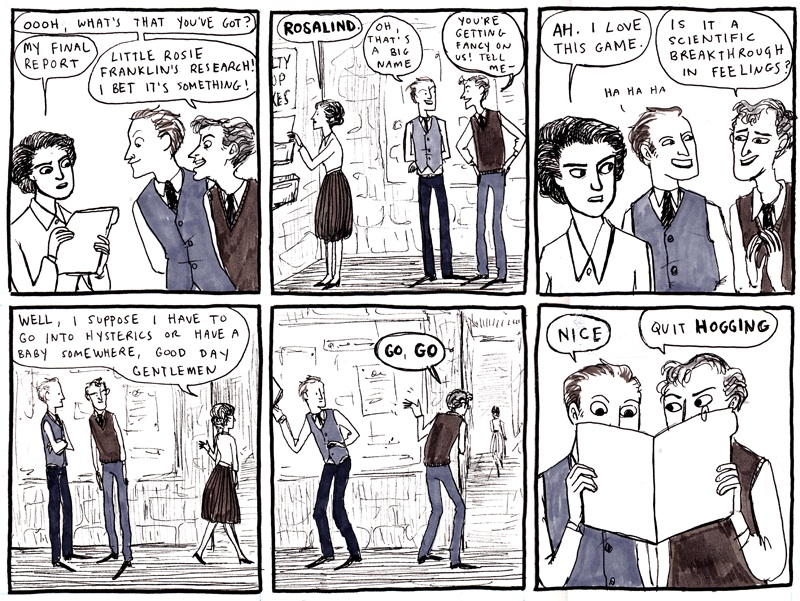
“The trouble with reading about a given woman’s history who was born before your mom is that sometimes, they were hilarious, powerful, tough, loud, et cetera et cetera all good comic making material! But then sometimes, man, the main thing about them is that they just got screwed, big time. I think when I read about Rosalind Franklin, or Mary Anning, or whoever, of just how shitty stealing someone else’s ideas really is. If I opened a newspaper and saw my comic in it signed by some random dude who was getting paid for it, I’d lose my cool! Dear readers, I would have an undignified tantrum. Wouldn’t you?” Kate Beaton
I know an omen when I see one, and it needn’t even involve a two-headed goat. As a scientist with a background in cancer research, the revelation I’m referring to is a bit of homework I did on the average yearly amount of money spent on programming by your television networks (about $1.5 billion). A number which strangely mirrors the average amount of money given last year to each of the 18 institutes within the National Institutes of Health, an organization that is the U.S.’s backbone of publicly driven medical research. Clearly, this is a call to merge the two enterprises together. So in the interest of public health, and given the pervasiveness of reality TV, I wish to expound to you four possible examples that demonstrate the feasibility of this union.
i. Real Science, Real People:
In the early 90s, studies were conducted whereby a single male mouse was presented with a plethora of different female mice. What was discovered was that the most desirable females had immune system genes that were most distinct from the male suitor. In other words, the female picked had a particular genetic background. Such a mechanism of mate selection would please Darwin since the offspring produced would inadvertently benefit from the most diverse, or most advantageous, immune system. More pressing, however, is the question of whether this decidedly unromantic notion pertains to mate choice in humans? Fortunately, we can now answer this question by asking the participants of programs like The Bachelor or The Bachelorette to provide a blood sample along with their video profile. This way, research can finally circumvent the sticky ethics of conducting such experiments on humans. On the plus side, this research opportunity should also generate its own built-in funding infrastructure as it can be easily applied to beat Vegas odds.
ii. Save Money:
Currently, every drug used for medicinal purposes in the United States needs to navigate through the strict and often precarious guidelines imposed by the Food and Drug Administration. This is an extremely long and expensive process, averaging 15 years and upward of $300 million in financing from discovery to product. Inevitably, most of this arduous process is due to the proper design and delivery of human clinical trials that examine drug efficacy and safety. Why not incorporate these trials into television shows like Fear Factor or Survivor? If contestants are willing to drink the seminal fluids of cattle or eat squirming maggots the size of your thumb, wouldn’t these same individuals revel in an opportunity to eat untested drugs? We could even have a “totally untested” and a safer “well, the mice survived” version of the same contest! In any event, millions of dollars would be saved.
iii. Promote Technology Development:
Medical research is largely driven these days by the ingenious design of equipment that can do new things or do old things better, faster, bigger, cheaper, safer. This to me is an invitation to incorporate medical technology development into reality TV. Why can’t Junkyard Wars showcase a competition to build the fastest DNA sequencer. Or viewers watch an episode of BattleBots that pits equipment used for insulin production. If Extreme Home Makeover can build a whole new environment in seven days, then why can’t you “fix that genetic mutation” in the same seven days. It’s no surprise that ingenuity often percolates under tough situations, and I can think of no tougher than a scenario where contestants only have 48 hours and a $1000 budget to meet their objective.
iv. Fostering Interest in Science Careers:
If we can have programming that features Donald Trump searching for a skilled apprentice, why can’t we use the same template to attract top graduate students. It should be simple enough to invite a feisty Nobel Laureate with an ego big enough to oversee the process. Just think of the entertainment value generated by having a team of young researchers told “Your project is to work together and come up with a cure for cancer in three days. And don’t forget—if you fail, you will meet me in the seminar room where somebody will be fired!” I mean, really—this stuff sells itself!
To conclude, I hope these four simple examples illustrate the opportunity at stake. It would be a great shame to not utilize these two great charges for the benefit of all. Now if we can only get the Food Network on board—maybe an episode of The Iron Chef with two-headed goats as the special ingredient?
“We currently have room in the lab for more graduate students.
But before you apply to this lab or any other, there are a few things to keep in mind. First, be realistic about graduate school. Graduate school in biology is not a sure path to success. Many students assume that they will eventually get a job just like their advisor’s. However, the average professor at a research university has three students at a time for about 5 years each. So, over a career of 30 years, this professor has about 18 students. Since the total number of positions has been pretty constant, these 18 people are competing for one spot. So go to grad school assuming that you might not end up at a research university, but instead a teaching college, or a government or industry job. All of these are great jobs, but it’s important to think of all this before you go to school.
Second, choose your advisor wisely. Not only does this person potentially have total control over your graduate career for five or more years, but he/she will also be writing recommendation letters for you for another 5-10 years after that. Also, your advisor will shadow you for the rest of your life. People will always think of you as so-and-so’s student and assume that you two are somewhat alike. Finally, in many ways you will turn into your advisor. Advisors teach very little, but instead provide a role model. Consciously and unconsciously, you will imitate your advisor. You may find this hard to believe now, but fifteen years from now, when you find yourself lining up the tools in your lab cabinets just like your advisor did, you’ll see. My student Alison once said that choosing an advisor is like choosing a spouse after one date. Find out all you can on this date.
Finally, have your fun now. Five years is a long time when you are 23 years old. By the end of graduate school, you will be older, slower, and possibly married and/or a parent. So if you always wanted to walk across Nepal, do it now. Also, do not go to a high-powered lab that you hate assuming that this will promise you long-term happiness. Deferred gratification has its limits. Do something that you have passion for, work in a lab you like, in a place you like, before life starts throwing its many curve balls. Your career will mostly take care of itself, but you can’t get your youth back.
If, after reading this, you want to apply to this lab, we would love to hear from you.”



 Firstly, I’ll be co-moderating a session with
  In terms of general science-y goodness and general networking, I want to chat with people who are really in awe of the quiet grandness and messy elegance of the scientific method, and who also want to think of interesting ways to explore it within an elementary school setting. And I’m not just talking about doing experiments (which will be done and will be awesome), but even in seeing if we can figure out the most effective, creative and engaging ways to talk to kids about weighty concepts like validity and evidence.
 Next up, I’d like to explore possible research opportunities where it would be great to gain some metrics on some of the programs my lab currently runs. This is one of the cases where funding already exists to perform the activities: but it just needs an interested party to design a research question around said activity. In particular, we have this really interesting field trip (called the
  Finally, I’m looking for someone who would appreciate a $5000 art grant to help host a
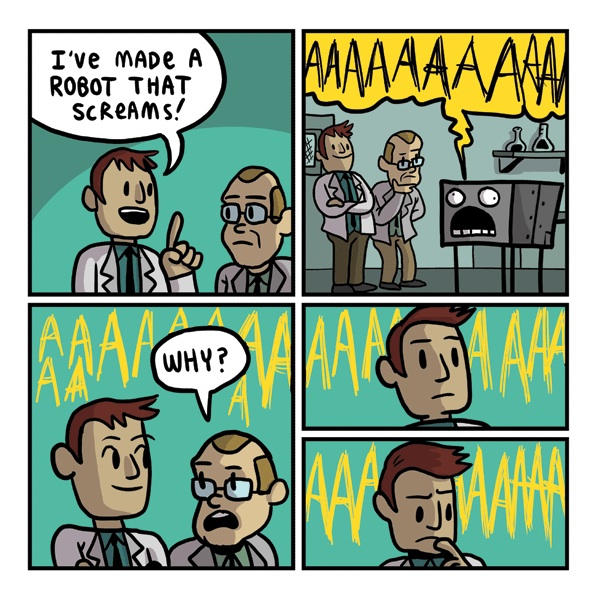
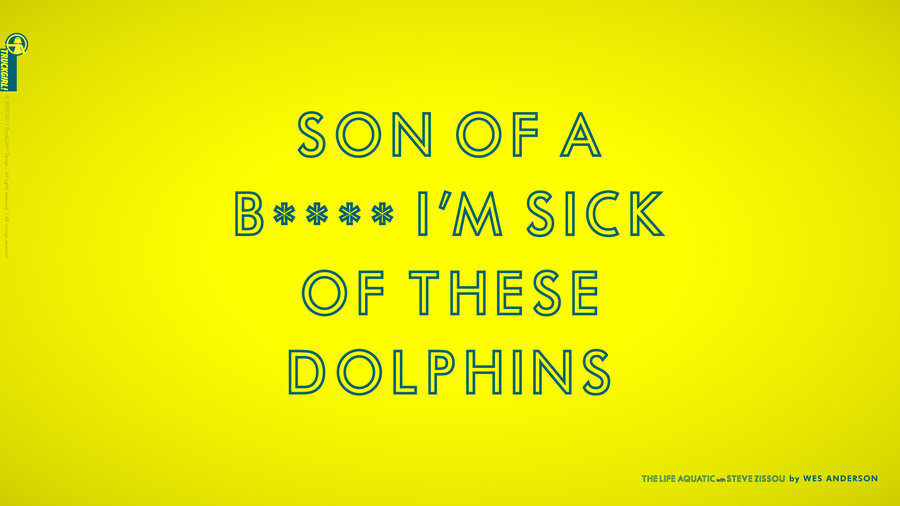
  Oh, and actually, there is one more thing. I’ve sort of started on the process of writing a book, on science literacy no less: but given that my writing background tends to be a little unconventional to say the least (for example, my pieces tend to look like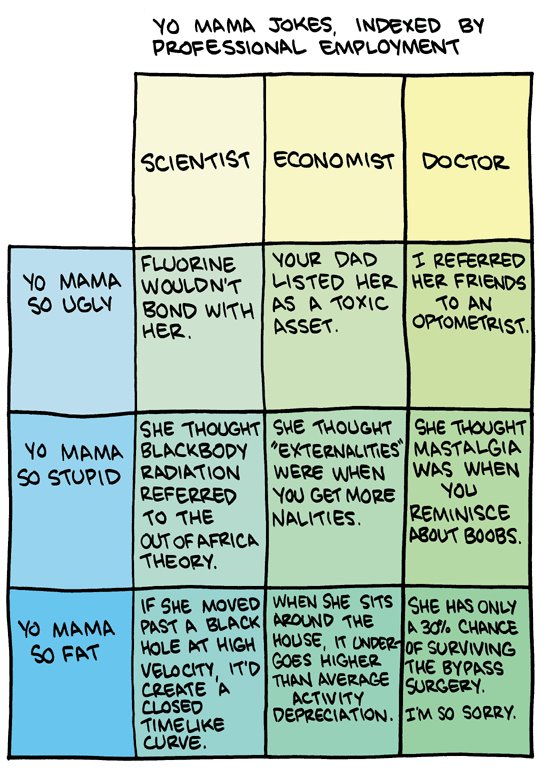








 popperfont.net