Beautiful White Sea Coral art made from tiny holes. #pretty

By Anatoly Vorobyev (and available at Etsy).

By Anatoly Vorobyev (and available at Etsy).
By DAVID NG
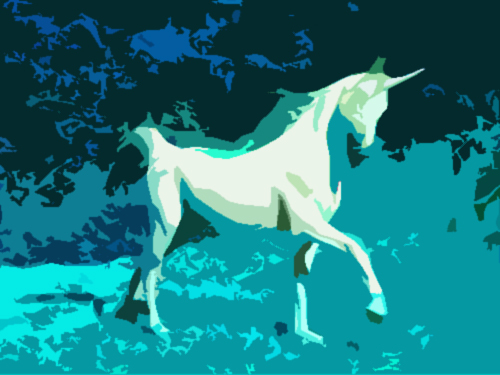
Unicorns are great. Seriously.
And here I’m going to think out loud and think of them in a conventional biology sort of way. You know – have a little fun evolution wise.
In many respects (except for the magical powers bit) I don’t think this is necessarily too hard to do. i.e. you have something that looks like a horse, but hey what’s this – there’s also a horn there.
I guess the question I’m pondering is whether a unicorn could occur from a realistic evolutionary biology point of view – you know, given the right circumstances and the right timescale. And if so, exactly what sort of things, biologically and genetically, would need to happen?
Anyway, here’s a couple options to sift through.
One possible way to get the whole horn thing started on a poor horse is through a condition known as “cutaneous horn” formation. In this situation, you essentially have an abnormal, sometimes cancerous growth, that results in a keratin structure protruding from the skin.
(Here’s a picture of a cutaneous horn – it’s kind of ugly)
“Cutaneous horns usually arise on sun-exposed skin but can occur even in sun-protected areas. The hyperkeratosis that results in horn formation develops over the surface of a hyperproliferative lesion. Most often, this is a benign verruca or seborrheic keratosis; or it could be a premalignant actinic keratosis. A malignancy has been reported at the base of a cutaneous horn in up to 20% of lesions. More than half of all cutaneous horns are benign.Benign lesions associated with cutaneous horns include angiokeratoma, angioma, benign lichenoid keratosis, cutaneous leishmaniasis, dermatofibroma, discoid lupus, infundibular cyst, epidermal nevus, epidermolytic acanthoma, fibroma, granular cell tumor, inverted follicular keratosis, keratotic and micaceous pseudoepitheliomatous balanitis, organoid nevus, prurigo nodularis, pyogenic granuloma, sebaceous adenoma, seborrheic keratosis, trichilemmoma, and verruca vulgaris. Lesions with premalignant or malignant potential that may give rise to cutaneous horns include adenoacanthoma, actinic keratosis, arsenical keratosis, basal cell carcinoma, Bowen’s disease, Kaposi sarcoma, keratoacanthoma, Paget’s disease, renal cell carcinoma, sebaceous carcinoma, solar keratosis, and squamous cell carcinoma.” (From eMedicine)
So you have something producing horn-like features, and whilst not exactly common, is still within the realm of possibility.
However, this possibility of unicorn evolution is kind of weak, because often the base of the “horn” structure is not at all stable, and in fact it looks like these horn structures can often be quite easily removed surgically. As well, this is not really a heritable trait in the usual sense – i.e. normally these structures are formed due to abnormal growth coming from a one cell, possibly mutated from exposure to a some mutagen (the sun is often sited for example). In other words, whilst susceptibility to the abnormal growth is likely genetic, the act of it always occuring on the horses head is less so (or something like that).
In other words, let’s move on.
One thing I can say is that it’s interesting to note that both the horse ((Equus ferus caballus) and the rhino (Rhinocerotidae) both belong to the Perissodactyla order, also often termed the odd-toed ungulates. This suggests that in the grand scheme of things, these two types of creatures are not so far apart. Whilst obviously interbreeding isn’t an option (since the species barrier would presumably be more than sufficient to disallow the formation, as well as the propagation, of hybrids unicorn like rhino-horses), it does present the idea that however the horn formed on the rhino, this could still be in the realm of reality with something like a horse.
Which actually makes all the more sense when you look through a paper published in the Journal of Morphology in 2006, which did CT scanning of rhinoceros’ horns to get a better sense of their anatomy. Here, the suggestion is that the horn of rhinos are markedly different from a horn of, say, a sheep. Specifically:
“The horns of most animals have a bony core covered by a thin sheath of keratin, the same substance as hair and nails. Rhino horns are unique, however, because they are composed entirely of keratin.”
This might fit a little with the “cutaneous horn” angle, but then another observation came about from the CT scans. The lead authors goes on to say that:
“The horns most closely resemble the structure of horses’ hoofs, turtle beaks and cockatoo bills. This might be related to the strength of these materials, although more research is needed in this area.”
And this nugget of information brings up a delicious possibility.
That is – maybe a unicorn could develop initially from a mutation within a hox gene, resulting in a hoof like structure coming out of the animal’s head. And in case, you’re wondering what a hox gene is all about, it’s essentially:
(From wiki) “A group of related genes that specify the anterior-posterior axis and segment identity of metazoan organisms during early embryonic development. These genes are critical for the proper number and placement of embryonic segment structures (such as legs, antennae, and eyes).”
In plain speak, this simply means that the hox family of genes are the grand controllers of body architecture – as in your arms go here, your head here, and this is about right for your big toes. In other words, for our unicorn, we really just need a mutational event where something meant to be coming out at the limbs is inadvertently coming out of the wrong part of the general body plan.
Classic examples of hox mutants occur in fly embryogenesis, and here are two of many examples of mutations that result in something along the lines of a foot/leg like structure coming out of the head area.
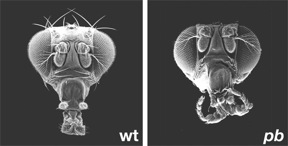
This is an image of a fly with a mutated proboscipedia gene: basically the labium develops into a pair of legs (image link)
Here’s another:
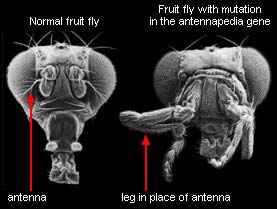
All to say that I’m wondering if the hox idea might actually have some (pardon the pun) legs to it.
Of course, even so, the hox idea would only be part of the story. Natural selection and the whole epic time scale stuff would still need to do its thing. Here, I must admit that I am curious to see what readers would think are the best environmental conditions (serious and funny ones) to produce the right selecting pressures for unicorn morphology. Maybe a few suggestions in the comments section would be cool?
And what about those magical powers? Well, how about we let the Intelligent Design folks debate over that one…
I’ll be playtesting some Phylomon decks today. Come out anyway – it’s a lovely day and there’s lots of cool things to see in and out by the museum today. See below.

Saturday, May 12, 2012 | 11 am – 3 pm
Courtyard adjacent to Beaty Biodiversity Museum
Science Rendezvous is an annual nationwide celebration of science. UBC is joining the celebration for the first time this year, and during this free, family-friendly event we will be revealing exciting experiments and riveting research through hands-on activities, interactive presentations, and exclusive tours of UBC’s research facilities. This year we are “Celebrating our Natural World”, and we invite you to join us to:
· Explore the physics of energy consumption while experimenting with hydrogen powered model cars and other economical ingenuity.
· Go on a fossil excavation and discover ancient animals and other geological wonders.
· Test out a new set of Phylo game cards made especially for UBC’s Beaty Biodiversity Museum. <- That's me!
· Expose the secret chemistry of invisible ink.
· Get the chance to peek behind the scenes at a Marine Biology Research Lab and see some interesting invertebrates.
· Sink some seeds into a soily splat and bring some urban agriculture home.
· Be a DNA Detective and discover the meaning behind this miraculous molecule.
· Make some noise and search for the science of sound waves.
· Bring out your Junior Scientist for some knee-high knowledge
· And more!
The Beaty Biodiversity Museum will also be offering 50% off regular admission* so this is a great time to come and explore!
* Offer cannot be combined with any other special offers; it excludes group rates and UBC Museum and Garden Pass.
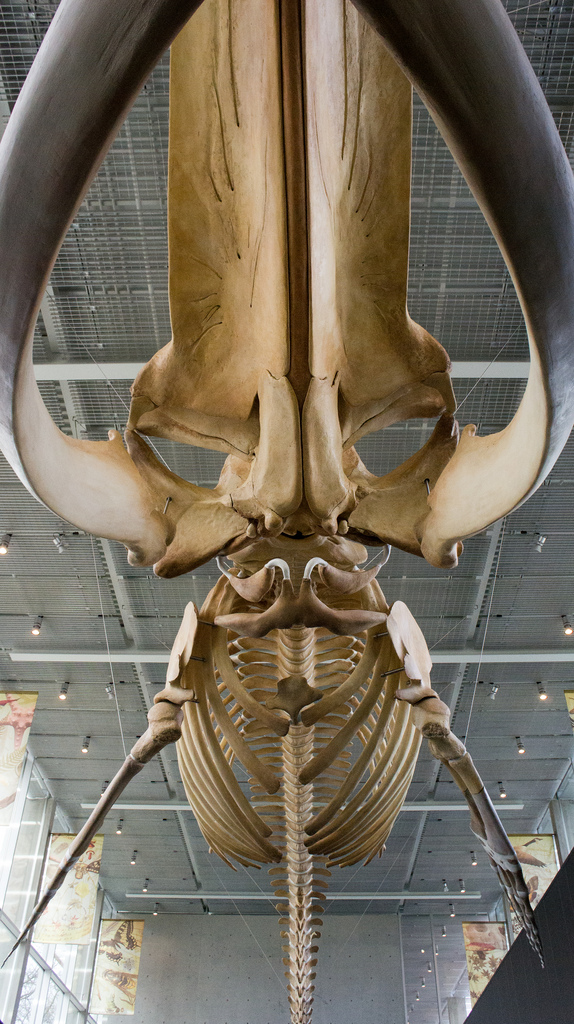
Top image by Artiom Shostak, bottom by Sonson.
Once again, we have evidence that LEGO is the supreme winner of all toys!
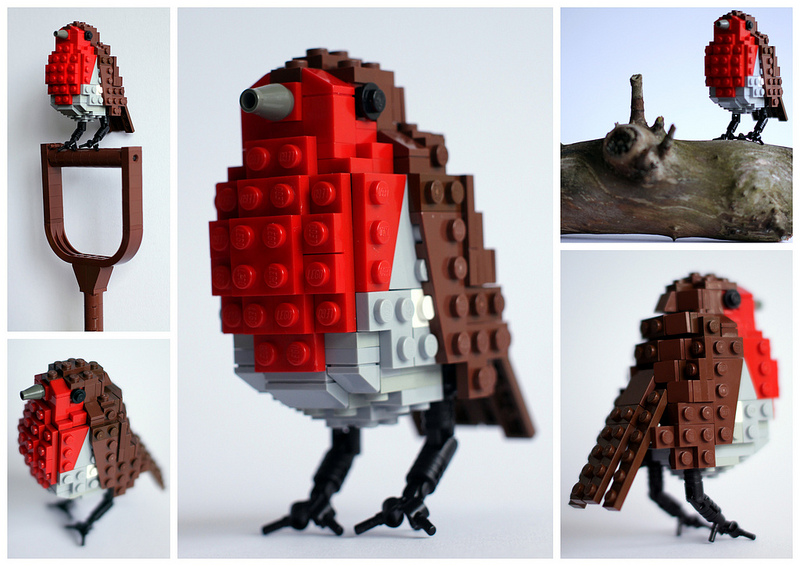

By DeTomaso Pantera, via Colossal.
Great turn of phrase.
Not sure on the validity of the numbers (haven’t check the papers involved), but I am certain that the scope of homosexuality in the animal kingdom is fairly wide and the sentiment of this statement is spot on – although nevermind it also being enlightening and really a sad commentary on our own species.

See this wiki entry for details on this, as well as this comprehensive list of species.
Technically known as Acraga coa, and first characterized by William Schaus in 1892. I can only imagine him stumbling upon one of these – I wonder what the vernacular of the day was for “Holy Sh*t!”

As well, this is the cristal stage before it grows up to be a moth. Which, apparently, means it will one day look like this:

Caterpillar image via Project Noah. Moth image by David Brownwell, via Whatisthatbug. Also via boingboing.net.
Check out the website here.
So awesome…

This here being the one fictional Phylomon card in the deck. Go here to see it or print it out.
(Originally published at Boingboing.net in 2010, a few months before the actual Nagoya COP10 conference. It’s also a general primer on how the United Nations do these sorts of things)
By DAVID NG

Image: Nagoya Congress Center plus Millenium Falcon reworked from original photo byPaula Pedrosa. link.
So what is up with this Nagoya thing? Well, it’s a big international meeting that is happening in Nagoya’s Congress Centre (see the picture above), starting on October 18th and lasting until the 29th. No doubt, you weren’t necessarily lured into finding out more by the conference’s bouncy theme song. You certainly weren’t intrigued by the reams ofofficial documents, frequently released, yet all stoically written.
The problem is, is that there is a lot of jargon in how all these meetings go down. You have a “Conference of the Parties” (or COP), you have “Conventions,” and you have “Secretariats.” I chose not to mention the “Subsidiary Body” part, because I believe that would have formally made the previous sentence the most boring in the universe. And as if that wasn’t bad enough, a lot of these documents have been written in a painful policy speak/legalese type of language, seemingly in an effort to make readers endorse the extinction of the writers responsible. Worse still, Nagoya isn’t getting a ton of media coverage, and that means you don’t tend to have needed public commentary like you did with similar recent outings (for instance, Copenhagen comes to mind).
Lucky for us, there seems to be a lot of similarities between these United Nations’ affairs and how planetary politics appear to be run in the world of Star Wars. In any event, the similarities are good enough to warrant having a go at bridging the two. This might be simplifying things a bit, but the analogy would basically work a little like this…
Convention (and specifically the Convention on Biological Diversity): I’ll write more on this later, but the CBD is what all the fuss in Nagoya will be about. It’s essentially an international agreement currently supported by a whole bunch of countries, which is basically up for review as well as a reboot. Also, because it’s classified as a “Convention” this agreement is bound by international law. It’s not like participating in a vote where the majority wins – you’re either in or you’re out. The goal, of course, is to come up with a document that everyone, or at least, almost everyone, is good with – understandably, not an easy thing to do. In Star Wars, this would be analogous to some sort of galactic treaty being mulled over (except that obviously the words galactic treaty are way cooler thanconvention).
Conference of the Parties (COP): This is a collective term for all the countries who are technically already “on board” with the Convention – this has a variety of meanings including the act of signing the convention, and then managing to get your national governments to back it up (this would technically be called “ratifying” the convention). In all, there are currently 193 countries who are in the Conference of the Parties.” In Star Wars terms, the COP would be analogous to all of the members of the Galactic Republic who have agreed to follow the laws bound to said galactic treaty.
Secretariat: In UN affairs, the term Secretariat more or less refers to a smaller group of individuals who comprise the administrative core of a particular department or convention. This sounds very close in structure to the role of the Galactic Senate. You might also remember that in Star wars, there was a Supreme Chancellor, who headed this Secretariat. In the CBD’s case, this would be the Executive-Secretary, a fellow by the name of Ahmed Djoghlaf.
Nagoya-COP10? In Star Wars, the movies anyway, a lot of the political stuff happens in that great big black room with all of the fancy floating balconies. This was the Senate Building on the planet Coruscant, which to me, is a little like the General Assembly hall in the United Nations New York headquarters. However, for these sorts of Convention meetings, (this being the tenth one for this particular COP – hence it being called “COP10”), they tend to get held in big conference centers, and in suspiciously nice locales. In other words, for our Star Wars analogy, the members of the Galactic Republic involved in the treaty probably wouldn’t meet in Coruscant: instead, they would find another host planet. As well, it would be unlikely for such an analogous meeting to be held at a place like Hoth(too cold) or Tatooine (too dusty), but rather a planet like Alderaan (before it was destroyed anyway) or Naboo, since both are apparently beautiful.
SBSTTA: Of course, throughout all of this, you’re probably wondering where the Jedi fit in. In Star Wars, members of the Jedi Order were essentially “keepers of the peace in the Republic.” Furthermore, the Jedi Council was often key in providing objective information and advice. This means that they were valued for being a source of knowledge and wisdom, and also a sort of a police force to ensure that folks follow the laws of the treaty. In our Convention on Biological Diversity context, there is something known as the SBSTTA (which unfortunately is not a droid name but a busy mess of an acronym for “Subsidiary Body on Scientific, Technical and Technological Advice.”) This, I guess, can be thought of as a group of “Jedi except without lightsabers plus no cool special powers.” In other words, while this SBSTTA aims to play an objective advisory role, in particular, helping the COP on the scientific and technological nuances of biodiversity, they have no part what-so-ever in enforcing the convention itself. Kind of like a bunch of Jedi’s who will tell you their expert opinion on the issues being discussed, but are unfortunately incapable of kicking ass on members who choose to disregard intergalactic law. This is actually one of the big problems in these international environmental treaties – there isn’t really a decent mechanism in getting COP members to follow through.
It’s also worth noting that the SBSTTA is analogous to what the IPCC (Intergovernmental Panel on Climate Change) does in Climate Change matters, except in a much smaller and some say slighter way (more on this later).
The Emperor? In Star Wars, this was of note, being the bit about the Senator and then Supreme Chancellor Palpatine managing to scheme his way into creating the Galactic Empire. In the CBD world, there really isn’t such a person or country member in the COP, but there are factors where different countries have different influences. Probably the best example is to think of something like the Trade Federation in Star Wars. This was an alliance based on economical clout – somewhat similar to how one might view the countries of the G8 or G20 these days. As well, you can imagine that countries in less fortuitous economic standings (i.e. developing countries) have an interest in making decisions together, which is what does happen in these affairs. As a side bar, I should note that, ironically, the Nagoya conference does “technically” have an Emperor involved – this would be Emperor Akihito, the head of the Japanese Imperial Family and monarch of the host country.
Anyway, this should set the scene a bit. Later on, I’ll write a primer on what the actual Convention on Biological Diversity is all about, how it currently kind of sucks, and why this meeting in Nagoya in particular is very very important.

Brilliant, and also finally an excuse to include the tag “cephalopod” your “need an interesting slide” pleasure.


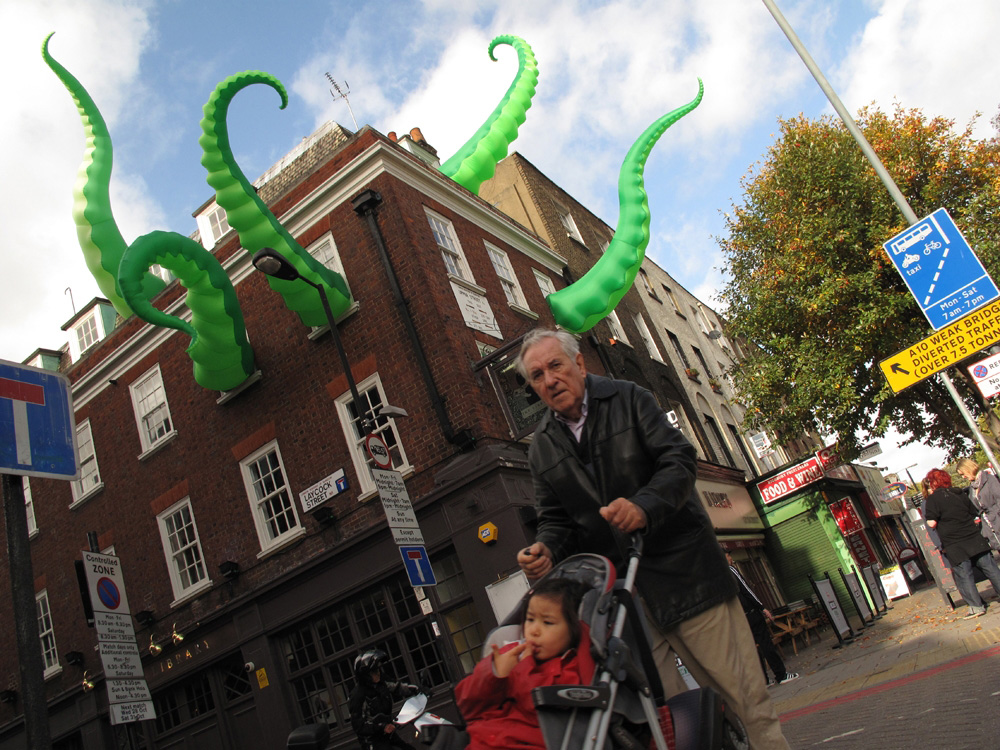
By Filthy Luker, via Colossal.
Great mixing of a haunting and beautiful Radiohead song (All I Need), with amazing footage from the movie MicroCosmos.
p.s. If you’re curious about the #song4mixtape hashtag, these are just my recommendations for mixed tape song. More can be seen by clicking here.
I was listening to the radio as we were coming to the lab this morning, and one of the things that caught my ear was a quick mention of collective nouns. Now these are instances where there is a special and specific term that is coined for a group of things. Wiki describes it as follows:
In linguistics, a collective noun is a word used to define a group of objects, where “objects” can be people, animals, emotions, inanimate things, concepts, or other things. For example, in the phrase “a pride of lions,” pride is a collective noun.
Then it kind of struck me that this sort of thing is most commonly seen when referring to things related to biodiversity, and I guess I got curious as to why that was.
I mean, who came up with phrases like “a parliament of owls” or a “knot of toads” (which, by the way, I think are perfect)? And maybe just as fun, if you were a zoologist or a botanist, and you happen to discover something totally new and novel in the kingdom of life, do you get to embellish the English language further by making up your own collective nouns?
Anyway, wiki sheds a little light on the matter by highlighting a reference that looks like it could be interesting:
Hodgkin, John. Proper Terms: An attempt at a rational explanation of the meanings of the Collection of Phrases in “The Book of St Albans,” 1486, entitled “The Compaynys of beestys and fowlys” and similar lists., Transactions of the Philological Society 1907-1910 Part III, pp 1 – 187, Kegan, Paul, Trench & Trübner & Co, Ltd, London, 1909.
And whilst on the hunt for this paper on the internet, I came across this great piece of academic writing.
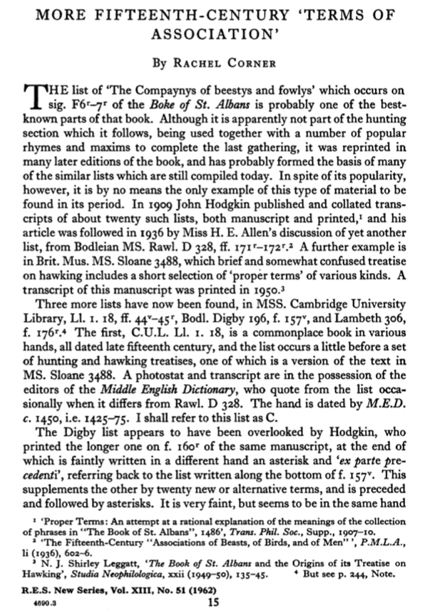
Bonus is that you can download the whole thing from here (if your university has an institutional subscription), which is where things get really interesting.
Basically, the paper outlines a variety of texts over the years where lists of collective nouns were provided. Furthermore, historically it seems as if most of these terms (which are often referred to as “terms of venery“) come from a hunting, British, or French and aristocratic background.
What’s wonderful about the paper is that, although 15 pages long: only 2 and half is the primary text, another 2 and a half is a list of these terms of the venery, and then the remaining 10 or so pages are detailed footnotes with particular information on specific collective nouns.
Here’s a few great samplers:


It’s all rather pretty really, and I wonder what would it take for newish “terms of the venery” to come about. I mean there could be countless cool ones for the various prokaryotes.
Sooner or later, something needs to take hold of an “awesome of…” title.
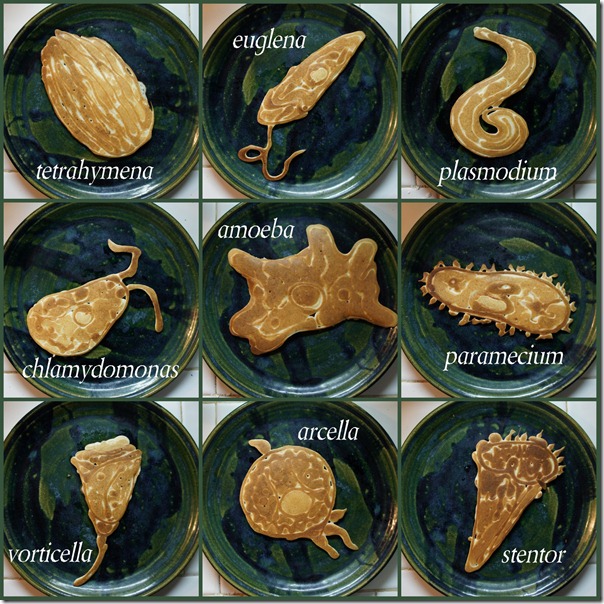










 popperfont.net

