.

Paper cups, airplane cups, and plastic bottles: When you see the totality of it all, it might just overwhelm you.

I’ve been a fan of Chris Jordon for a while, and although I’ve written about him before in other places, I just realized I don’t actually have him tagged here at Popperfont.  Anyway, here’s a sampling for what he does:  that is, he takes statistical information and represents it photographically in very powerful ways.  I recommend clicking on the links for each image, where you’ll be treated to a zooming effect so that you can see his artwork as if from afar and then moving in.

runningthenumbers01
Plastic Bottles, 2007 60×120″
Depicts two million plastic beverage bottles, the number used in the US every five minutes.

runningthenumbers02
Paper Cups, 2008 60×96″
Depicts 410,000 paper cups, equal to the number of disposable hot-beverage paper cups used in the US every fifteen minutes.

runningthenumbers03
Plastic Cups, 2008 60×90″
Depicts one million plastic cups, the number used on airline flights in the US every six hours.

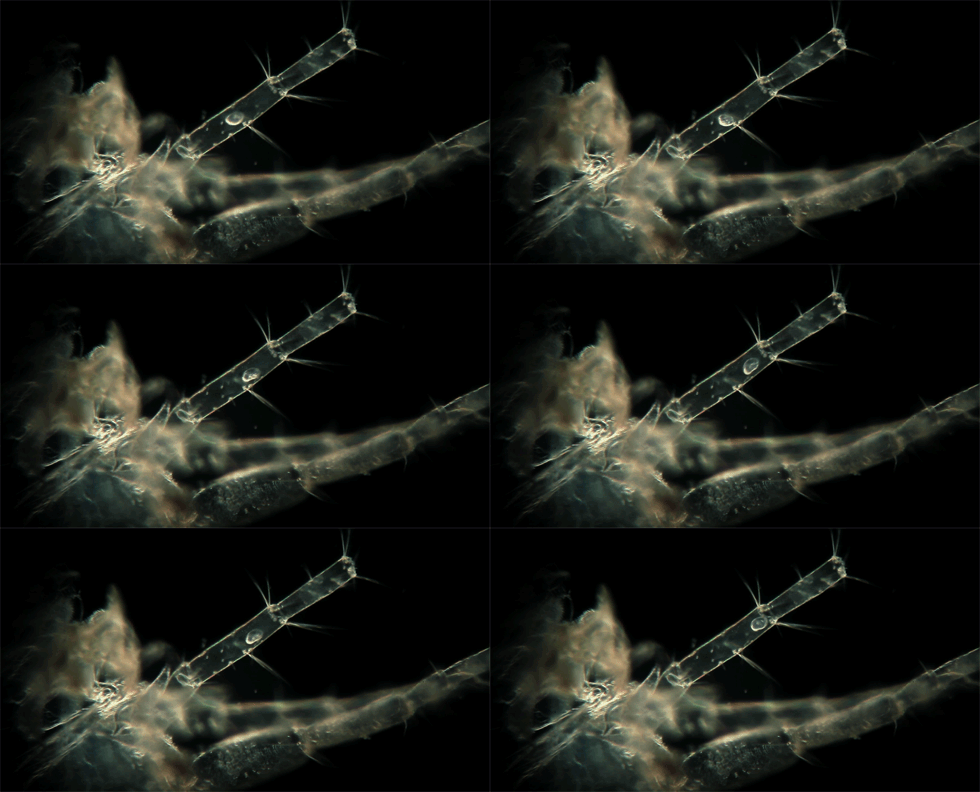
The serenity of the microscopic world as captured with animated gifs #beautiful

microscopic02

microscopic03

microscopic01

Images from Clemens Wirth, gifs by microscopicexpressionism, via Fresh Photons

Beautiful character design meets the primate family

primates01
primates02

By Justin Pervorse, via Drawn.ca

Dear Algebra: Please stop asking us to find your ex… #funny

dearalgebra

Source unknown, via IFLS

It’s a Lucky Thing for Evolutionary Biology that the Following Passages aren’t in the Bible

By DAVID NG

Jesus then entered the farm, and saw creatures of every shape and size, and so said to his followers, “Hey, my Dad made that creature, and that creature, and also that creature… Actually, now that I think about it, he made them all.”

And at the early dawn of the seventh day, just before He rested, God did a lot of pretty complicated things at super duper God speed. This was so that people would think the whole Creation thing probably took a lot longer than seven days.

The heavens opened and the angels proclaimed, “Fear any literate man, capable of impressive facial hair, who is uncomfortable on boats, has a thing for finches, and is named Darwin, for he is basically an unrighteous phony. So it is said in the very literal Kingdom of God.”

And the Lord said, “Yes, my child, the unicorn was a first edit. They were poorly designed so I had to do away with them – kept goring themselves when nuzzling and stuff. Indeed, not my best work.”

With Cain facing Abel, God then commanded, “Look deeply into his eye, and marvel at my handiwork, because my child, making that eye work properly, took, like, for freakin’ ever!”

And God appeared to Moses as a Burning Bush – not a monkey, but a bush. Because clearly, God is no monkey.

In which it is calculated that a spider’s web is actually strong enough to stop a train.

This, from the Journal of Physics Special Topics.

spidermanwebpaper

ABSTRACT:
In Spiderman 2 there is a scene in which Spiderman stops a runaway train using his webbing to provide a counter-force. Using the information available this paper examines the material properties of the webbing under these conditions and finds the Young’s modulus to be 3.12GPa, a reasonable value for spider silk.

INTRODUCTION:
In the early sixties Marvel Comics first introduced Spiderman; a superhero with the abilities and scaled strength of a spider. In a recent movie incarnation, Spiderman has the ability to sling webs from spinnerets located in his wrists. These webs have been shown to be capable of taking great amounts of strain, and have displayed a high level of adhesiveness. Arguably the greatest test of these webs is found in the 2004 movie, Spiderman 2; wherein Spiderman manages to bring a runaway train to a stop by sticking multiple webs to adjacent buildings, and bracing himself on the front of the train until it comes to a rest just before dropping into a river [1]. In this paper we attempt to model the forces upon the webbing in such a situation, and compare it to measured values of the Youngs modulus and yield strengths of real spider’s web.

Download the paper here.

Roberto de Vicq de Cumptich Typography Animals

bemboszoo4 bemboszoo2 bemboszoo1 bemboszoo3

By Roberto de Vicq de Cumptich, via Brain Pickings

Holy crap! This Polar Bear Hot Air Balloon is Fantastic!

polarbearballoon02

polarbearballoon01

Source unknown. From The Cool Hunter, via Thinx.

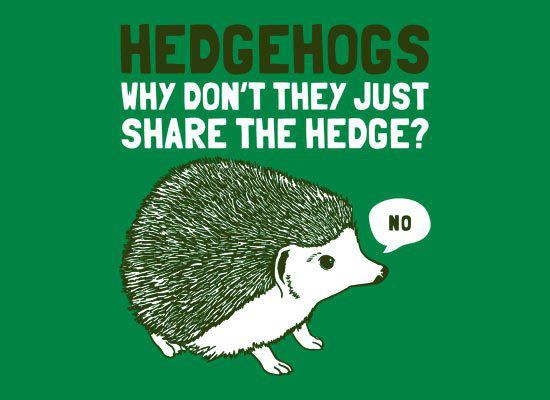
Funny graphic that could be used in a lesson on how species and animals are named

More on Erinaceus europaeus here.

hedgehogsnoshare

From wikipedia:

“When a creature is discovered, it is first necessary to determine whether it is a new species, a new subspecies or merely a variant of an already described and known species. As there is no single, unambiguous definition of “species” this determination can be time-consuming and subject to discussion and disagreement.

By tradition, the right to name a new species is given to the discoverer, or more precisely the scientific describer of the species (who is not necessarily the person who discovered the species in nature). There are, however, many regulations to be followed when naming a species, all of them fixed by the International Code of Zoological Nomenclature (ICZN) when animals are concerned, or the International Code of Botanical Nomenclature (ICBN) for plants.

In general, the nomenclature of creatures follows a system established 1758 by Carl von Linné and each scientific species name is a composite of two parts, namely the genus name and the species name. For example, the scientific name of the European Common Frog is Rana temporaria, where Rana is the genus name and temporaria is the species name.

As the genus name should reflect relationships among different species within the same genus, the first attempt after each discovery is to allocate the creature to a respective genus (and the systematic categories of higher hierarchical levels). Thus in most cases, with exception of the discovery of new genera, the genus name is fixed already, whereas the species name may be freely chosen by the scientic describer of the species within the frame of the ICZN or ICBN regulations.”

Via IFLS

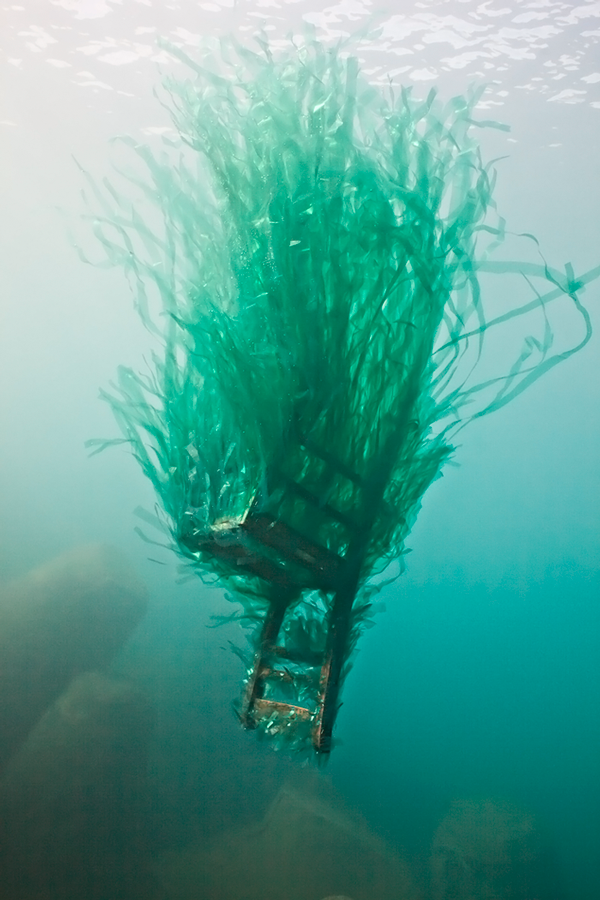
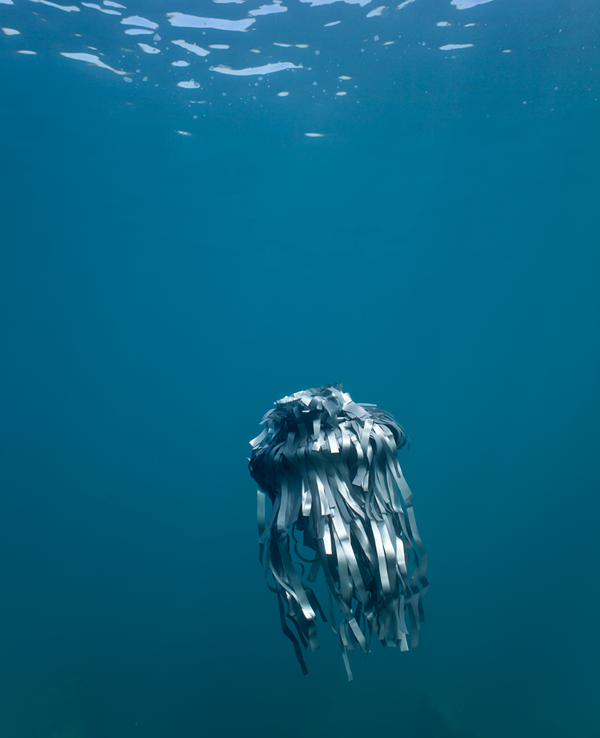
Underwater art showcasing the world of things discarded.

Forlane-6-Studio-Posidonia-1

Forlane-6-Studio-Posidonia-2

Forlane-6-Studio-Laundry

By Forlane 6 Studio (scuba diving artists Mathieu Goussin and Hortense Le Calvez), via Visual News.

This is what a 30ft high “plastic” bag made out of plastic bags looks like. #whoa

pascale-marthine-tayou-plastic-bags_installation_macro_rome_collabcubed

pascale-marthine-tayou-plastic-bags_installation_macro_rome_2_collabcubed

“His current exhibit at Rome’s contemporary art museum MACRO titled Secret Garden includes a nearly 10-meter high, U-shaped installation made of plastic bags and appropriately titled Plastic Bags. The bags are very relevant symbols of both consumerism and homelessness in today’s society.”

By Pascale Marthine Tayou, text via Collabcubed.com

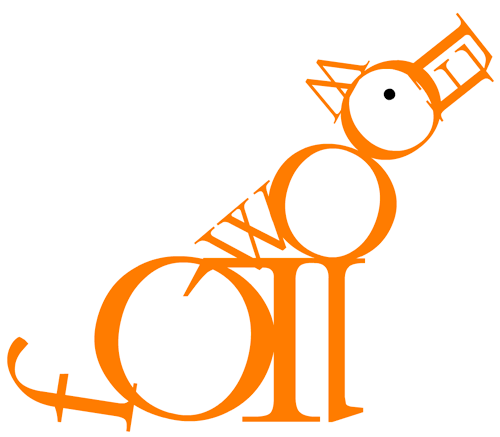
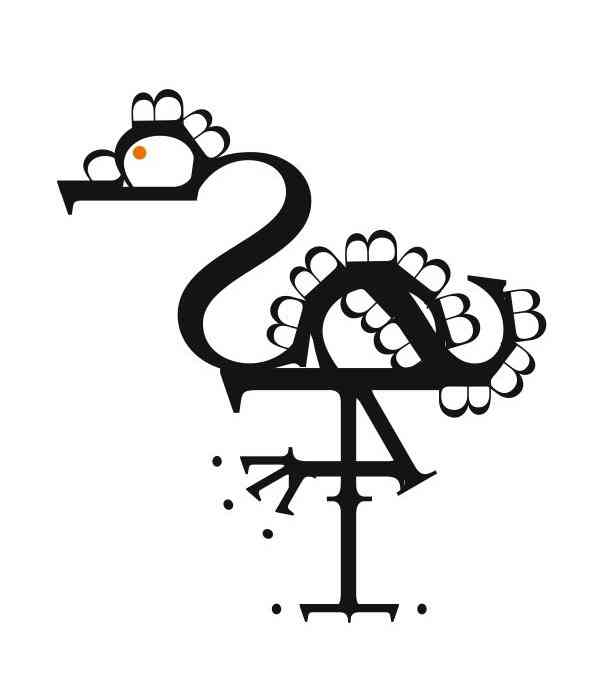
Animals created by the letters in their name. #clevertypography

WA FULL SET 745px

WA FULL SET 745px

WA FULL SET 745px

WA FULL SET 745px

WA FULL SET 745px

WA FULL SET 745px

By Dan Fleming, via My Modern Met.

Foldable creature themed paper lights #pretty

light-1

light-5

light-3

By MostLikelyShop, via Colossal

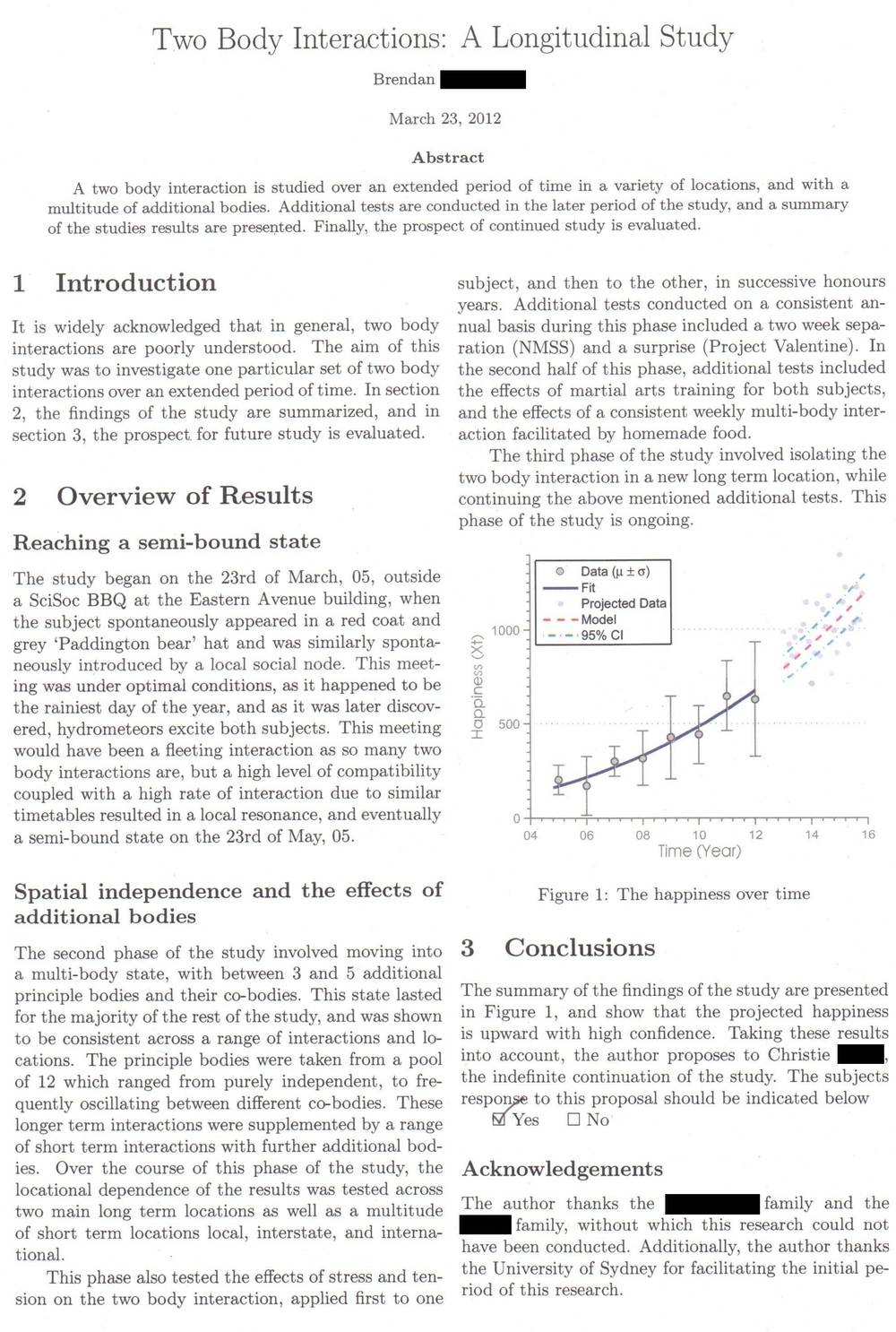
Best physics related marriage proposal ever!

SKNl3VR2

By Redditor bogus_wheel, via Boing Boing.

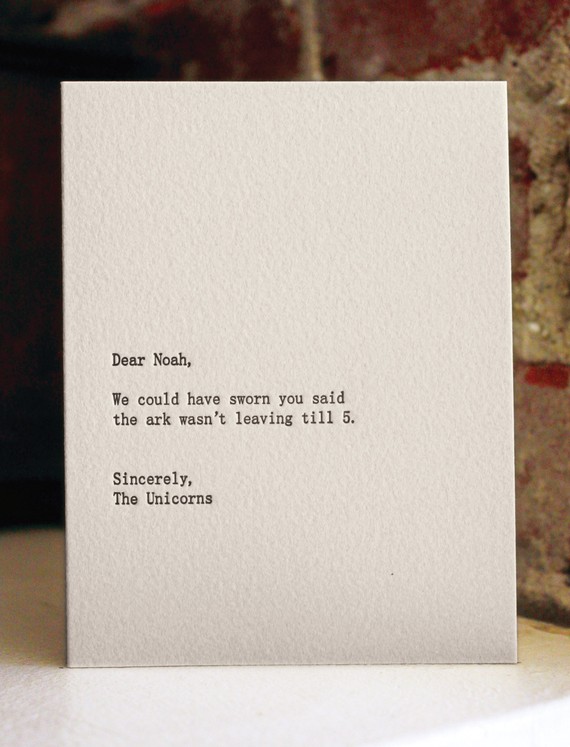
Regarding the unicorn: Not quite natural selection #funny

sincerelytheunicorns

For sale at Sapling Press, quote from Dear Blank Please Blank.

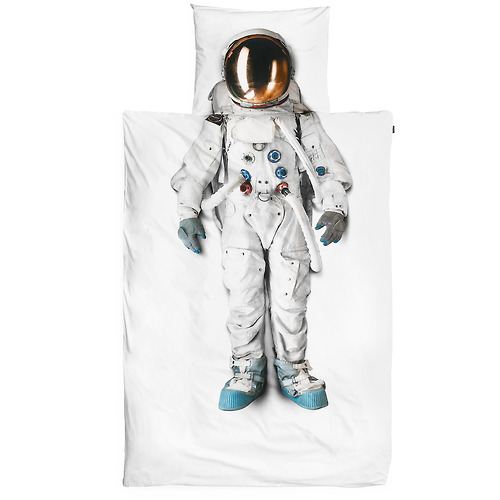
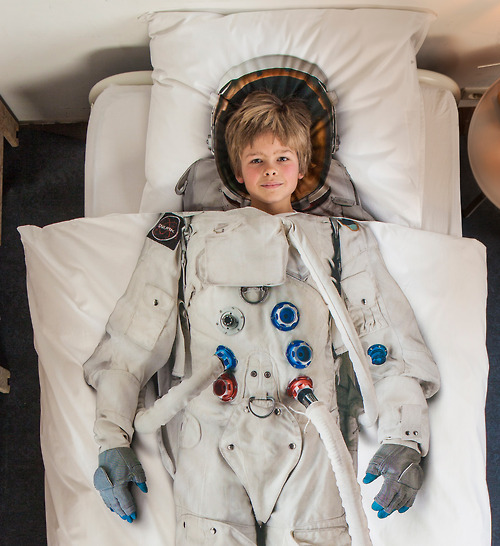
Way cool astronaut bedsheets

astronautbedsheets01

astronautbedsheets02

From Snurk, via Thinx

Absolutely mesmerizing stop motion animation on the speed of the Earth’s rotation

SLOW DEREK from danojari on Vimeo.

Via Drawn.ca

Looks like we can’t run the ethanol precipitation today. #funny

lookslikewecantruntheethanolppttoday

From Saturday Morning Breakfast Cereal.

“We scientists – we’re a diverse bunch.” Great message in TEDx Talk given by @PolycrystalhD

Preliminary Data from the Unicorn Genome: First Possible Indication in History of Mammalian Evolution of Hybridization Across Orders.

From the Science Creative Quarterly. Could this signal the return of the SCQ?

Hope so… (send in some submissions if you hope so too)

unicornpaper

Full paper available here (pdf)

Journal of Fantastic Phylogenetics 2012 8(9): 42-49

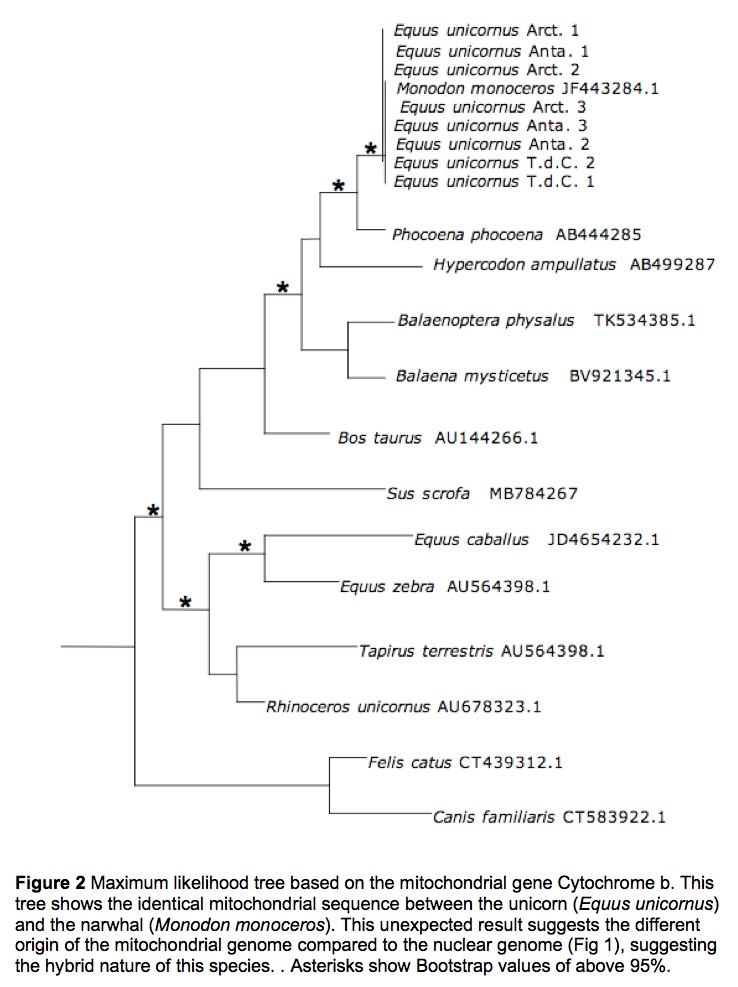
Abstract: In this study we present the preliminary finding of what could be the first record in history of hybridization between mammalian Orders (Perissodactyla and Cetacea). Phylogenetic analyses from the unicorn (Equus unicornus) mitochondrial genes (protein-coding Cytochrome b, Cytb) show a matriline belonging to the Narwhal (Monodon monceros) while nuclear (V-kit Hardy-Zuckerman 4 feline sarcoma viral oncogene homologKit) clearly show a sister relationship of the unicorn-pegasus (Equus alatus) clade with the rest of the Perissodactyl family Equidae. Our preliminary study strongly suggests the need for further investigation because this finding could completely revolutionise our understanding of the processes of hybridization in mammals.

From the Introduction:

Hybridization is widely known from the plant kingdom (Rieseberg & Carney 1998) and horizontal gene transfer has been repeatedly reported in prokaryotes (Jain et al. 1999). However, these forms of genetic exchange have never been prevalent (or even recorded in the case of horizontal gene transfer) in the Mammalia and never been recorded at such an evolutionary distance between organisms (Equidae and Cetacea).

Here are presented the incongruent results from two phylogenies built with mitochondrial and nuclear genes of E. unicornus showing relatedness to two different orders of the Mammalia.

unicornfig1

unicornfig2

This awesome fake paper by Anna Bazzicalupo, via the Science Creative Quarterly