
.
Category: *



November 17, 2011
“Sperm + Egg = Me” Venn Diagram

By Khang Nguyen Tuan (Hat tip to Hey Oscar Wilde).
November 17, 2011
Karaoke Venn Diagram

By Tan Nuyen, via Flickr. (Hat tip to Hey Oscar Wilde)

November 16, 2011
Advice for potential graduate students. One of the wisest things I’ve read from a supervisor.

(Click on image for pdf version of poster).
Full text by Sönke Johnsen and reprinted below:
“We currently have room in the lab for more graduate students.
But before you apply to this lab or any other, there are a few things to keep in mind. First, be realistic about graduate school. Graduate school in biology is not a sure path to success. Many students assume that they will eventually get a job just like their advisor’s. However, the average professor at a research university has three students at a time for about 5 years each. So, over a career of 30 years, this professor has about 18 students. Since the total number of positions has been pretty constant, these 18 people are competing for one spot. So go to grad school assuming that you might not end up at a research university, but instead a teaching college, or a government or industry job. All of these are great jobs, but it’s important to think of all this before you go to school.
Second, choose your advisor wisely. Not only does this person potentially have total control over your graduate career for five or more years, but he/she will also be writing recommendation letters for you for another 5-10 years after that. Also, your advisor will shadow you for the rest of your life. People will always think of you as so-and-so’s student and assume that you two are somewhat alike. Finally, in many ways you will turn into your advisor. Advisors teach very little, but instead provide a role model. Consciously and unconsciously, you will imitate your advisor. You may find this hard to believe now, but fifteen years from now, when you find yourself lining up the tools in your lab cabinets just like your advisor did, you’ll see. My student Alison once said that choosing an advisor is like choosing a spouse after one date. Find out all you can on this date.
Finally, have your fun now. Five years is a long time when you are 23 years old. By the end of graduate school, you will be older, slower, and possibly married and/or a parent. So if you always wanted to walk across Nepal, do it now. Also, do not go to a high-powered lab that you hate assuming that this will promise you long-term happiness. Deferred gratification has its limits. Do something that you have passion for, work in a lab you like, in a place you like, before life starts throwing its many curve balls. Your career will mostly take care of itself, but you can’t get your youth back.
If, after reading this, you want to apply to this lab, we would love to hear from you.”
November 14, 2011
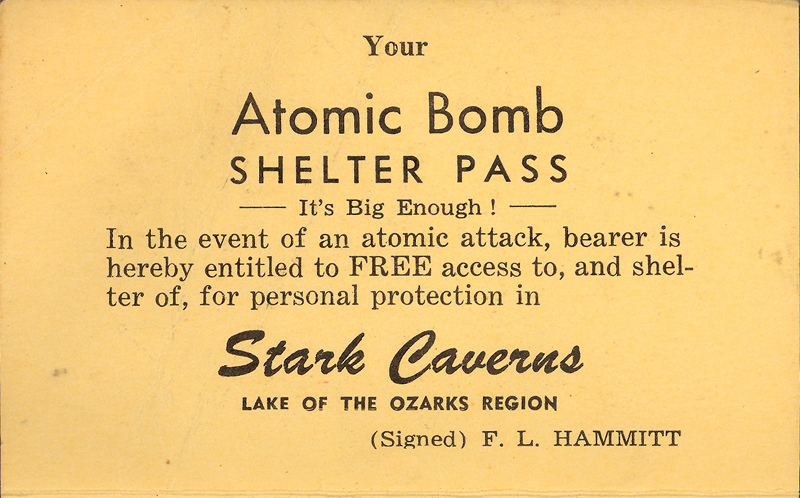
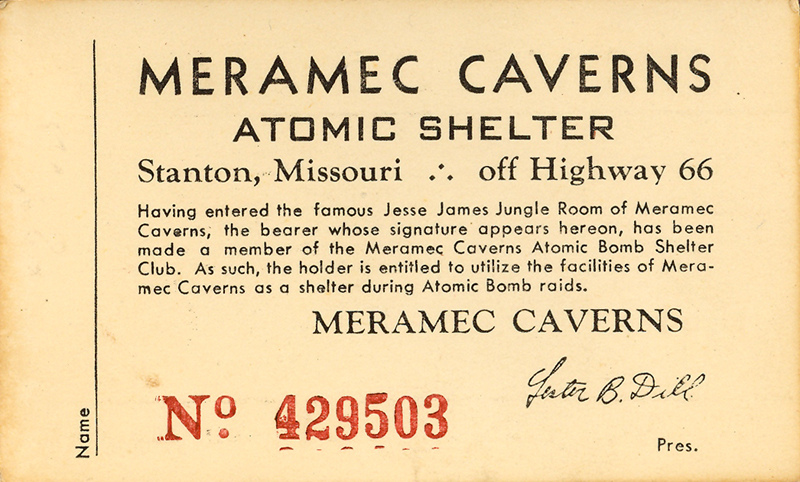
This is Cape Canaveral.

Awesome image by Miroslav Sasek:: via flickr.com
November 14, 2011
The Manganese, Sodium, Barium, Deuterium, Phosphorus song. Or how I tried to use this AWESOME video for a science lecture.
“Mn, Na, Mn, Na… Ba, D, P, D, P…”
I was challenged by some friends to see if I could include the below video in a public talk I had to give last week on science literacy.
I think I succeeded. I used it as a prelude to demonstrating that Chemistry, and the physical sciences generally, are freaking everywhere. p.s. A warning: the video is AWESOME, but it will live in your head for at least a week if you play it.
November 11, 2011
Beautiful poppy mandala. #remember
“As we express our gratitude, we must never forget that the highest appreciation is not to utter words, but to live by them.”
-John Fitzgerald Kennedy
.

This is specifically an Oriental Poppy (Papaver orientale). Image by David J. Bookbinder.
November 10, 2011
It’s finally happened. RNA kits sexualized.

A little bizarre really. It will be interesting to see how folks react to this: there’s already an amusing comment thread on reddit.
Via Fresh Photons.
November 10, 2011
Knitting Anatomy 101 (aliens and frogs!)
First the Alien autopsy. I’m sure this could be used as a slide on the subject of anatomy, surgery, etc.

Then, of course, there is the classic frog dissection.
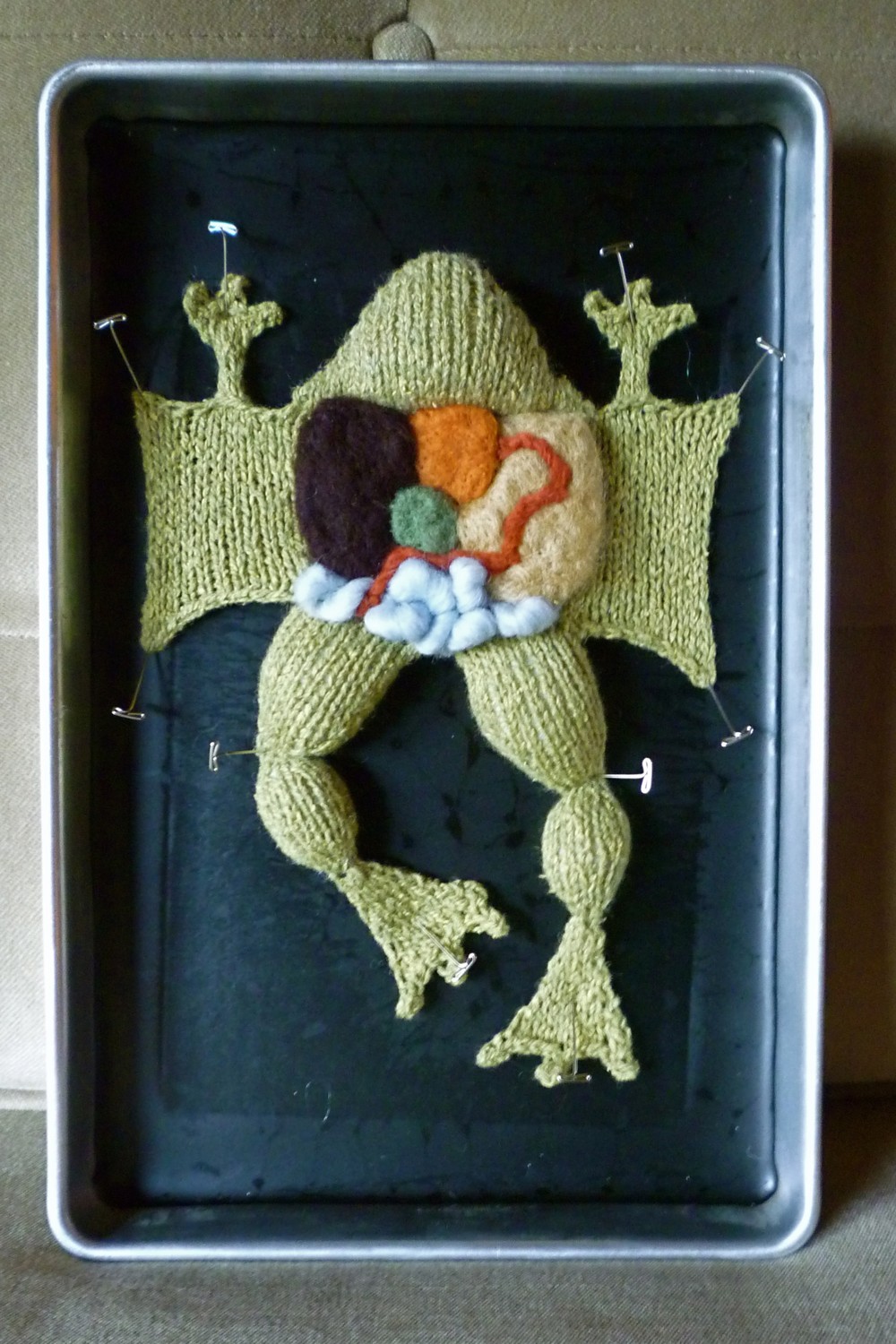
Best of all, both of these are available as knitting kits. From the talented Emily Stoneking (alien | frog). Via @kpwerker.
November 9, 2011
So maybe this magazine is responsible for the poor levels of science literacy in the world.
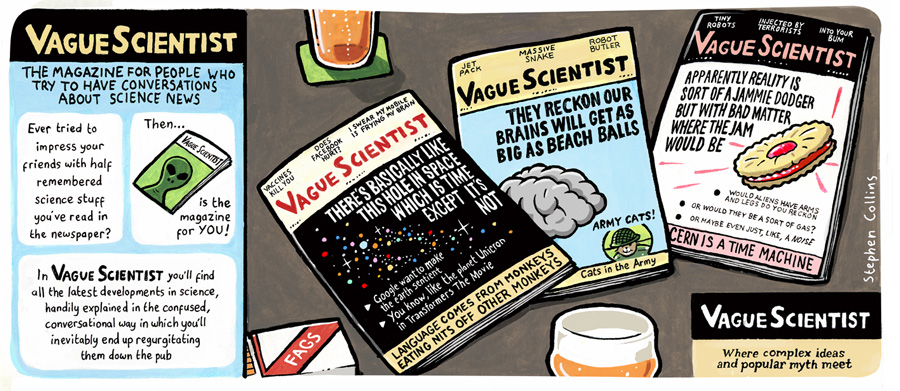
Via collinscomics.com. Click on image for larger version.
November 9, 2011
Why Francis Bacon would have loved the Chemical Abstracts Service.
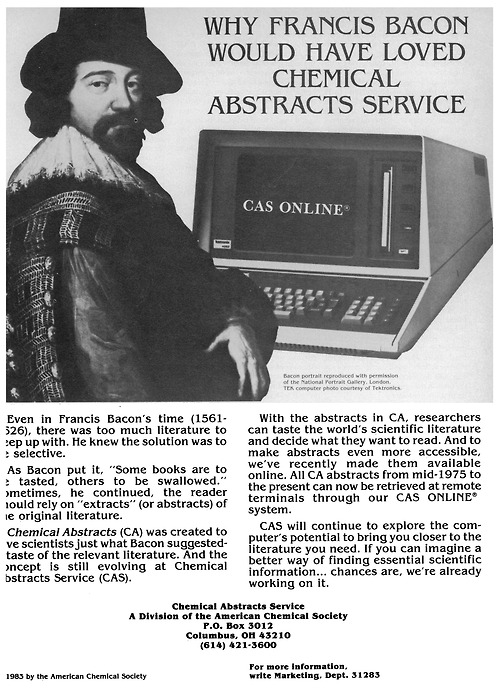
Well… what’s not to love? Via Fresh Photons.
November 9, 2011
Tycho Brahe gets put in his place. #funny #sciencehistory

From the talented Kate Beaton, who has a number of wonderful pieces concerning greats in scientific history: so much so that I feel compelled to create a new popperfont category (science history). Oh yeah, and here’s the wiki link to Tycho Brahe if you’re curious (the assumption is that you know who Kepler is already, right?)

November 7, 2011
If Orbitals were to play Acids in a game of basketball – yes, you read that right.
I wrote this years ago, when my friend Ben Cohen and I, cohosted a SCIENCE SHOWDOWN during the 2007 NCAA. We had many folks play along, writing some really excellent creative science pieces – you should check them out, to see which scientific term won in the end.
* * *
By DAVID NG
Welcome folks, to this here what we’ll call the beautiful game (at least we’ll say that for the molecular level). This game really had it all, it was dynamic, it had equilibrium, it had fluid transition, and it was catalytic. It involved freakishly large chemical sounding words, and also a wierd scoreboard that looked something like this:

But hey, whatever, right?
The game started off slowly enough, with Team Acid moving the ball well. Their game plan was fairly straight forward, and with a play by play that looked a little bit like this:

But then the d-orbitals stepped it up in strides. Moving with both precision and with uncanny diffuse footwork that was seemingly hard to defend. Full of spark and basically responsible for a lot of the colour of the game, their floor plan followed a few extravagant patterns. Such as:
this,
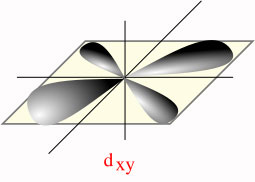
this,
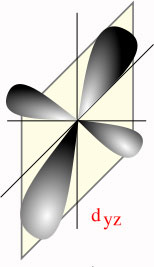
this,

and every now and then, even this:

But the coaching staff for the Acids were a smart bunch, and soon realized that the d-orbital gameplans were essentially all similar. That for all of their flash, (as well as support from the well resourced transition metals), they were (as the coach was heard to say), “just moving about in the same f**king four way formation – any sh*thead should be able to mess that up!”
So, newly motivated, they countered with:

and on ocassion this,
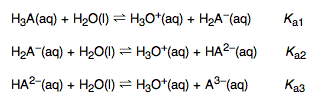
So for a while, it looked like Acids had it in the bag. That they would advanced to the final eight. That it was all over for Team d-orbitals, who would then have to delocalize and do other things that incorporated some kind of sad chemistry pun.
But then, in the last ten minutes, something happened. Something beautiful, something different, but not something entirely unexpected – because let’s face it, it’s easy enough to google this sort of thing these days.
And so, here’s how it happened. This, my friends, is what the game will be remembered for:

Where really all we can say is, SWEET JESUS!
And then it was basically all over – Acids were all but destroyed from that point on. And this, here, is the final result – d-orbitals takes the game. In style some would say, and by a score of 98 to 86.
* * *
Later that evening, I caught up to the Acids, with some questions. But they had no answers, just a few sorrow shrugs and some parting words.

FIN
 popperfont.net