Handy flowchart that helps you come to terms with the Higgs Boson

By Fake Science, via rjallain, via BoraZ

There’s actually a whole bunch of them (mostly not science related), but here are a few that are…


From Run Pencil Run.
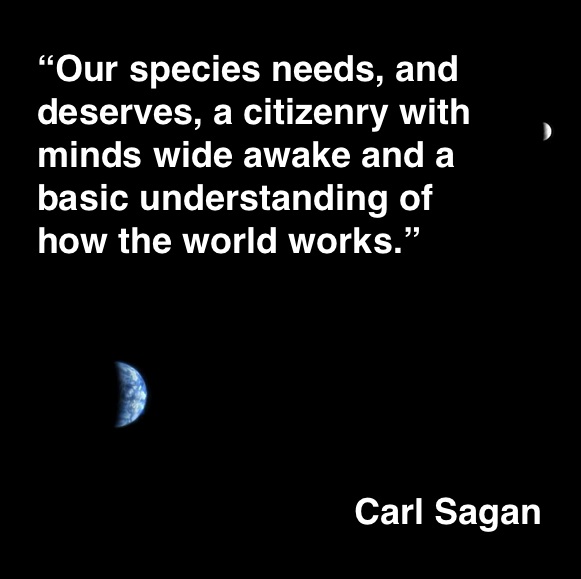
Love this quote, and so I had to quickly make a little graphic for it. Image from NASA/JPL-Caltech/University of Arizona (source link). Font: Helvetica bold.
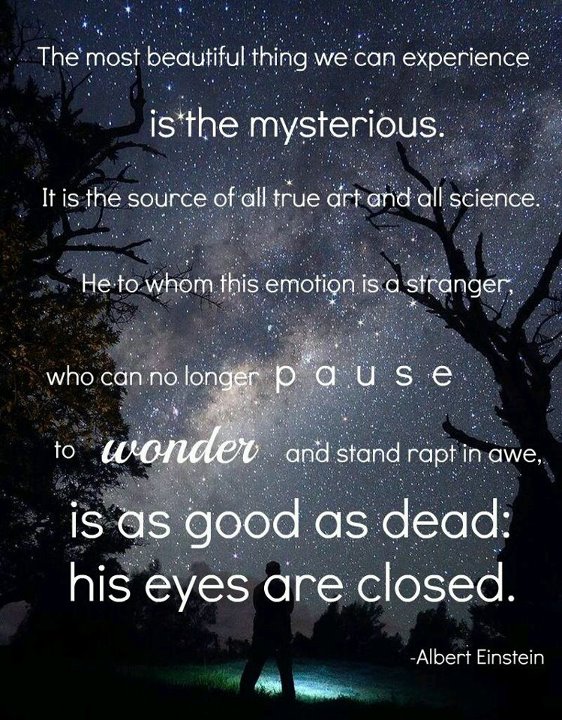
Quote by Einstein. Image source unknown.
By DAVID NG
Just told this story at the Pathology Arts Gala last night, and I thought that maybe others would like to hear it. This is based on a piece I wrote for the Believer, and it’s about a time when I was a bit obsessed with my name.
Recorded by The Monti at ScienceOnline 2012, January 20th, 2012.

By Gavin Aung Than at Zenpencils.com. Words by Phil Plait.
Robert Krulwich over at NPR highlights this lovely video where Feynman succinctly describes science.
Even better, is the commentary that Robert adds. It’s so lovely that I have to show you a little:
“Science is our way of describing — as best we can — how the world works. The world, it is presumed, works perfectly well without us. Our thinking about it makes no important difference. It is out there, being the world. We are locked in, busy in our minds. And when our minds make a guess about what’s happening out there, if we put our guess to the test, and we don’t get the results we expect, as Feynman says, there can be only one conclusion: we’re wrong.”
But do read the whole thing over at his blog. It’s awesome.
(@mwand, thanks for the link!)

This image is all over tumblr right now. Apparently, it started here at biomedinapadroa.com.
Apparently, yes (if you take this page from a Bible Colouring Book to heart)*
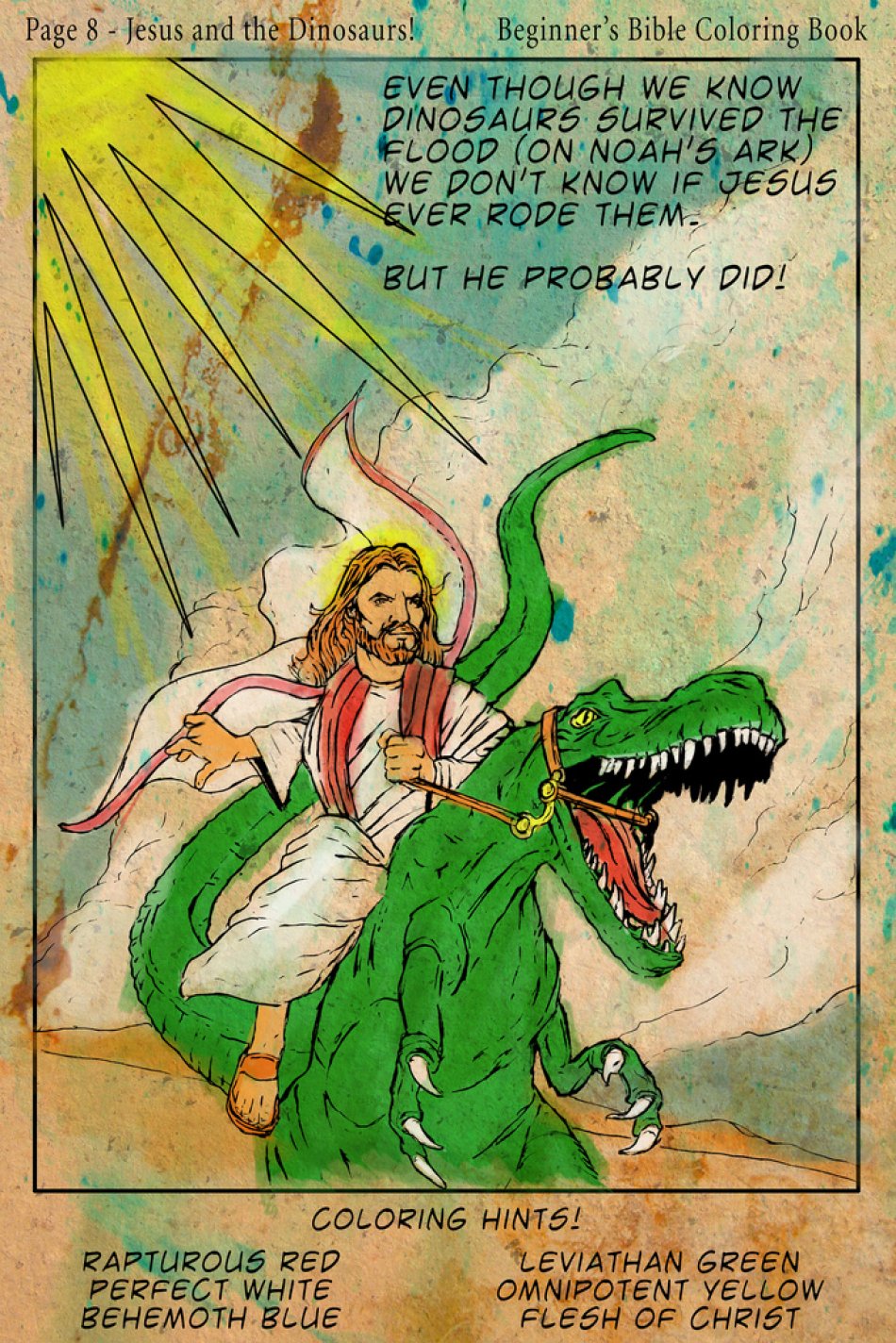
*Also possibly a spoof – since I can’t find an original source for this (it’s basically all over the web).

It’s unfortunate, but talking about the scientific method is one of those things that can elicit the “glazed over” look instantly. Which is really too bad, since the scientific method, or scientific process (how ever you want to call it) is very very very important. More so, since it is often misunderstood.
So, how to make it engaging to read? Well, here is my attempt: this is essentially a 3rd draft edit of my first five sciencegeek fundamental essays (now labeled as sections).
Together, it has the longest title ever (I think) for a treatment on the scientific method. I’ve called it:
“A TANGENTIAL SCIENTIFIC METHOD:
ON THE NATURE OF SCIENCE WITH REFERENCES TO CHEWBACCA, STORK EATING ALIENS, A FEW STEVES, ONE INSTANCE OF THE WORD “FUCK,” AND (QUITE POSSIBLY) TWO VERY LARGE CHILDREN.”
Please take a peek, and let me know what you think. I’m guessing it’s not for everyone, but it was definitely fun to write. It would be great to hear what I can do to make it better. I’d like to keep working at this until I hit that ever elusive sweet spot.
Available as a print friendly low res pdf or high res pdf, or start here for web reading.
In which:
“The wheel is running, but there is, apparently, no hamster.”

Not sure what the source for this is.
The correct answer is $5.
If you got this right then according to a study by Harvard neuroscientist and philosopher Joshua Greene, you are more likely to be skeptical of religion. If you had said $10, then you are more inclined to believe in religion.
Although $0.10 comes easily to mind (it’s the intuitive answer), it takes some analytical thought to come up with the correct answer of $0.05. People who chose more intuitive answers on these questions were more likely to report stronger religious beliefs, even when the researchers controlled for IQ, education, political leanings, and other factors.
What’s even more interesting is that a new study by UBC’s Will Gervais and Ara Norenzayan that would suggest that if you encourage analytical thinking, you can also encourage disbelief in religion.
To test this idea, the duo devised several ways to subconsciously put people in what they considered a more analytical mindset. In one experiment with 57 undergraduate students, some volunteers viewed artwork depicting a reflective thinking pose (such as Rodin’s The Thinker) while others viewed art depicting less intellectual pursuits (such as throwing a discus) before answering questionnaires about their faith. In another experiment with 93 undergraduates and a larger sample of 148 American adults recruited online, some subjects solved word puzzles that incorporated words such as “analyze,” “reason,” and “ponder,” while others completed similar puzzles with only words unrelated to thinking, such as “high” and “plane.” In all of these experiments, people who got the thinking-related cues reported weaker religious beliefs on the questionnaires taken afterward than did the control group.
For more on this, see this short Science piece. For the full paper (“Analytic Thinking Promotes Religious Disbelief”), go to this link (pdf of first page here Jpg below)

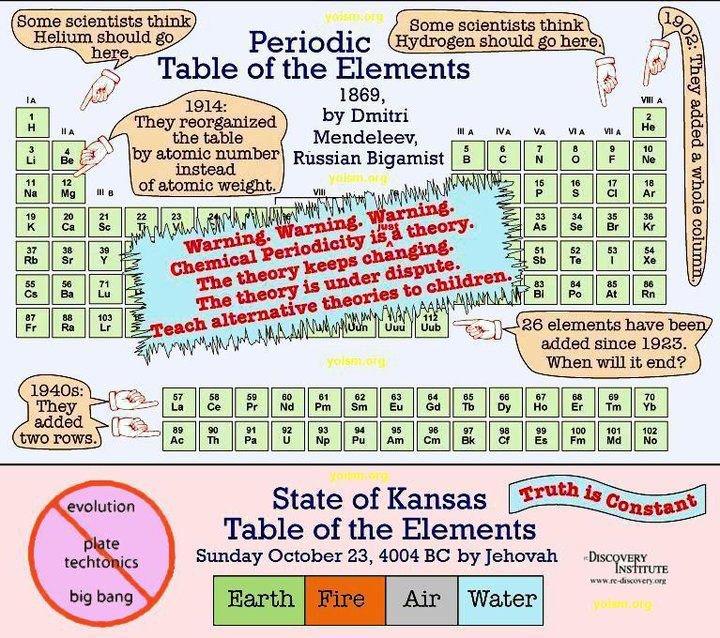
Source: an website which used to spoof the Discovery Institute (but now no longer exists).




 popperfont.net