
.
Tag: planetary science
October 2, 2012
When a Crocodile Hunter Becomes a Planet Hunter
By DAVID NG
Cor Crikey! And g’day mate! Right now we’re walking up to Hawaii’s Gemini Observatory on the summit of Mauna Kea. It’s got a beaut of a telescope inside, and we’re hoping to find a new planet today.
(Whispering) Here we are at the front door. But we should first give it a bit of space. Patience is important when dealing with telescopes. And we’ve got to be careful with that door. It’s locked! Looks like the observatory doesn’t open for another 20 minutes.
(20 minutes later) Alright mate! Let’s go! (running) Quickly mate! We’re already inside, but we’ve got to move fast! If you look around, you might see that there are other humans around here that will also want to use the telescope, but if you get there first, you’re in there mate. You can use one hand for the controls, and the other to fend the others off.
(Reaching the console) We’re the first here! And it looks like we’ll get to have it to ourselves too. Ripper! Looks pretty complicated, but I’ve been around telescopes all my life and this is definitely an “on” button. But before I press it, let’s first camouflage ourselves behind this adjustable office chair, just in case! I’m going to turn it on now.
(Apparatus makes a noise). Watch out mate! We’ve got to stay extra alert now. Remember – never do this without the supervision of an expert like myself around.
It’s on. And don’t forget to be on the look-out for other humans. We can scare them off by making ourselves look as big as possible – spread your arms wide and look like you’re real pissed. That’s right, like that. Beauty mate! Alright, now let’s go find us some planets…
(7 hours) Did you see that?
(12 days) Did you see that?
(4 week) Did you see that?
(6 weeks) Did you see that?
(7 weeks) Crikey! Did you see that?
(3 months and 1 week) Did you see that?
(4 months) Did you see that?
(5 months and 3 weeks) Did you see that?
(6 months later and looking weary) Well mates, that’s all we have time for in this show. It’s a shame we didn’t find a new planet but that’s sometime how it is in these observatories. See you next time!
July 25, 2012
Why the Moon Hates the Beach
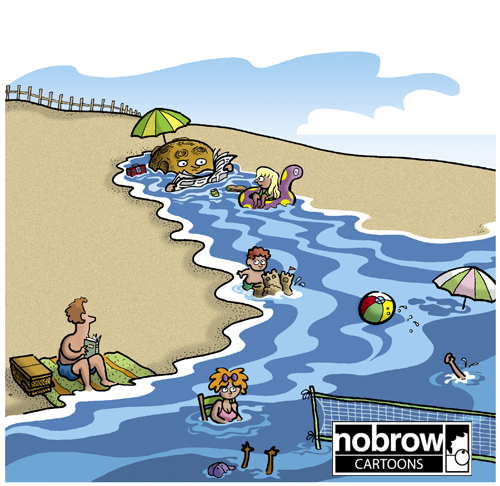
By Mark Heath at Nobrow Cartoons.
June 21, 2012
Brilliant exoplanet infographic
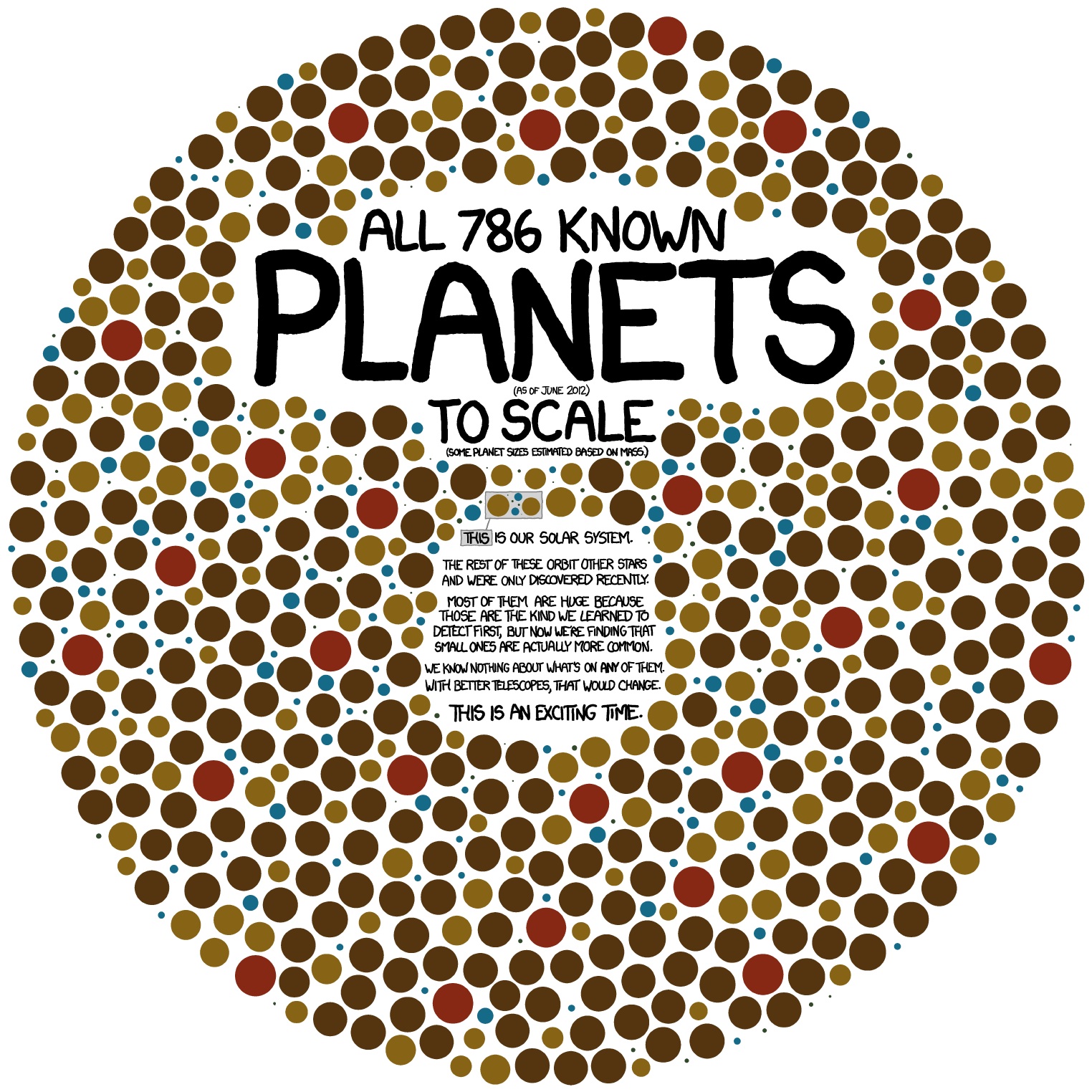
(Click on image to see larger version)
Some of the text reads:
“Most of them are huge because those are the kind we learned to detect first, but now we’re finding that small ones are actually more common. We know nothing about what’s on any of them. With better telescopes, that would change. This is an exciting time.”
From xkcd.
June 13, 2012
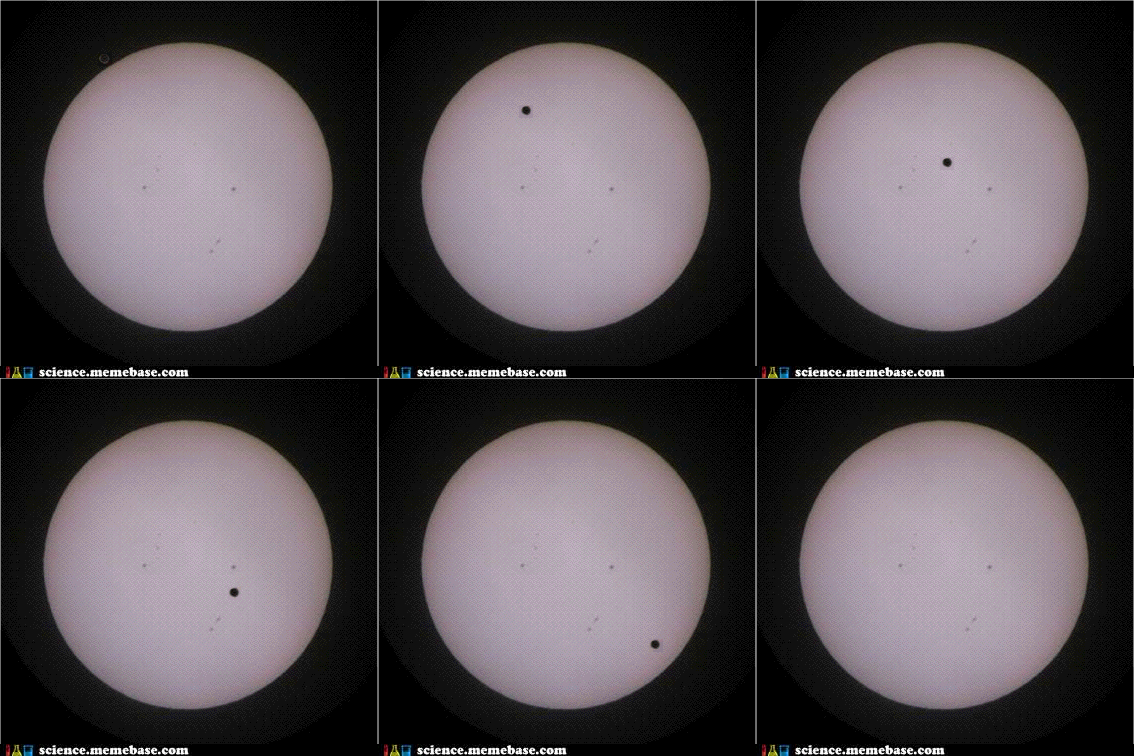
Indeed it is… A fun animated gif of the Venus Transit.
Admittedly, this makes me smile.
June 5, 2012
Enceladus passing Dione: Just another day in Saturn’s neighbourhood. #beautiful
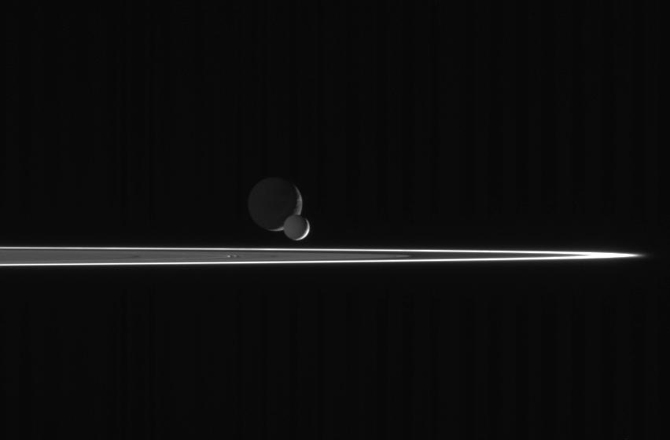
More about Enceladus at Wired.com. Also wikipedia.
“Enceladus is one of only three outer Solar System bodies (along with Jupiter’s moon Io and Neptune’s moon Triton) where active eruptions have been observed. Analysis of the outgassing suggests that it originates from a body of sub-surface liquid water, which along with the unique chemistry found in the plume, has fueled speculations that Enceladus may be important in the study of astrobiology.”
May 28, 2012
Saturn pop up by Mengyu Chen. Cool animated gif.
I really want Mengyu to make one of these with the first law of thermodynamics…
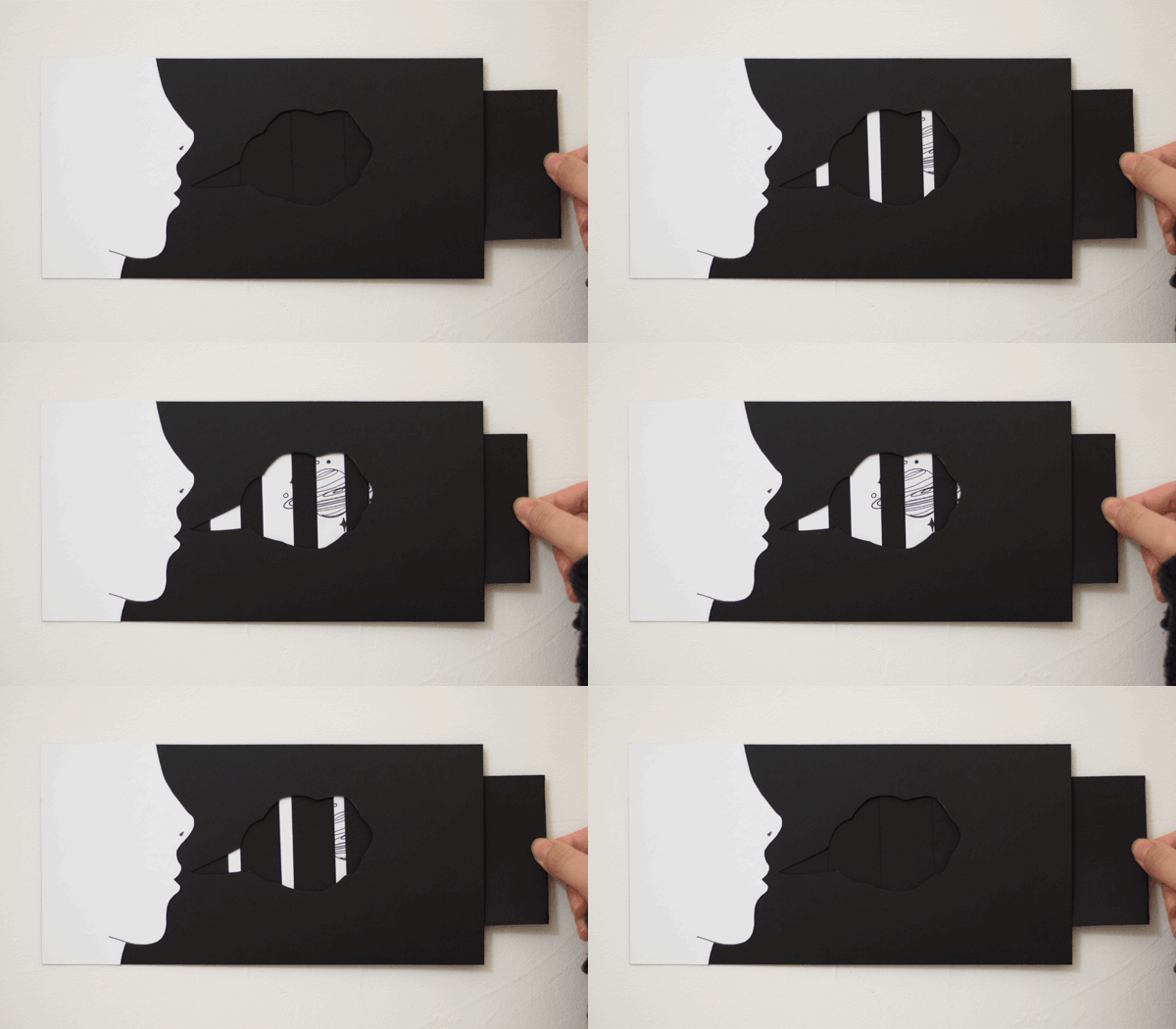
By Mengyu Chen, via Colossal.

May 16, 2012
Awe inspiring time lapse sequences from the International Space Station. #whoa
It’s footage like this that makes me wish I was an astronaut (best viewed in full screen).
“The International Space Station Expedition 30 crew shot some truly awe-inspiring time-lapse sequences flying over practically every square mile of the globe.
I downloaded the high-resolution image sets that have been made available by the NASA Johnson Space Center and constructed this short time-lapse film in hi-res 2K project format. I was amazed at how clean the Nikon D3S images turned out (even at ISO 3200 and above) which kept the post-processing requirements to a minimum.
By Adonis Pulatus.
May 13, 2012
Shots of the Earth and Moon in the same frame. #beautiful
I just think this one is very cool.
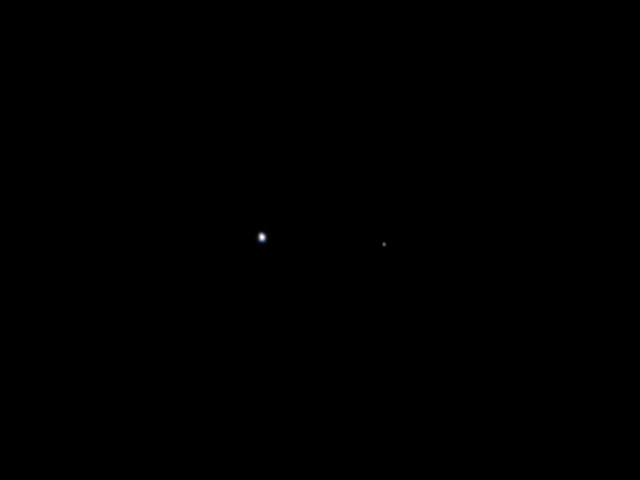
“Earth (on the left) and the moon (on the right) were seen by NASA’s Juno spacecraft on Aug. 26, 2011, when the spacecraft was about 6 million miles (9.66 million kilometers) away. The photo was taken by the spacecraft’s onboard camera, JunoCam.” CREDIT: NASA/JPL-Caltech
And here is the first one ever.
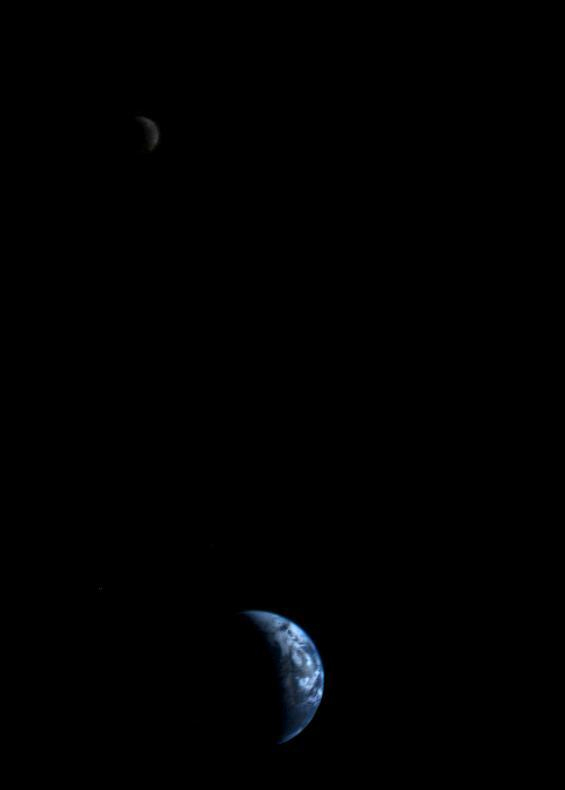
“This picture of a crescent-shaped Earth and moon — the first of its kind ever taken by a spacecraft — was recorded Sept. 18, 1977, by NASA’s Voyager 2 when it was 7.25 million miles (11.66 million kilometers) from Earth. Because the Earth is many times brighter than the moon, the moon was artificially brightened so that both bodies would show clearly in the prints.” CREDIT: NASA
Via Space.com
May 7, 2012
This space video is beautiful to watch but also makes me feeling very very small. Stunning mix of Cassini and Voyager footage.
I suggest watching this in HD, on a large screen, and preferably in the dark.
The footage in this video is derived from image sequences from NASA’s Cassini and Voyager missions. I downloaden a large amount of raw images to create the video.
Mixed by Sander van den Berg.
April 20, 2012
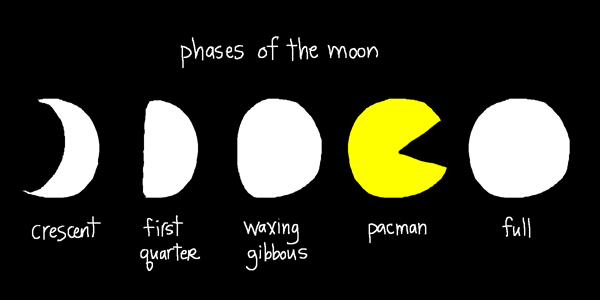
Grain of sand or small moon? Can you guess which is which?
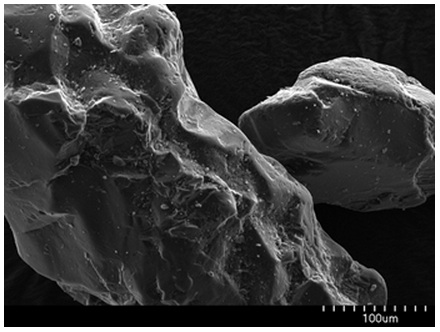
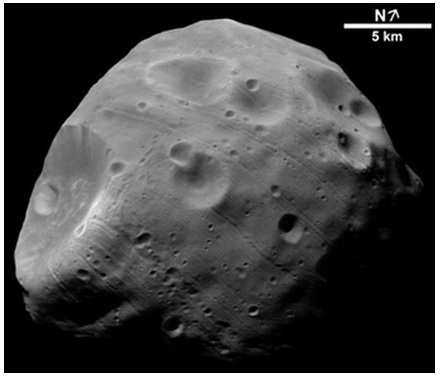
The top image is a portrait of two grains of Coney Island sand. Below it is a NASA image of Phobos, one of the moons of Mars.
By Alison Cornyn via McSweeney’s.
April 12, 2012
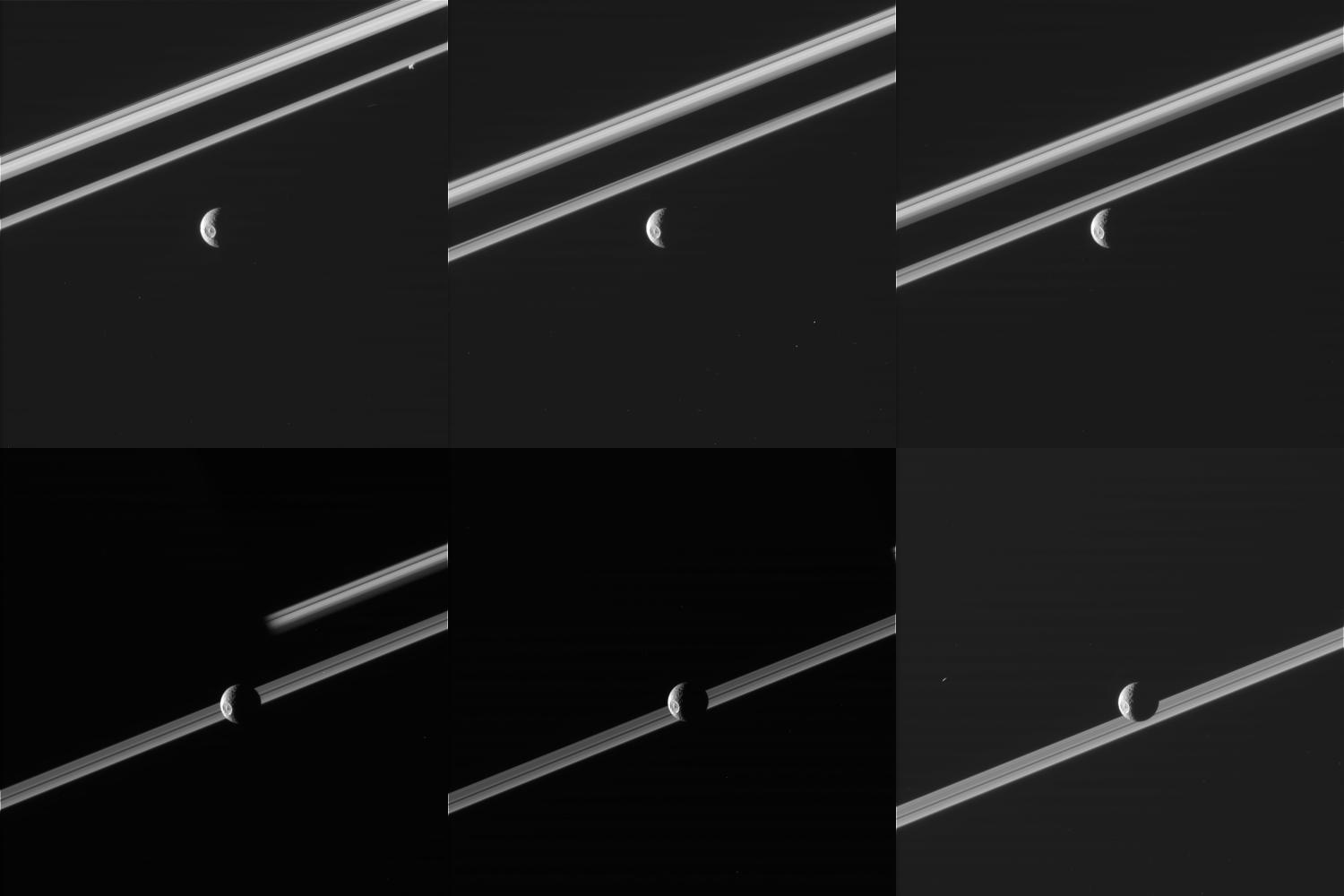
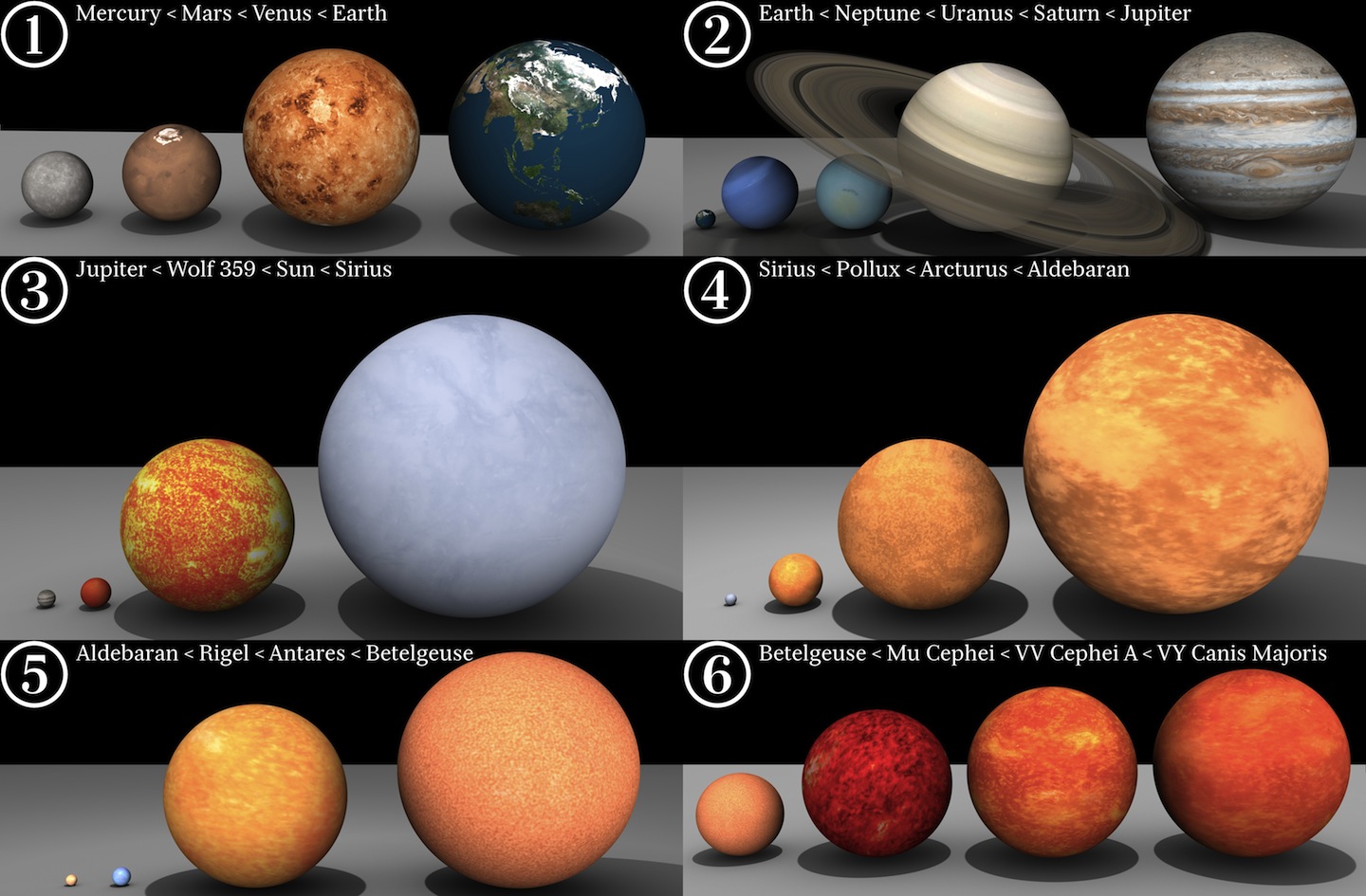
“That’s no moon.” Actually, it is a moon (despite the uncanny resemblance to the Death Star).
Basically, if I ever have my own top secret headquarters, it would have to be this…
…I wonder how much it would cost to install a laser system.
A photo of the moon Mimi, taken by NASA’s Cassini spacecraft while orbiting Saturn in 2005.
March 27, 2012
Ocean currents visualized: strangely reminiscent of Van Gogh
This visualization shows ocean surface currents around the world during the period from June 2005 through Decmeber 2007.
NASA/Goddard Space Flight Center Scientific Visualization Studio
March 20, 2012
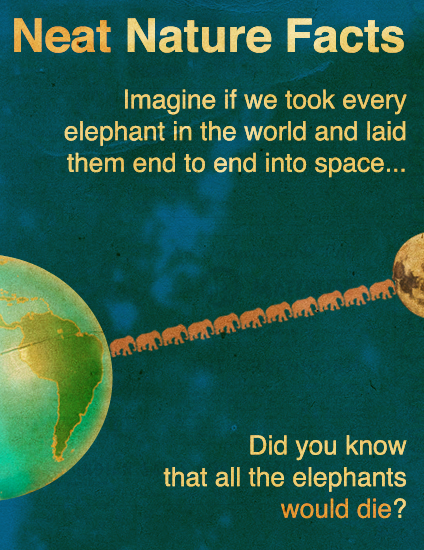
Striking graphic showing volume of Earth versus volume of Earth’s water versus volume of Earth’s fresh water
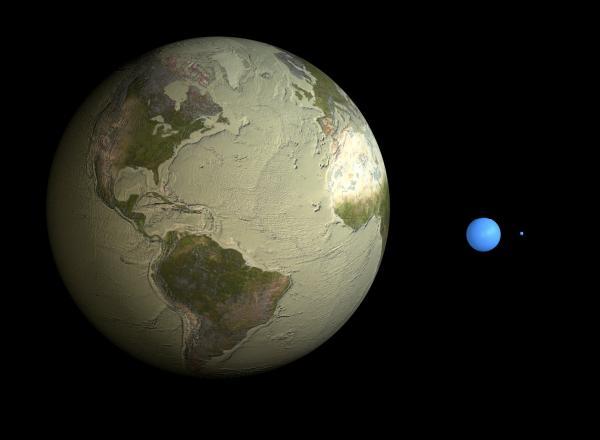
In this illustration, the blue ball represents the volume of all the water on earth, relative to the size of the earth. The tiny speck to the right of the blue ball represents Earth’s fresh water.
CREDIT: David Gallo/WHOI.
 popperfont.net
