.

Tag: chemistry

Chemicus Service Set: I am very tempted to order 24 of these for my lab.

Well, not really… plus, then I would also need to wallpaper the space as well. Ironically, I wouldn’t be surprise if the price is not too far off from the price point of the scientific equipment.

From the Art.Lebedev Studio (note that the “process” section is also pretty cool), via Fresh Photons.

A calculation to see how many cups of coffee you would need to drink in order to kill yourself.

By DAVID NG

I’m in full on marking mode right now, which also means my uptake of coffee has increased significantly. Consequently, I’m procrastinating and thinking about strange things – such as lethal doses – especially for things we scientists particularly indulge in (like coffee, alcohol and, yes – the free cookies at Departmental seminars). So let’s look at the fatality of coffee drinking? And yes, for the scientist, the first place to look a little deeper is the vaulted MSDS (or Material Safety Data Sheet).

For those not initiated in this lingo, MSDS are those documents that provide risk assessment and health considerations for any and all reagents, compounds, molecules, chemistries you might care to use in a laboratory setting. Of course, the most press worthy value it often provides is the “lethal dose.” Which, according to wiki is:

the median lethal dose, LD50 (abbreviation for “Lethal Dose, 50%”), LC50 (Lethal Concentration, 50%) or LCt50 (Lethal Concentration & Time) of a toxic substance or radiation is the dose required to kill half the members of a tested population.

Anyway, I thought it might be interesting to do some back of the envelope calculations to bring to you, some information on how many cups of coffee to avoid drinking, so as to not kill yourself.

However, this calculation is not as easy as it sounds, because there’s a certain amount of kinetics that needs to be taken into consideration. So, let’s first start with a few facts and figures to get the ball going.

To begin with, if we’re going to focus on coffee, probably its most potent chemical component from an oral lethal dose point of view is the caffeine. However, from a purely empirical perspective, it might actually be its water content that will kill you in the end. In other words, if you drink lots of coffee and plan on doing it to induce a fatality, it might be interesting to see what scenarios are necessary for that death to be caused by too much caffeine versus too much water.

In any event, here are the numbers to concern ourselves with:

1. Average weight of a human: From wiki:

In the United States National Health and Nutrition Examination Survey, 1999-2002, the mean weight of males between 20 and 74 years of age was 191 pounds (86.6 kg, 13 st 9 lb); the mean weight of females of the same age range was 164 pounds (74.4 kg, 11 st 10 lb)

Let’s use 80kg as an average.

2. A single cup of coffee on average contains about 250ml of water, and about 135mg of caffeine (link).

3. Lethal dose (oral intake for a rat, which has similar metabolism – although we should note, not identical metabolism) is about 192 mg/kg for caffeine and 90 mL/kg for the water.

4. However, the other part of the equation is we need to evaluate involves rates of elimination.

The half-life of caffeine–the time required for the body to eliminate one-half of the total amount of caffeine–varies widely among individuals according to such factors as age, liver function, pregnancy, some concurrent medications, and the level of enzymes in the liver needed for caffeine metabolism. In healthy adults, caffeine’s half-life is approximately 4.9 hours.

And for water – this was a little harder, because water turn over rates I found, tended to revolve around the idea of an individual not imbiding in crazy amounts of fluids. So, for the sake of our calculations, I’ll go with the following piece of information:

It’s Not How Much You Drink, It’s How Fast You Drink It! The kidneys of a healthy adult can process fifteen liters of water a day! You are unlikely to suffer from water intoxication, even if you drink a lot of water, as long as you drink over time as opposed to intaking an enormous volume at one time. As a general guideline, most adults need about three quarts of fluid each day. Much of that water comes from food, so 8-12 eight ounce glasses a day is a common recommended intake. You may need more water if the weather is very warm or very dry, if you are exercising, or if you are taking certain medications. The bottom line is this: it’s possible to drink too much water, but unless you are running a marathon or an infant, water intoxication is a very uncommon condition.

O.K. so let’s do the math.

First, an oral lethal dose for an 80kg human would extrapolate to 15,360mg of total caffeine. This technically is equivalent to the amount of caffeine absorbed from drinking 113 cups of coffee really really really quickly. However, the reality is that this figure would instead result in a fatality due to water intoxication since 113 cups is close to 30 litres of water.

So let’s try a different tact: by focusing on a safe water ingestion figure (i.e. 15 litres per day when spread reasonably). This works out to 60 cups of coffee over a full day, or approximate one cup every 24 minutes. Anyway, this is some pretty nasty math to figure out (since it’s a half life calculation with continual replenishing going on). Anyway, if you do the math, what you find is that at the end of a 24 hour period, that average body would have retained a little less than 2500mg (this is based on some very rough back of the envelope calculations). Not even close to the 15,000 or so milligrams needed to reach the lethal dose. Presumably still not a healthy thing to do, but within the context of our LD50, it sounds doable.

And the funny thing is, by the next day, that 2500mg would have been metabolized or cleared itself and only about 50mg of this is left behind. Which means that the net total amount of caffeine still in a person’s system if he or she were to continue drinking a cup of coffee every 24 minutes for a 48 hour period is 2550mg (2500mg + 50mg).

It turns out that your body is potentially quite capable of dealing with such a heavy coffee dosage, because that new 2550mg level becomes 53mg by the next 24hours – therefore three days of drinking a cup of coffee every 24 minutes will result in a net retention of 2553mg (2500mg + 53mg) and so on.

I haven’t had a chance to extrapolate this over the full year (365 days), but I’m pretty sure that even a constant coffee drinking regime (1 cup every 24minutes for the full year) wouldn’t work out to a retention amount above the lethal dose.

All to say that your body pretty much kicks ass in its remarkable metabolism. Now, it’ll be interesting to maybe dig a little deeper with regards to how messed up a person gets with that base 2500mg inside them (as I’m sure the case will be). As well, not sure what the deal would be with 15 litres of expresso shots per day – that may just about be enough!

(This is partly reprinted from a post I wrote in good old Scienceblogs.com).

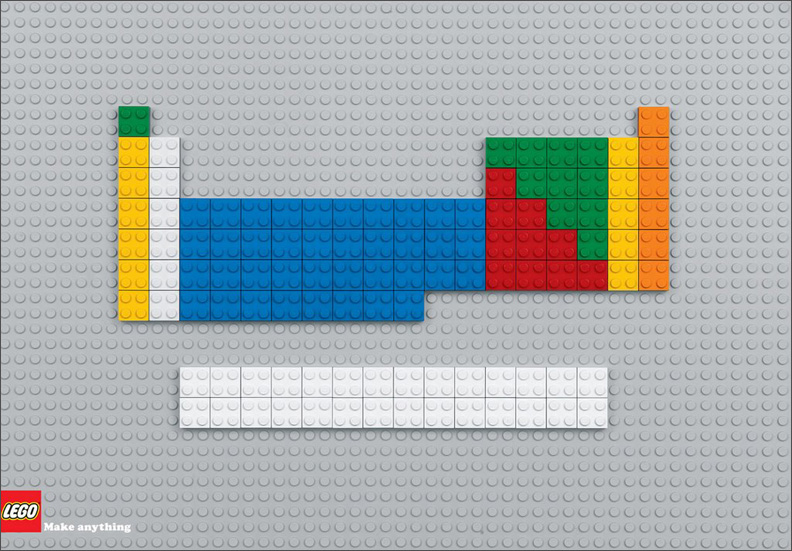
Coolest periodic table of elements ever.

I especially love the tagline: “Make anything.”

From www.frederiksamuel.com.

I feel like this would be a good image to broach the subject of physical laws of the universe.

By Matt Dawson, via Hey Oscar Wilde.

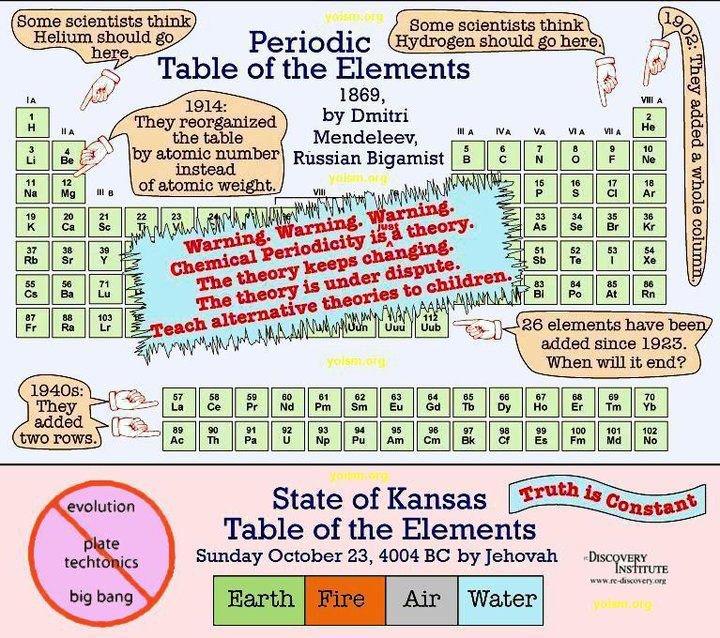
Kansas Periodic Table of Elements: a Comparison

Source: an website which used to spoof the Discovery Institute (but now no longer exists).

Notes from Mattel’s “Future of Barbie®” Brainstorming Session (including Stem Cell Barbie and others…)

I always thought the Stem Cell Barbie’s slogan would make an interesting t-shirt. Note that this was originally published at Yankee Pot Raost.

By DAVID NG

ConceptStem-Cell Barbie®

Description: Produce a plastic mesh form in the shape of a Barbie doll. Seed this mesh with embryonic stem cells. Culture in bio-chambers until cells infiltrate and coat the plastic form.
Pro: This Barbie might get pregnant.
Con: This Barbie might get cancer
Potential slogan: “Feels like real skin because it is real skin.”

ConceptHybrid Barbie®

Description: Barbie doll powered by both conventional gasoline engine, as well as an electric motor.
Pro: Barbie is emissions-compliant.
Con: No one can figure out a good place for the gas nozzle to go in. It always ends up looking dirty.
Potential slogan: “This baby gets up to 40 miles per gallon.”

ConceptSchrödinger’s Barbie®

Description: Interactive Barbie doll placed inside a thick lead box, containing a mock cyanide canister, and mock Geiger counter. The Geiger counter may or may not release one decaying mock atom, which in turn, may or may not break the canister releasing the cyanide. Therefore, child would be uncertain as to the fate of the Barbie doll (who could be pretend-dead or pretend-alive) until the lead box is actually opened.
Pro: This is fun way to illustrate an aspect of quantum law, which suggests that due to the superposition of states, Barbie is both dead and alive until the box is opened.
Con: Huh?
Potential slogan: “Schrödinger’s Barbie—be the first to give a shit.”

ConceptSuper Malleable Barbie®

Description: Produce Barbie dolls using the Dow Corning 3179 dilatant compound (a mixture containing silicone oil and boric acid, commonly known as Silly Putty).
Pro: Barbie can bounce.
Con: When Barbie pretend-falls asleep whilst pretend-reading a newspaper, the newsprint will show up on her face.
Potential slogan: “Ken will thank you.”

ConceptFlame-Retardant Barbie®

Description: Coat existing doll product with copious amounts of the common flame retardant, polybrominated diphenyl ether.
Pro: Excellent opportunity for accessories (fireworks, matches, flame throwers, etc).
Con: Excellent opportunity for accessories (fireworks, matches, flame throwers, etc).
Potential slogan: “Throw the Barbie on the barbie!”

ConceptSupercomputer Artificial-Intelligence Robot Barbie®

Description: Multiple clusters of high-powered processors networked to a Barbie doll mainframe. 2 USB ports standard. CD/DVD burner drive optional.
Pro: No more stupid brainstorming sessions—send Barbie instead.
Con: Small chance of total world domination and destruction of the human race as we know it.
Potential slogan: “Kicks ass at chess!”

When oxygen gets excited. Great video on the chemistry of “fire.” (via @beatricebiology)

This is nicely done.  Great simple overview of the notion of “burning.”  Good for use when talking about fossil fuels.

By Beatrice the Biologist.

Here is a song I wrote about thermodynamics. Be nice…

By DAVID NG

Lyrics as follows:

THERMODYNAMICS OF LOVE (demo mp3)

First you have one
It says a ton
Basically saying that something can’t come from nothing

Gives you the sum, of things to and from, making it all – total up – all working out

CHORUS
I should have you all figured
With a law like this in mind
Listen to my reasoning
You should know by now

The thermodynamics of love.

Then you have two
Messing with you
Telling you life is a journey full of disorder
Giving off heat, ordinary feat, and telling you work a bit harder – figure it out.

CHORUS

ITS very simple
very rational
really excerptional
just universal

absolute zero
not moving on
stuck in a standstill
we’re not responsible.

FADE TO END

Oxygen plus Nitrogen plus 10 to 12 hours of free time = your own home lab!

From Fake Science.

Synthesis of Anthropomorphic Molecules: The NanoPutians

“Described here are the synthetic details en route to an array of 2-nm-tall anthropomorphic molecules in monomeric, dimeric, and polymeric form. These anthropomorphic figures are called, as a class, NanoPutians. Using tools of chemical synthesis, the ultimate in designed miniaturization can be attained while preparing the most widely recognized structures:  those that resemble humans.”

J. Org. Chem., 2003, 68 (23), pp 8750–8766 DOI: 10.1021/jo0349227

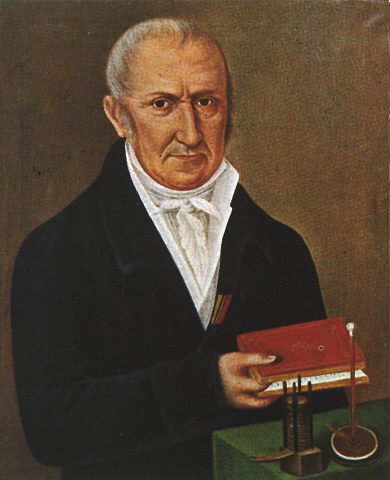
Alessandro Volta invented the battery but also hung out with Napoleon and made methane ignited airguns!


.

In 1800, as the result of a professional disagreement over the galvanic response advocated by Galvani (he of the electricty twitching frog leg’s fame), he invented the voltaic pile, an early electric battery, which produced a steady electric current.[6] Volta had determined that the most effective pair of dissimilar metals to produce electricity was zinc and silver. Initially he experimented with individual cells in series, each cell being a wine goblet filled with brine into which the two dissimilar electrodes were dipped. The voltaic pile replaced the goblets with cardboard soaked in brine. The battery made by Volta is credited as the first electrochemical cell. (via wiki)

Note that Volta is also the first to characterize the gas Methane. In fact, he even devised an air gun contraption that relied on igniting the flammable gas (see this link for pictures). For this and his battery invention, he was made a count by Napoleon.

MUST find recipes and do this chemistry demo myself! Watch this, watch this, watch this!

Seriously… Watch this, watch this, watch this…


.
What you are watching is called The Briggs-Rauscher reaction, demoed by “the guy who literally wrote the book on chemistry demos: University of Wisconsin-Madison Chemistry Professor and 2012 ACS President Bassam Shakhashiri, author of the popular “Chemical Demonstrations” textbooks.”

Via Eric Lagally.

p.s. Here are the recipes:

– Solution A:
Add 43 g potassium iodate (KIO3) to ~800 mL distilled water. Stir in 4.5 mL sulfuric acid (H2SO4). Continue stirring until the potassium iodate is dissolved. Dilute to 1 L. 

– Solution B:
Add 15.6 g malonic acid (HOOCCH2COOH) and 3.4 g manganese sulfate monohydrate (MnSO4 . H2O) to ~800 mL distilled water. Add 4 g of vitex starch. Stir until dissolved. Dilute to 1 L. 

– Solution C:
Dilute 400 mL of 30% hydrogen peroxide (H2O2) to 1 L.

Procedure

Place the stirring bar into the large beaker.
Pour 300 mL each of solutions A and B into the beaker.
Turn on the stirring plate. Adjust the speed to produce a large vortex.
Add 300 mL of solution C into the beaker. Be sure to add solution C after mixing solutions A + B or else the demonstration will not work. Enjoy!

Notes

This demonstration evolves iodine. Wear safety goggles and gloves and perform the demonstration in a well-ventilated room, preferably under a ventilation hood. Use care when preparing the solutions, as the chemicals include strong irritants and oxidizing agents.

Clean Up

Neutralize the iodine by reducing it to iodide. Add ~10 g sodium thiosulfate to the mixture. Stir until the mixture becomes colorless. The reaction between iodine and thiosulfate is exothermic and the mixture may be hot. Once cool, the neutralized mixture may be washed down the drain with water.

From chemistry.about.com.

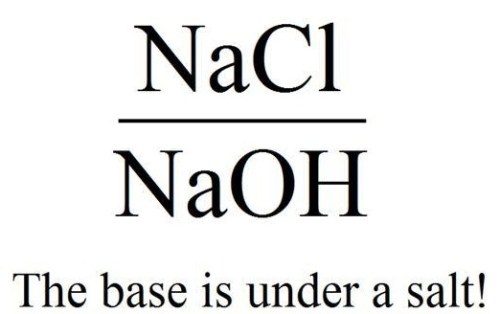
This chemistry pun is so bad, it’s good…

Get it?

At a chemistry party, I would totally be a noble gas.

Via European Commissions: Research and Innovation.

Seriously dude, I think you’re overreacting. #funny #chemistry

Via stickycinemafloor.tumblr.com.

None of my Science Piñatas are Appropriate for Children.

By DAVID NG

(I always thought that this piece would have been great as a pictorial. First published at McSweeney’s)

– – –

1.
Hydrochloric-Acid-Filled Piñatas

Good: Have the sturdy construction required to ensure no unintended leakage of contents.

Bad: Possible severe burning. Brings the party down.

2.
Endangered-Animal Piñatas

Good: Kids love animals. High potential for very cute-looking piñatas, like baby seals, for instance.

Bad: Beating with a stick sort of sends the wrong message.

3.
Particle-Accelerator Piñatas

Good: Built full-scale and often several miles in dimension. Therefore, young children find them easy to hit.

Bad: Each one worth several billion dollars. Parents generally not keen on damaging them.

4.
Smallpox (Variola major) Piñatas

Good: Cool virus shape.

Bad: Highly contagious and high mortality rate. Would also bring party down—as well as everyone else within a 100-mile radius.

5.
Infinity-Symbol Piñatas

Good: Possibly a way to address the often reported decline of mathematics education.

Bad: Thinking about infinity makes my head hurt. Now imagine having to explain it to a child over and over again.

6.
Piñatas in the Shape of the USA and Filled
With the Greenhouse Gas Carbon Dioxide

Good: Sort of works as a metaphor for the United States’ role in the global-warming crisis.

Bad: Unfortunately, the irony would be totally wasted on a 5-year-old.

Amazing science posters by Schuhle-Lewis. Definitely worth a look.

By Schuhle-Lewis (link | link | link).

Cummingtonite. #geology #chemistry #notwhatyoumightthinkitis

Yup. I did a double take too. Here is the wiki entry for this mineral.

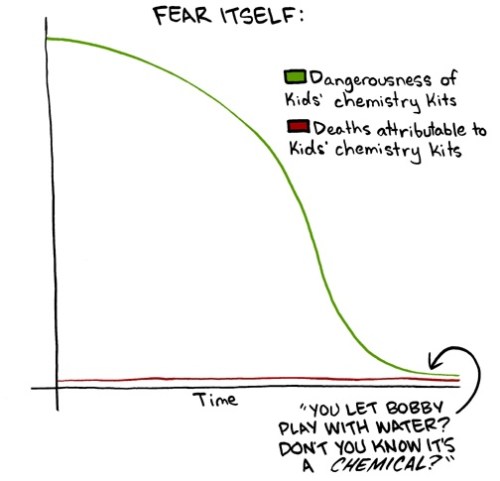
“You let Bobby play with water? Don’t you know it’s a CHEMICAL?”

Via Saturday Morning Breakfast Cereal.

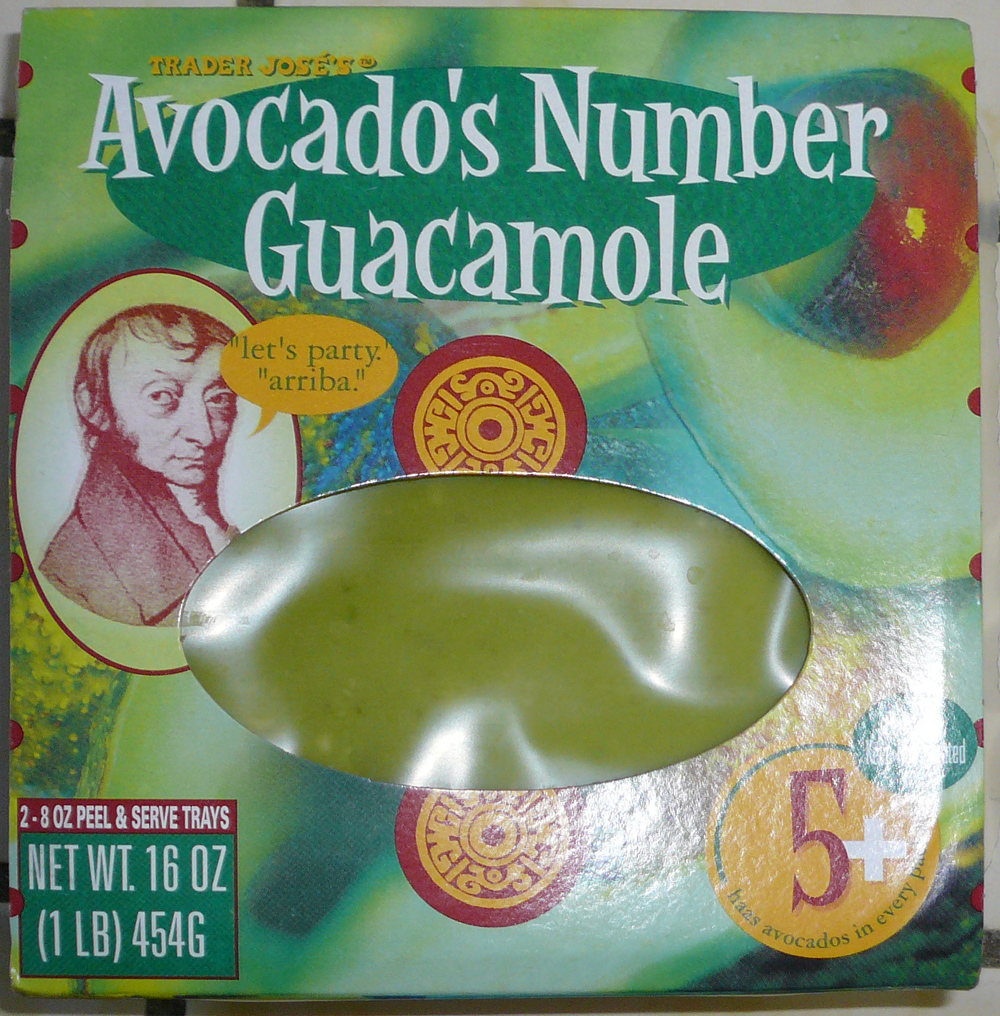
Avocado’s Number Guacamole #chemistrypun

Apparently the back leads with: “There may not be 6.02 x10²³ avocados in here, but…”

A Trader Joe’s product, via gregamckinney.