
.
Tag: biodiversity




October 28, 2013
Ridiculously detailed (but fake) research paper on the electrical abilities of #Pokemon #pikachu

– – –
PLOS BIOLOGY (March 2013). Vol 11 Issue 3. e1001501 p1-6
Click on the image to go to full text paper. Click here for pdf download.
ABSTRACT
Electrocytes contain membrane proteins that allow the polarization of the plasma membrane, thereby allowing the generation of electricity in animals. It has been long established how electricity is generated in the electric eel, but recent studies found similar electrocytes to be active in electric mice. We aimed to study the basis behind electric discharge in a land animal. We found that the voltage-gated sodium channel, Nav1.4a, was expressed in electric organs of the electric mouse, Pokemon pikachu and the electric eel, Electrophorus electricus. However, Nav1.4a was not expressed in the muscle cells of E. electricus while it was expressed in the muscle cells of P. pikachu and other rodents. We also found that P. pikachu and E. electricus shared similar amino acid substitutions at the nonconserved region of this protein. Voltage-clamp technique gave insight on the much greater potential differences generated by P. pikachu compared to electric eel and finally, microscopy analysis revealed greater Nav1.4a numbers in P. pikachu, potentially correlating with aforementioned greater electric potential generation, which perhaps lead to its capability to discharge electricity readily through air.
AUTHOR SUMMARY
Many species of fish are able to generate weak or strong electric discharges, either for communication or for stunning predator or prey. The electric organ, made of electrocytes, is responsible for generating electric discharge. Electrocytes are thought to be derived from neuronal and muscle cells. The voltage-gated sodium channel, Nav1.4a, is found to be absent in the muscle cells, but is highly expressed in the electric organs of electric fishes. In our study, we looked at Nav1.4a in a species of mouse, P. pikachu, that also generates electricity, but through air instead of water. We compared this electric mouse with electric eel as well as nonelectric rodents. Here, we found that Nav1.4a is expressed in both the muscles and electric organs of P. pikachu. In terms of the amino acid sequence, the channel protein of P. pikachu was more similar to the electric eel rather than the rodents. We then observed that P. pikachu possessed much greater numbers of Nav1.4a and generated a much higher potential compared to the electric eel, which may explain its ability to discharge electricity through air.
Via the Science Creative Quarterly (with apologies to PLOS Biology)
October 15, 2013
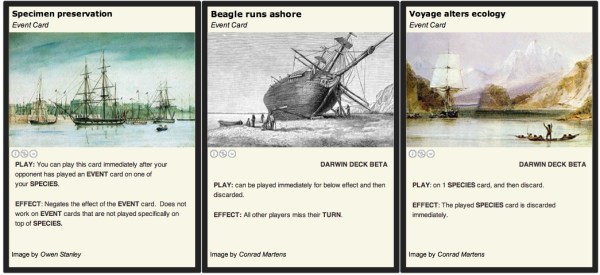
Announcing the “Voyage of the Beagle” trading card game. Plus a call for some crowdsourced goodness!
The Phylo project is hard at work on preparing the next high quality Phylomon* deck, and this one will revolve around Charles Darwin and his wonderful 5 year voyage on the H.M.S. Beagle.
At this point in time, we’ve enlisted the help of noted Darwinian aficionado, Karen James, who has nicely narrowed down the list of cards that are needed for this endeavour (see original google doc here). In turn, I have a group of folks in the backend of the phylo website, who have produced a number of nice looking “beta” cards that can be used to test things out (they used images from vintage natural history prints, many of which were actually produced by folks on the voyage itself – i.e. John Gould for example).
These “beta” cards can be found on the phylogame website, but we’ve also produced a handy dandy 10 page pdf of the putative deck for easy printing and cutting (click on the image below to download – 11.5Mb pdf). Note, the rules for the game can be downloaded here.

Click on the cards to download the beta deck pdf (11.5Mb)
That being said, because this is a crowdsourced project, we would love to hear comments from anyone interested, and with that community incentive in mind, here is a list of things to consider:
1. The next two weeks, I’m hoping that some folks out there in the world wide web will print out this “beta” Darwin card set and give it a try: this way, we can finalize what the deck list needs to be. The reason why there is a time crunch on this, is that this finalized list will allow us to start the process of seeking out and commissioning artists for the production of lovely card art.

Click on the cards to download the beta deck pdf (11.5Mb)
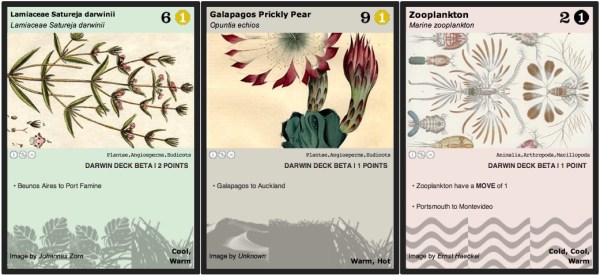
2. The species used are all species observed and noted during that fateful voyage. For now, they’ve been grouped according to certain legs of the trip (kind of by geography if you will). This was mainly because the actual sea voyage had a lot of going back and forth, so Karen thought that going with a temporal theme would be too tricky. Here you’ll note that the geography categorization is mentioned in the card text (i.e. “Galapagos to Auckland), but we’ve also coordinated the background colours of the cards themselves, to make this easier to see (some cards have a reddish background, some brownish, etc).
Click on the cards to download the beta deck pdf (11.5Mb)
3. With the geographical mode of categorization, and because the H.M.S. Beagle itself traversed a significant part of the globe, it turns out that when one plays this game, there will often be cases where an organism can be played adjacent to another where the compatibility rules work, but that they would never actually be in the same part of the world (i.e. technically, some connections would not be grounded in reality, as usually decks are organized around locality unlike this one). Here, players will need to make a judgement call on how important this is. In other words, I’d like to hear people’s opinions on what they think about this. We think the cards can still be played in a scientifically literate manner (i.e. using the background card colour to help guide these more “real” connections), but that being overly strict will likely make the game much more finicky. Perhaps there are options out there where the scientifically literate connections (i.e. via background card colours) are worth more points, or are immune from event cards, etc. We’d love to hear your thoughts.
4. The current list of “Event Cards” were pretty hastily made and largely influenced by availability of cool vintage paintings. Since the final deck will involve art commissions, we’re actually a lot more free to come up with much more clever event cards. Would love to hear more ideas here.
Click on the cards to download the beta deck pdf (11.5Mb)
5. And since we’re asking for help generally, there is also a much bigger challenge at stake. Karen and I are very intrigued by the idea of tweaks to the current rules that allow folks to follow the voyage in a “temporal” manner. i.e. the possibility of “history cards.” Mostly, event cards change the food chain connections, or alter the game play where someone has a logistical advantage or disadvantage (i.e. The pdf you’ve been provided with is pretty much the usual ecosystem type building game, which we know works pretty well). With the possibility of “history cards” we want to see if there are elements to the game that can illustrate things in a time dependant (i.e. historical) manner. This is actually why the pdf has a number of blank cards. These have been included in case anyone out there has a cool idea they want to test out, since we currently have no idea what this might look like, or know how doable it is. Furthermore, we’re not even sure if it’s something we want to try to sort out now, or perhaps later with the release of Darwin themed expansion packs (i.e. no rush to do this, but super mega bonus points if someone does have a go).
Anyway, for folks who do help out, please leave commentary somewhere for us to find (if not in comments sections, then maybe at the forum, or via email – db at mail dot ubc dot ca). Anybody who comes up with some excellent suggestions/commentary will be eligible to receive the Darwin deck when all is said and done (and also the Beaty Deck as well). Note if the contribution is outstanding, we’ll also make sure you’ll be properly attributed in the final version of the deck itself.
Game on!
October 7, 2013
Children’s hospital uses biodiversity to whimsical and playful effect
In case, you were wondering: the Boulogne (France) hospital is called the Giraffe Childcare Center.

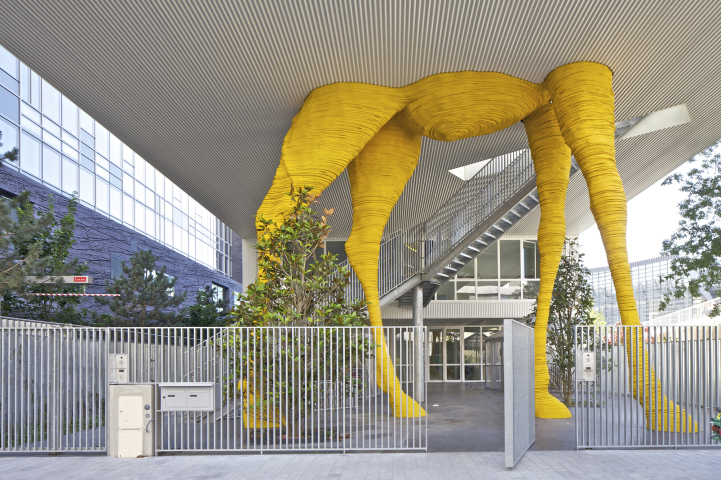
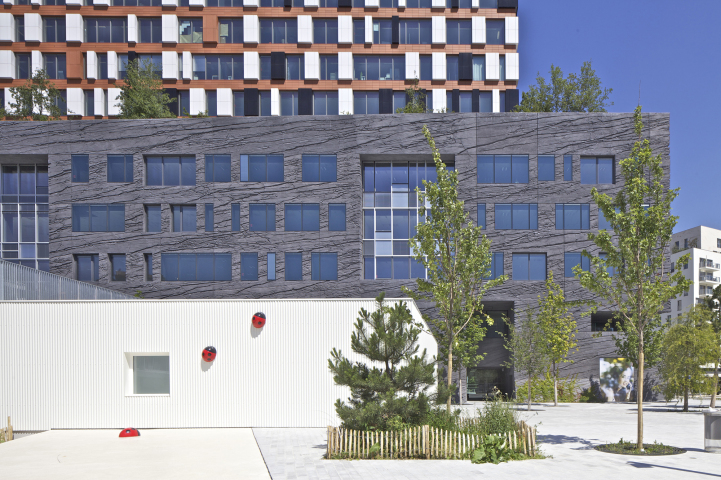

Designed by Hondelatte Laporte Architecte. Via My Modern Met.
September 20, 2013
In case you need an interesting anecdote on human feces and excrement generally
For slides on the value of feces. Like… ecosystem assessment of feces as a seed dispersal system? Nutrient rich manure for soil upkeep? Things that would resemble a sort of poo-nomics: using feces for microbial or metagenomic analysis?

“In 1961 Italian artist Piero Manzoni offered art buyers 90 tins of his own excrement, signed and numbered, each sold by weight at gold’s daily market price.
That would have been a good investment. A tin that would have cost $37 in 1961 was auctioned by Sotheby’s for $67,000 in 1991 — outperforming gold more than seventyfold.”
Text via Futility Closet. Image from Wiki Commons.


September 13, 2013
That’s one small rocket launch for man, one giant leap for frogkind…
This. Is. Epic.
And all over the internet, but now also archived here at Popperfont if you ever need a graphic on (amphibians, natural selection, biodiversity, thrust calculations, insert keyword here).

From NASA/Universe Today, via Atlantic.
September 11, 2013






July 19, 2013
Vancouver folk take note: The Beaty Biodiversity Museum @phylomon deck is available for purchase (and they look AWESOME!)
In case, you’re new to Phylo, it’s basically a crowdsourced art, science, education and gaming project that revolves around the unfortunate reality of children knowing WAY more about Pokemon than they do about the flora and fauna around them. This, of course, is problematic since one might suggest that it’s not a bad thing for children to want to know a little more about the real environment around them (a more detailed description of the project can be found here). Up to now, the Phylo project has been largely about collecting and playing with a continually pool of very cool and free print-your-own cards.
But now, I’m happy to announce, we finally have our first high quality deck, available for purchase!

So let me introduce the (DUM DUM DUM!) Beaty Biodiversity Deck, currently available at the Beaty Biodiversity Museum gift shop*. It’s on sale for limited time (10% off from $12.99, until September 1st), so if you live in the neighbourhood and want to pick up one of the first available sets, head on over to the museum!
This is the first purchasable deck, but stay tuned as we have a few more slated to be released in the near future. For now, here are some close ups of the Beaty cards!
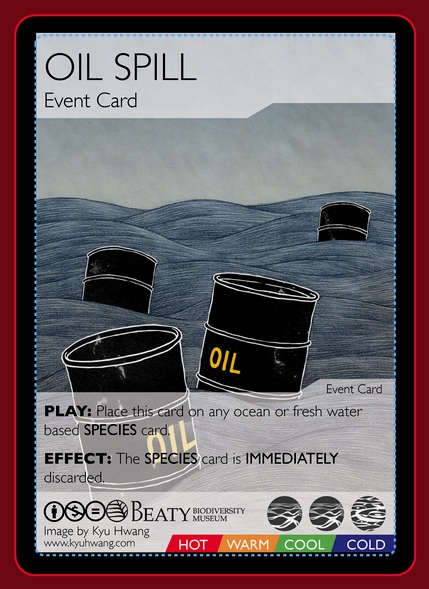
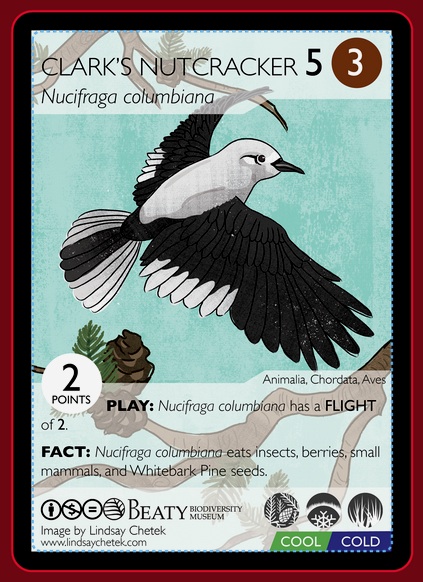


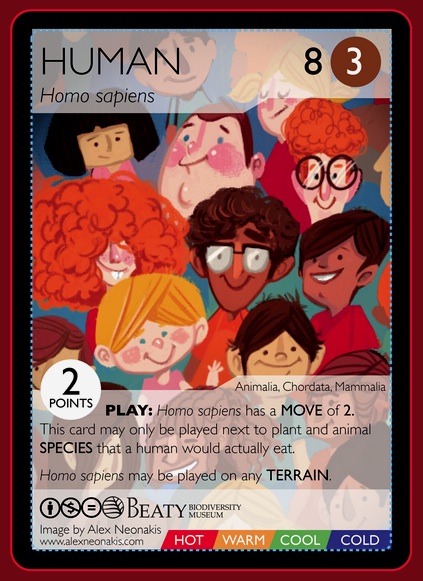
Art Lindsay Chetek, Kyu Hwang, Brandy Masch, Kyle McQueen, Victoria Heryet , Derek Tan, and Alexandria Neonakis.
*The museum is also working on making the deck available for online purchasing, so check out this link for more information!


June 24, 2013
Not an angel, but a common clione (and a lovely photo of one too)
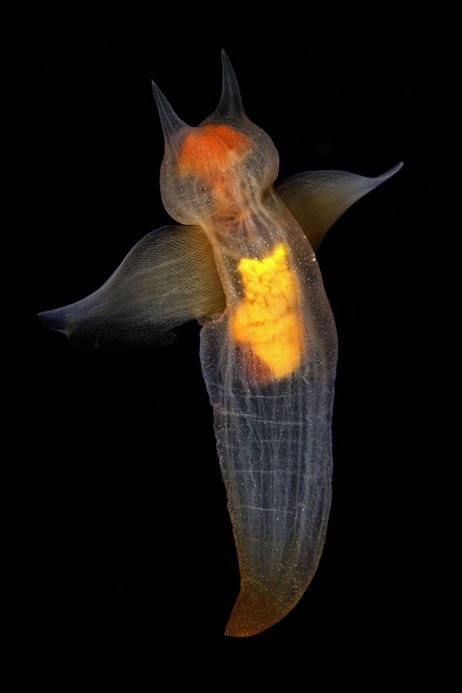
By Franco Banfi, via Thinx. Also available as a Phylo card.


June 17, 2013
Large scale whale photos: epic and beautiful.

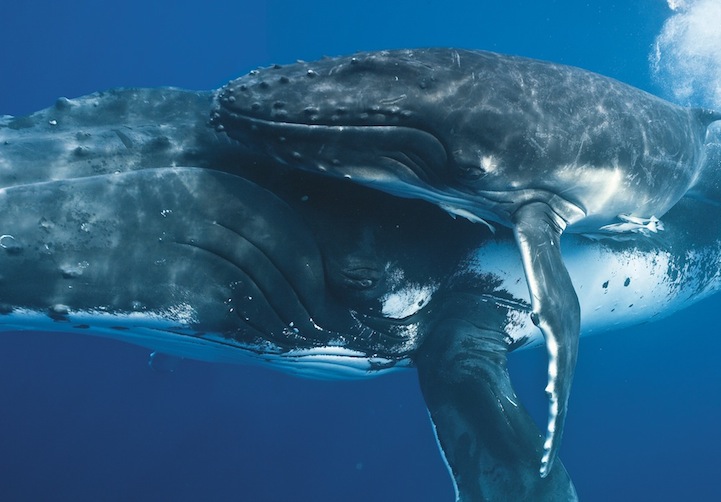
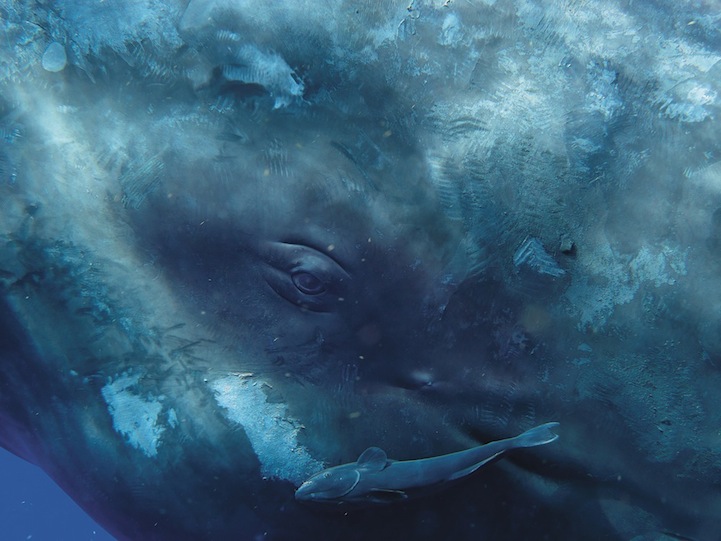
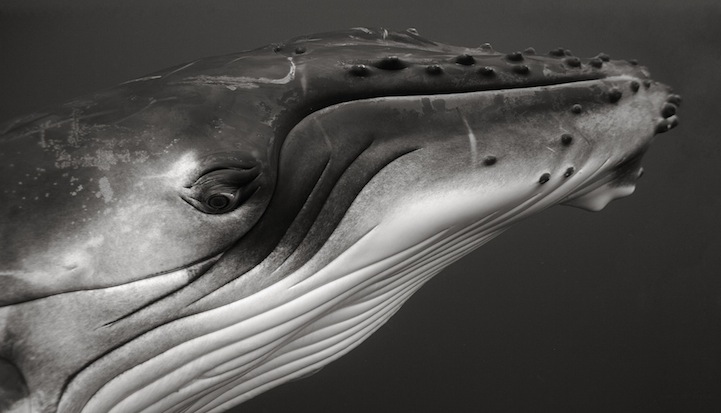

“Photographer and conservationist Bryant Austin captures some truly breathtaking shots of whales as a reminder of their beauty and existence in the vast oceans. The photographer manages to get full body shots of them, a feat that so few are able to achieve with such high quality, while revealing remarkable details of these aquatic mammoths. Browsing through his collection, one feels like they can actually reach out and touch the giant creatures, feeling the texture of their skin while examining the breadth of their bodies.”
By Bryant Austin. Text via My Modern Met.


 popperfont.net
