.

Tag: biodiversity

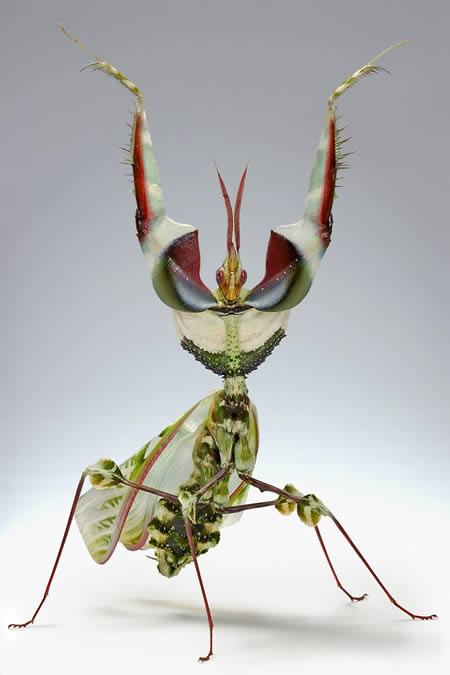
This picture of a Devil’s Flower Mantis is pretty awesome.

“The Idolomantis Diabolica is sometimes known as the “King of all mantids” for the obvious reason: it’s beauty, size and rarity, is one of the largest species of praying mantis that mimic flowers. (Photo by: Scott Thompson) ”

Via oddee.com.

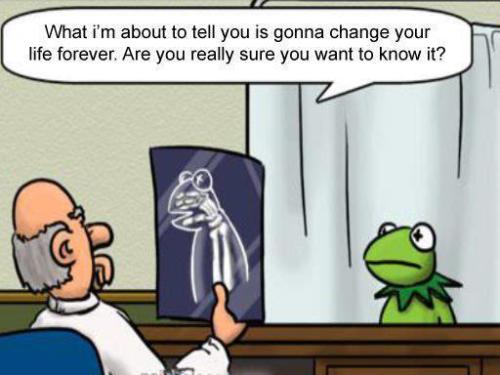
Kermit gets some bad news. #funny

Can’t find source. Seems to have first surfaced in 2005 though.

Awesome Venn Diagram (yes it involves beavers and keytars)

Also available as a t-shirt. By tenso GRAPHICS.

Beautiful: what you get when you mix a dead turtle with chemistry that includes potassium hydroxide and red dye.

Iori Tomita transforms marine life with scientific technique of preserving and dying organism specimens into art. A series that he calls New World Transparent Specimens. Tomita first removes the scales and skin of fish that have been preserved in formaldehyde, he leaves the organism to soak in a mixture of blue stain, ethyl alcohol, and glacial acetic acid before utilizing the enzyme trypsin to break down protein and muscles, stopping the reaction as soon as they become transparent but before they lose their form. The bones are then stained by soaking the fish in a combination of potassium hydroxide and red dye, before the specimen is preserved in glycerin.(link).

Cabinet of Curiosity repeatable pattern = I want this as one of those laptop sleeves.

I might also see if I can use this for my twitter background.

By the talented Sakura Snow, via the always awesome Fresh Photons.

Beautiful short film about decomposition of a whale carcass. via @boingboing

By Sharon Shattuck and Flora Lichtman. Via Boing Boing.

Whoa… it’s a CYCLOPS SHARK!

Via National Geographic.

Bad ass Pokemon (I mean Phylomon) cards. Looking to hire some artists – leave your portfolio website if you’re interested.

Just saying that biodiversity isn’t all about beauty and things being cute and cuddly.

These cards at the Phylogame website rock! And in case, you’re new to the Phylomon idea, it’s basically a crowdsourced art, science and gaming project that revolves around the reality of children knowing WAY more about Pokemon than they do about the flora and fauna around them. This, of course, is problematic since one might suggest that it’s not a bad thing for children to also know a little more about the real environment around them (a more detailed description of the project can be found here).

This is also a post to say that I’m on the lookout for artists to contribute to special Phylomon “decks.” In particular, we’ve got funding to seek out art contributions at about $200 per image, with a preference of hiring each artist to contribute at least 5 or so images at a time. Image copyright would remain with the artist, but we ask that the phylo project is allowed to showcase them online in card format in a non-derivative, attribution, non-commercial manner; as well as allow non-profits, museums, educational institutions to use the image (but only in the form of phylo cards) in physical decks that may be sold only for agreed upon outreach project fund raising purposes.

Anyway, if you’re a freelance artist and the project (and the pay) sounds interesting to you, then please do leave your portfolio website in the comments below (we’re also going to contact a few artists who have already so nicely allowed us to use existing art). As well, just so you know, we’re actually looking for art that veers a bit away from the usual conservative realistic type of animal art (i.e. character design buffs are welcome!). Ultimately, we’re looking for art that might actually be considered a bit Pokemon-ish but with details that reflect the real-life organisms.

Oh… And if you want to see more of our existing catalog of cards, then just go to http://phylogame.org/cards. You can also print more, by just hitting “select” on any cards you like – there’s about 300 to choose from, as well as about 500 DIY cards that kids have drawn. When you do this, the card should appear in the “selected cards” shopping basket. When you’re finished, just click on the “Selected Cards” link and it’ll just show you just the ones you’ve picked (6 at a time).

The best part is that you can just print that webpage (i.e. what you see there), and it’ll automatically produce a printout of just the cards (6 at a time) and at print quality resolution.

Game on!
Dave Ng

Naked Mole Rat Genome Sequenced.

Paper link: (E. B. Kim et alNature doi:10.1038/nature10533;2011)

“The naked mole rat is one of Mother Nature’s great survivors. The busy underground lairs in which the animals live almost always run low on oxygen and high on carbon dioxide. Steady subterranean temperatures have sapped the creatures’ ability to regulate their body temperature. Yet what they sacrifice in quality of life they more than make up for in extraordinary quantity. Comfortably the longest-living rodent, naked mole rats can live for more than 30 years. They seem impervious to cancer and do not feel some types of pain.

All of which means that the frankly ugly naked mole rat could prove a sight for sore eyes in the biomedical community. The information published on its genome and transcriptome has already revealed patterns of gene expression different from those in humans, mice and rats, and this may underlie its longevity. With further study, mechanisms of ageing, genetic regulation of lifespan, adaption to extreme environments, low-oxygen tolerance, cancer resistance, sexual development and hormonal regulation are up for grabs.”

Via Nature. Image from Livescience.com.

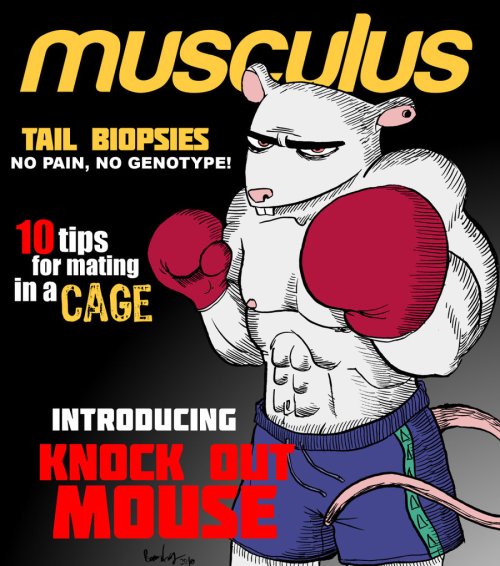
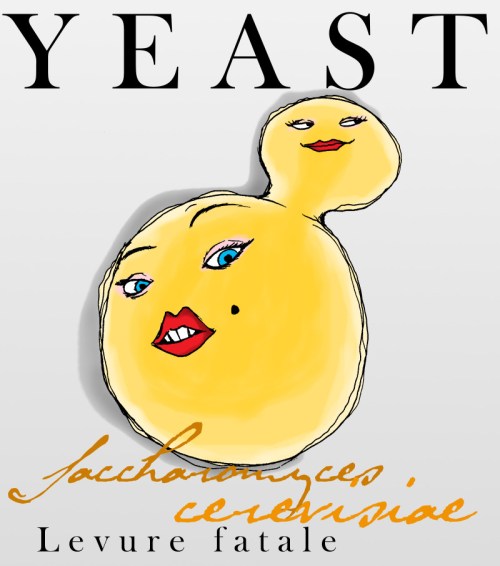
Model Organisms: The magazine covers.

These are awesome. From the talented Velica – link.

Evolution of a (certain corporate) mouse.

By William Stout and Jim Steinmeyer, via Fresh Photons, via Jimmy Tyler.

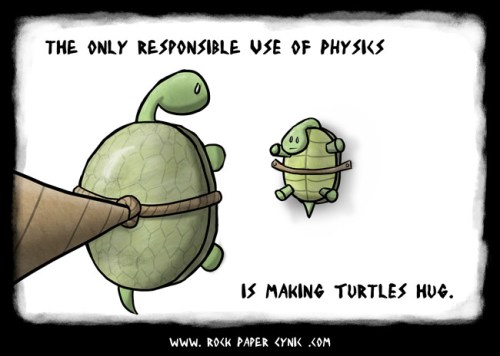
The only responsible way to use physics: is making turtles hug.

Perhaps a commentary on how sometimes science (and esp. some aspects of physics) is not obviously applicable?

Via Rock Paper Cynic.

San Diego Waves Glow in the Dark

“When jostled, each organism (warmwater phytoplankton Lingulodinium polyedrum) will give off a flash of blue light created by a chemical reaction within the cell. When billions and billions of cells are jostled — say, by a breaking wave — you get a seriously spectacular flash of light. ~Professor Peter J. Franks of the Scripps Institution of Oceanography”

Via Scuttlefish.

What if Smurfs were real? Presumably the systematic biology folks would have some words.

What if Smurfs were real? The Smurf is actually the result of a symbiotic relationship between two organisms. We believe that Smurfs put their ’embryos’ in the button of a developing mushroom. From a distance, Smurfs seem like they are wearing a hat and pants but as you can see this is a fallacy. The fungus provides camouflage and protective epidermal layers for the creature, while the creature provides nutrients and mobility for the spreading of spores.

Via Nate Ethallinan.

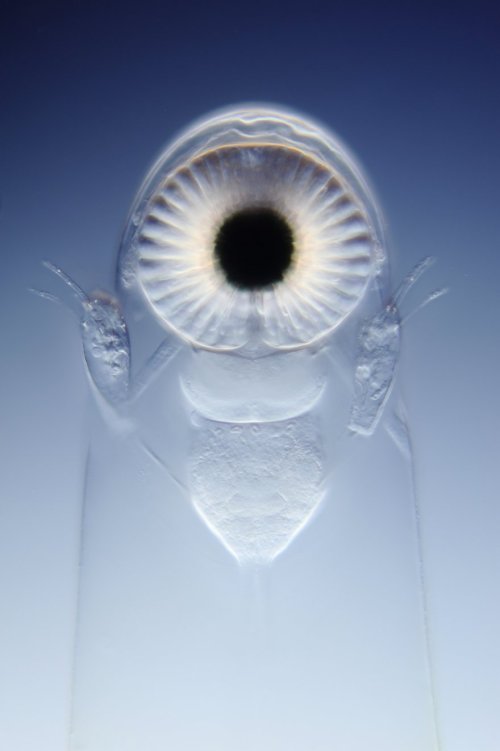
I’ve got my “eye” on you. #amazingphoto

This remarkable image of Leptodora kindtii (giant water flea) by Wim van Egmond is one of many incredible images from the Nikon Small World competition (go and vote for your favourite). In case, you’re wondering – that is, apparently, the flea’s eye.

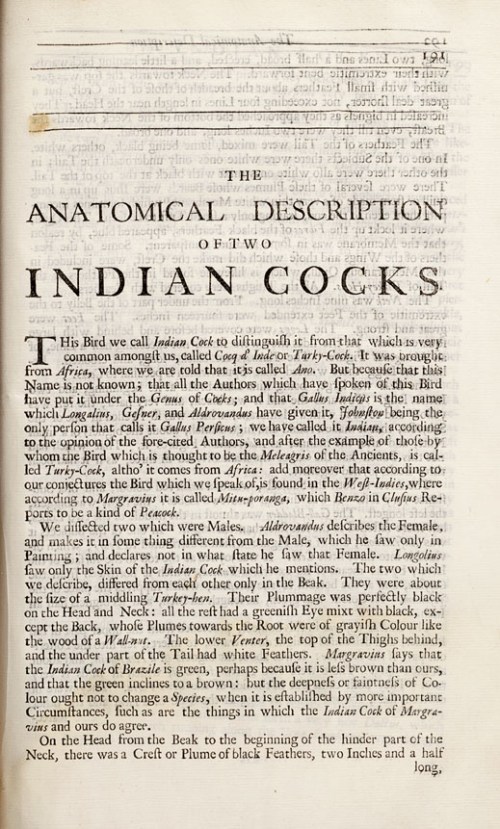
Anatomical description of two Indian Cocks. Example of scientific literature that isn’t quite what you expect.

From Memoir’s for a natural history of animals : containing the anatomical descriptions of several creatures dissected by the Royal Academy of Sciences at Paris
By Claude Perrault, 1688.; hat tip to Fresh Photons.

Tree made with blood vessels.

By boojumsan via Flickr

The hypotamoose. Awesome t-shirt.

Get the t-shirt here.

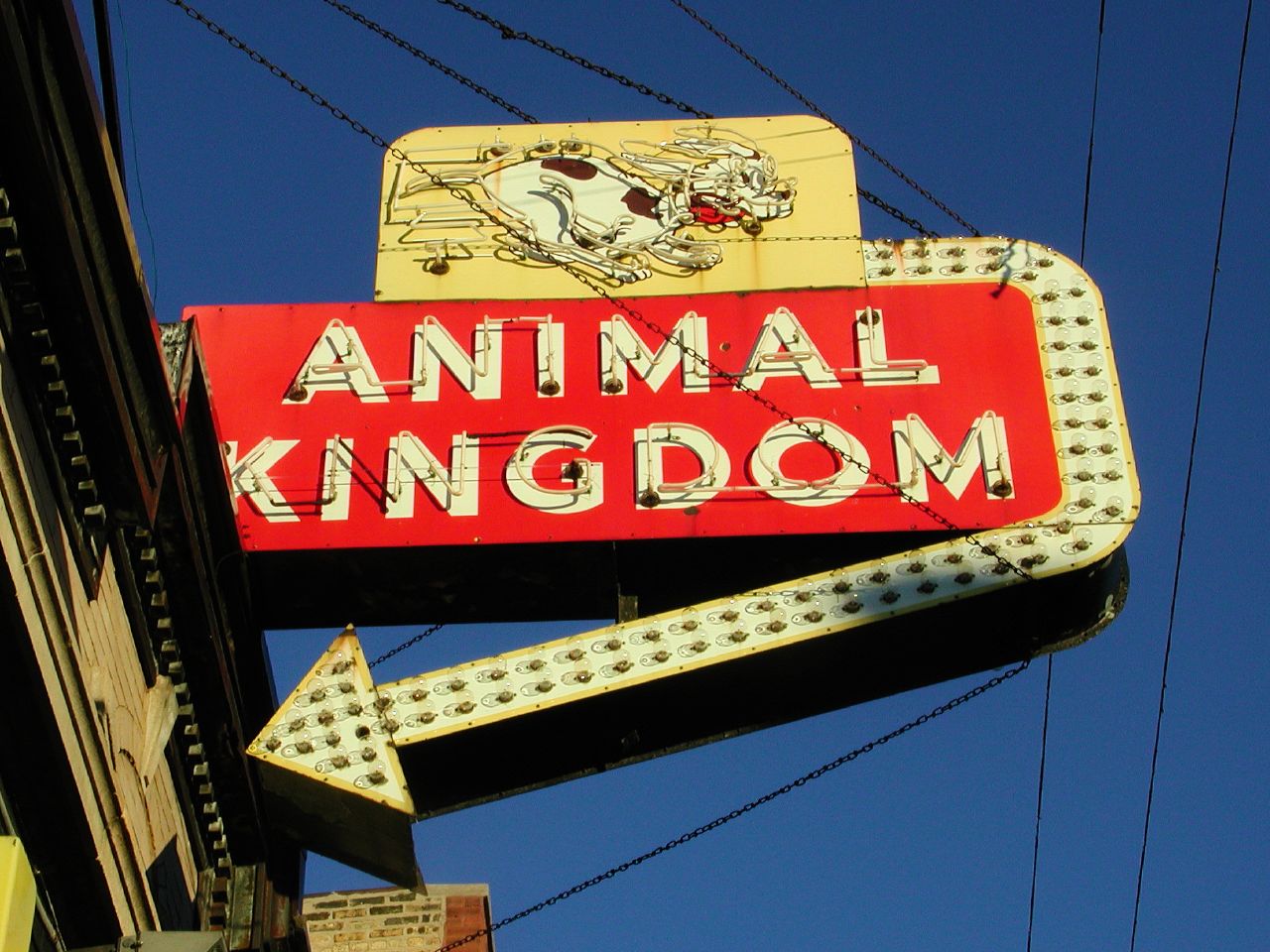
Animal Kingdom (slide depository)

keywords: biodiversity | ecosystem assessment

(Image: Animal Kingdom Sign, a Creative Commons Attribution Share-Alike (2.0) image from pixeljones’s photostream)

This object has been temporarily removed as we revise its facial expression (via @edyong209)