
.
Tag: astronomy




May 16, 2012
Awe inspiring time lapse sequences from the International Space Station. #whoa
It’s footage like this that makes me wish I was an astronaut (best viewed in full screen).
“The International Space Station Expedition 30 crew shot some truly awe-inspiring time-lapse sequences flying over practically every square mile of the globe.
I downloaded the high-resolution image sets that have been made available by the NASA Johnson Space Center and constructed this short time-lapse film in hi-res 2K project format. I was amazed at how clean the Nikon D3S images turned out (even at ISO 3200 and above) which kept the post-processing requirements to a minimum.
By Adonis Pulatus.
May 15, 2012
This lovely image of the Wide-field Infrared Survey Explorer (WISE) sky is pretty breathtaking

(Click image for larger view)
“In the mosaic, the Milky Way Galaxy runs horizontally across this map. The Milky Way is shaped like a disk and our solar system is located in that disk about two-thirds of the way out from the center. So we see the Milky Way as a band running through the sky. As we look toward the center of the galaxy, we are looking through more of the disk than when we are looking at large angles away from the center, and you can see a noticeable increase in stars (colored blue-green) toward the center of the image.”
From NASA.
May 14, 2012
Giant Sun Simulation. #whoa
“Electronic artist Rafael Lozano-Hemmer is interested in creating advanced technology art that involves public participation. This large installation entitled Solar Equation is a simulation of the Sun, 100 million times smaller than the real thing! The sphere, commissioned by the Light in Winter Festival in Australia, is the largest spherical balloon in the world.”

It would also be kind of interesting to do the reverse perspective calculation (i.e. how big would this Sun actually be, if it was situated in the same place in space, but actually looked this big!).
By Rafael Lozano-Hemmer, via My Modern Met.
May 13, 2012
Shots of the Earth and Moon in the same frame. #beautiful
I just think this one is very cool.
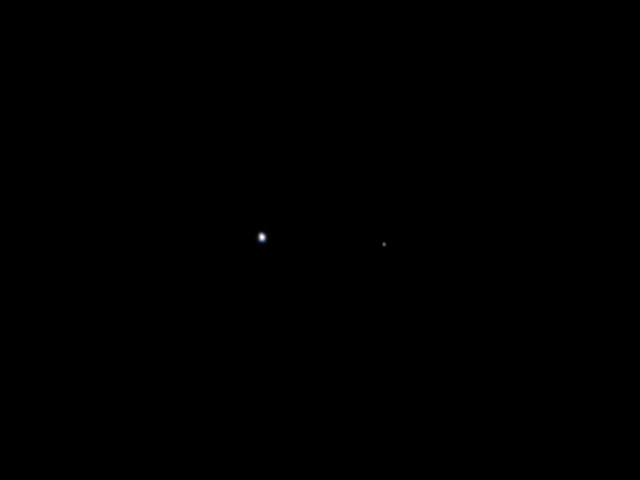
“Earth (on the left) and the moon (on the right) were seen by NASA’s Juno spacecraft on Aug. 26, 2011, when the spacecraft was about 6 million miles (9.66 million kilometers) away. The photo was taken by the spacecraft’s onboard camera, JunoCam.” CREDIT: NASA/JPL-Caltech
And here is the first one ever.
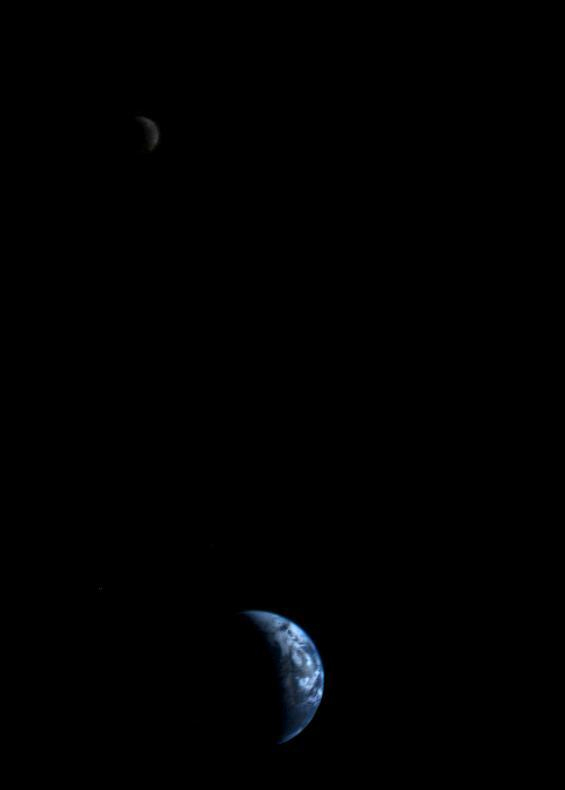
“This picture of a crescent-shaped Earth and moon — the first of its kind ever taken by a spacecraft — was recorded Sept. 18, 1977, by NASA’s Voyager 2 when it was 7.25 million miles (11.66 million kilometers) from Earth. Because the Earth is many times brighter than the moon, the moon was artificially brightened so that both bodies would show clearly in the prints.” CREDIT: NASA
Via Space.com
May 8, 2012
If Extraterrestrials Are Watching Our TV Signals, This Is What They Are Currently Seeing

(Click on image for high res version)
During the first 4.5 billion years nothing but silence has emanated from our planet on the cosmic radio dial. Then, during the past 100 years Earth started broadcasting radio and TV signals which have leaked off our planet and out into space. If there is an advanced civilization within 100 light years of Earth (as the radio and TV waves travel at the speed of light) listening for messages, they could hear our first broadcasts. They might think we are still in World War 1 or 2. It makes you wonder what impression this would give them of our race. If they were on the ball and sent out a reply to us, depending on their distance from us, it would take up to 100 years for their reply to reach us.
Via Flixxy.com.
May 8, 2012
A is for Astronaut, C is for Chemist
Only the letters A, B, and C have been released at the Tiny Alphabet site, but so far, two science-y ones out of three isn’t bad.


By Tini Malitius.
May 8, 2012
Neil deGrasse Tyson quote (in graphic novel form)

By Gavin Aung Than at Zen Pencils.
May 7, 2012
This space video is beautiful to watch but also makes me feeling very very small. Stunning mix of Cassini and Voyager footage.
I suggest watching this in HD, on a large screen, and preferably in the dark.
The footage in this video is derived from image sequences from NASA’s Cassini and Voyager missions. I downloaden a large amount of raw images to create the video.
Mixed by Sander van den Berg.
May 1, 2012
This cat has located a wormhole
This picture, right here, is why I want to include more physics in the ASIC200 course next year!
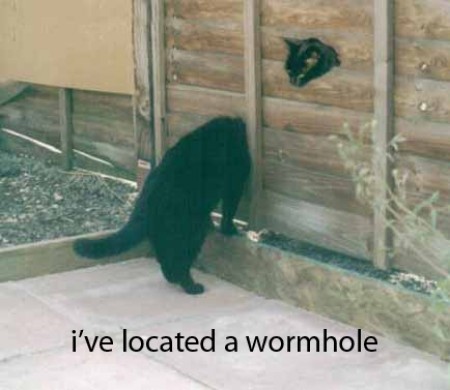
Found via LOLCats.com.

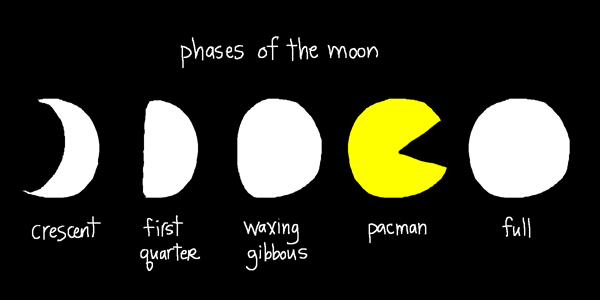
April 23, 2012

April 20, 2012
Grain of sand or small moon? Can you guess which is which?
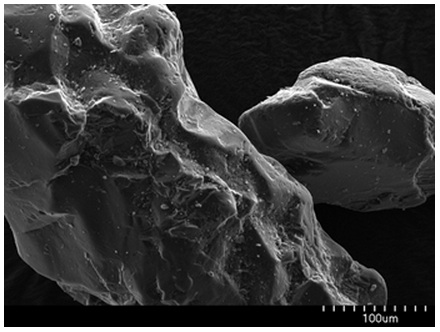
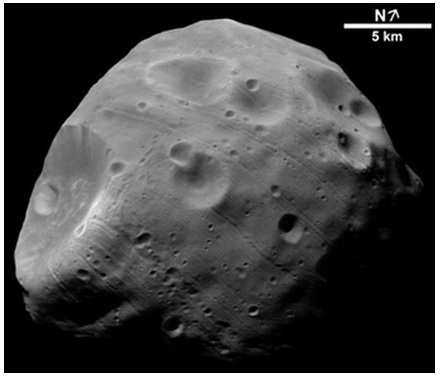
The top image is a portrait of two grains of Coney Island sand. Below it is a NASA image of Phobos, one of the moons of Mars.
By Alison Cornyn via McSweeney’s.
April 12, 2012
“That’s no moon.” Actually, it is a moon (despite the uncanny resemblance to the Death Star).
Basically, if I ever have my own top secret headquarters, it would have to be this…
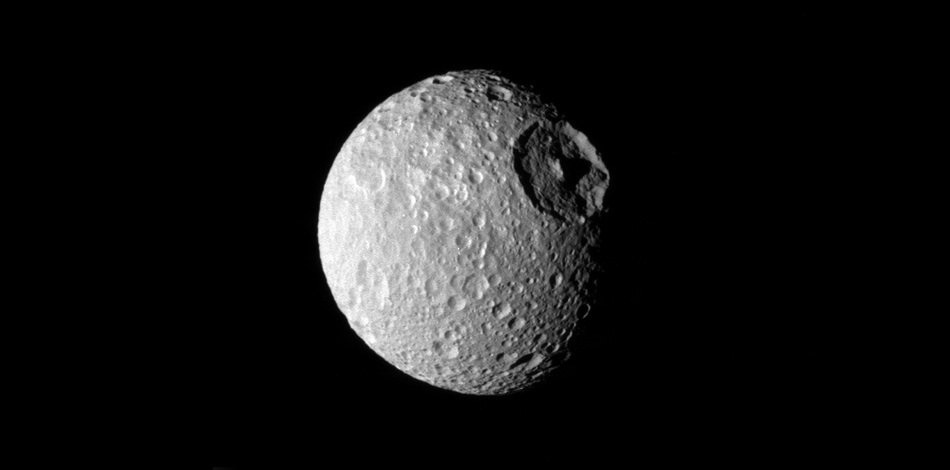
…I wonder how much it would cost to install a laser system.
A photo of the moon Mimi, taken by NASA’s Cassini spacecraft while orbiting Saturn in 2005.
April 10, 2012
The Space We Live In: Breathtaking video rendering what it might be like to fly around beautiful things in the universe..
I don’t think is based on any real astronomical data, but boy does it look really really pretty. Check it out in HD and in full screen (and also in the dark). Plus, I’d imagine that technically – given the scales involved, you would never be able to get this kind of perspective in motion unless you were traveling faster than the speed of light, in which case, what you see would likely be altered.
By matthiasm.de.

March 22, 2012
Who knew an X-ray of a space suit would be this pretty?

(Click on image for larger version).
Via The New York Times.
 popperfont.net
