Awesome animated gif of a physics blackboard

Can’t find out the source for this (do let me know if you know).

Can’t find out the source for this (do let me know if you know).
Seriously… Watch this, watch this, watch this…
.
What you are watching is called The Briggs-Rauscher reaction, demoed by “the guy who literally wrote the book on chemistry demos: University of Wisconsin-Madison Chemistry Professor and 2012 ACS President Bassam Shakhashiri, author of the popular “Chemical Demonstrations” textbooks.”
Via Eric Lagally.
p.s. Here are the recipes:
– Solution A:
Add 43 g potassium iodate (KIO3) to ~800 mL distilled water. Stir in 4.5 mL sulfuric acid (H2SO4). Continue stirring until the potassium iodate is dissolved. Dilute to 1 L.– Solution B:
Add 15.6 g malonic acid (HOOCCH2COOH) and 3.4 g manganese sulfate monohydrate (MnSO4 . H2O) to ~800 mL distilled water. Add 4 g of vitex starch. Stir until dissolved. Dilute to 1 L.– Solution C:
Dilute 400 mL of 30% hydrogen peroxide (H2O2) to 1 L.Procedure
Place the stirring bar into the large beaker.
Pour 300 mL each of solutions A and B into the beaker.
Turn on the stirring plate. Adjust the speed to produce a large vortex.
Add 300 mL of solution C into the beaker. Be sure to add solution C after mixing solutions A + B or else the demonstration will not work. Enjoy!Notes
This demonstration evolves iodine. Wear safety goggles and gloves and perform the demonstration in a well-ventilated room, preferably under a ventilation hood. Use care when preparing the solutions, as the chemicals include strong irritants and oxidizing agents.
Clean Up
Neutralize the iodine by reducing it to iodide. Add ~10 g sodium thiosulfate to the mixture. Stir until the mixture becomes colorless. The reaction between iodine and thiosulfate is exothermic and the mixture may be hot. Once cool, the neutralized mixture may be washed down the drain with water.
From chemistry.about.com.

This is so amazingly geeky! The below graphic is the crystal structure for Alzheimer’s disease related Amyloid Precursor Protein.
The image gained by means of X-ray diffraction contains eight chains of the APP copper binding domain. Four chains are used for the elephant picture.
Via its copper binding domain Amyloid Precursor Protein (APP) can modulate copper transport. Cu-binding presumably leads to a reduction of Aβ levels which is a key player in the onset of Alzheimer’s disease. Therefore copper could have therapeutic effects on Alzheimer’s patients.
More by Maja Klevanski.
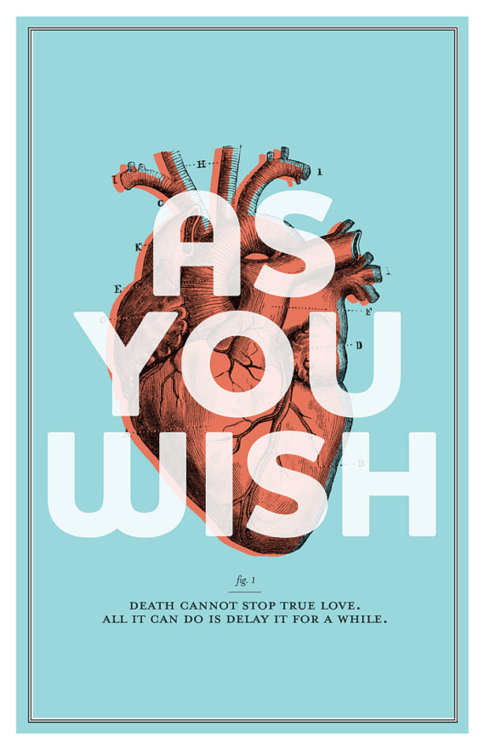
The Princess Bride illustrated by Amy McAdams and available at etsy.com. (via Hey Oscar Wilde!)
That’s it… I need a radical change in hairstyle.

From

(Click on image for larger version)
From sheldoncomics.com.

Beautifully done by Carlos Díaz, via flickr.com and Hey Oscar Wilde.
You can see the album version here.
Their new acoustic EP (Sing Sing Sessions) is pretty great.

.
Clever…
By Kevin Van Aelst.
Specifically, this one:
Which, of course, is a cover of Kid A from the CD Kid A. Thom Yorke, years ago, reportedly left the following message on a radiohead message board:
POSTED BY Thom ON JULY 30, 2000 AT 23:39:21:
IN REPLY TO: Thom, why Kid A?
dedicated to the first human clone.
i bet it has already happened.

By DAVID NG
O.K. so maybe my language was a little harsh in the previous section. But in many ways, it’s true – let’s just say that getting information via media, and getting information via science is best described as a complete and utter contradiction.
How so? Well, it’s a bit like what you see when you look at this image:
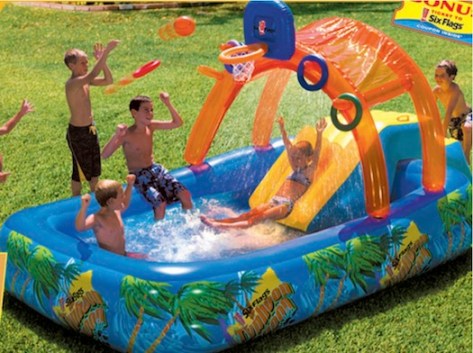
If you are thinking that that is one kick-ass inflatable pool, then you would right: and that is partly the point. But first, a little context might help.
In the summer of 2009, my hometown of Vancouver experienced a small heat wave. It got very hot and humid, and not surprisingly my two young kids (Hannah and Ben) were quite miserable. Consequently, I had the brilliant idea of getting an inflatable pool for our backyard. This appeared to be a genius move; and to my kids I gained more than a few notches on the cool scale. So before we knew it, we were hunting for inflatable pools, which naturally led us to a local toy store, where lo and behold, marketing geniuses that they are, the store had conveniently placed all of their inflatable pools front and centre.
In this selection, we saw the pool that you see in the picture above. It looked, quite frankly, awesome, and, if you can believe it, it was also priced at only twenty dollars. Needless to say, we bought it immediately and full of excitement, took it home to set up. It was here that something odd happened. In essence, when the pool was inflated, it looked a little different from the box. In fact, this is how it turned out:
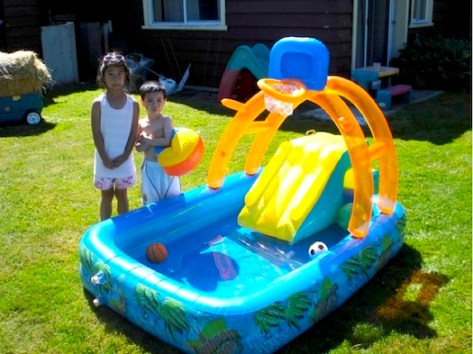
Of course, being a scientist and all, my rational mind was racing and trying its hardest to come up with hypotheses that could explain what was going on. Why did the pool look so tiny?
Was it because my children are massive?
Was the photograph on the box taken in a land of hobbit-like people?
Did I not blow hard enough and inflate my pool properly?
It was all very bizarre, but at the end of the day, the explanation was simple. Apparently, in the world of advertising, it is permissible to use misleading images as long as the object’s dimensions are clearly printed on the box, and as long as a fallback statement, “object in box may not be as appears,” is included.
For our discussion of science, the sentiment “object may not be as appears” happens to perfectly encapsulate how science is viewed by the general public. What one finds, is that what you see, hear, and read tends to be a modified version of reality. In other words, “science” reporting is often not altogether right, usually with a tendency to be exaggerated, sensationalized, and missing much needed context. More worrying, it can even be deliberately false, as any example of pseudoscience can attest to. However, when you look at how day to day media generally works and the caveats it has in place, it’s really not that surprising that this is what happens. Indeed, let me repeat:
Getting information via media, and getting information via science is best described as a complete and utter contradiction.
Why is this? Well, to begin with, in the arena of media, time is of the essence. The soundbite is key. This means that in the world of audio and video, something that is quick and attention grabbing is paramount to attracting your audience. In the world of writing, this means that an over indulgence in space or word count is often a rare sight. Furthermore, strong loud voices are coveted. Unfortunately, when you think about it, how scientific research is done is neither quick nor generally dependent on loud strong voices. Science moves at a pace that is either wildly unpredictable, or just excruciatingly slow. The data speaks for itself. As well, most of the research is punctuated by things that aren’t necessarily exciting to the average person – it’s not at all attention grabbing – and yet those elements are often key to fully understanding and appreciating the merits and fallacies of a particular discovery. In other words, to fully understand the research, you need to look at the increments involved. It’s like what Sir Isaac Newton might say: “You are standing on the shoulders of giants…” And in a perfect world, we would not place limits on how many shoulders we reference, despite the word count involved.
Another thing that makes media and science different, is that one prefers to have obvious endings, whereas the other technically never really ends. You can call this a form of narrative bias, where media prefers to express itself in friendly and familiar structures – like a story. Perhaps this is why we read about science in ways that suggest a finality. This is also why we see so many headlines that proclaim “Cancer is Cured!” so much so that we begin to distrust such proclamations and indeed become suspect of the science behind it. The thing is: the scientific method is fluid process with a narrative that considers the gradual attainment of information in a continual twisty turny fashion. What occurs in the process of science is maybe closer to a Choose Your Adventure book that never ends badly or happily. It just never ends. Consequently, forcing an ending on acts of discovery doesn’t really work, and further contributes to an inaccurate picture.
Then, there is the issue of validity. Is what you are hearing or reading actually reliable and trustworthy? With science you have the awesome power of expert peer review in your corner. It’s very democratic, objective, and inclusive: or at least it sincerely tries to be. I say try because it’s not perfect: it can be slow, it can still be influenced by various pressures, and it hardly ever reaches a complete consensus; but overall, there’s probably not a better way to figure out whether a piece of knowledge is valid or not. In fact, when all things are considered, the process of expert peer review is just an incredibly sensible way to do things.
However, in media, things can be very different. With traditional media, where journalistic integrity and ethics is upheld, the writer may still be prisoner to the soundbite mentality. This is not necessarily the fault of the writer: but such a beat may mean that the writer has no time to be familiar with the science, meaning that they may miss important parts of the research that provide the context. They may also have to write in certain ways so that publishers and audiences are satisfied. Furthermore, objectivity is key in journalism in that there is always pressure to try to present “both sides of the story.” However, this can also translate to equal billing for viewpoints that expert peer review would normally consider marginal, inconsequential or even discredited.
Worse, however, are “unconventional” forms of media. This is where journalistic ethics may be missing, either through ignorance or perhaps deliberately. This doesn’t apply to all users of this medium, and it’s not really fair to categorize them all in sweeping terms, but the existence of communicators that seriously harm scientific discussion is more common than you would think. More so, in today’s world of social media, and portals of self expression. Nowadays, it’s not inconceivable for anyone with the right delivery and a bit of luck to become a communicator of significant clout (as in numbers of readers or viewers) – this, irrespective of their credibility and their expertise. And without these credentials, their message could be inadvertently error prone, or in a more cynical take, their message could be distorted to fit within biased influences. Examples of this can be easily seen in some celebrity endorsements, in various cases of corporate lobbying, political discussion, or simply in the rantings of an influential but biased blogger.
Plus, with such voices in the media, and the ever expanding glut of these voices, more and more individuals (including you and I) become trapped in the path of corrective bias. This is where you inadvertently limit yourself to the “news” that you agree with anyway. You read certain newspapers, you like certain television stations, you follow the links of your like-minded friends, and so on. It’s always easy to find someone who provides a viewpoint you agree with. Language is great at reworking any piece of information so that the proverbial inflatable pool can always look kick ass.
A lot of this has to do with the fact that most people really do have a problem with the idea of absolute “truth.” In other words, if there are so many things that have yet to be discovered, then how do will really know that our current knowledge base is the “truth.” Most people might surmise that because the scientific community is not 100% certain about anything, it is then, by default, deeply flawed in its thinking and perhaps not to be believed. You see this type of mentality in climate change discourse in particular, especially when future modeling is involved. Obviously, science that attempts to predict the future for something as complicated as climate is not without a degree of uncertainty. But even with the smallest of error margins, it’s as if people assume that a paradigm shift is looming just around the corner. Worse still, it only takes a few phrases to entice these doubts.
Here is one of the more common ones: “There are some scientists who are skeptical of the data.”
You see this a lot because of noble journalistic desires to be even handed, and because biased commentators are very good at twisting such statements around. Unfortunately, this type of messaging can easily be destructive to science. In short, this style of narrative would ask that we should ignore the scientific consensus, since there is always some doubt and therefore some chance that it could all be false.
But of course, there are skeptical scientists! This is why it is so important that everyone knows that such scientific skepticism and such reluctance to talk about “truth” is a normal facet of the philosophy of science.
In any event, let’s end things here for now. All of these considerations simply mean that it is worth being scientifically minded when you take in your media. That there is value in the rational approach. It might take more effort, is possibly more boring, is often too complicated, is reliant on the expertise of others – but it is the process that will actually arrive at the best approximation of the truth, or at least the kinds of truths that relate to questions about the physical universe.
Awareness of this, I think, is what makes a true sciencegeek. A true sciencegeek understands that there is a great disconnect between how science is done and how it is represented. And a true sciencegeek is aware of how this can lead to a dangerous lack of scientific literacy, which in turn is negatively affecting our society. In short, we need more sciencegeeks, and I say this because without them, the hypothetical future is looking very bleak indeed.
(3rd draft)
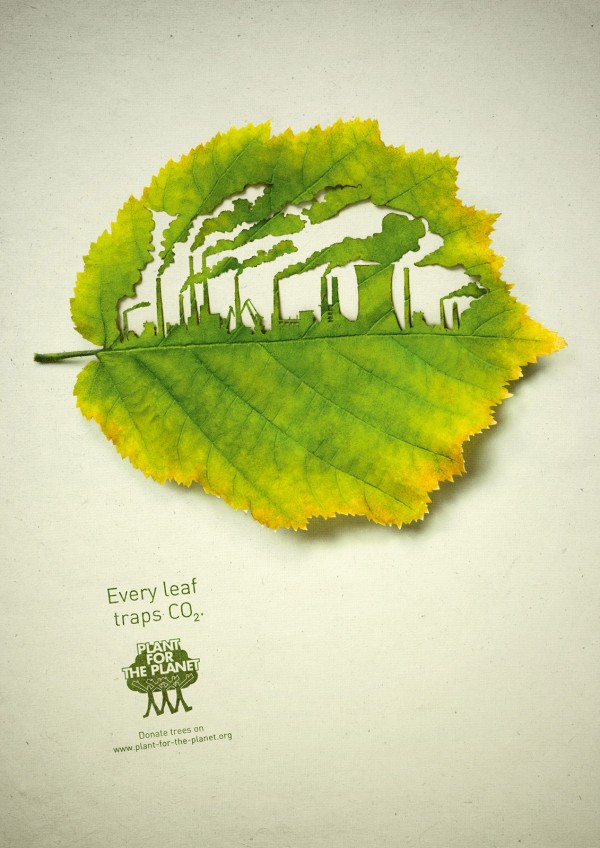




 popperfont.net