.

Giant Sun Simulation. #whoa

“Electronic artist Rafael Lozano-Hemmer is interested in creating advanced technology art that involves public participation. This large installation entitled Solar Equation is a simulation of the Sun, 100 million times smaller than the real thing! The sphere, commissioned by the Light in Winter Festival in Australia, is the largest spherical balloon in the world.”

It would also be kind of interesting to do the reverse perspective calculation (i.e. how big would this Sun actually be, if it was situated in the same place in space, but actually looked this big!).

By Rafael Lozano-Hemmer, via My Modern Met.

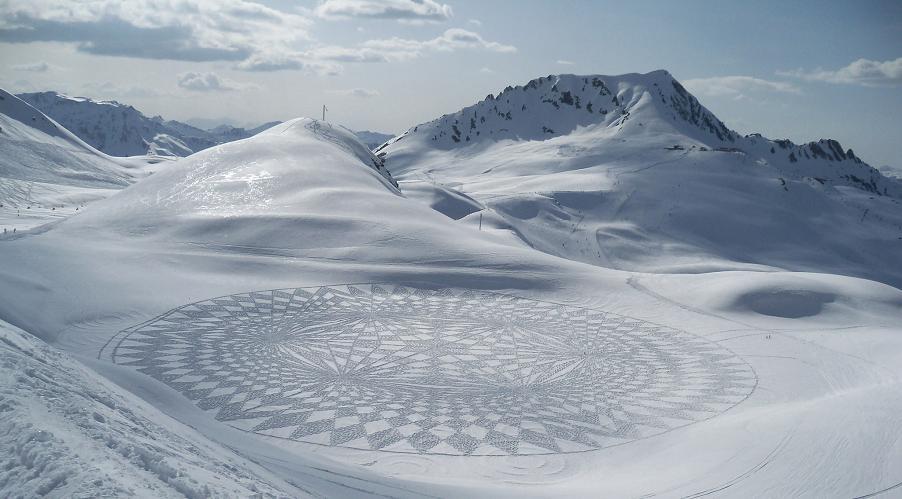
Artistic patterns embeded snowy landscapes: a very pretty way to create albedo.

Who would have thought albedo could be so pretty?

“Artist Simon Beck creates amazing pieces of snow art by walking in the snow wearing raquettes (snowshoes). Each artwork is typically the size of three soccer fields and takes 2 days to complete. The Oxford-educated self-employed map maker typically walks for about 5 to 9 hours or until he gets too tired, using a headlamp if it gets dark first.”

By Simon Beck, via Amusing Planet.

Amazing cloud sculptures by Berndnaut Smilde

Hmmmm… could use this for segue on talking about clouds generally (i.e. for albedo or radiative forcing, etc) – maybe even something like geoengineering.

“Dutch artist Berndnaut Smilde installs miniature clouds in empty gallery spaces. But these are neither digital manipulations nor fluffy Poly-fil sculptures strung from the ceiling. The cloud works are, in fact, real, with Smilde using smoke, moisture, and spot lighting to conjure up his momentary creations.”

Via Architizer.

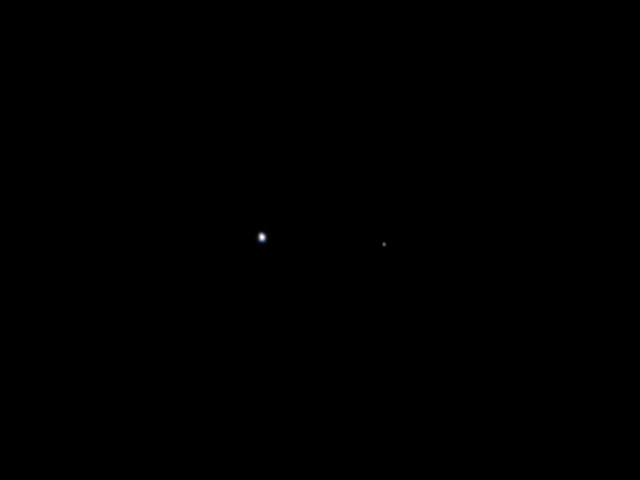
Shots of the Earth and Moon in the same frame. #beautiful

I just think this one is very cool.

“Earth (on the left) and the moon (on the right) were seen by NASA’s Juno spacecraft on Aug. 26, 2011, when the spacecraft was about 6 million miles (9.66 million kilometers) away. The photo was taken by the spacecraft’s onboard camera, JunoCam.” CREDIT: NASA/JPL-Caltech

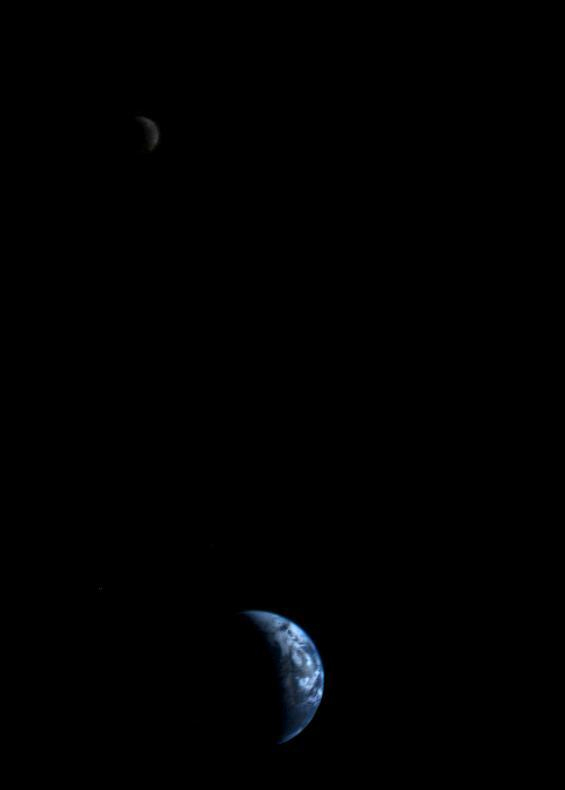
And here is the first one ever.

“This picture of a crescent-shaped Earth and moon — the first of its kind ever taken by a spacecraft — was recorded Sept. 18, 1977, by NASA’s Voyager 2 when it was 7.25 million miles (11.66 million kilometers) from Earth. Because the Earth is many times brighter than the moon, the moon was artificially brightened so that both bodies would show clearly in the prints.” CREDIT: NASA

Via Space.com

Beaty Biodiversity Museum is hosting an outdoor Science Rendezvous today. Come say hello if you come out.

I’ll be playtesting some Phylomon decks today. Come out anyway – it’s a lovely day and there’s lots of cool things to see in and out by the museum today. See below.
Saturday, May 12, 2012 | 11 am – 3 pm
Courtyard adjacent to Beaty Biodiversity Museum

Science Rendezvous is an annual nationwide celebration of science. UBC is joining the celebration for the first time this year, and during this free, family-friendly event we will be revealing exciting experiments and riveting research through hands-on activities, interactive presentations, and exclusive tours of UBC’s research facilities. This year we are “Celebrating our Natural World”, and we invite you to join us to:

· Explore the physics of energy consumption while experimenting with hydrogen powered model cars and other economical ingenuity.

· Go on a fossil excavation and discover ancient animals and other geological wonders.

· Test out a new set of Phylo game cards made especially for UBC’s Beaty Biodiversity Museum. <- That's me!

· Expose the secret chemistry of invisible ink.

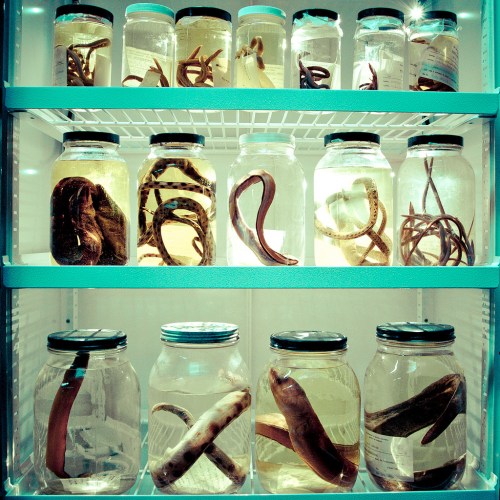
· Get the chance to peek behind the scenes at a Marine Biology Research Lab and see some interesting invertebrates.

· Sink some seeds into a soily splat and bring some urban agriculture home.

· Be a DNA Detective and discover the meaning behind this miraculous molecule.

· Make some noise and search for the science of sound waves.

· Bring out your Junior Scientist for some knee-high knowledge

· And more!

The Beaty Biodiversity Museum will also be offering 50% off regular admission* so this is a great time to come and explore!

* Offer cannot be combined with any other special offers; it excludes group rates and UBC Museum and Garden Pass.
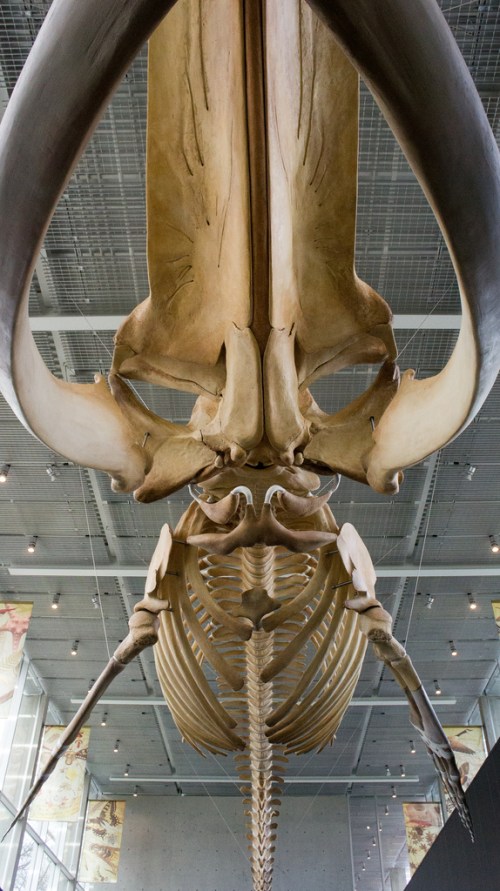
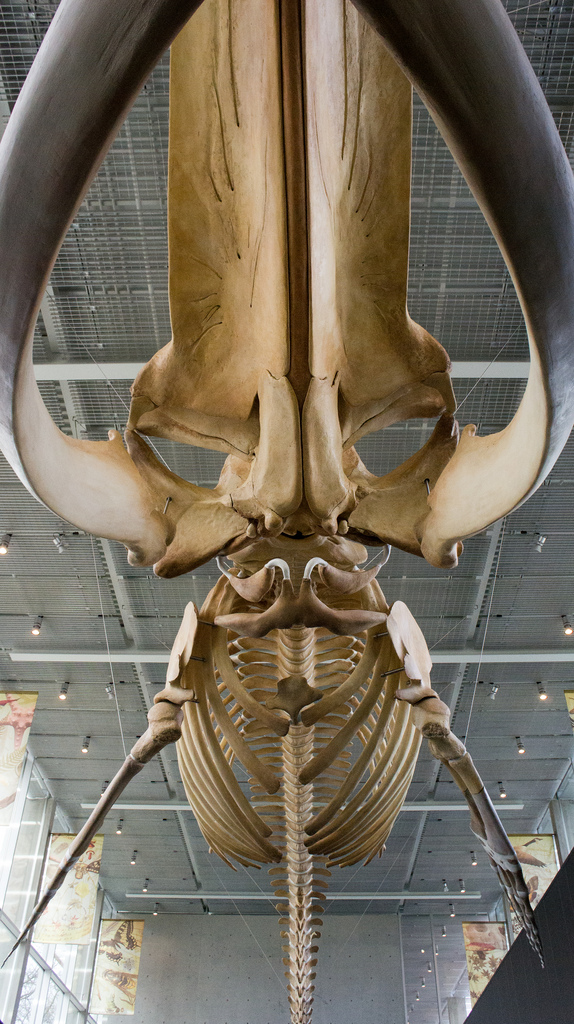
Top image by Artiom Shostak, bottom by Sonson.

How To Survive A Robot Uprising.

Always run in a zig zag pattern…

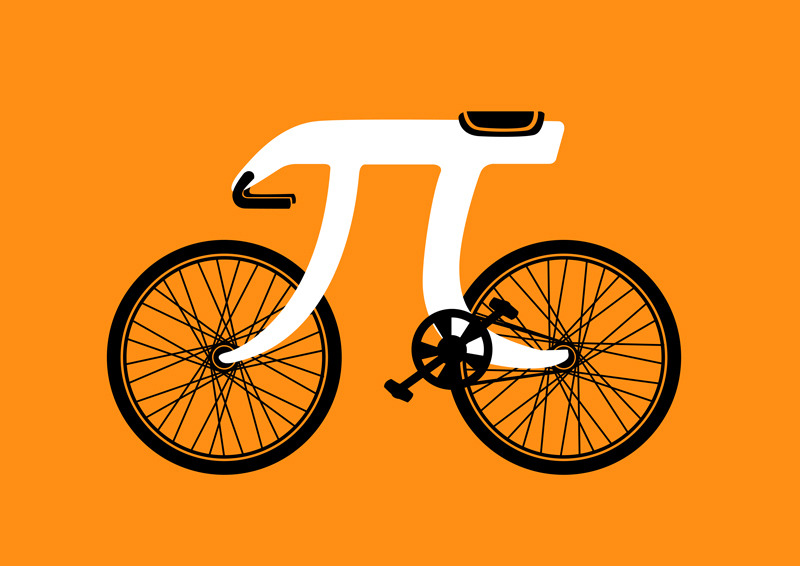
Time to ride your Picycle! #math

By Tang Yau Hoong.

FYI: data transfer via sperm is way faster than a 4G network.

Not sure of the source of this one.

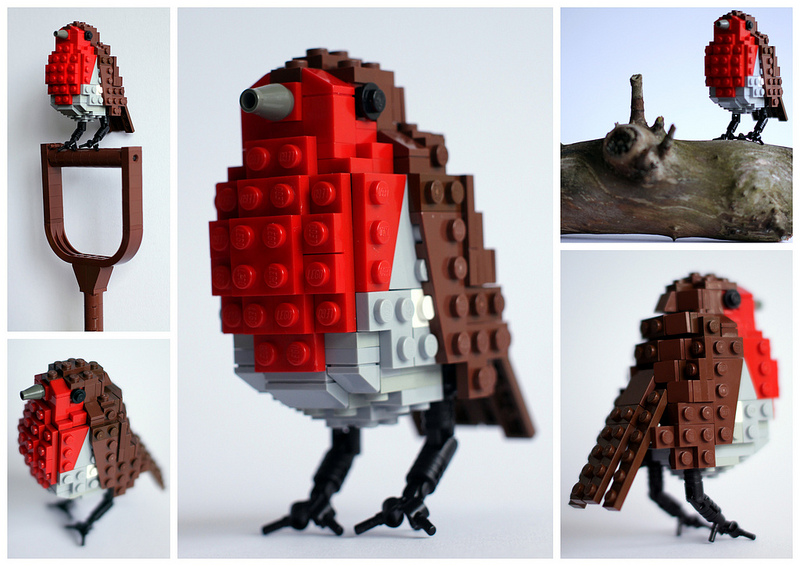
British birds done LEGO style. #amazing

Once again, we have evidence that LEGO is the supreme winner of all toys!

By DeTomaso Pantera, via Colossal.

Who or what do you think is Chewbacca’s arch-nemesis?

Found at the thedoghousediaries.

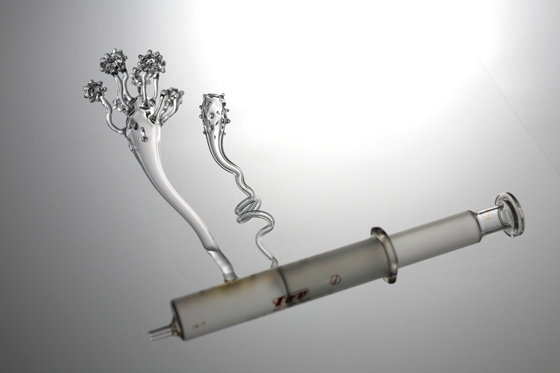
Interesting art that mix syringes with sculptured glass

By Miko Aoki. More at My Modern Met.

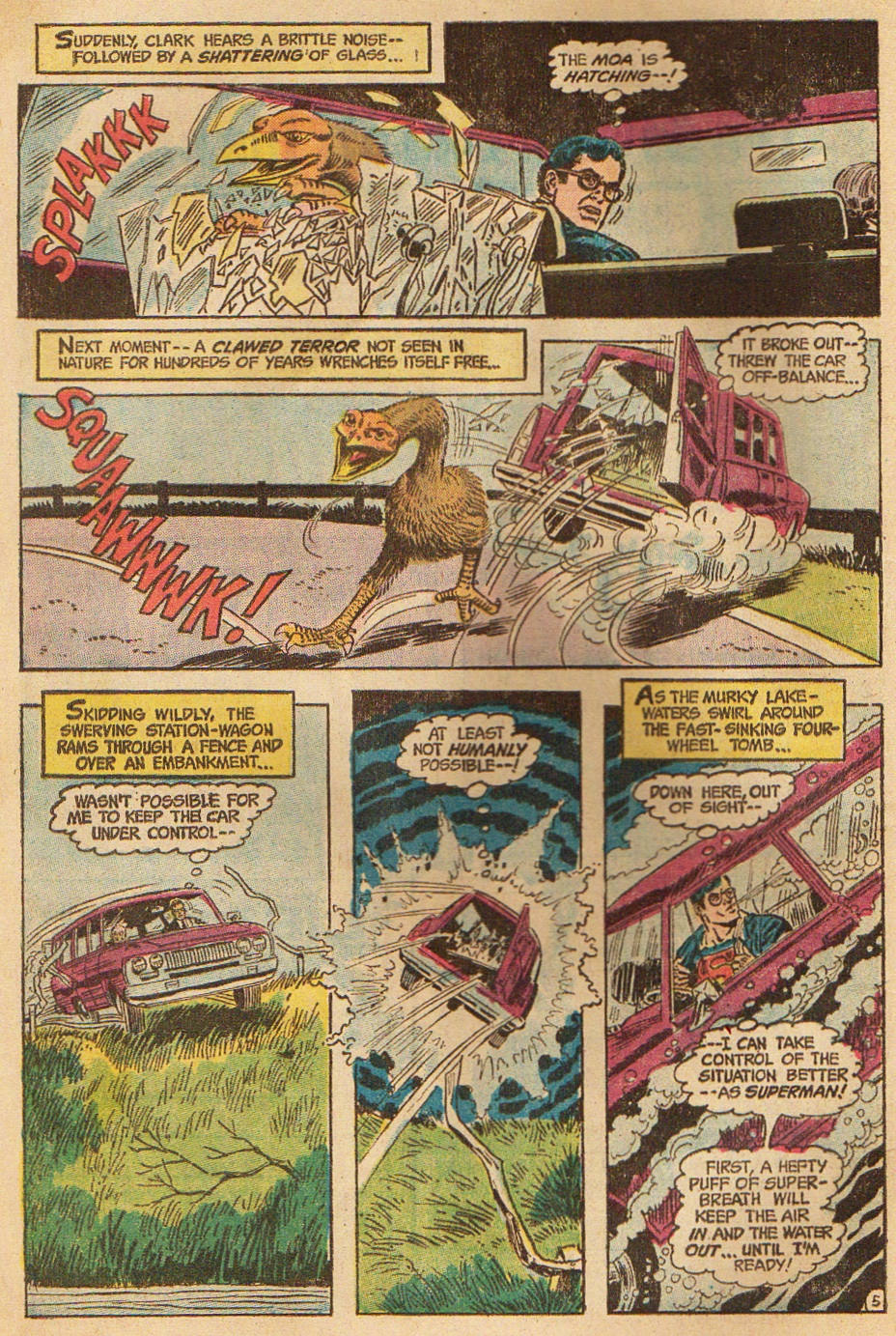
Superman versus the Last Moa on Earth!

Not sure about the “flapping feet so fast it can fly bit,” but awesome nevertheless…

By Cary Bates, Curt Swan, and Frank Giacoia, found via boingboing.net.

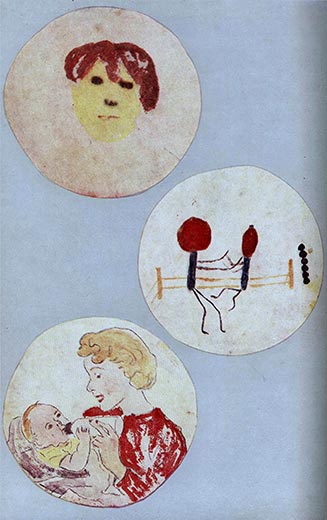
Alexander Flemming, discoverer of Penicillin, was also an avid microbial artist (as in he painted with microbes)

Really quite amazing if you consider how the medium needs to applied, since it grows (changes) over time.

In addition to working as a scientist, and well before his discovery of antibiotics, Fleming painted. He was a member of the Chelsea Arts Club, where he created amateurish watercolors. Less well known is that he also painted in another medium, living organisms. Fleming painted ballerinas, houses, soldiers, mothers feeding children, stick figures fighting and other scenes using bacteria. He produced these paintings by growing microbes with different natural pigments in the places where he wanted different colors. He would fill a petri dish with agar, a gelatin-like substance, and then use a wire lab tool called a loop to inoculate sections of the plate with different species. The paintings were technically very difficult to make. Fleming had to find microbes with different pigments and then time his inoculations such that the different species all matured at the same time. These works existed only as long as it took one species to grow into the others. When that happened, the lines between, say, a hat and a face were blurred; so too were the lines between art and science.

Via smithsonianmag.com.

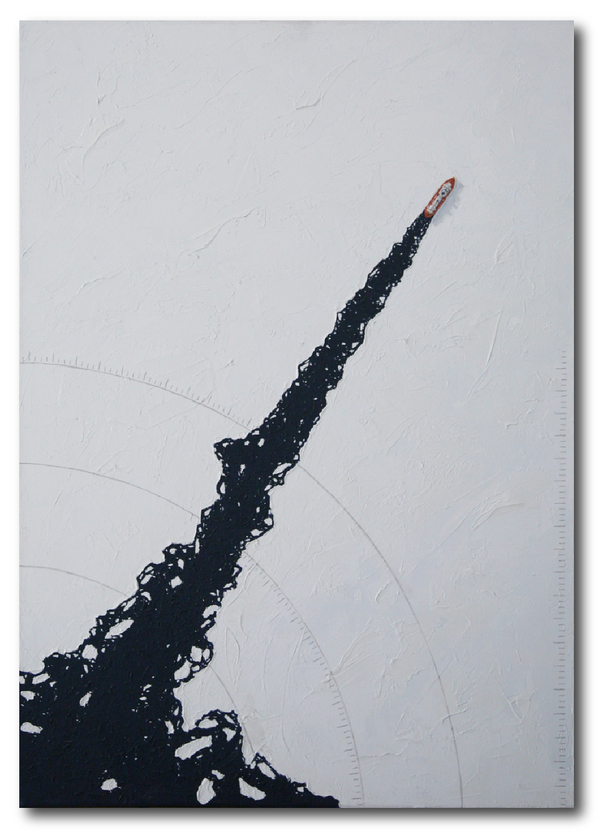
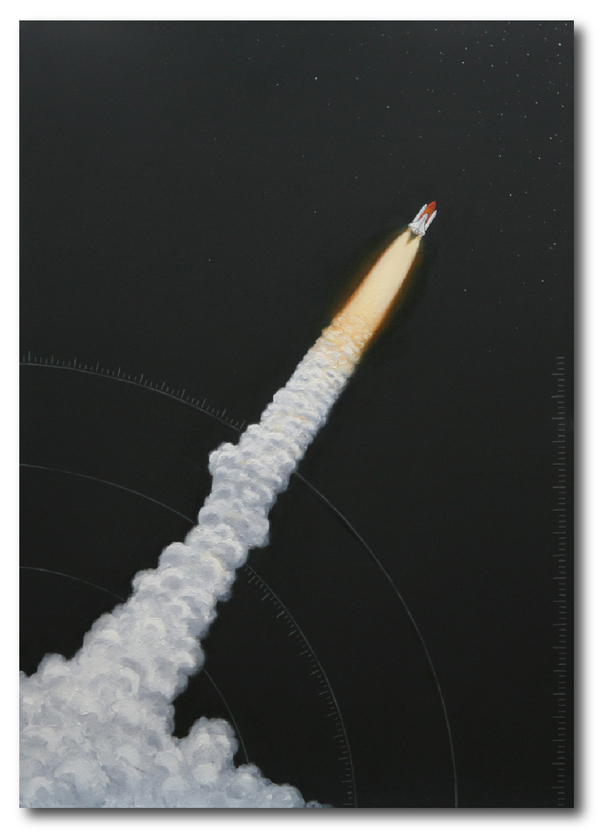
There’s a nice visual connect here between the path of an ice breaker and the effluent of a rocketship.

Re-Edit: Whoa – just realized, the boat picture isn’t an oil spill, but rather the path of an ice-breaker (even cooler)

Called “Beyond the Limits”, the effect you see here is pretty cool, although not really sure how these pieces might be used in a science lecture. Possibly to do with carbon? (oil, exhaust, etc).

By Marko Manev at Behance.

“Pilot Evolution” the cartoon. #awesome

From Boolab.

This pun about lab safety is so for the dogs.

Cue in the groaning…

From lifewiththedogs.blogspot.ca.

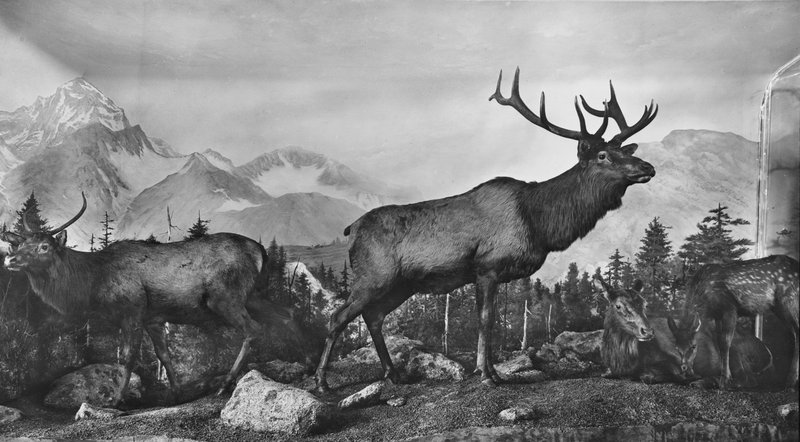
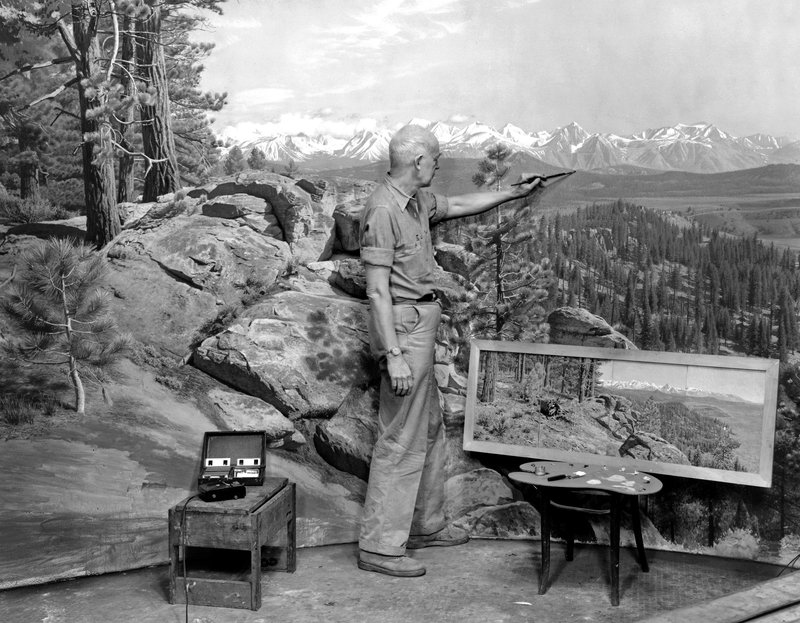
Beautiful vintage photos of the Dioramas of the American Museum of Natural History

Via the American Museum of Natural History Research Library.

Homosexuality is found in over 450 species. Homophobia is found in only one. Which one seems unnatural now?

Great turn of phrase.

Not sure on the validity of the numbers (haven’t check the papers involved), but I am certain that the scope of homosexuality in the animal kingdom is fairly wide and the sentiment of this statement is spot on – although nevermind it also being enlightening and really a sad commentary on our own species.

See this wiki entry for details on this, as well as this comprehensive list of species.

Amazing video of the Yosemite Range #whoa

Yesterday, I passed on a link of an epic and breathtaking space video. Now, take a look at how pretty our own planet can be. Best viewed in HD in full screen.

By Shawn Reeder.

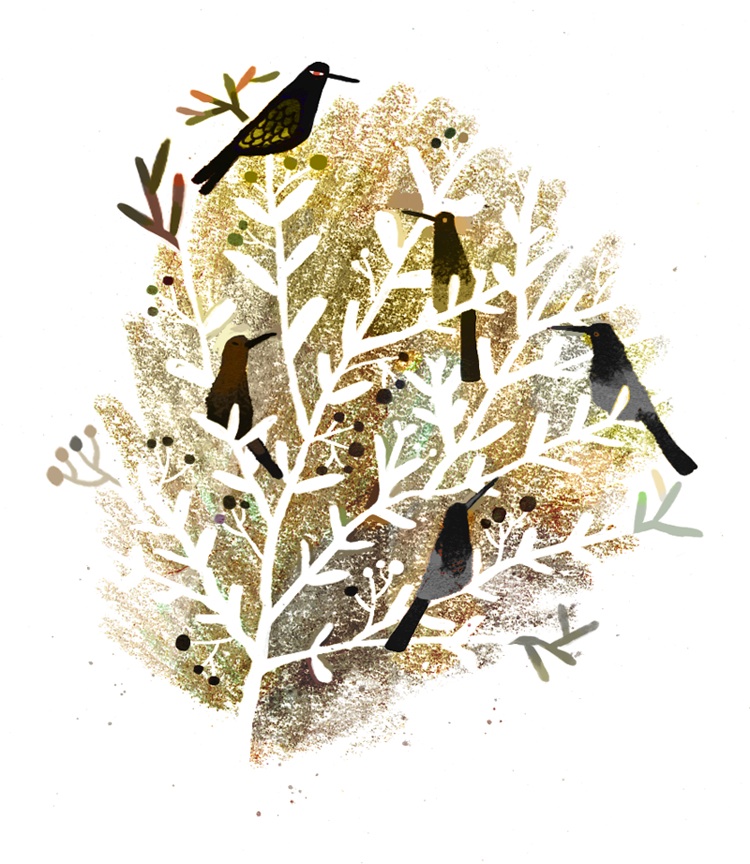
A beautiful beautiful drawing of birds in a tree.

So lovely…

By Matthew Forsythe.