
.

July 24, 2012
Mother Goose and the Scientific Peer Review Process
By DAVID NG
Jack and Jill went up the hill.
To fetch a pail of water.
Jack fell down and broke his crown.
And Jill came tumbling after.
First of all, we are not sure there’s enough clarity in this text. Scientific literature, in particular, should leave little room for confusion. Where exactly did Jack fall down? Into the well? A little ways down the hill? All the way down the hill? It’s just too vague. Worst still, we’re not convinced that the science conducted is of high enough caliber. I mean really, who would be stupid enough to put a well on the top of a hill? In conclusion, we feel that this manuscript should be rejected in its current state, but are not opposed to viewing a revised version in the near future.
—
Twinkle twinkle little star.
How I wonder what you are.
Up above the sky so high.
Like a diamond in the sky.
Twinkle twinkle little star.
How I wonder what you are.
Initially, we were quite intrigued by your work, especially since it appeared to contain several elements that merit genuine excitement. However, it was then brought to our attention that this body of work had remarkable similarities to a previously published report (The Alphabet Song). It was upon further investigation, that our worst fear was confirmed to be true – that this manuscript constitutes an act of plagiarism. We must state that we feel this to be a serious breach of scientific ethics, and must therefore strongly decline your manuscript.
—
Humpty Dumpty sat on a wall.
Humpty Dumpty had a great fall.
All the King’s horses and all the King’s men.
Couldn’t put Humpty together again.
Although otherwise promising, the reviewers felt that the research in its current state is incomplete. Quite frankly, it was agreed that your principle subject needed to be put back together again. Several of the reviewers suggested courting the expertise of a mathematician who could perhaps create an appropriate algorithm to solve this problem. Alternatively, one reviewer suggested glue. As a final note, questions were also raised regarding the treatment and well being of Mr. Dumpty. Why exactly was he made to sit on the wall? And why exactly would you allow horses (of all things) to put him together again. No matter, the reviewers overall impression was that if you were able to address each and every one of these issues, they would see no problem entertaining a revised version.
—
Hey diddle diddle, the cat and the fiddle.
The cow jumped over the moon.
The little dog laughed, to see such a sight.
And the dish ran away with the spoon.
The reviewers felt that not enough data was presented to support your claims. For example – how many times did your group observe the cow jumping over the moon? From the text and supporting figures, it would appear that you base this conclusion on one data point as no calculations regarding standard deviations were presented. As an analytical journal of high repute, the reviewers felt that this is simply not acceptable. In addition, several of the reviewers felt that the word ‘diddle’ was inappropriate, and should have been replaced by the more scientifically correct, ‘Hey fornicate fornicate.” Because of these, and other problems, we are sorry to inform you that your manuscript has not been accepted for publication.
—
Rub a dub dub, three men in a tub.
And who do you think they’d be?
The butcher, the baker, the candlestick maker.
Turn’em out, knaves all three.
Thank you most kindly for allowing us to see this marvelous manuscript. We feel that it is a great privilege that you and your colleagues decided to submit it to our journal. We truly feel that it represents seminal work that could even one day lead to a Nobel prize. To be frank, we were quite surprised to receive your submission, in that we all felt it could have easily been accepted by the more high profile publications (The Nature and Science journals for instance). In any event, we are very pleased to inform you that, we, the reviewers are unanimous in our decision to accept your manuscript.
(Originally published at the Science Creative Quarterly)
July 23, 2012
Traffic light in an Erlenmeyer Flask
A solution of glucose, sodium hydroxide, and indigo carmine, when shaken, will change from yellow to red to green. Left to sit, it will revert to red again, then yellow, and the process can be repeated. The indigo carmine is green when oxidized, yellow when reduced, and red in the intermediate semiquinone state
From Futility Closet, and available for purchase at Ward’s Natural Science.
July 20, 2012
Hengki Koentjoro: Photography that captures the beauty of nature perfectly
These are breathtaking… And only a small sample of his amazing work.
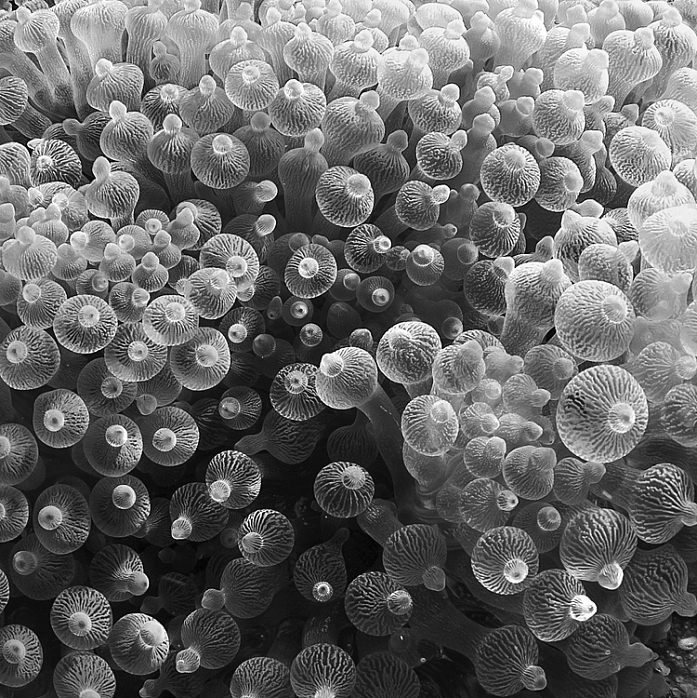
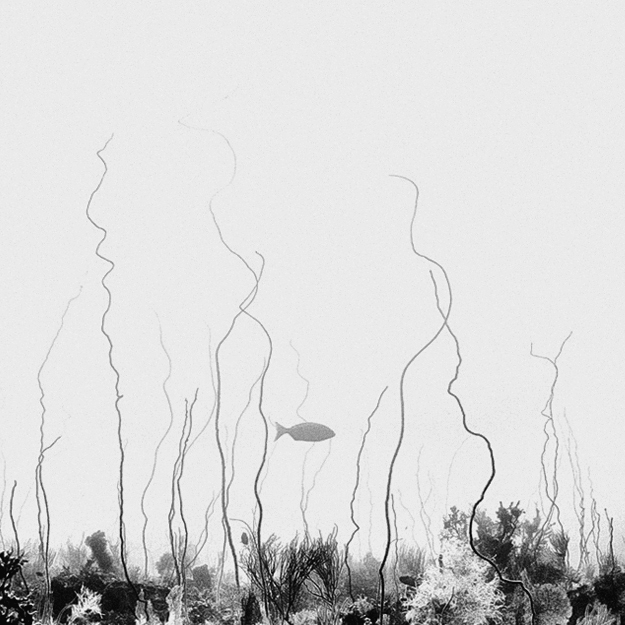

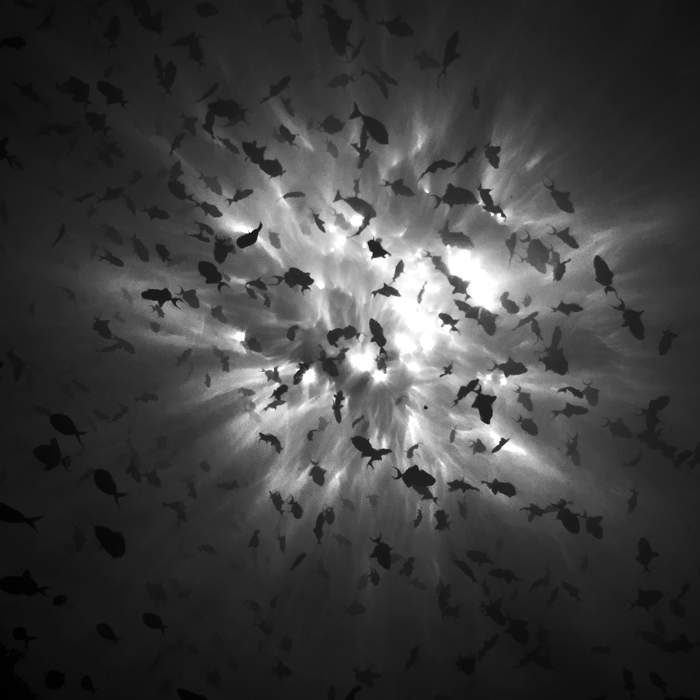
“Photography is not just a way of expressing his most inner soul but also creating a window to the world where through his pictures the unseen and the unspoken can be grasped. Driven by the desire to explore the mystical beauty of nature, he develops his sense and sensibility through the elements of fine art photography. His freedom of expression is more reflected in the elaboration and exploration of black and white.”
By Hengki Koentjoro.

July 20, 2012
The global mean temperature versus time graph is gonna get bad (very bad).

Not sure of the source. Do leave a comment, if you know.
July 20, 2012
This conceptual rainforest canopy structure is pretty incredible.


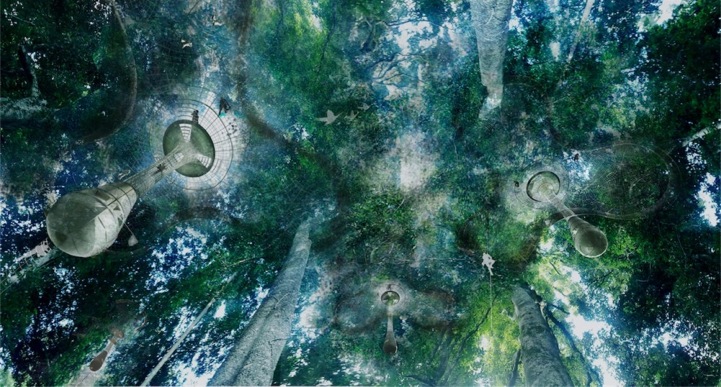
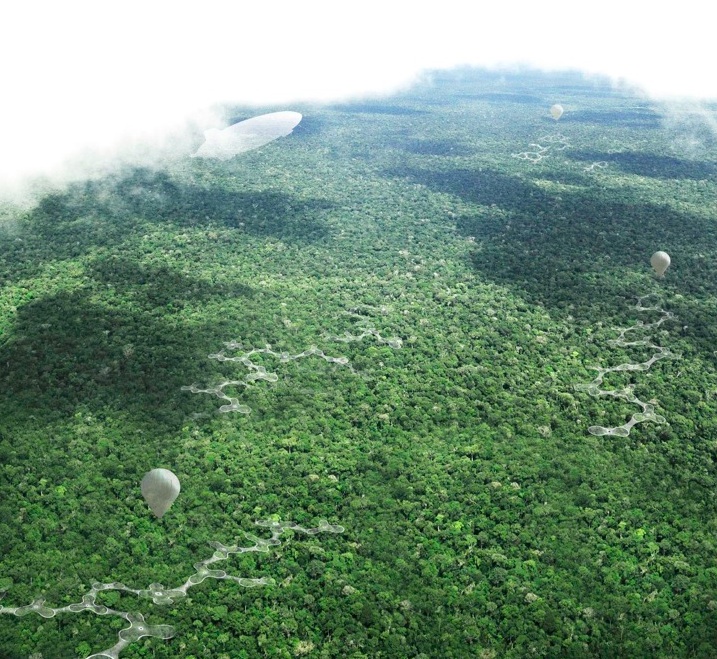
“Programmatically, the project is centred on scientific exploration and harvesting medicinal plants, which provides an alternative use of the forest without destroying it. At the same time, the positive occupation of the territory it enables could provide a level of surveillance that helps to protect both the endangered environment and the indigenous population.”
Concept by Yi Yvonne Weng.
July 20, 2012
Gain Mass Fast. Take Higgs Boson Pills.
O.K. Not technically an accurate turn of phrase, but maybe a good visual segue into such matters.

By Frogsicle.


July 20, 2012
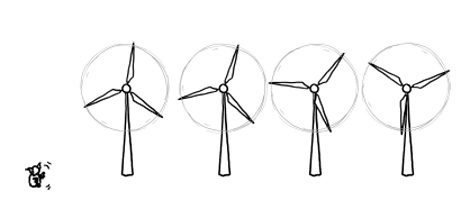
When humanity disappears, a ring of dead spacecraft will remain as evidence of our existence.
Trevor Paglen – The Last Pictures from Creative Time on Vimeo.
“In September 2012, the television satellite EchoStar XVI will lift off from Kazakhstan with the disc attached to its anti-earth deck, enter a geostationary orbit, and proceed to broadcast over ten trillion images over its fifteen-year lifetime. When it nears the end of its useful life, EchoStar XVI will use the last of its fuel to enter a slightly higher “graveyard orbit,” where it will power down and die. While EchoStar XVI’s broadcast images are destined to be as fleeting as the light-speed radio waves they travel on, The Last Pictures will continue to slowly circle Earth until the Earth itself is no more.”
By Trevor Paglen.


July 19, 2012
Wine glasses calibrated for musical notation

Get your next dinner party humming when you turn your sips into a symphony with these gilded glasses turned musical instruments. The etchings on the glasses are musical notations that correspond to the level of the liquid. When the user drinks to D for example, he or she may run a finger along the rim of the glass to create its lush, sonorous note. Or, for the more percussive partier, the same note will ring out with a gentle rap of his or her utensil on the side of the glass.
Available at Uncommon Goods, via Fresh Photons.
July 18, 2012
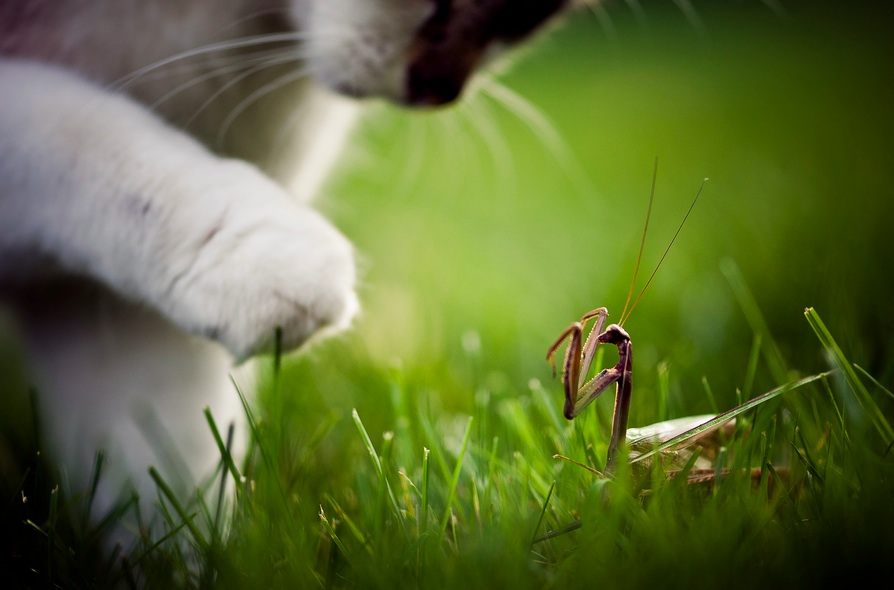
What kind of scientist is Batman? (And what do you think?)

Since the the new movie is fast upon us, I’d thought I’d revisit the above question. This was something that Ben Cohen posed at our old blog, The World’s Fair.
Basically, he referenced a great Simpson’s episode (Marge v. the Monorail), which has the corresponding dialogue:
Marge: Homer?
Homer: Yelloh?
Marge: There’s a man here who thinks he can help you.
Homer: Batman?
Marge: No, he’s a scientist.
Homer: Batman’s a scientist.
In any event, back then (this was in 2008), we got some great responses. It would be lovely to hear some more, especially with the Batman iconography maturing so much during the last 4 years, but for now, I’ve reprinted all the responses we were able to get the first time around.
– – –
(From 2008) Scienceblogger responses below:
Afarensis
Obviously, he is a forensic scientist…
The World’s Fair (Dave Ng Ed Note: a.k.a my response)
I’m gonna go out on a limb here, and suggest that Batman is (amongst other things) a “bat scientist.” This, I think, would make him a chiropterist, since Bats belong to the family Chiroptera (greek for “hand-wing”). I can imagine Mr. Wayne going to his fancy cocktail parties and providing all manner of banter and trivia on bats, all the while chuckling to himself and thinking, “the fools.” Anyway, whatever discipline he falls under, at the very least he could do with some counseling – that dude has issues.
Note: There’s actually a North American Symposium on Bat Research in North Carolina coming up in October. Maybe, Mr. Wayne is a keynote?
Discovering Biology in a Digital World
Holy Moly! What kind of scientist are you, Batman? This important question, posed by Benjamin Cohen of The World’s Fair, is one that cannot be ignored. And, most importantly, can be quickly answered…. (more)
Adventures in Ethics and Science
“That’s Dr. Batman to you, evil doer!” Ben at The World’s Fair asks what kind of scientist Batman is. (Of course, he does this after producing something like reliable testimony that Batman is a scientist to begin with.) Sandra Porter makes the case that he’s a geneticist,… (more)
Pharyngula
The “What kind of scientist is Batman” problem. This new strange question is sweeping the scienceblogs: “what kind of scientist is Batman?” The answer is obvious…. (more)
Respectful Insolence
Batman’s no scientist.
Now Reed Richards, there’s a scientist. 
Uncertain Principles
Ask a ScienceBlogger: Cartoon Edition What sort of scientist is Batman? (more)
Scienceblogs.com (Tim)
OT: I don’t know what kind of scientist Batman is, but his religious affiliation is Episcopalian/Catholic (lapsed). http://www.adherents.com/lit/comics/comic_book_religion.html
– – –
Over 100 comments to be found at Pharyngula, The World’s Fair, Uncertain Principles, and thisComic Book Forum.


July 17, 2012
I bet we could go explore the galaxy if we could stop being dicks for like five minutes.
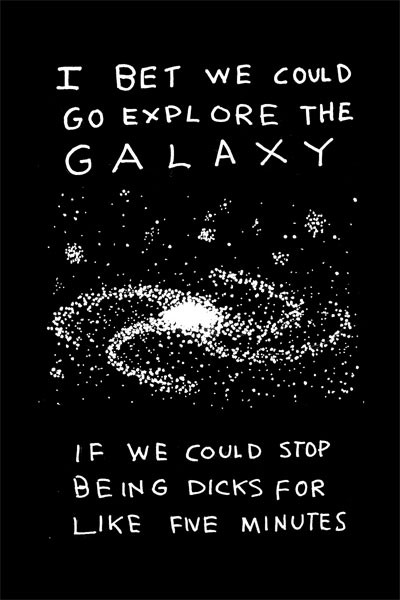
All over the internet, via Imgur.

 popperfont.net