
Getting organized for #scio13. Making “to do” lists and some networking (a.k.a. meeting wonderful people) homework.
(For #scio13 interview links, scroll down).
O.K. so if there is one conference, that I want to kind of spend a disproportionate amount of time to get ready for, it would have to be this one.

Yes, this would be the vaulted Science Online 2013 conference. Last year, I kind of winged it, and still ended up: (1) doing a little performance, (2) catching up with a lot of old friends, (3) being introduced to a ton of amazing folks, and (4) starting the odd discussion that laid groundwork for a collaboration or two.
So here it is: a blog post that serves as my “this is what I want to do, and who else is coming” info station. This would also double as an introductory post for those who might be interested in some of the things I do, and maybe even want to chat with me.
Firstly, this is a picture of me (yes, I will be bringing the t-shirt along). I was also recently interviewed by Bora, so you can take a peek at that to get a sense of the sort of stuff I do. I run this lab, but in general, I’m interested in intersections between creativity and science; excellent ways to broach challenging science education logistics and/or topics (especially to audiences not that receptive to science); and (if you must know) I’m also always thinking of ways to weasel myself into one of those new Star Wars movies planned for the future (because I think I would be perfect as one of those Stormtroopers who fires his/her laser gun, a piece of technology that is presumably very advanced, and still miss the target that is only a room length away and not even moving terribly fast). And if you’d like to learn more about some of the web hijinks I’ve been involved in, or some of the “writing” I’ve done, then do feel free to peruse my pseudo (and oft neglected) portfolio site.
– – –
But on to the matter at hand: the conference runs from January 30th to February 2nd and will likely involve the most intense 70 to 80 hours of epic science discussion you can imagine. With those parameters in mind, here’s the gist of what I hope to accomplish.
 Firstly, I’ll be co-moderating a session with Tom Levenson on “Opening doors: Science communication for those that don’t care/don’t like science.” (Fri, Feb 1, 2:30-3:30 pm, Room 7b) – Session specific website here.
This, I think, will be one of those discussions that will be both wonderful, challenging, surprising, and prone to tangential exploration (i.e. a back and forth about the variety of unconventional methods that can be used to talk science). The key question (and the prevailing tension of this topic), I suppose, is whether that tangential nature is a good thing or a bad thing – does it distract or dilute from the real translation of science, and/or if it does, is that sometimes alright.
I’m actually hoping to take in the collective wisdom of the session (as well as the conference in general) to think more seriously about this idea, primarily because it concerns the challenge of preaching outside the choir. In other words, how does one embed the notion of science culture into everyone’s self identity, whether it’s in large parts like in the case of Tom and I, or (perhaps more importantly) in smaller, nuanced but still critical ways for those who aren’t as passionate about such things, or those who blatantly resist it. As well, I want to know if this collected wisdom is something that should be described, archived, even assessed somewhere – say as a journal, book, ebook, ap, workshop, or website or whatever. I know I think so – and I hope there are others who also think so (we can, for instance, brainstorm about what this might look like, if there is interest).
Cara and Melanie – might be worth having a chat beforehand since I think your session will be tackling some similar themes, albeit dealing with a much feistier (and impertinent) element?
 In terms of general science-y goodness and general networking, I want to chat with people who are really in awe of the quiet grandness and messy elegance of the scientific method, and who also want to think of interesting ways to explore it within an elementary school setting. And I’m not just talking about doing experiments (which will be done and will be awesome), but even in seeing if we can figure out the most effective, creative and engaging ways to talk to kids about weighty concepts like validity and evidence.
My end goal is to design a 1 day elementary school teacher workshop (which would possibly be later adapted to an elementary school fieldtrip program), and any insight into what ideas/exercises might be good to pursue or avoid would be very handy. In fact, hearing about examples of great programs that already exist would also be much appreciated.
 Next up, I’d like to explore possible research opportunities where it would be great to gain some metrics on some of the programs my lab currently runs. This is one of the cases where funding already exists to perform the activities: but it just needs an interested party to design a research question around said activity. In particular, we have this really interesting field trip (called the Science Creative Literary Symposia) which essentially teams up a Science Graduate Student with a Creative Writing (and sometimes Visual Arts) MFA student. Here, the two of them are guided to design a days worth of activities where a classroom of 9 to 11 year olds can do some relatively fancy science experimentation (in my lab in tune with the specialty of the scientist), as well as ask them to do some expository creative writing or creative art around the experience (also in tune with the preferred genre of the writer/artist).
The intent of this fieldtrip is primarily to show that mixing these two things isn’t so strange afterall. In fact, another point to be made is that there are many similarities in these seemingly two divergent tasks, and that therefore one shouldn’t necessarily assume you can’t enjoy both. We’ve done this fieldtrip for a few years now, and I think we now have it as a well oiled machine, consistently generating great reviews from both the kids and teachers who attend. It just seems like a remarkable opportunity to design a study with the aim to query the children’s impressions around concepts of science and creativity.
Anyway, if this sounds intriguing to you (especially if you’re the type that considers the creative arts when sharing science, or if you have a background in education research), then do let me know – I know Marie-Claire and I will have a good chat about this, and I know I’m itching to release my grant writing chops for this…
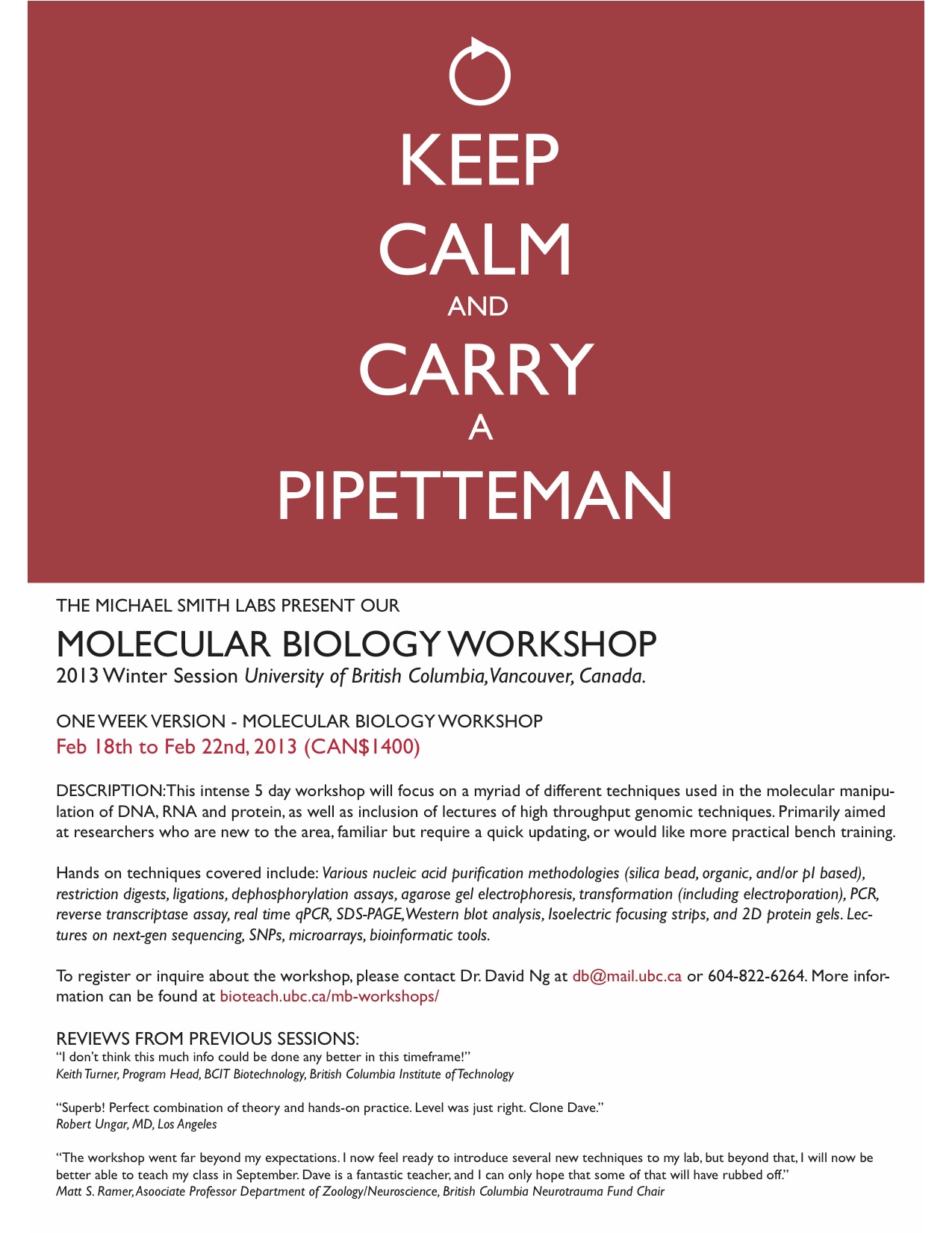
 Finally, I’m looking for someone who would appreciate a $5000 art grant to help host a Phylo deck. Usually folks from a Natural History Museum makes the most sense here, but I’m open to all sorts of suggestions (environmental and science education NGOs, publications could also work). Essentially, I think it would be kind of cool to initiate discussions with the formal intent of having the deck ready for the next conference in 2014 (i.e. a recurring tradition). I’m also at the beginning stages of initiating some education research around this project as well (essentially to assess its utility in terms of actually making children/players think more about biodiversity), but would love to have more involved. The idea of a hosted deck is pretty cool – they can certainly look nice, as sample cards from this deck in progress can attest to. I’ve started an exploratory tweet here, but curious if there might be others that are intrigued.
 Oh, and actually, there is one more thing. I’ve sort of started on the process of writing a book, on science literacy no less: but given that my writing background tends to be a little unconventional to say the least (for example, my pieces tend to look like this, this, and this), I have to admit that the whole prospect is scaring the bejeezus out of me. Basically, it would be lovely to just chat with other science book writers, both those who are Yodas in the industry, as well as others who might also be new to the endeavour.
– – –
Now onto my homework – which isn’t really as arduous as it sounds, because Bora, Karyn and Anton have made things easy for us. Here is a list of all the interesting folks who are coming out, and then here is this large archive of great interviews of past Science Online attendees (also just found this other archive of SA Incubator’s Q&A’s). For this post, I’ve gone and edited this list of links to focus on the folks who also happen to be attending this year. So my homework (and maybe yours too), is to slowly make your way through the below list (marked with year that the interview was conducted). If you’re not here because you haven’t sent in a Q&A to Bora, then you’re also welcome to leave a comment introducing yourself at the bottom (perhaps with mention of your favorite beverage and, if you’re up to the challenge, done as a six word memoir?)
– – –
David Ng, 2012 | Tom Levenson, 2008
Samuel Arbesman, 2012 | Stacy Baker, 2009 | Karl Leif Bates, 2008
DeLene Beeland, 2010 | Aatish Bhatia, 2012 | Holy Bik, 2011
Mollie Bloudoff-Indelicato, 2012 | Carin Bonder, 2013 | Emily Buehler, 2012
Bug Girl, 2012 | Russ Campbell, 2009 | Katie Cottingham, 2012
Kiyomi Deards, 2011 | Lali Derosier, 2012 | Carmen Drahl, 2010
Nadia Drake, 2012 | Jonathan Eisen, 2010 | Sean Ekins, 2013
Rose Eveleth, 2012 | Marissa Fessenden, 2012 | Suzanne Franks, 2008
Simon Frantz, 2013 | Laura Geggel, 2012 | Miriam Goldstein, 2009
Mary Beth Griggs, 2012 | Rebecca Guenard, 2012 | William Gunn, 2012
Chris Gunter, 2013 | Dirk Hanson, 2012 | Justine Hausheer, 2012
Mark Henderson, 2012 | James Hrynyshyn, 2008 | Scott Huler, 2010
Karen James, 2008 | Anne Jefferson, 2010 | Djordje Jeremic, 2009
Miriam Kramer, 2012 | Pascale Lane, 2011 | Danielle Lee, 2009
Tom Linden, 2010 | Peter Lipson, 2009 | Robin Lloyd, 2011
Maryn McKenna, 2012 | Glendon Mellow, 2009 | Seth Mnookin, 2011
Joanne Monaster, 2010 | Jessica Morrison, 2012 | Dave Mosher, 2011
Dave Munger, 2008 | Andrea Novicki, 2010 | Kelly Oakes, 2012
Princess Ojiaku, 2010 | Ivan Oransky, 2010 | Jennifer Ouelette, 2008
Trevor Owens, 2012 | Catherine Owsik, 2012 | Erin Podolak, 2012
Kelly Poe, 2012 | Kate Prengaman, 2012 | Elizabeth Preston, 2012
Jason Priem, 2011 | Kathleen Raven, 2011, 2012 | Anthony Salvagno, 2013
Cara Santa Maria, 2012 | SciCurious, 2009 | Marie-Claire Shanahan, 2010
David Shiffman, 2012 | Matt Shipman, 2012 | Michelle Sipics, 2012
Dr.SkySkull, 2009 | Tara Smith, 2008 | Blake Stacey, 2009
Janet Stemwedel, 2008 | Brian Switek, 2008 | Amy Shira Teitel, 2012
Kaitlin Thaney, 2011 | John Timmer, 2010 | Holly Tucker, 2011
Kaitlin Vandemark, 2012 | Sarah Webb, 2013 | Mindy Weisberger, 2012
David Wescott, 2011 | Christie Wilcox, 2010 | Allie Wilkinson, 2013
Antony Williams, 2010 | Josh Witten, 2012 | Kate Yandell, 2012
Ed Yong, 2010 | Carl Zimmer, 2010 | Bora Zivkovic, 2008, 2013
Anton Zuiker, 2013
– – –
Finally, just so that we can set the tone a little bit, do check out this great video by Carin Bondar. It’ll do wonders to get you in the mood:

















 popperfont.net