.

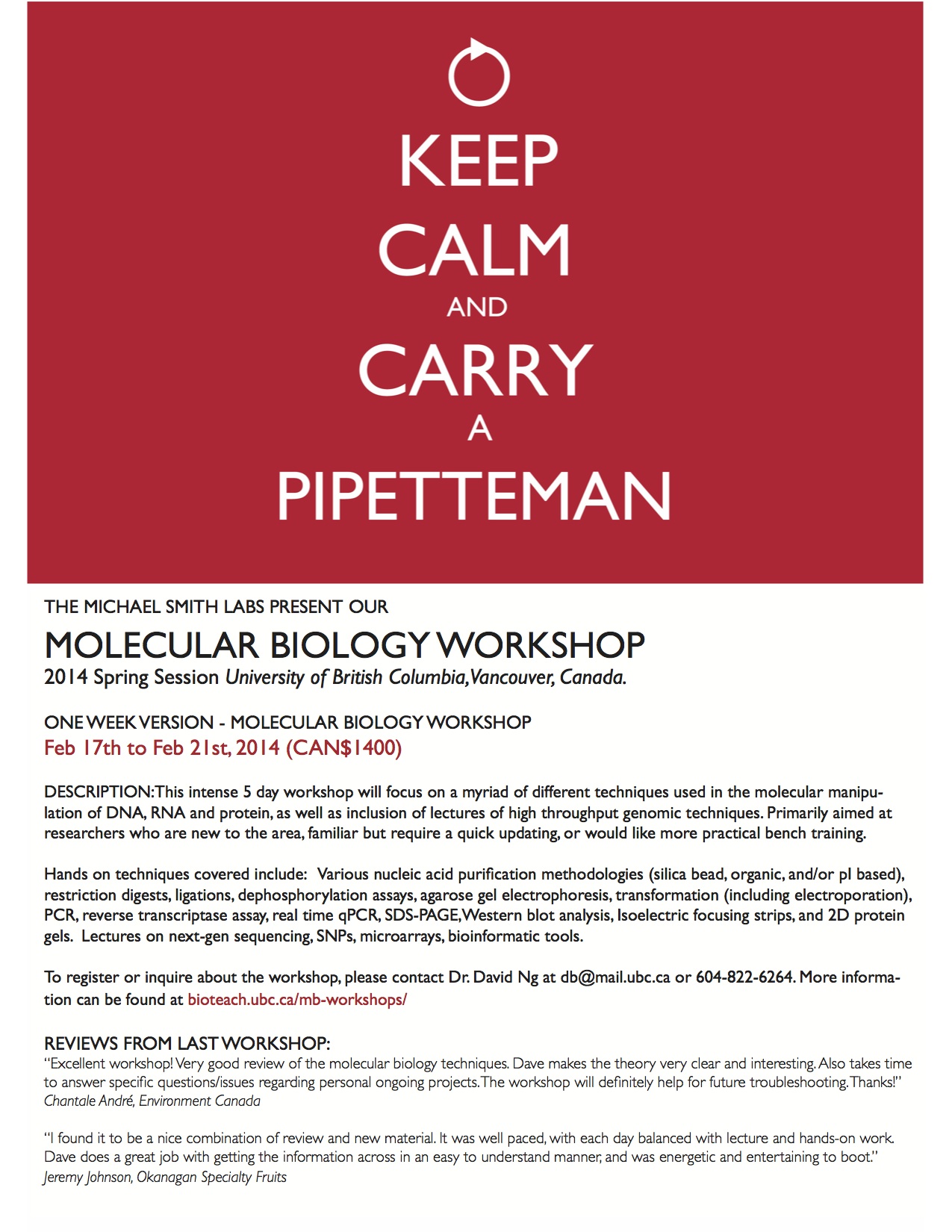
Keep Calm and Carry A Pipetteman: The T-shirt. #molecularbiology #geekwear

carryapipetteman

T-shirt now available in honour of my lab’s Molecular Biology 5 day professional workshop (next one held in Vancouver from Feb 17th to 21st, 2014 – more details here). Note that all revenues go towards my lab’s outreach programming, which can be surveyed here.

Anyway, if you’re a scientist in need of a quick refresher in these techniques, or someone in a parallel field and want to learn more about the various methodologies that keep infiltrating your research discipline, then take a peek and consider signing up (or pass along to a colleague).

Also, if you’ve got a friendly neighbourhood bulletin board nearby, it would be AWESOME if you could put this poster (pdf) up somewhere.

T-shirt available for purchase here.

Registration open for next molecular biology workshop. February 17th to 21st, 2014

Via my lab’s website (bioteach.ubc.ca)

proffworkshopadFEB2014


MOLECULAR BIOLOGY TECHNIQUES WORKSHOPS (SPRING 2014 PROGRAM):

Registration is open

To inquire about registration, please contact Dr. David Ng at db@mail.ubc.ca

(1) ONE WEEK VERSION
Dates: February 17th to 21st, 2014 (5 days: Monday to Friday)
Price: CAN$1400 (does not include room or board)


Reviews and testimonies from our last workshop (June 2013)

“Excellent workshop! Very good review of the molecular biology techniques. Dave makes the theory very clear and interesting. Also takes time to answer specific questions/issues regarding personal ongoing projects. The workshop will definitely help for future troubleshooting. Thanks!”
Chantale André, Environment Canada

“Fabulous teacher, well organized, gives a good introduction into the field. I enjoyed it! Thanks!”
Michael Fischer, Department of Chemistry, University of British Columbia.

“I found it to be a nice combination of review and new material. It was well paced, with each day balanced with lecture and hands-on work. Dave does a great job with getting the information across in an easy to understand manner, and was energetic and entertaining to boot.”
Jeremy Johnson, Okanagan Specialty Fruits

“Excellent workshop. Got lots of information. Activities were great. After this workshop, I got a direction for my acquisition of knowledge to proceed in my area of specialization. This workshop has benefited me extremely.”
Poonam Singh, School of Horticulture, Kwantlen Polytechnic University

More testimonials can be found here.


INSTRUCTOR: Dr. David Ng

DESCRIPTION: This intense 5 day workshop will focus on a myriad of different techniques used in the molecular manipulation of DNA (general cloning, transformation, silica kits, pI kits, PCR, qPCR), RNA (isolation, reverse transcription) and protein (SDS-PAGE, 2D gels), as well as lectures that will describe some high throughput technologies such as SNP analysis, and next generation sequencing. Primarily aimed at researchers who are new to the area, familiar but require a quick updating, or would like more practical bench training.

PHILOSOPHY: Whilst molecular techniques have evolved at a blindingly fast rate over the last few decades, the underlying biochemical principles behind the vast majority of them have actually changed little. This workshop therefore combines opportunities to perform the latest, as well as commonly used older techniques, with particular attention to the chemical nuts and bolts behind them. In all, this allows the researcher to not only gain needed familiarity with the techniques, but also achieve a comfortable theoretical level to allow for both (1) that all important skill of troubleshooting, and (2) the often undervalued skill of judging the utility of “tricks” that aim to speed up, or lower costs of a given methodology.

NOTE: You can also see our June 2013 editions of our lecture notes, and lab manuallab manual for a frame of reference.

LOCATION:
Located in the heart of the UBC campus, the Michael Smith Laboratories is a testament to the vision of its founding Director, Dr. Michael Smith. Under his leadership, a gifted team of young scientists were recruited. These scientists have gone on to develop internationally renowned programs of research and training. The second and third floors of the new building are dedicated to the research facilities of the former Biotechnology Laboratory. The Stewart and Marilyn Blusson Education Forum is located on the ground floor and is open to the public. The molecular techniques workshops are held in the teaching lab, room 105 of this forum.
(click here for detailed directions)

REGISTRATION DETAILS:
Registration is essentially through first: an email inquiry for space (contact Dr. David Ng at db@mail.ubc.ca), second: a verbal commitment and then third via payment. Your place is essentially secured with payment, which more or less equates to a first come first serve mechanism. This payment would be a CAN$1400 cheque (or equivalent) payable to “The University of British Columbia” and sent to

Dr. David Ng
Michael Smith Laboratories
301-2185 East Mall,
University of British Columbia
Vancouver, BC, CANADA V6T 1Z3

If you prefer us to send an invoice, please let us know and we can arrange that accordingly. Note that we can accommodate a maximum of 16 clients, but on occasion up to half of these spaces are already reserved for predetermined group clients. Therefore, it’s best to put your name down as soon as possible if you are interested in the workshop.

REFUND POLICY
Your spot in the workshop is secured when we receive your payment. The deadline for receipt of payments is 2 weeks prior to the workshop start date. Unfortunately, we are unable to issue any refunds after this deadline has passed.

DAY TO DAY SCHEDULING DETAILS:
Workshop will begin each day at 9am sharp and usually end between 4pm and 5:30pm. A detailed final schedule and syllabus will be released to clients as the date draws nearer.

MATERIALS:
All paper materials will be provided on the first day of the workshop. Downloadable versions will be available about 3 weeks before the workshop begins. Whilst we do not require the clients to “study” these documents, we do ask that clients take a moment to peruse the first day practical materials. All safety gear (including lab coats) is provided at the workshop.

ACCOMMODATIONS:
Here are some accommodation options that are basically on campus. Costs involved would vary (I think the most budget option would be the Vancouver Youth Hostel which is about a 15minute bus ride away). The closest would be those of Gage through UBC conferences. The others (except for point grey house) are all a relatively short walk away.

International Youth Hostel at Jericho Beach
UBC accomodations (on campus – note there are only 47 available)
St. John’s College (on campus)
Green College (on campus)
St. Andrew’s Hall (summer only)
Point Grey House (off campus, but only 10 minute bus ride away)

Alternatively, Downtown Vancouver offers a variety of accommodation options, but would entail about a 30-40minute bus ride each way. Depends on your preference since the Campus is pretty quiet at night time, whereas other areas would be more interesting. Go to www.expedia.ca, and select:

hotel > near an attraction/vancouver > type in “University of British Columbia”

Usually the out of town clients make use of a little extra time after or before the workshop in visiting some of the sights Vancouver has to offer. I often strongly recommend this since the city and surrounding locale are really quite spectacular. In particular Whistler-Blackcomb is a world famous ski/outdoor resort, and is only a 2 hour drive away. Ski season usually opens in mid November (click here for more info)

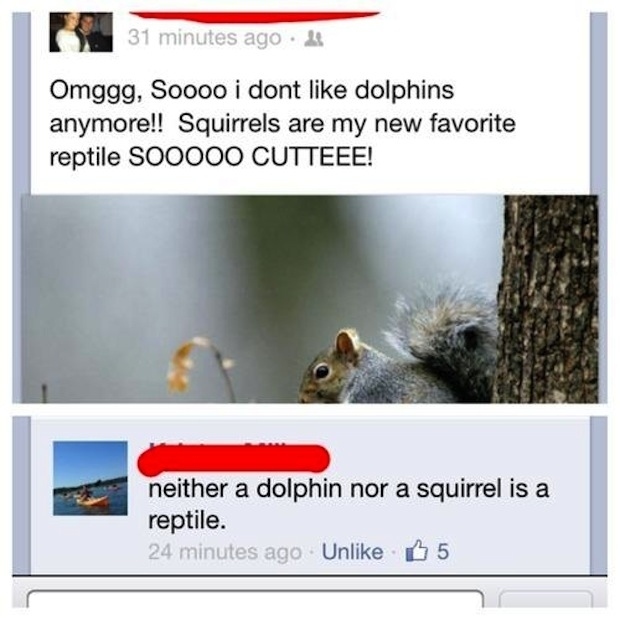
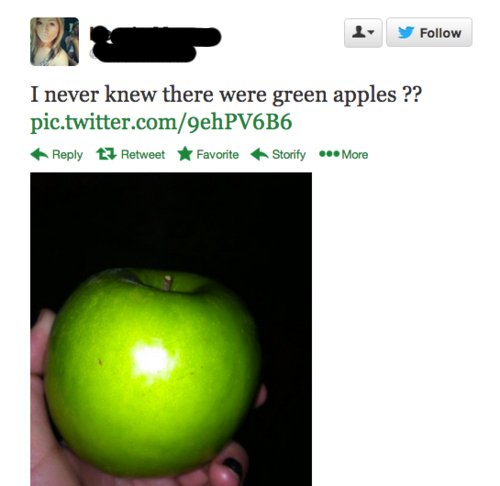
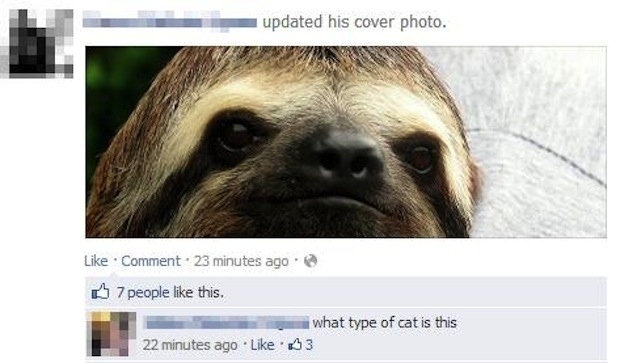
This is for people who don’t think Nature Deficit Disorder is a thing & don’t think folks are disconnected from biodiversity.

This.

naturedeficitdisorder03

This.

naturedeficitdisorder02

And, yes, even this.

naturedeficitdisorder01

Via Buzzfeed.

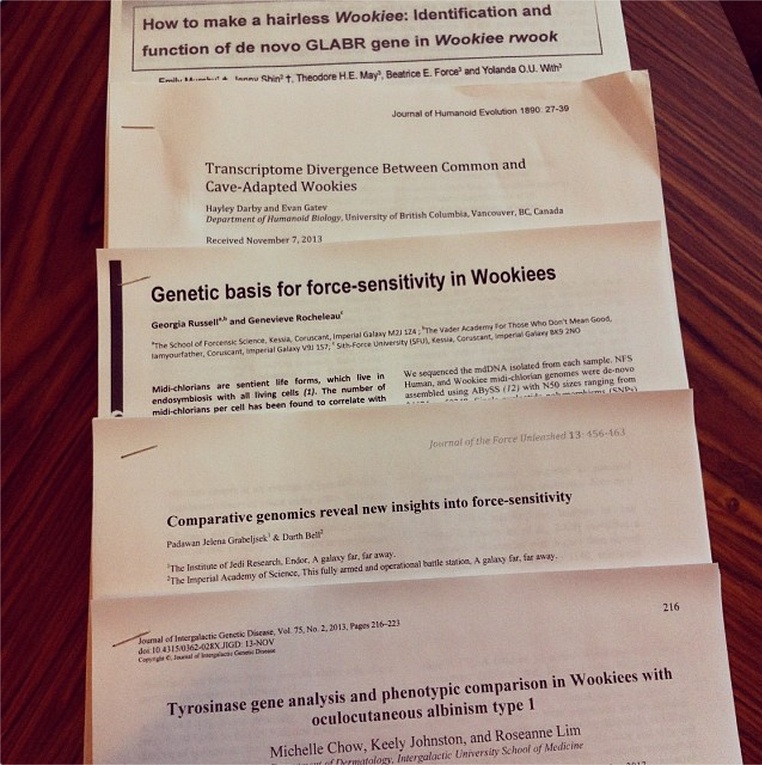
You know it’s all good, when you have to read Wookiee research papers. Wookienomics: it’s a thing… #starwars

wookieepapers

Note: eventually, some of these (I suspect) will be published in full at the Science Creative Quarterly.

This is a wonderful & touching way to spend 7 minutes in science history joy: Wallace: The Other Guy to Discover Natural Selection

Beautifully done…

Via the New York Times.

The 2013 Candy Hierarchy

By DAVID NG and BENJAMIN R. COHEN

candyhierarchy2013final

Click on the image for larger graphic.

– – –

(CLICK HERE FOR PIN-UP POSTER – pdf file ~1Mb)
– We suggest photocopying at 129% – LTR to 11×17 –

– – –

ABSTRACT

The “Candy Hierarchy” represents a thoroughly authoritative attempt to scientifically measure and classify Halloween Candy by assessing “joy induction.” More or less. Since 2006, Cohen and Ng have curated these rankings as an ongoing longitudinal study, one which reassesses itself through the use of the newest technologies (often teeth and jaws) and robust scientific peer review (comments). This article therefore presents the latest rankings with insight into the complex cultural underpinnings of “sweet” things. Specific notes of interest are two fold: (1) the emergence of a child-centric sucro-fructo-tastic gummi/chewy/taffi layer into the upper strata and (2) the recent prominence of corporatized corn fructose agents potentially, but we doubt it, influencing the hierarchy. Speaking of corporate influence, we are proud to be sponsored by Sweetum’s this year. Sweetums!: When fructose jitters can’t wait, try Sweetums, an American delight! In conclusion, these findings continue to demonstrate the enormous challenge in monitoring the constantly changing landscape of candy joy induction. Except, of course, for Whoppers – Whoppers still blow. And, good god, if I get one more box of Nerds. They’re gone. It’s done. Boom. Drop the mic.

– – –

DISCUSSION

This year, we had money. Gobs of money. Like lots and lots. If Everlasting Gobstoppers were money and not gobs used to stop things, we would be that. So much money it was crazy town for a while. It’s like, this year for Halloween we’re not going to be giving out Toblerone; we’re going to be giving out 3D printers that make Toblerone. But don’t let’s get all braggy. Our point is this: we got big cash and we did fancy research.

And what did this research look like? Well, all sorts of scientific things—things like booking time at CERN to collide candy corn and chocolate bars together in an attempt to explain why some fundamental particles (bodies) have (more) mass; things like using next gen sequencing methodologies to elucidate the genetic variation within populations of same-flavored and different-flavored Starbursts; things like setting up a Dancing-with-the-Stars-like competition where we had animated FTIR machines (which we printed with our disposable 3D printers) spit out competing glucose fingerprint codes to see which danced the best. Was most of this wasted time, effort, and money? Sure, maybe…the CERN data showed that colliding candy together at high speeds resulted in smaller bits of candy (intriguing); the Starburst genome project essentially suggested that Starbursts don’t, in fact, have genomes (curious); and it’s not clear that Dancing FTIR thing even made sense. But it’s not for us to decide the findings’ value. That’s what the peer community is for. Who knows how this knowledge might one day be applied? Besides, the stuffed coats at Sweetum’s tell us we can’t actually make the good data public until Sal in marketing vets it. I think this discussion is supposed to be redacted, actually. Rob, can you go check on that before this runs?

Regardless, we can state this: lo and behold, this year’s hierarchy reveals a bi-modal fracturing at the top strata. Previous rankings had found chocolate dominance at the top. The new hierarchy reflects discoveries made in the last year whereby some kids don’t think chocolate is top tier. Seemed like bullshit at first—because, really? Non-chocolate? But data don’t lie. So check out the graphic above.

Know what else? After years of failed get-it-right fast schemes, in this scheme we got it right. And fast. With some methodological retooling, more data sets, further research, and hundreds of additional peer review comments, the hierarchy is now entirely correct. There will be no need for comments. You can turn the internet off now. Yes yes, we said that last year, and the numerous years before. But that was before Twitter was big so nobody really read this. People always say they’re super confident, and you can never believe them, and don’t ever trust who ever acts like they’re one hundred percent certain. It’s just, if someone says something is entirely correct, you have to be a bit skeptical, right? But this time we are one hundred percent confident; this hierarchy is entirely correct. Why? Because of that corporate sponsorship. That’s why we’re proud to thank Sweetum’s Good Times High Fructosery for funding this year’s hierarchy. Sweetum’s, the quicker picker upper. Anyway, the scientific process is largely structured by corporate mechanisms and economic considerations, we’re told. Scientific research is underwritten by commitments to those problems our funders deem worthy of study. Right? And so here we are. Lots of sugar. Eventual diabetes. Meager dentistry. Yum.

– – –

SOME PEER REVIEW COLLECTED HERE

– – –

FOOTNOTES

1. Because like, score! (Bcsizemo, 2010)

2. a.k.a. God’s Candy

3. These may be rolled to a friend.

4. Not sure if this should be included. Systematics are still on going – denomination appears to be key.

5. Like that fish you’ve seen on television. You know – the one which looks like it can breathe air and stuff.

6. Appropriate ranking may depend entirely on date of purchase versus date of opening. Experts in this field often refer to this dichotomy as “fresh CCE” versus “stale CCE,” or FCCE versus SCCE (Beschizza, 2011). Note that its interior has also been described as “pustulent.” (Petersen, 2010)

7. Sometimes spousal influence forces these placements as with, ahem, this primarily southern delicacy.

8. Blame the children on this one, Canadian children too. Also, sponsored by Sweetums (“Sweetums!: When fructose jitters can’t wait, try Sweetums, an American delight!”) whose corporate dollars may or may not be messing with your heads.

9. Always a contentious subject with a rich history of controversy. Briefly: Candy Corn, as of 2006, remained unclassified, but as of 2007 had been tentatively placed in the Upper Chewy/Upper Devonian. 2008: no sighting. This year, we have elected to place in a new tier, although what this means exactly has yet to be determined.

10. Includes comparable Commonwealth version of “Smarties.” (Devo, Legionabstract, gadgetgirl et al, 2011)

11. Although has also been classified as packing material (Cunning, 2010)

12. Placed solely to acknowledge, make fun of, and possibly undermine British opinions. Google it, but be careful when you google it (2012).

13. This is from EU pressure, known in diplomatic circles as the “Hornby Concession” (see his many footnotes from the 2012 version).

14. In which we acknowledge the complex underpinnings of this here Candy ranking exercise: apparently, the wrapper of the Ferrero Roche gets a higher ranking than the candy itself (due to high artwork potential). (Son of Anthrodiva 2012)

15. Whoppers blow.

16. The authors are curious as to which neighborhoods you belong to.

17. Also a hot mess of debate. Not to be confused with hot messes involving actual persons named “Mary Jane.” (Girard, franko, lexicat, Easton, Petersen, Halloween_Jack, 2012)

18. The discontinued candy, not the equally rankable discontinued board game.

19. Oh smack, can you even imagine if you got Fritos?

20. You know, we don’t even know what this is, but, hell, your sister marries an Australian, they have a kid, now you’ve got a niece, and you want a nice life for her, you want her to have a stake in the hierarchy, so okay, Aussie Lollies — Picnic bars, cherry ripe, Frys Turkish delight, probably something Chazzwozzer-based too, knock yourself out.

21. In a word, surreal… Plus grandpas with eyepatches always make everything better. Pretty sure, this is reproducible. (Gyrofrog, petertrepan, Koerth-Baker, Olsen 2012)

22. By some accounts, these two are actually one and the same (Gadgetgirl, 2010)

23. Yet some would be just as well to be left off. Bit-o-Honey, for example, might be called a lower tier member, but why bother? It says to your trick-or-treaters, “Here, I don’t care, just take this.” The lesson of Bit-o-Honey is: you lose. Doorstep offers of lectures in civics, too. You’re making a social statement–“I hate you and everything you represent”– when you give these out.

24. Yes, we really meant fruit that is healthy, clean-cut upstanding fruit that takes time from its gym membership and all the demands that come with it to contribute a positive message of citizenship and camaraderie to the community. This isn’t a typo of healthy for healthful. (see U.M.H. 2011)

25. Research has further defined this relationship. Currently, it has been suggested that Blackwing Pencils > Hugs > Creepy Hugs > Pencils. (Lobster, Prufrock451, and Warreno, 2010)

26. Unless it’s something caramel, pronounced “caramel.”

27. Unless you eat them properly. To quote Anonymous, 2010: “The trick to realizing how brilliant and delicious Now ‘n Laters are is a two step process. The first step is to carefully read the name of the candy. “Now ‘n Later.” What does it mean, you ask? Well, it implies that the candy will be different “now” (when you put it in your mouth) and at some point “later” in time. A small leap of logic takes us to the second step: be patient. You need to suck on it for a while until it softens. If you skip this step, the Now ‘n Later will be an inedible, rock-like colorful brick quite worthy of the low end of the hierarchy. But if you are patient in your candy-eating process, oh the rewards you will reap!”

– – –

Originally published at Boingboing.net.

Lovely animated gif of some sort of protist. #beautiful

tumblr_mpytbgQ1Rq1rk0k2jo1_500

From gifovea, via Fresh Photons.

Love this little anecdote about astronaut John Glenn and the International Flat Earth Research Society

Found at Futility Closet and noted here for tagged archive.

In February 1962 John Glenn circled Earth three times on Friendship 7.

When he landed, he received a card from the International Flat Earth Research Society.

It said, “OK wise guy.”

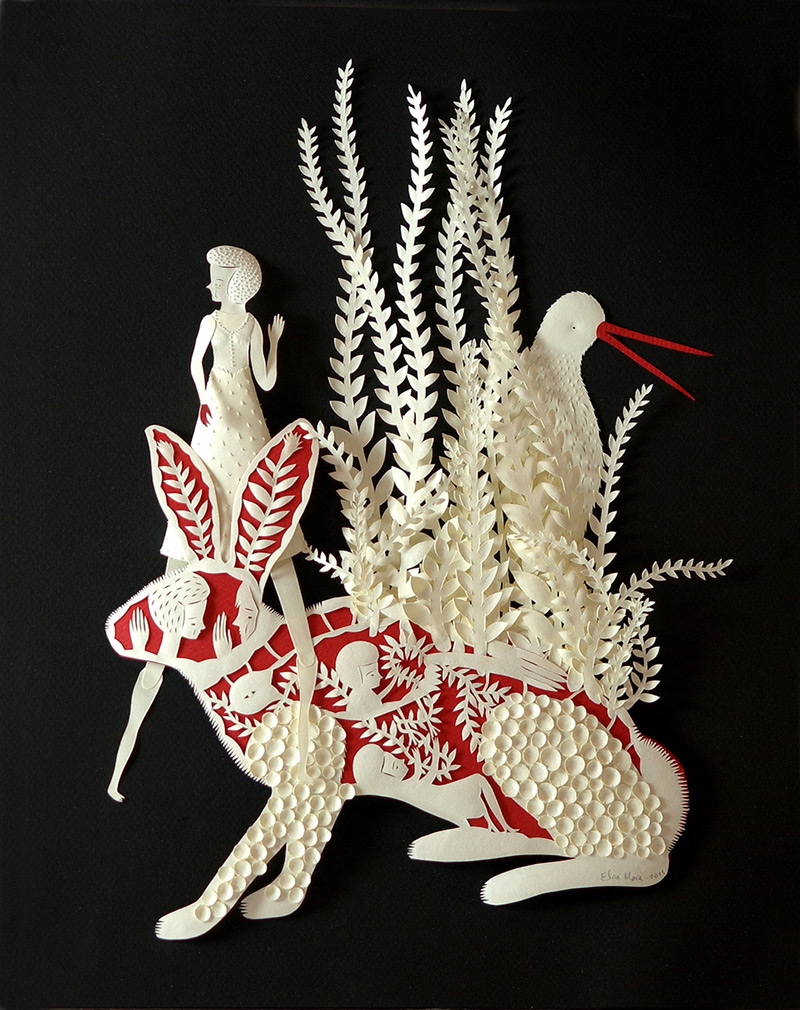
Wow. These paper cut sculptures are pure biodiversity themed wonder.

In a word: whoa…

elsa-5

elsa-1

elsa-3

By Elsa Mora, via Colossal.

That’s a lot of big numbers to make a single jar of honey.

honeystats

By Heather Diane Hardison, via IFLS

Ridiculously detailed (but fake) research paper on the electrical abilities of #Pokemon #pikachu

paperfrontpikachu

– – –

PLOS BIOLOGY (March 2013). Vol 11 Issue 3. e1001501 p1-6 

Click on the image to go to full text paper. Click here for pdf download.

ABSTRACT

Electrocytes contain membrane proteins that allow the polarization of the plasma membrane, thereby allowing the generation of electricity in animals. It has been long established how electricity is generated in the electric eel, but recent studies found similar electrocytes to be active in electric mice. We aimed to study the basis behind electric discharge in a land animal. We found that the voltage-gated sodium channel, Nav1.4a, was expressed in electric organs of the electric mouse, Pokemon pikachu and the electric eel, Electrophorus electricus. However, Nav1.4a was not expressed in the muscle cells of E. electricus while it was expressed in the muscle cells of P. pikachu and other rodents. We also found that P. pikachu and E. electricus shared similar amino acid substitutions at the nonconserved region of this protein. Voltage-clamp technique gave insight on the much greater potential differences generated by P. pikachu compared to electric eel and finally, microscopy analysis revealed greater Nav1.4a numbers in P. pikachu, potentially correlating with aforementioned greater electric potential generation, which perhaps lead to its capability to discharge electricity readily through air.

AUTHOR SUMMARY

Many species of fish are able to generate weak or strong electric discharges, either for communication or for stunning predator or prey. The electric organ, made of electrocytes, is responsible for generating electric discharge. Electrocytes are thought to be derived from neuronal and muscle cells. The voltage-gated sodium channel, Nav1.4a, is found to be absent in the muscle cells, but is highly expressed in the electric organs of electric fishes. In our study, we looked at Nav1.4a in a species of mouse, P. pikachu, that also generates electricity, but through air instead of water. We compared this electric mouse with electric eel as well as nonelectric rodents. Here, we found that Nav1.4a is expressed in both the muscles and electric organs of P. pikachu. In terms of the amino acid sequence, the channel protein of P. pikachu was more similar to the electric eel rather than the rodents. We then observed that P. pikachu possessed much greater numbers of Nav1.4a and generated a much higher potential compared to the electric eel, which may explain its ability to discharge electricity through air.

Via the Science Creative Quarterly (with apologies to PLOS Biology)

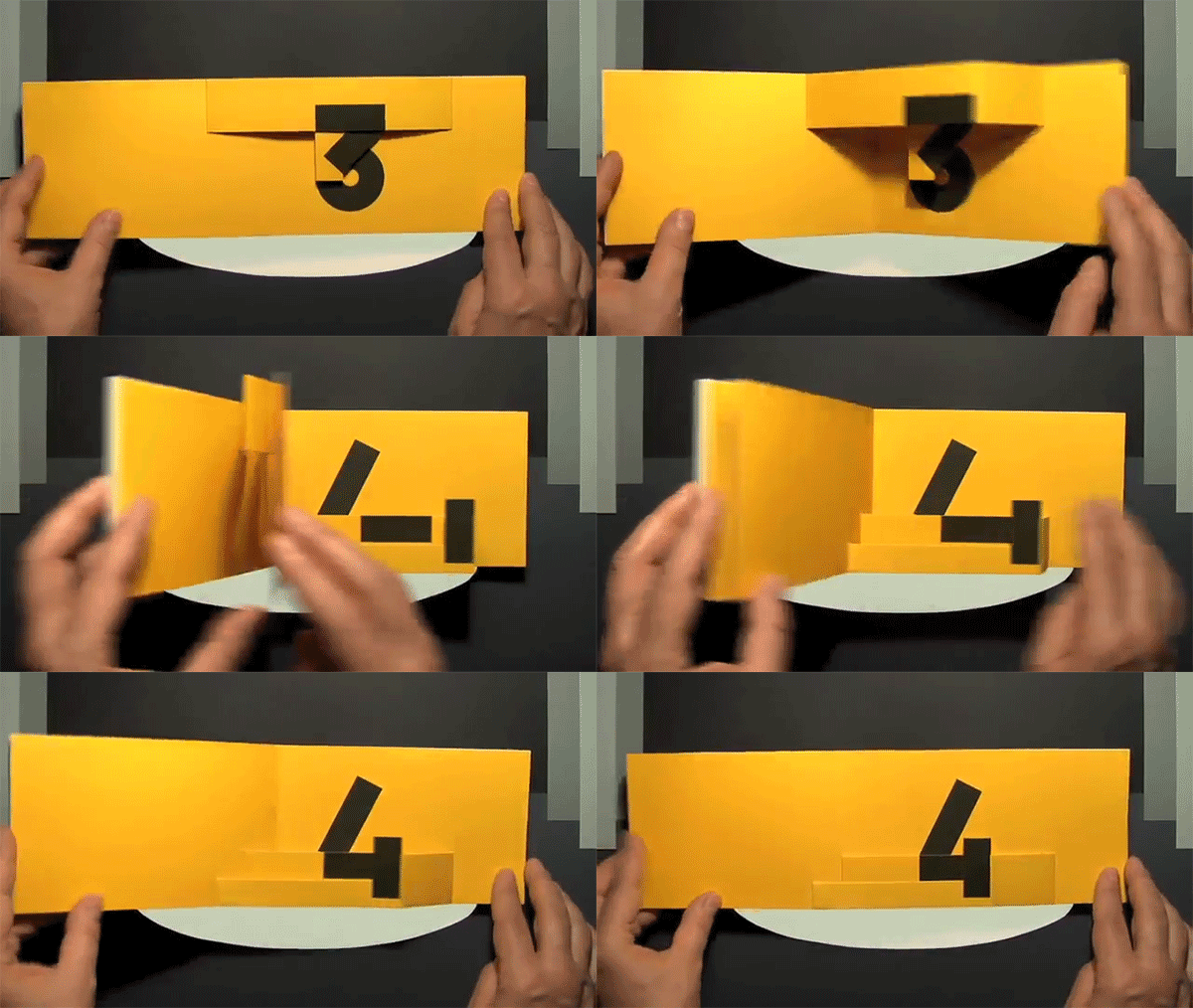
For the math geek: wonderful pop up book of whole numbers.

So awesome…

number-2

number-4

By Marion Bataille, and available here. Via Colossal

Good morning world. How about something upbeat? Fam Jam from Shad. #song4mixtape

“Fam Jam (Fe Sum Immigrins)” by Shad

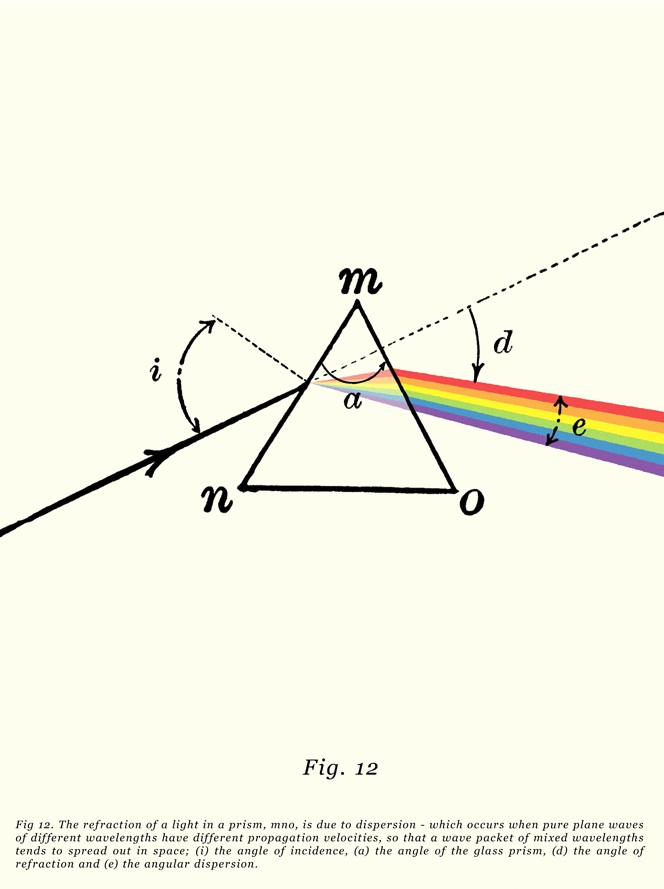
These chromatic mathematical figures by @simoncpage are gorgeous to behold

Damn, these are pretty…

rareminimum12

rareminimum11

rareminimum10

rareminimum03

rareminimum02

rareminimum05

rareminimum01

Outstanding work by Simon C Page (a.k.a Rare Minimum), and available as cards for purchase. Via Fresh Photons.

Strange and surreal space themed animated gifs

zack-2

zack-3

By Zach Dougherty, via Colossal.

A little morning music to shuffle by. Ragtime by Neko Case #song4mixtape

By Neko Case, from her excellent The Worse Things Get, The Harder I Fight, The Harder I Fight, The More I Love You.

Saturn is awesome. That is all.

Breathtaking…

beautifulsaturn

Data from Cassini. Image processing by Gordan Ugarkovic. Via Bad Astronomy.

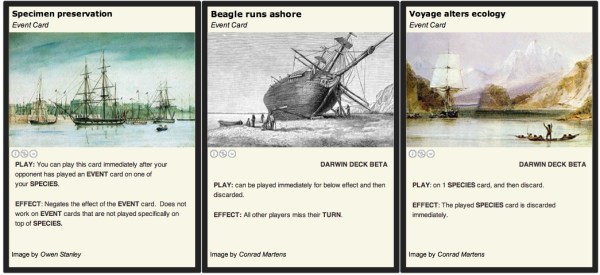
Announcing the “Voyage of the Beagle” trading card game. Plus a call for some crowdsourced goodness!

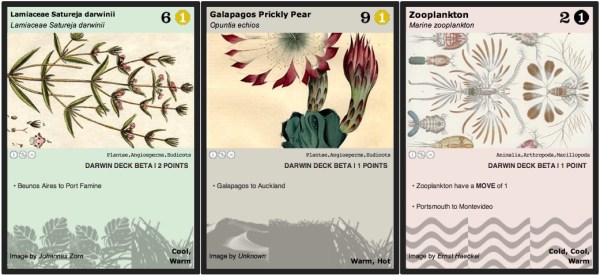
The Phylo project is hard at work on preparing the next high quality Phylomon* deck, and this one will revolve around Charles Darwin and his wonderful 5 year voyage on the H.M.S. Beagle.  

At this point in time, we’ve enlisted the help of noted Darwinian aficionado, Karen James, who has nicely narrowed down the list of cards that are needed for this endeavour (see original google doc here). In turn, I have a group of folks in the backend of the phylo website, who have produced a number of nice looking “beta” cards that can be used to test things out (they used images from vintage natural history prints, many of which were actually produced by folks on the voyage itself – i.e. John Gould for example).

These “beta” cards can be found on the phylogame website, but we’ve also produced a handy dandy 10 page pdf of the putative deck for easy printing and cutting (click on the image below to download – 11.5Mb pdf). Note, the rules for the game can be downloaded here.

downloadbetadarwindeck01

Click on the cards to download the beta deck pdf (11.5Mb)

That being said, because this is a crowdsourced project, we would love to hear comments from anyone interested, and with that community incentive in mind, here is a list of things to consider:

1. The next two weeks, I’m hoping that some folks out there in the world wide web will print out this “beta” Darwin card set and give it a try: this way, we can finalize what the deck list needs to be. The reason why there is a time crunch on this, is that this finalized list will allow us to start the process of seeking out and commissioning artists for the production of lovely card art.

downloaddarwinbetadeck04

Click on the cards to download the beta deck pdf (11.5Mb)

2. The species used are all species observed and noted during that fateful voyage. For now, they’ve been grouped according to certain legs of the trip (kind of by geography if you will). This was mainly because the actual sea voyage had a lot of going back and forth, so Karen thought that going with a temporal theme would be too tricky. Here you’ll note that the geography categorization is mentioned in the card text (i.e. “Galapagos to Auckland), but we’ve also coordinated the background colours of the cards themselves, to make this easier to see (some cards have a reddish background, some brownish, etc).

downloaddarwinbetadeck03

Click on the cards to download the beta deck pdf (11.5Mb)

3. With the geographical mode of categorization, and because the H.M.S. Beagle itself traversed a significant part of the globe, it turns out that when one plays this game, there will often be cases where an organism can be played adjacent to another where the compatibility rules work, but that they would never actually be in the same part of the world (i.e. technically, some connections would not be grounded in reality, as usually decks are organized around locality unlike this one). Here, players will need to make a judgement call on how important this is. In other words, I’d like to hear people’s opinions on what they think about this. We think the cards can still be played in a scientifically literate manner (i.e. using the background card colour to help guide these more “real” connections), but that being overly strict will likely make the game much more finicky. Perhaps there are options out there where the scientifically literate connections (i.e. via background card colours) are worth more points, or are immune from event cards, etc. We’d love to hear your thoughts.

4. The current list of “Event Cards” were pretty hastily made and largely influenced by availability of cool vintage paintings. Since the final deck will involve art commissions, we’re actually a lot more free to come up with much more clever event cards. Would love to hear more ideas here.

downloaddarwinbetadeck02

Click on the cards to download the beta deck pdf (11.5Mb)

5. And since we’re asking for help generally, there is also a much bigger challenge at stake. Karen and I are very intrigued by the idea of tweaks to the current rules that allow folks to follow the voyage in a “temporal” manner. i.e. the possibility of “history cards.” Mostly, event cards change the food chain connections, or alter the game play where someone has a logistical advantage or disadvantage (i.e. The pdf you’ve been provided with is pretty much the usual ecosystem type building game, which we know works pretty well). With the possibility of “history cards” we want to see if there are elements to the game that can illustrate things in a time dependant (i.e. historical) manner. This is actually why the pdf has a number of blank cards. These have been included in case anyone out there has a cool idea they want to test out, since we currently have no idea what this might look like, or know how doable it is. Furthermore, we’re not even sure if it’s something we want to try to sort out now, or perhaps later with the release of Darwin themed expansion packs (i.e. no rush to do this, but super mega bonus points if someone does have a go).

Anyway, for folks who do help out, please leave commentary somewhere for us to find (if not in comments sections, then maybe at the forum, or via email – db at mail dot ubc dot ca). Anybody who comes up with some excellent suggestions/commentary will be eligible to receive the Darwin deck when all is said and done (and also the Beaty Deck as well). Note if the contribution is outstanding, we’ll also make sure you’ll be properly attributed in the final version of the deck itself.

Game on!

Complex carbohydrates indeed

complexcarbsgemmacorrell

By Gemma Correll.

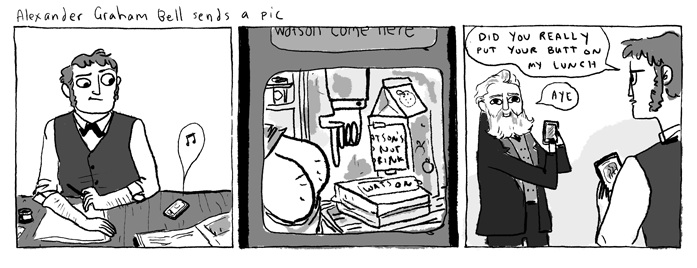
Alexander Bell sends a pic #funny via @beatonna

Almost peed my pants when I read this. Plus I love it, because it’s a perfect commentary on the diverse nature of science culture (i.e. we can be silly and crude as well as science-y). Would be wonderful if, one day, Ms. Beaton decides to do a book on science history – heck, I would even love to commission that sort of project (ooh ooh – maybe a “famous folks in science history” phylo deck?)

katebeatonalexanderbell

By Kate Beaton.