.

Category: *

Is Grimace an example of yeast genetics gone bad?

Should give credit, where it’s due – although I made this graphic, the idea for the graphic isn’t mine. Saw something similar in an ad for some graphic design school. If anyone else knows what I’m talking about, do send a note to me. O.K. enough with the references to Grimace…

Scientists say the world is made of morons.

Via iwastesomuchtime.com.

Awesome animated gif of a physics blackboard

Can’t find out the source for this (do let me know if you know).

MUST find recipes and do this chemistry demo myself! Watch this, watch this, watch this!

Seriously… Watch this, watch this, watch this…


.
What you are watching is called The Briggs-Rauscher reaction, demoed by “the guy who literally wrote the book on chemistry demos: University of Wisconsin-Madison Chemistry Professor and 2012 ACS President Bassam Shakhashiri, author of the popular “Chemical Demonstrations” textbooks.”

Via Eric Lagally.

p.s. Here are the recipes:

– Solution A:
Add 43 g potassium iodate (KIO3) to ~800 mL distilled water. Stir in 4.5 mL sulfuric acid (H2SO4). Continue stirring until the potassium iodate is dissolved. Dilute to 1 L. 

– Solution B:
Add 15.6 g malonic acid (HOOCCH2COOH) and 3.4 g manganese sulfate monohydrate (MnSO4 . H2O) to ~800 mL distilled water. Add 4 g of vitex starch. Stir until dissolved. Dilute to 1 L. 

– Solution C:
Dilute 400 mL of 30% hydrogen peroxide (H2O2) to 1 L.

Procedure

Place the stirring bar into the large beaker.
Pour 300 mL each of solutions A and B into the beaker.
Turn on the stirring plate. Adjust the speed to produce a large vortex.
Add 300 mL of solution C into the beaker. Be sure to add solution C after mixing solutions A + B or else the demonstration will not work. Enjoy!

Notes

This demonstration evolves iodine. Wear safety goggles and gloves and perform the demonstration in a well-ventilated room, preferably under a ventilation hood. Use care when preparing the solutions, as the chemicals include strong irritants and oxidizing agents.

Clean Up

Neutralize the iodine by reducing it to iodide. Add ~10 g sodium thiosulfate to the mixture. Stir until the mixture becomes colorless. The reaction between iodine and thiosulfate is exothermic and the mixture may be hot. Once cool, the neutralized mixture may be washed down the drain with water.

From chemistry.about.com.

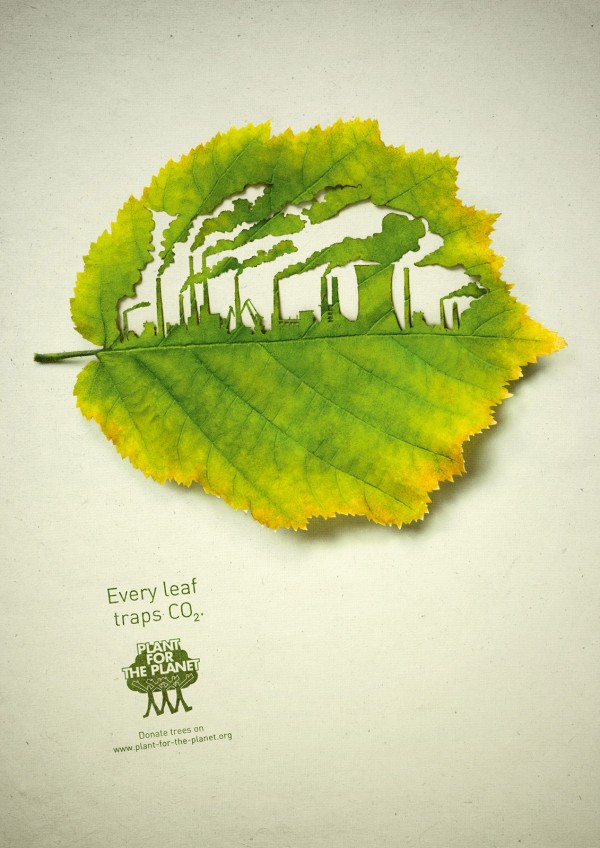
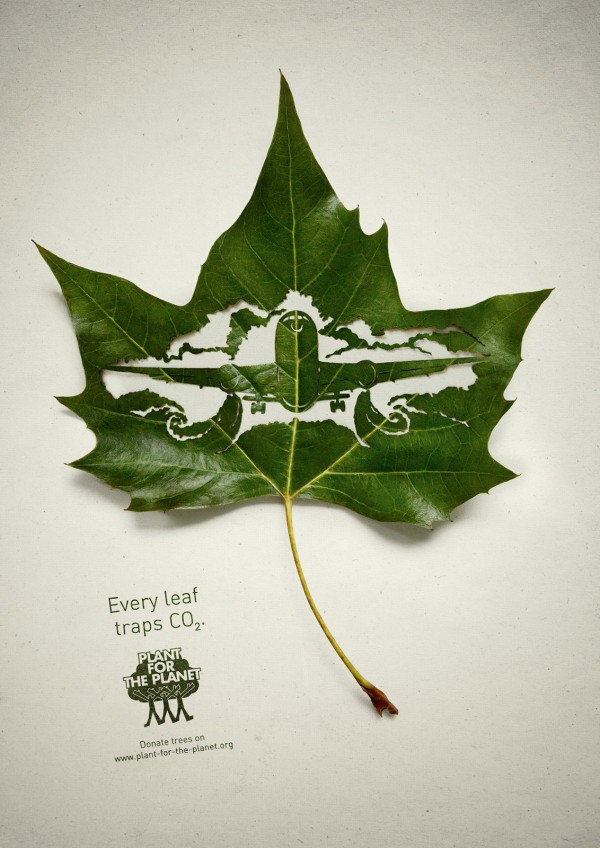
Environmental cut images in leaves, produced for environmental campaign.

From Plant for the Planet via thisiscolossal.

Human anatomical cross-sections made with paper. #beautiful

Art by Lisa Nilsson, via thisiscolossal, via Drawn.

Using 3D protein structures as inspiration for art and doodles. #verycool

This is so amazingly geeky! The below graphic is the crystal structure for Alzheimer’s disease related Amyloid Precursor Protein.

The image gained by means of X-ray diffraction contains eight chains of the APP copper binding domain. Four chains are used for the elephant picture.

Via its copper binding domain Amyloid Precursor Protein (APP) can modulate copper transport. Cu-binding presumably leads to a reduction of Aβ levels which is a key player in the onset of Alzheimer’s disease. Therefore copper could have therapeutic effects on Alzheimer’s patients.

More by Maja Klevanski.

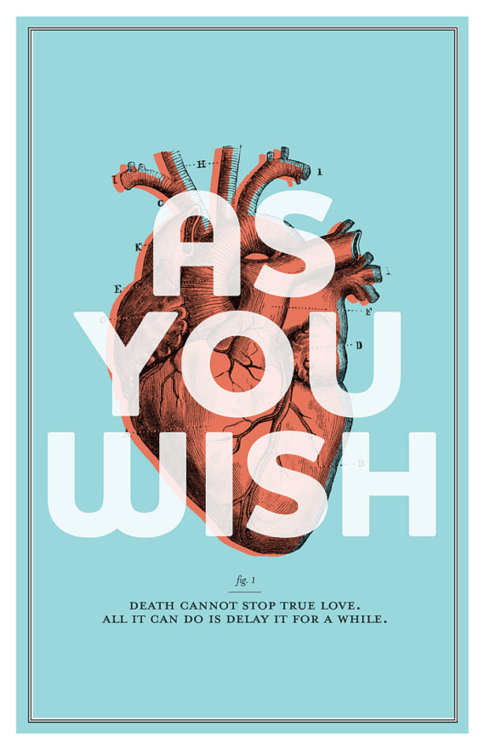
Lovely heart graphic (with cool Princess Bride tie-in)

The Princess Bride illustrated by Amy McAdams and available at etsy.com. (via Hey Oscar Wilde!)

Serotonin and Dopamine: Technically the only two things you enjoy (the t-shirt)

For the neuroscientist.

From Toothpaste for Dinner.

Hirsute (as in pertaining to hair) history of science.

That’s it… I need a radical change in hairstyle.

From

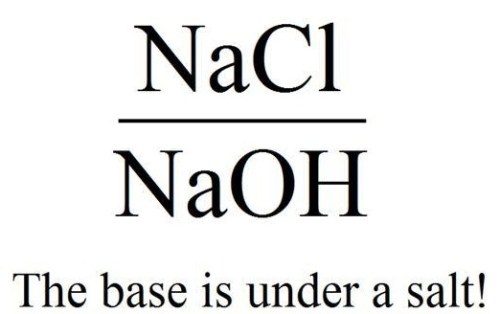
This chemistry pun is so bad, it’s good…

Get it?

Scientific method for ten year olds.


(Click on image for larger version)

From sheldoncomics.com.

Minimalist Zoo.

Beautifully done by Carlos Díaz, via flickr.com and Hey Oscar Wilde.

Very cool image showing different brains from different animals.

From Frontiers in Neuroanatomy.

Technology cemetery. #artwork


.
Clever…

By Kevin Van Aelst.

Great Radiohead cover (which incidentally is all about human cloning)

Specifically, this one:

Which, of course, is a cover of Kid A from the CD Kid A. Thom Yorke, years ago, reportedly left the following message on a radiohead message board:

POSTED BY Thom ON JULY 30, 2000 AT 23:39:21:
IN REPLY TO: Thom, why Kid A?
dedicated to the first human clone.
i bet it has already happened.

Why do cats purr?

From Fake Science.

The history of the world is pretty much all about the dinosaurs.

Image by Malachi Ward.

Proof that God is not a physicist

From Saturday Morning Breakfast Cereal.

The science of winning Rugby World Cups

Apparently, it’s pretty simple- you need big players who have played for a while.

Paper (link to first page pdf)

How they won Rugby World Cup through height, mass and collective experience. Adrien Sedeaud, Andy Marc, Julien Schipman, Muriel Tafflet, Jean-Philippe Hager, Jean-François Toussaint. Br J Sports Med doi:10.1136/bjsports-2011-090506

Abstract
Objectives To investigate the evolution of anthropometric characteristics in World Cup rugby players and identify elements associated with performance.

Design Age, weight and height were collected for 2692 World Cup rugby players as well as rankings in each World Cup, and collective experience of winners, finalists, semifinalists and quarter finalists in comparison to the rest of the competitors. Anthropometric parameters were compared according to age and position (back and forwards).

Results From 1987 to 2007, forwards and backs have become heavier by 6.63 and 6.68 kg and taller by 0.61 and 1.09 cm, respectively. The collective experience of the forwards’ pack is a value increasing with the final ranking attained, as well as the weight of forwards and the height of backs.

Conclusions For all Rugby World Cups, the highest performing teams have the tallest backs and heaviest forwards with the highest percentage of collective experience.

Via io9.