
.
Category: *


March 27, 2012
Ocean currents visualized: strangely reminiscent of Van Gogh
This visualization shows ocean surface currents around the world during the period from June 2005 through Decmeber 2007.
NASA/Goddard Space Flight Center Scientific Visualization Studio
March 27, 2012
A better way to appreciate human anatomy: just mix slow motion with ballet and add a little Radiohead.
This is worth checking out in HD.
By Simon Lannelli.
March 27, 2012
Need to exercise your brain a little? See if you can figure this puzzle out…
Futility Closet once again makes my head hurt.
On a multiple-choice test, one of the questions is illegible, but the choice of answers is listed clearly below. What’s the right answer?
(a) All of the below.
(b) None of the below.
(c) All of the above.
(d) One of the above.
(e) None of the above.
(f) None of the above.
Answer over at Futility Closet.
March 27, 2012
Please RT. Novartis and “evergreening.” Sneaky way to extend an old drug patent. Kind of (literally) a killer move in the developing world.
In short:
Novartis wants to allow “evergreening” in India. This is an IP trick that allows a drug patent, about to expire, a pseudo extension due to slight structural modifications. i.e. very sneaky. Currently, India doesn’t abide by this, and hence is a major source of generics for the developing world. If Novartis wins, this would be good for those of you with Novartis stock, but bad if the drug that’s keeping you alive is now off the shelf or priced way too high.
In essence, the issue before the court is this: Novartis wants to patent a formulation of a leukemia drug called imatinib mesylate, which it markets as Gleevec in North America and Glivec in the rest of the world. In 2006, the Indian Patent Office denied that patent, saying that it was not a new medicine but a salt formulation of a known drug. Novartis took that decision to court, and has lost twice on appeal; judges said the company had not shown the drug would have greater “efficacy” than the already-patented molecule, as required by the patent law. Novartis says that efficacy clause is discriminatory. This is the last showdown in a long battle.
At stake is India’s $26-billion (U.S.) generic drug industry, which supplies not only most all of the medicines used domestically but also acts as “the world’s pharmacy” and helped to fuel major gains in public health around the developing world over the last 15 years. Countries such as Zambia are able to treat hundreds of thousands of people with HIV in their public sector health programs because they buy generic Indian anti-retrovirals that cost $120 per patient per year, rather than the brand name versions that cost $12,000 per patient per year.
More here.
If this seems kind of wrong to you, then do head over here and sign the petition.
March 26, 2012
Just wonderful… #natureandkids (via @itscolossal)

By Ken Bohn at the San Diego Zoo.
March 26, 2012

March 26, 2012
This is brilliant! A VW bug remixed as a stegosaurus.
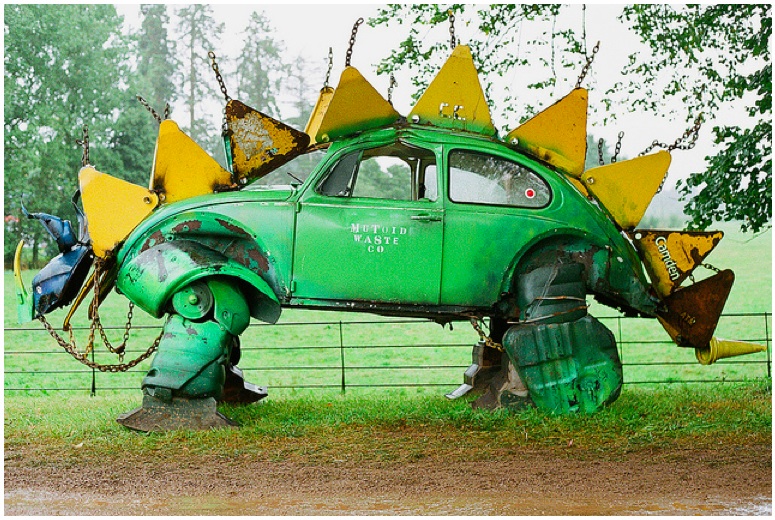
Awesome photo by Mark Massey, via thisiscolossal.
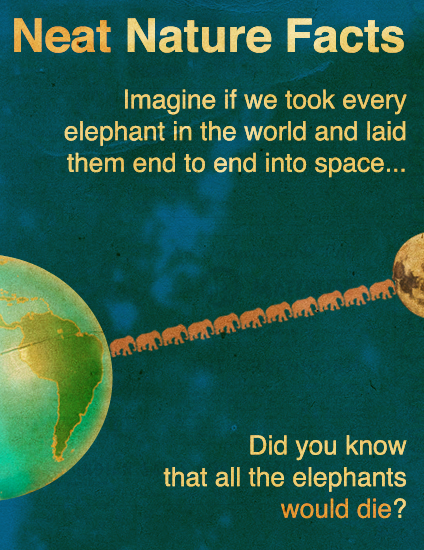

March 22, 2012
Who knew an X-ray of a space suit would be this pretty?

(Click on image for larger version).
Via The New York Times.
March 22, 2012
Century old patents for alternative energy solutions. #awesome
I love this…

Alfred Clark patented a labor-saving brainstorm in 1913 — a churn operated by a rocking chair.

Here’s one solution to the energy crisis: enlist the children. Julius Restein’s “device for operating churns,” patented in 1888, will exercise your kid and produce loads of delicious butter at the same time.
It also works with washing machines.
Both examples courtesy of the awesome futility closet.
March 22, 2012
When Zombies Attack! Math and medicine (and zombies) combine for interesting epidemiology paper.

– – –
Title: WHEN ZOMBIES ATTACK!: MATHEMATICAL MODELLING OF AN OUTBREAK OF ZOMBIE INFECTION
Authors: Philip Munz, Ioan Hudea, Joe Imad, Robert J. Smith.
Reference: Infectious Disease Modelling Research Progress, Chapter 4. Editors: J.M. Tchuenche and C. Chiyaka, pp. 133-150. ISBN 978-1-60741-347-9. c 2009 Nova Science Publishers, Inc.
Abstract: Zombies are a popular figure in pop culture/entertainment and they are usually portrayed as being brought about through an outbreak or epidemic. Consequently, we model a zombie attack, using biological assumptions based on popular zombie movies. We introduce a basic model for zombie infection, determine equilibria and their stability, and illustrate the outcome with numerical solutions. We then refine the model to introduce a latent period of zombification, whereby humans are infected, but not infectious, before becoming undead. We then modify the model to include the effects of possible quarantine or a cure. Finally, we examine the impact of regular, impulsive reductions in the number of zombies and derive conditions under which eradication can occur. We show that only quick, aggressive attacks can stave off the doomsday scenario: the collapse of society as zombies overtake us all.
Link to full paper – here.

March 20, 2012
Striking graphic showing volume of Earth versus volume of Earth’s water versus volume of Earth’s fresh water
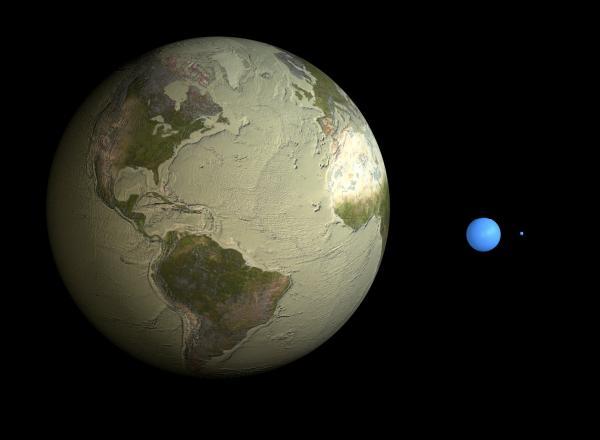
In this illustration, the blue ball represents the volume of all the water on earth, relative to the size of the earth. The tiny speck to the right of the blue ball represents Earth’s fresh water.
CREDIT: David Gallo/WHOI.


March 18, 2012
Brilliant graphic of the great lunar cycle. #awesome
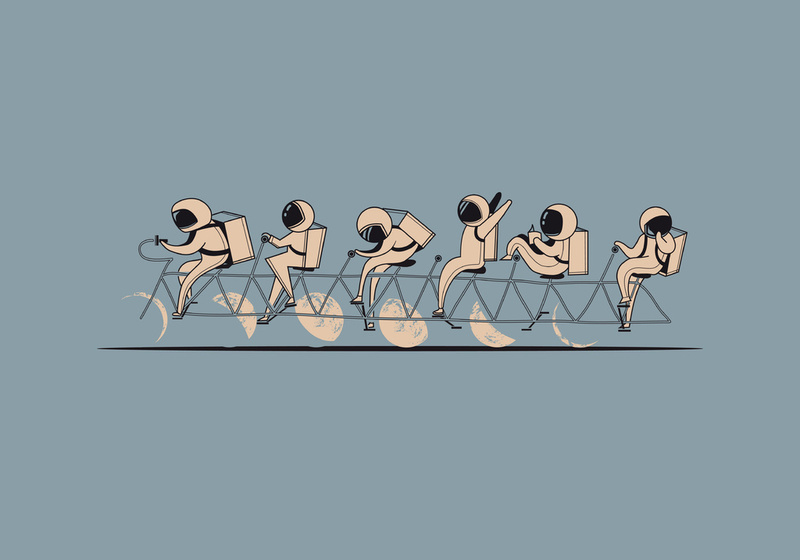
I can’t begin to describe how wonderful this illustration is. Bonus – you can buy it as a print!
By Aaron Thong.
March 18, 2012
It’s like math but louder…
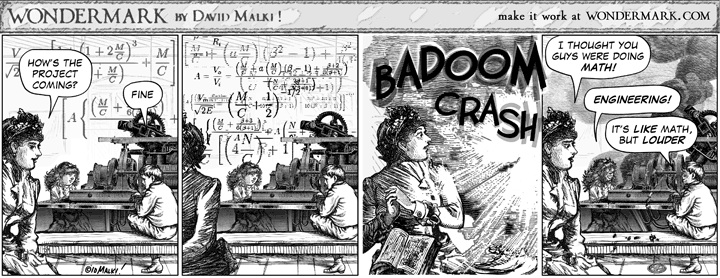
From Wondermark. (Click on image for larger version).
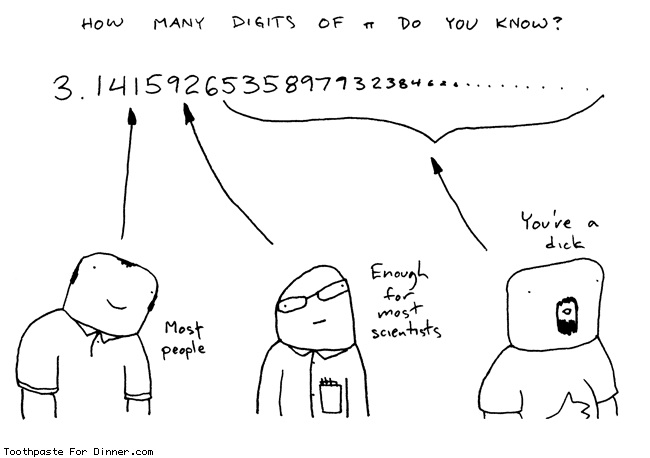
 popperfont.net