Wonders of Evolution: The Newly Discovered “Sporked-Tongued” Lizard of South Eastern England

By Gemma Correll.

You just knew that the Wookies would make good organists. Too bad, Bach was not much of an operatic composer. A wookie opera would be something else…

Unknown source – as in all over the web.

Available here (by Spelling Mistakes Cost Lives), via boingboing.net.
It’s footage like this that makes me wish I was an astronaut (best viewed in full screen).
“The International Space Station Expedition 30 crew shot some truly awe-inspiring time-lapse sequences flying over practically every square mile of the globe.
I downloaded the high-resolution image sets that have been made available by the NASA Johnson Space Center and constructed this short time-lapse film in hi-res 2K project format. I was amazed at how clean the Nikon D3S images turned out (even at ISO 3200 and above) which kept the post-processing requirements to a minimum.
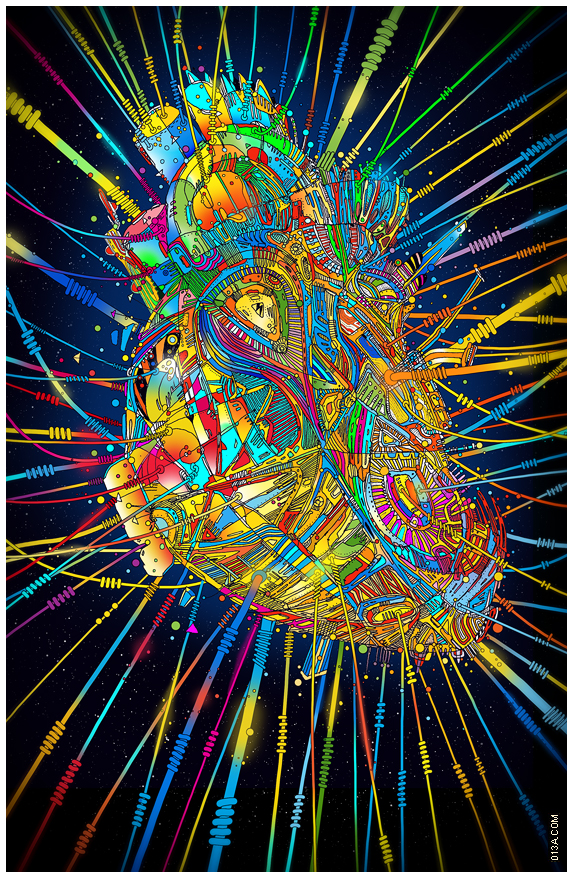
By Adonis Pulatus.
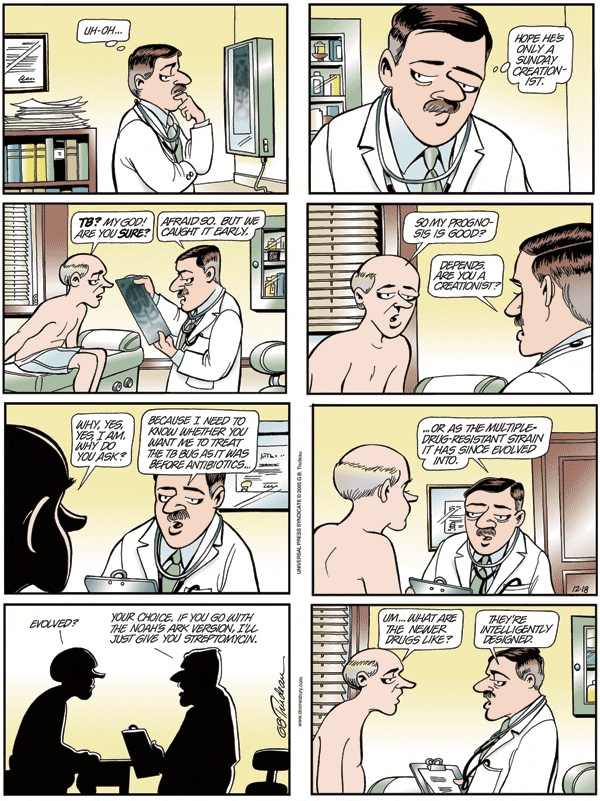
Apparently, yes (if you take this page from a Bible Colouring Book to heart)*
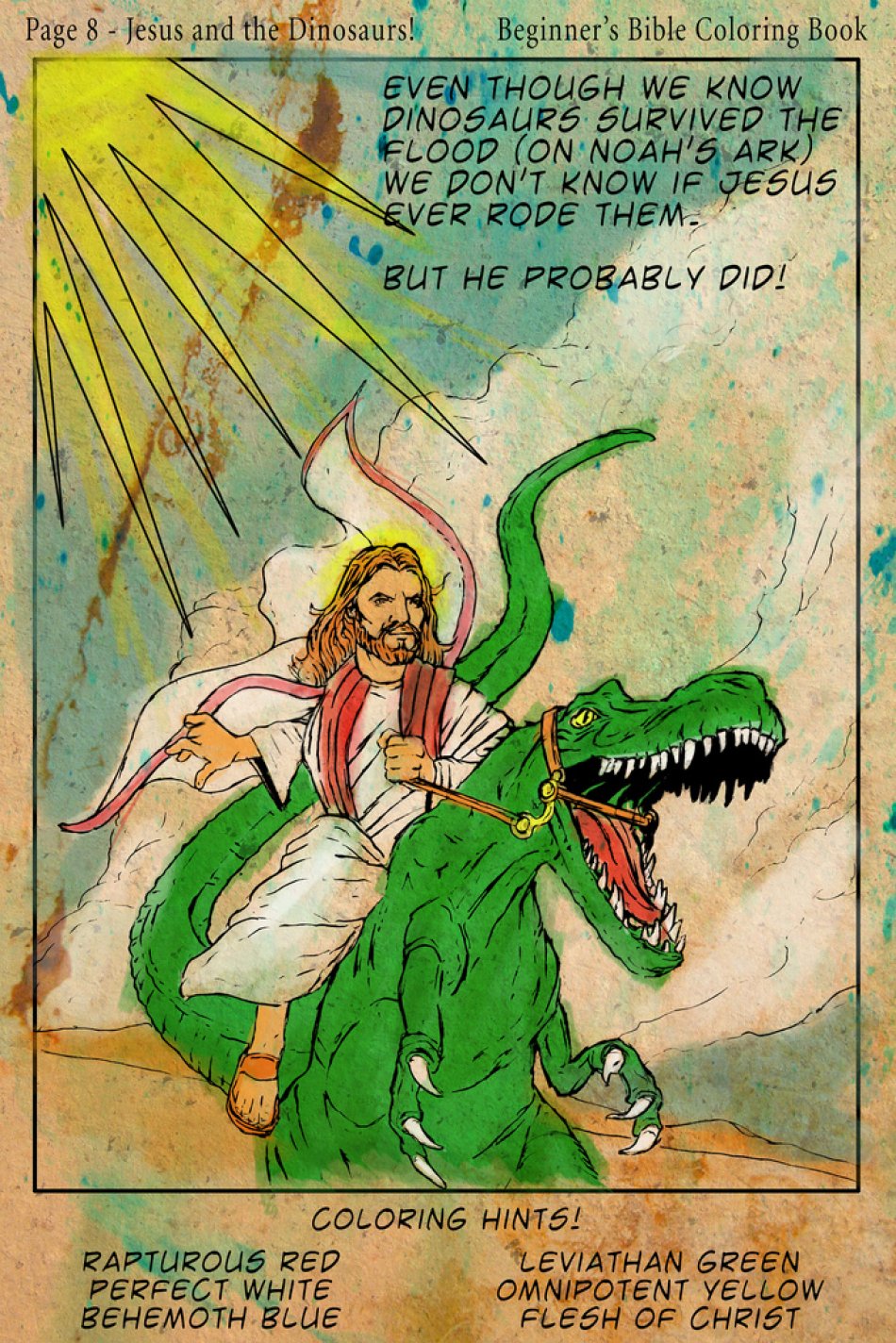
*Also possibly a spoof – since I can’t find an original source for this (it’s basically all over the web).

By Roll & Tumble Press, and available at Street Anatomy.

(Click image for larger view)
“In the mosaic, the Milky Way Galaxy runs horizontally across this map. The Milky Way is shaped like a disk and our solar system is located in that disk about two-thirds of the way out from the center. So we see the Milky Way as a band running through the sky. As we look toward the center of the galaxy, we are looking through more of the disk than when we are looking at large angles away from the center, and you can see a noticeable increase in stars (colored blue-green) toward the center of the image.”
From NASA.
The word you are looking for is “whoa.” Beautiful to watch, a little strange, but definitely makes the 8 minutes melt by.
By Mikey Please, and recipient of (like) a ton of awards.

“Sucralose was discovered in 1976 by scientists from Tate & Lyle, working with researchers Leslie Hough and Shashikant Phadnis at Queen Elizabeth College (now part of King’s College London).[3] While researching ways to use sucrose as a chemical intermediate in non-traditional areas, Phadnis was told to test a chlorinated sugar compound. Phadnis thought that Hough asked him to taste it, so he did.[3] He found the compound to be exceptionally sweet.” (From wiki)
Read a bit more about this neat story at Futility Closet.
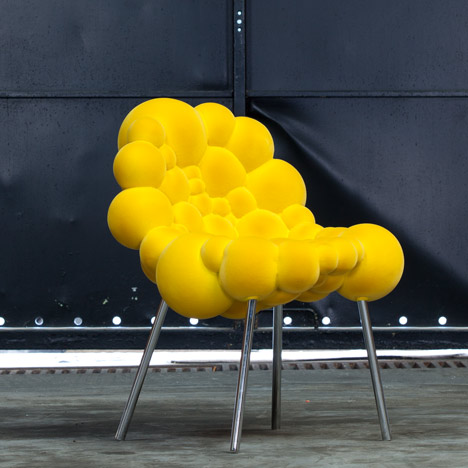
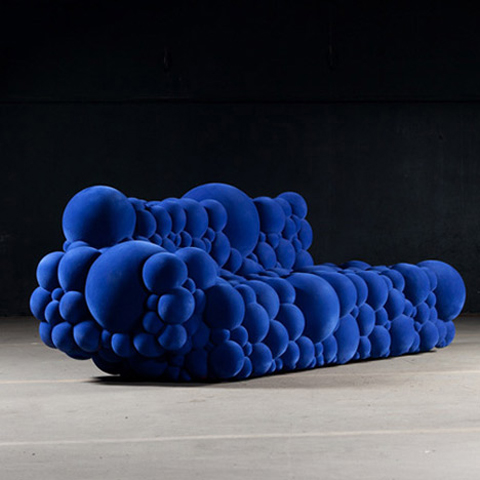
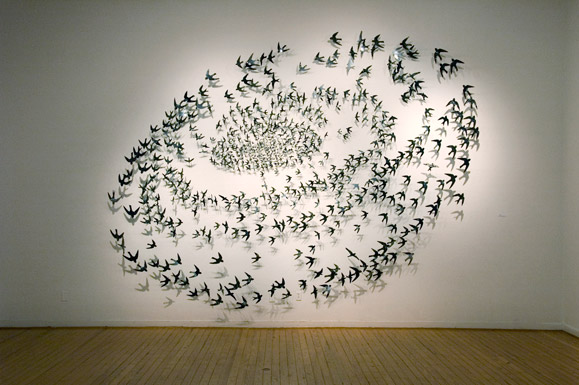
“Each piece in the Mutation series is made from foam spheres, cut so they fit together, attached to a frame and coated in rubber or flocked.”

“Electronic artist Rafael Lozano-Hemmer is interested in creating advanced technology art that involves public participation. This large installation entitled Solar Equation is a simulation of the Sun, 100 million times smaller than the real thing! The sphere, commissioned by the Light in Winter Festival in Australia, is the largest spherical balloon in the world.”

It would also be kind of interesting to do the reverse perspective calculation (i.e. how big would this Sun actually be, if it was situated in the same place in space, but actually looked this big!).
By Rafael Lozano-Hemmer, via My Modern Met.
Who would have thought albedo could be so pretty?
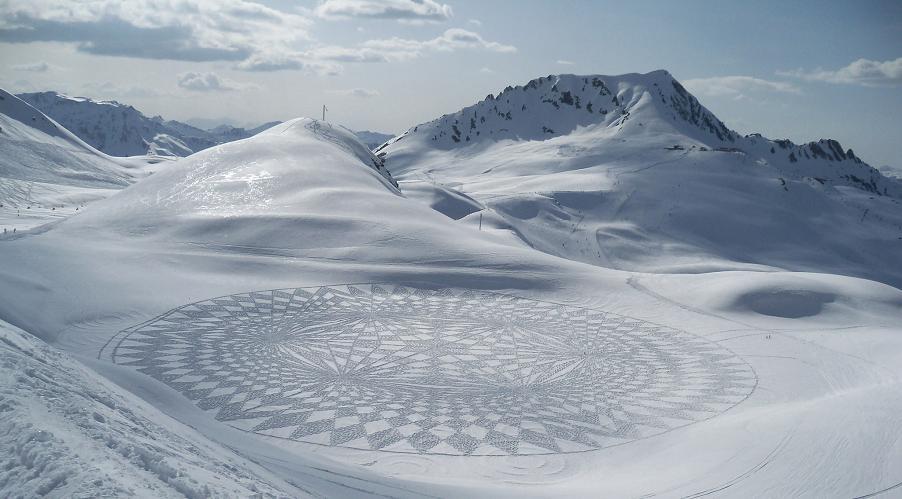


“Artist Simon Beck creates amazing pieces of snow art by walking in the snow wearing raquettes (snowshoes). Each artwork is typically the size of three soccer fields and takes 2 days to complete. The Oxford-educated self-employed map maker typically walks for about 5 to 9 hours or until he gets too tired, using a headlamp if it gets dark first.”
By Simon Beck, via Amusing Planet.
Hmmmm… could use this for segue on talking about clouds generally (i.e. for albedo or radiative forcing, etc) – maybe even something like geoengineering.

“Dutch artist Berndnaut Smilde installs miniature clouds in empty gallery spaces. But these are neither digital manipulations nor fluffy Poly-fil sculptures strung from the ceiling. The cloud works are, in fact, real, with Smilde using smoke, moisture, and spot lighting to conjure up his momentary creations.”

Via Architizer.





 popperfont.net