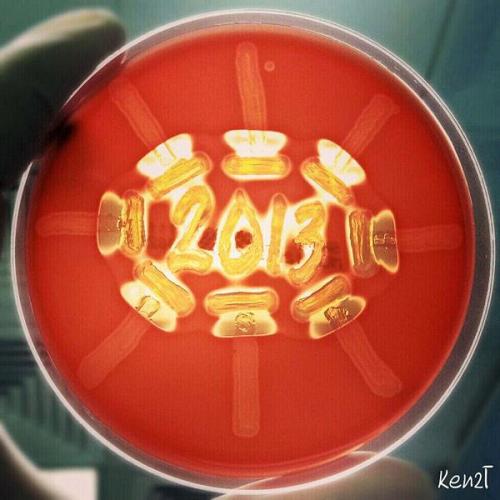
Recently, I was asked to imagine a set of New Year’s Resolutions that “Science” would aspire towards. This was pretty general and in good fun, as well as potential fodder for a piece at Slate. In the end, Slate only used a small part of my rambling, but I figured this blog is as good a place as any to share the rest of my role playing resolutions. As well, I’ve categorized it into three main sections, and note that some of them are a little silly (albeit potentially AWESOME).
A: Proper science (technical) resolutions
– Some major mind blowing breakthrough(s) in the renewable energy category. Something, basically where the cost per watt just destroys the competing fossil fuel economy.
– DNA Sequencing to hit that magic criteria where costs and speed are met. Basically, something akin to someone getting that Genomics X Prize (http://genomics.xprize.org/). With those kind of capabilities, I think this is where the ideas behind personal genomics can really be put to test (we’re fast approaching it anyway). Note that ideally, this would also mean that the policy side of things can also keep up.
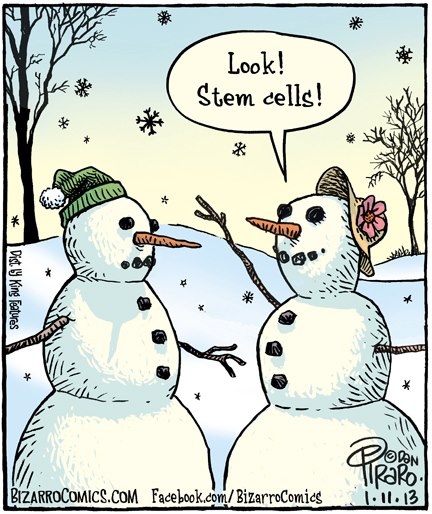
– Somebody works out an efficient, effective, and easy way to isolate, purify, culture, and even possibly reset adult stem cells.
B: In the education, and/or policy arena
– Some kind of decent increase in national funding for science research generally – this works for any number of countries, US, and England (and Canada), in particular. This is especially true in the basic research category which tends to get hit the hardest due to lack of appreciation (by politicians and the general public at large) of how science tends to progress.
– Science expertise in policy making decisions is given much (much!) more clout. This kind of clout is needed so that more (all?) political decisions are made based on rationality, validity and good evidence (climate change policy, I’m looking at you). While we’re at it, such expertise must also be utilized in a much more efficient and quicker fashion, since this advice doesn’t help if it can’t keep up with the science (decisions around molecular genetics/genomics for instance). Basically, science needs to have a much more primary role in the political world.
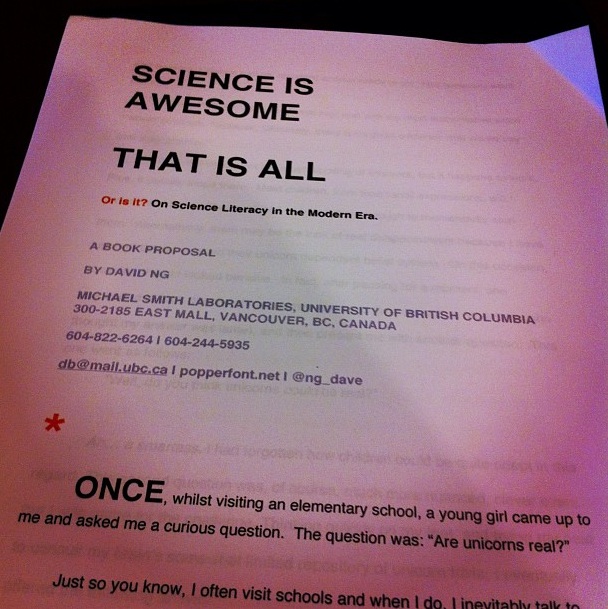
– Slow but strategic introduction of “Science Philosophy” concepts into school curricula, such that one day, it will have a much more significant presence throughout elementary and high school syllabus (and also diversified in where it turns up: such as in Social Studies as well as the usual science topics). This is because the nuances of things like the scientific method are far too important to be really only covered at the earlier ages where it is presented in an overly simplistic fashion. The epistemology of science much richer than that, and ultimately you want all citizens to comfortable and knowledgable in such things because they provide the best practices for good decision making. (Plus, it doesn’t have to be boring either – check out this piece for instance) In other words, it’s not necessarily about educating people to become scientists, it’s more about teaching everyone the value of “thinking” like a scientist. Put another way, I’d like everyone to smile while looking at this t-shirt, but then on reflection, that same person would ask themselves “How is that claim validated? What is the evidence?”
– I would love for science communication skill sets/options/practices to have a greater presence in the conventional academic science pipeline. In other words, something like if there is a dedicated funding schematic for graduate students to have the option of exploring these practices. Translation of science needs more advocates from those in the trenches, or at least needs more that have some experience in the public communications arena.
– Somebody to develop a “Downton Abbey” type television series, but revolve it around the contrasting relationships between supervising scientists (professors, etc), and the rest of the lab (graduate students, technicians). That show is like crack (I can only assume) to me.
– Where science begins to be recognized formally as a “creative” endeavour. i.e. you go to the art gallery, and there’s a floor or the permanent exhibit looking at how science is, in many ways, a form of art. This isn’t so much from the point of view of “this data looks aesthetically pleasing,” but rather, “how they came up with that hypothesis is just so elegant.” I, and I’m sure others, believe that there’s beauty in that.
C: “Out there, totally unrealistic but this would be awesome category.”
– Somebody invent a time machine already, so that we can finally persuade Climate Change denialists that Climate modelling is actually a very robust and validated science. In other words, with this contraption we can finally go to the future, and say “See, told you…”
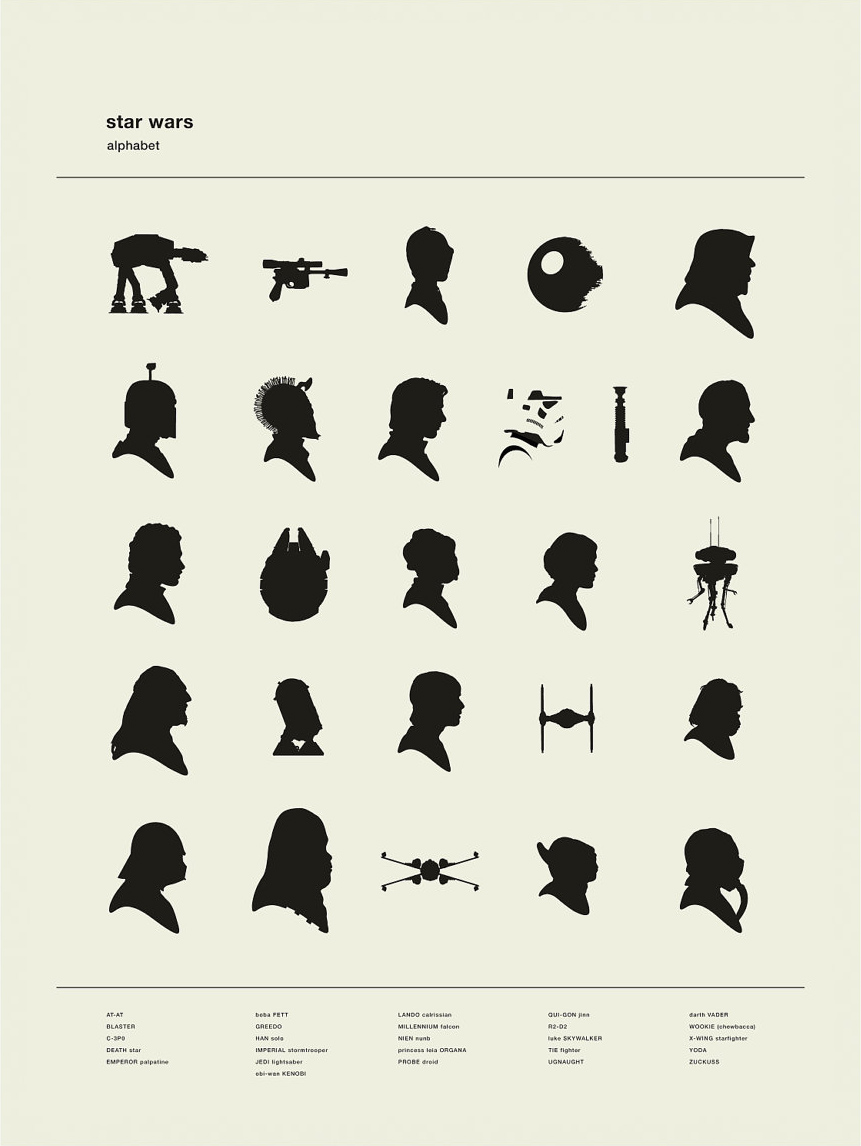
– Give the UN enforcement capabilities for international agreements concerning the environment or biodiversity issues. I suggest giving them lightsabers so that everyone knows that this is serious now.
– A super group who makes a “Let’s promote science literacy” music album (can we still call it an album?). I can see Thom Yorke, Peter Gabriel, and Bjork doing this as a triad of voices backed by the rest of the Radiohead band.
Alright, that was fun. Any other suggestions out there?
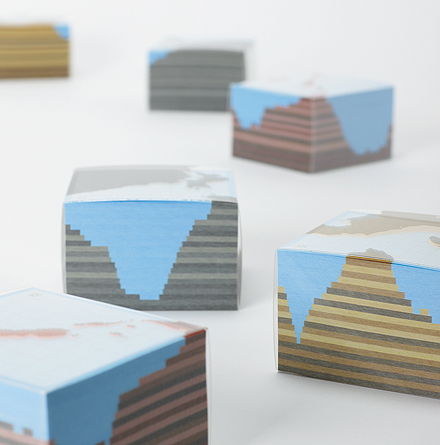
(Image by Kenwyn Lim)












 popperfont.net