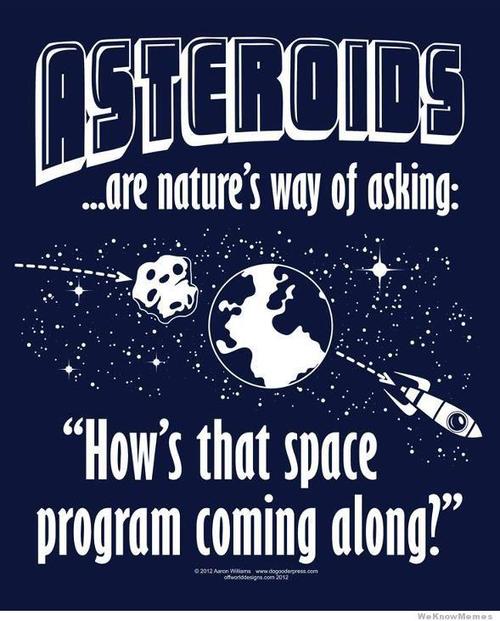
Asteroids are nature’s way of asking: How’s that space program coming along?
Phew! That was close…
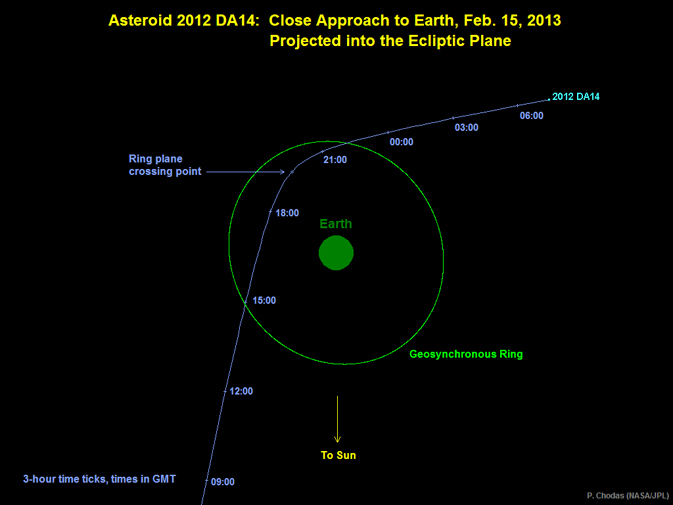
Top graphic source unknown (but via Fresh Photons). Bottom graphic via NASA (great link explaining the recent flyby).

Phew! That was close…
Top graphic source unknown (but via Fresh Photons). Bottom graphic via NASA (great link explaining the recent flyby).
This is pretty wild.
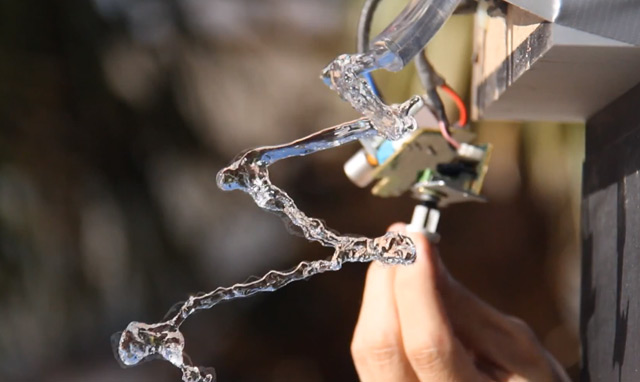
From the Youtube description:
“Ever since I created the first version of this video a year ago I’ve been wanting to try it again with more water and better lighting / footage. This is a really fun project and when you first see the results, chances are your jaw will drop. The main thing to keep in mind for this project is that you need a camera that shoots 24 fps.
The effect that you are seeing can’t be seen with the naked eye. The effect only works through the camera. However, there is a version of the project you can do where the effect would be visible with the naked eye. For that project, you’d have to use a strobe light.
For this project you’ll need:
A powered speaker
Water source
Soft rubber hose
Tone generating software
24 fps camera
Tape.
Run the rubber hose down past the speaker so that the hose touches the speaker. Leave about 1 or 2 inches of the hose hanging past the bottom of the speaker. Secure the hose to the speaker with tape or whatever works best for you. The goal is to make sure the hose is touching the actual speaker so that when the speaker produces sound (vibrates) it will vibrate the hose.
Set up your camera and switch it to 24 fps. The higher the shutter speed the better the results. But also keep in the mind that the higher your shutter speed, the more light you need. Run an audio cable from your computer to the speaker. Set your tone generating software to 24hz and hit play.Turn on the water. Now look through the camera and watch the magic begin. If you want the water to look like it’s moving backward set the frequency to 23hz. If you want to look like it’s moving forward in slow motion set it to 25hz.
This would have been something else, if it came to pass.
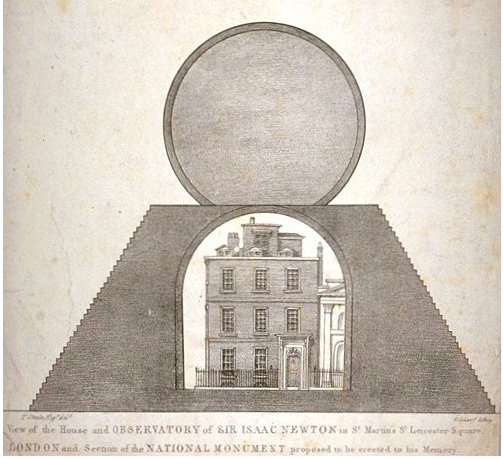
“In an anonymous letter to the London Times in 1825, Thomas Steele of Magdalen College, Cambridge, proposed enshrining Isaac Newton’s residence in a stepped stone pyramid surmounted by a vast stone globe. The physicist himself had died more than a century earlier, in 1727, and lay in Westminster Abbey, but Steele felt that preserving his home would produce a monument ‘not unworthy of the nation and of his memory'”
Text and via Futility Closet.


“Photographer Mitch Payne, Designer Kyle Bean and Art Director Gemma Fletcher collaborate on a playful still life project which visually represents different forms of renewable energy. Energy extracted from resources which are continually replenished such as Solar,Nuclear and Wind. Each image depicts a glass tank housing various setups acting as ‘energy sources’ which power a lightbulb. The series includes ‘Geothermal’ where coloured gravel is layered up to represent a cross section through earth and ‘Tidal’ where water is seen dramatically splashing like a giant wave within the glass tank.”
From Stem Agency, via Notcot.org
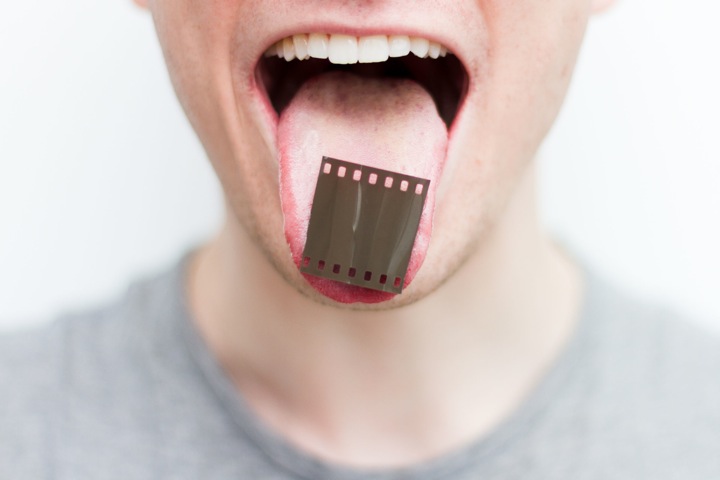
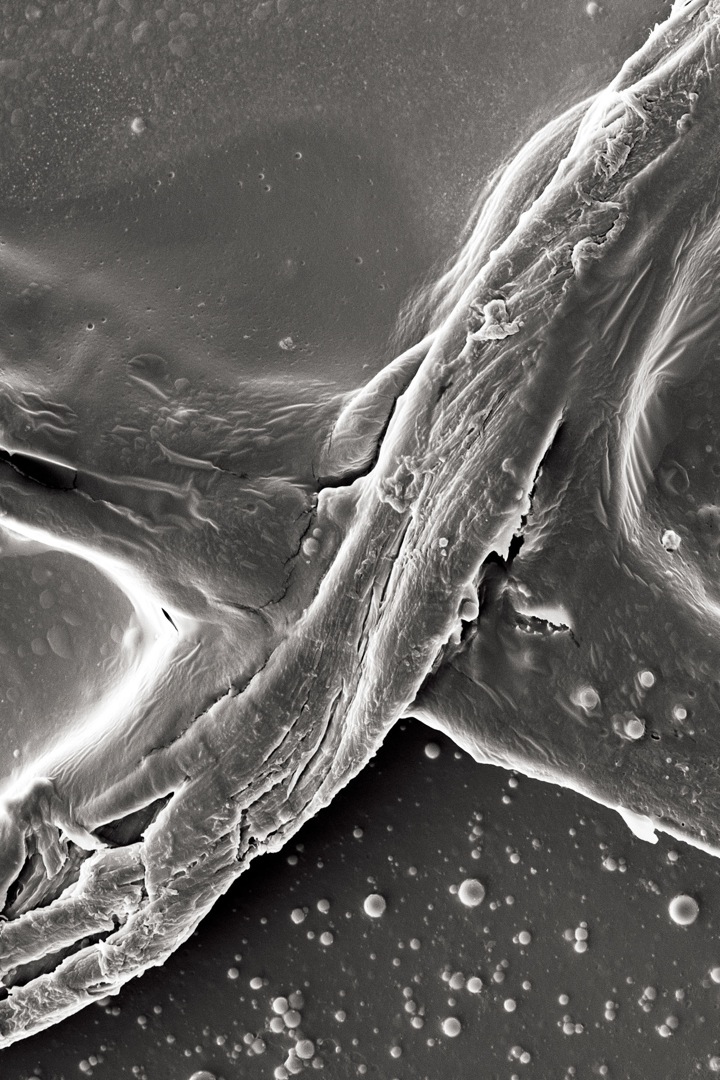
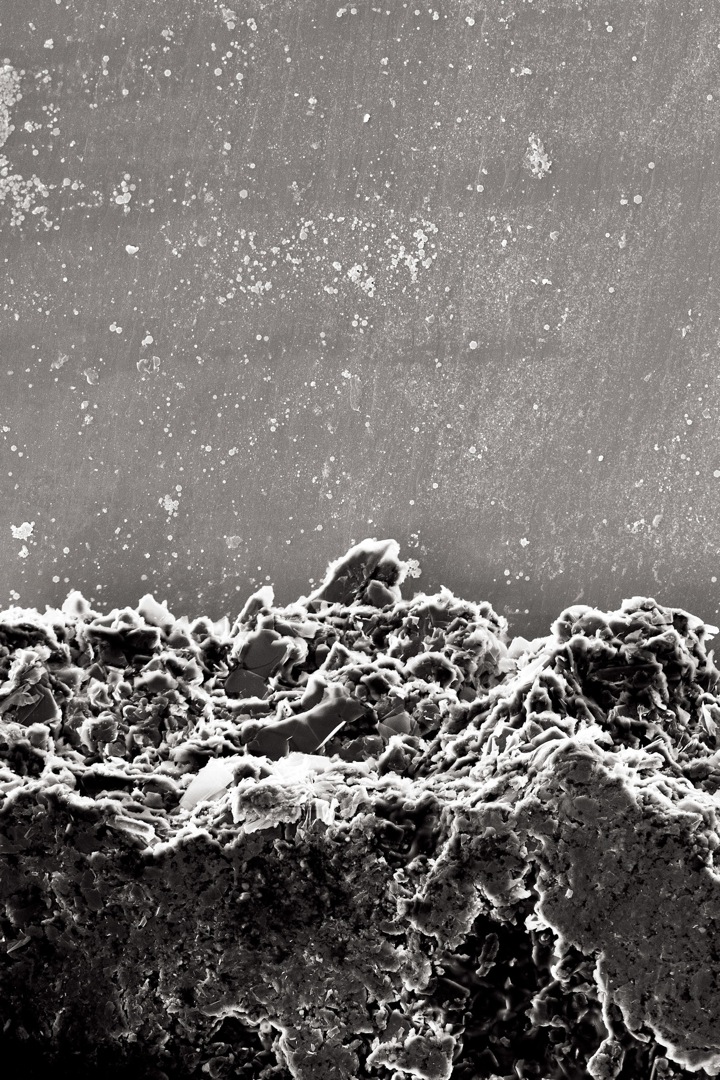

Kingston University photography students Luke Evans and Josh Lake decided to turn themselves into human cameras by eating 35mm film squares and letting their bodies do the rest. The single film segments were first ingested, excreted (in a dark room) then washed.
Via Fresh Photons.
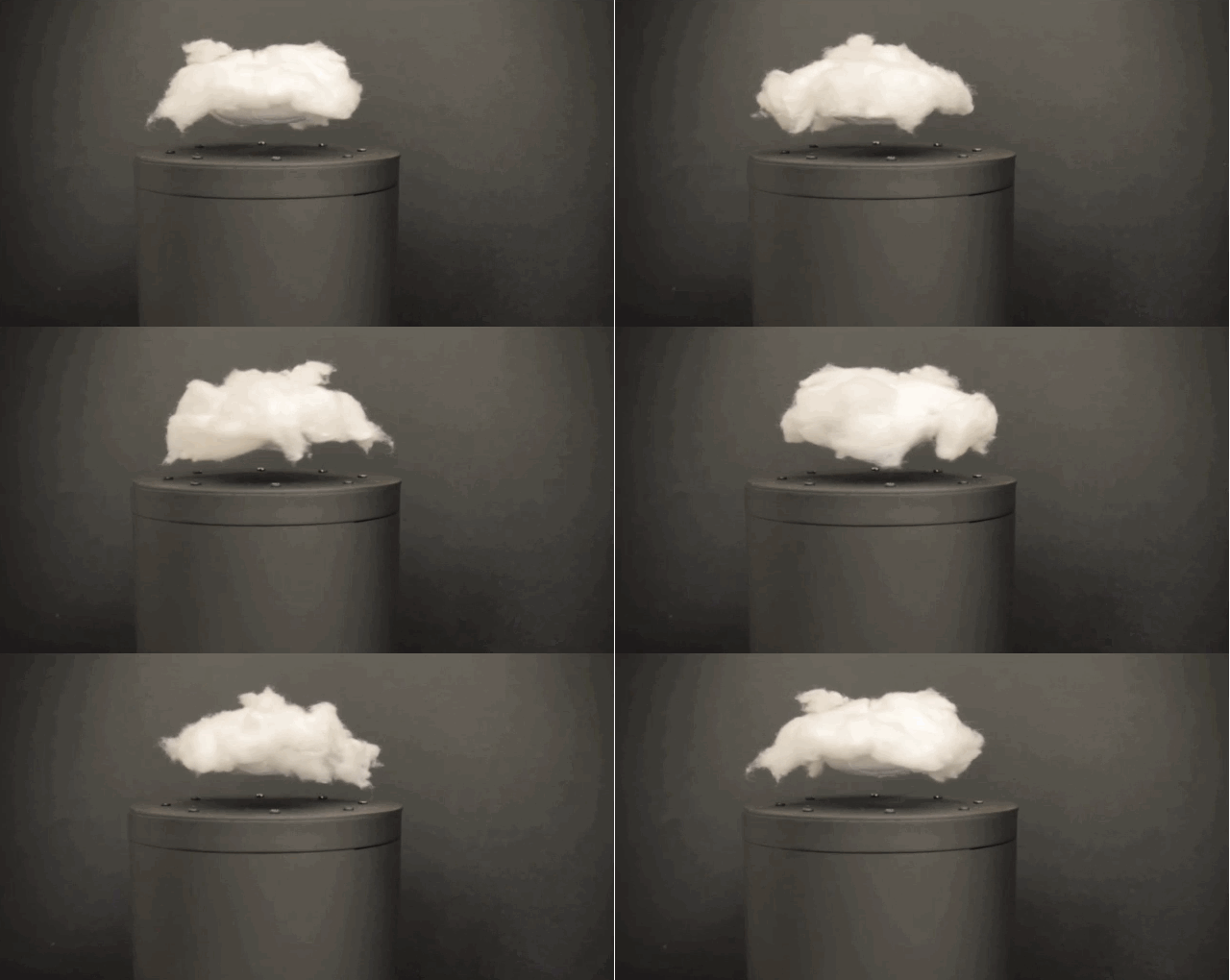
“NUAGE EN SUSPENSION”
Kinetic sculpture. Plexiglas, Magnet, electro-magnetset, Cotton wool. 20x20x40
By Laurent Debraux, via Colossal.
Wow.
Water ink _ BDDP Unlimited and Solidarités International – UK from BDDP Unlimited on Vimeo.
“To mark World Water Day, on March 22nd Solidarités International and its agency BDDP Unlimited will roll out a campaign to build awareness of the scourge of undrinkable water.
Today, it is estimated that 3.6 million people, including 1.5 million children under the age of 5, die every year of diseases borne by unhealthy water, making it the world’s leading cause of death.
Yet the public isn’t aware of it and political leaders do not demonstrate the drive it takes to end the terrible deaths. The campaign calls on journalists to spread awareness of this scourge and appeal to readers to sign a petition that will be personally handed to the French president during the 6th World Water Forum in March 2012.
To evoke the silent and invisible threat of unhealthy water, BDDP Unlimited opted for a minimalist approach that is both visually appealing and surprising, using water and ink exclusively. The spot shows the power of ink to reveal the invisible.
The spot, created by BDDP Unlimited, produced by Hush and directed by Clément Beauvais, a young director, illustrator, musician and photographer. His multiple talents and mastery of various techniques enabled him to both create the drawings and direct the spot.
The campaign will be seen from mid-March on TV, in cinemas, on the Internet and in print. A dedicated web site,votregouttedeau.org, will gather signatures for the petition.”
From BDDP Unlimited and Solidarités International.
This in from the folks at COPUS:
As you probably know, the earth’s natural system is changing. Many of the aspects of how, where and when is well known within the scientific community, yet the public is slow to accept the science behind these global changes.
In response to the need for a better informed and scientifically literate populace, the University of California Museum of Paleontology (UCMP) and the National Center for Science Education (NCSE) received funding from the Moore Foundation to develop a web-based resource for educators and the general public that will provide rigorously-vetted, non-partisan, scientific information on global change, specifically how the earth’s natural systems are changing.
We need your help! We would like to have a better sense of how teachers (at all grade levels, in both formal and informal settings) view global change, the importance of teaching it, and the resources available for doing so. Don’t teach about global change issues? We want to know that too!
The following anonymous survey is being conducted by the Biological Sciences Curriculum Study (BSCS) and should take you less than 15 minutes, but will help hundreds of thousands of educators and students for years to come!
To participate in the survey, follow this link:
UNDERSTANDING GLOBAL CHANGE SURVEY
If you have any questions about the survey, please email ugcinfo@bscs.org.
Thank you for sharing your thoughts and time with us. We (UCMP, NCSE, and BSCS) will thoughtfully review all responses and use the information to develop the best web-based resource on global change issues possible.
p.s. US teachers only. Now, Canadian teachers can play too! ~Dave
Not technically microbial art (which would have been very very impressive), but still pretty cool nevertheless…

By Klari Reis, via NotCot.org
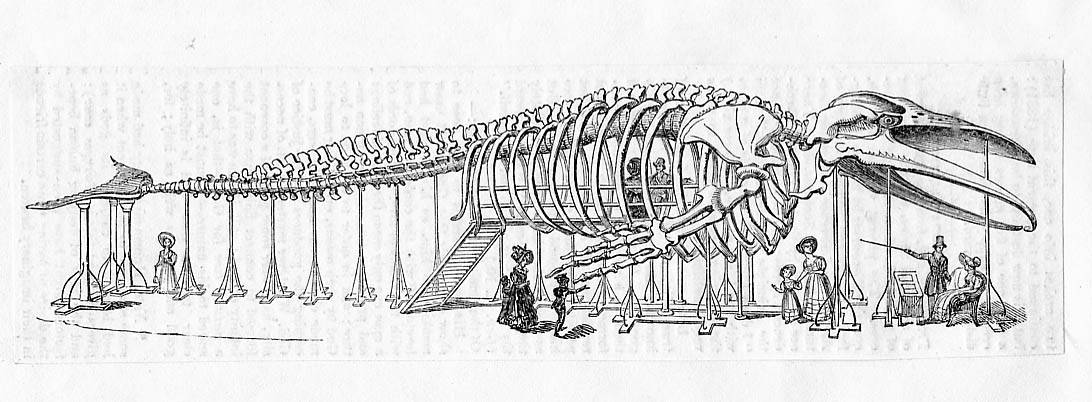
“In 1831 the skeleton of a 95-foot bowhead whale was displayed in a pavilion at Charing Cross, as part of a tour that had also touched Ostend and Paris. Visitors could ascend a flight of steps to a stage set within the ribcage, where they could sit at a table and write puns in the guest book. (“Why should we be mourned for if killed by the falling of the bones of the whale? We should be be-wailed.”)”
Text via Futility Closet.
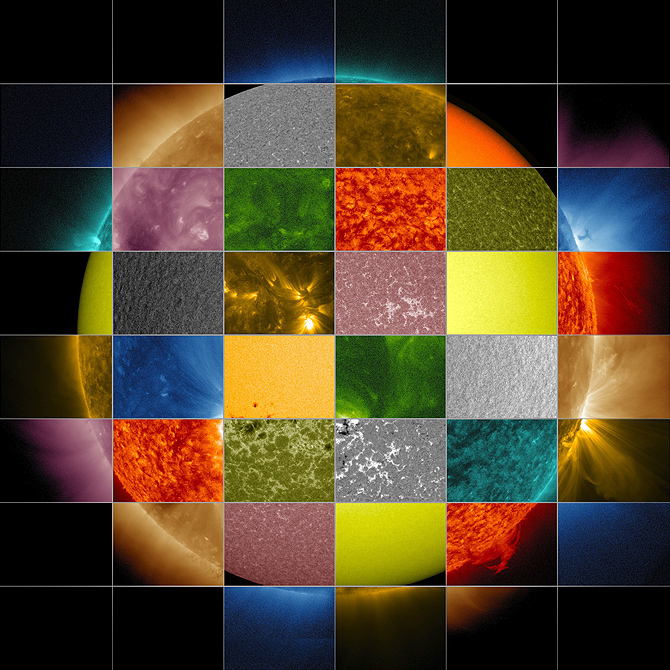
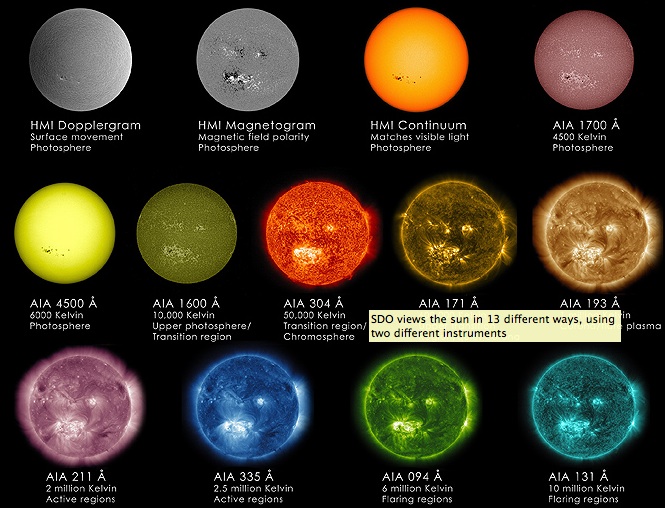
“Yellow-green light of 5500 Angstroms, for example, generally emanates from material of about 10,000 degrees F (5700 degrees C), which represents the surface of the sun. Extreme ultraviolet light of 94 Angstroms, on the other hand, comes from atoms that are about 11 million degrees F (6,300,000 degrees C) and is a good wavelength for looking at solar flares, which can reach such high temperatures. By examining pictures of the sun in a variety of wavelengths – as is done through such telescopes as NASA’s Solar Dynamics Observatory (SDO), NASA’s Solar Terrestrial Relations Observatory (STEREO) and the ESA/NASA Solar and Heliospheric Observatory (SOHO) — scientists can track how particles and heat move through the sun’s atmosphere.”
I’ve been a fan of Chris Jordon for a while, and although I’ve written about him before in other places, I just realized I don’t actually have him tagged here at Popperfont. Anyway, here’s a sampling for what he does: that is, he takes statistical information and represents it photographically in very powerful ways. I recommend clicking on the links for each image, where you’ll be treated to a zooming effect so that you can see his artwork as if from afar and then moving in.

Plastic Bottles, 2007 60×120″
Depicts two million plastic beverage bottles, the number used in the US every five minutes.

Paper Cups, 2008 60×96″
Depicts 410,000 paper cups, equal to the number of disposable hot-beverage paper cups used in the US every fifteen minutes.

Plastic Cups, 2008 60×90″
Depicts one million plastic cups, the number used on airline flights in the US every six hours.








 popperfont.net