
.
Category: *


January 6, 2014
Scientific research on the existence of time travellers. #4real
Love this – although disappointing that none were found…

ABSTRACT: Time travel has captured the public imagination for much of the past century, but little has been done to actually search for time travelers. Here, three implementations of Internet searches for time travelers are described, all seeking a prescient mention of information not previously available. The first search covered prescient content placed on the Internet, highlighted by a comprehensive search for specific terms in tweets on Twitter. The second search examined prescient inquiries submitted to a search engine, highlighted by a comprehensive search for specific search terms submitted to a popular astronomy web site. The third search involved a request for a direct Internet communication, either by email or tweet, pre-dating to the time of the inquiry. Given practical verifiability concerns, only time travelers from the future were investigated. No time travelers were discovered. Although these negative results do not disprove time travel, given the great reach of the Internet, this search is perhaps the most comprehensive to date.
By Robert J. Nemiroff and Teresa Wilson. Link to arXiv page.
December 16, 2013
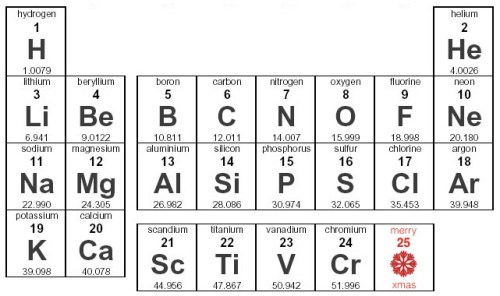
Periodic Table of Elements as Christmas Advent Calendar
Just a heads up: Popperfont is going to take a bit of a break until the New Year, but over at the Science Creative Quarterly, we have our Sciencegeek Advent Calendar Extravaganza thing still in progress. Do check it out by visiting scq.ubc.ca, and by clicking the elements!


December 13, 2013
Feeling full of yourself right now? Watch this and you’ll be sorted. #wearepuny #NASA
Wow.
“When NASA’s Juno spacecraft flew past Earth on Oct. 9, 2013, it received a boost in speed of more than 8,800 mph (about 7.3 kilometer per second), which set it on course for a July 4, 2016, rendezvous with Jupiter.
One of Juno’s sensors, a special kind of camera optimized to track faint stars, also had a unique view of the Earth-moon system. The result was an intriguing, low-resolution glimpse of what our world would look like to a visitor from afar.
The cameras that took the images for the movie are located near the pointed tip of one of the spacecraft’s three solar-array arms. They are part of Juno’s Magnetic Field Investigation (MAG) and are normally used to determine the orientation of the magnetic sensors. These cameras look away from the sunlit side of the solar array, so as the spacecraft approached, the system’s four cameras pointed toward Earth. Earth and the moon came into view when Juno was about 600,000 miles (966,000 kilometers) away — about three times the Earth-moon separation.
During the flyby, timing was everything. Juno was traveling about twice as fast as a typical satellite, and the spacecraft itself was spinning at 2 rpm. To assemble a movie that wouldn’t make viewers dizzy, the star tracker had to capture a frame each time the camera was facing Earth at exactly the right instant. The frames were sent to Earth, where they were processed into video format. ”
Video and text via NASA Jet Propulsion Laboratory.

December 3, 2013



December 2, 2013
Research paper on Hulk genetics. Need I say more?

Briefly:
BACKGROUND
Superheroes possess exceptional characteristics that far exceed the scope of human capabilities, such as the tremendous strength and pigmentation observed in The Incredible Hulk following his exposure to γ-radiation. Here, we explore the underlying molecular mechanisms for the “superhuman” abilities seen in the Hulk, as compared to semi-superheroes Papa Smurf and Popeye the Sailor. In particular, we examine the role of epigenetic mechanisms, principally DNA methylation, in the genotypic expression of “super” genes and their phenotypic manifestation.
METHODS
Whole Transcriptome Shotgun Sequencing (WTSS) was conducted on The Incredible Hulk, Popeye the Sailor, and Papa Smurf to identify “super” genes. Whole Genome Shotgun Sequencing (WGSS) was subsequently performed on the Hulk, from which chromosome γ was assembled and Bacterial Artificial Chromosomes (BAC) were created. FISH-karyotyping was then employed for chromosome examination before and after treatment with γ-radiation. Methylation assays were conducted on CpG islands upstream of “super” genes to assess gene expression following treatment with activator substances spinach and smurf berries.
See the data and the full paper (pdf and full text copy) at the Science Creative Quarterly.
November 28, 2013
I guess it might look like this if microbes were to suit up like Iron Man?
Or not.
But wow… Check out these stunning metal sculptures of microbes by Erick James. Currently on display at the Beaty Biodiversity Museum at the University of British Columbia, Vancouver (Until January 5th).

Trichonympha

Trichomitopsis
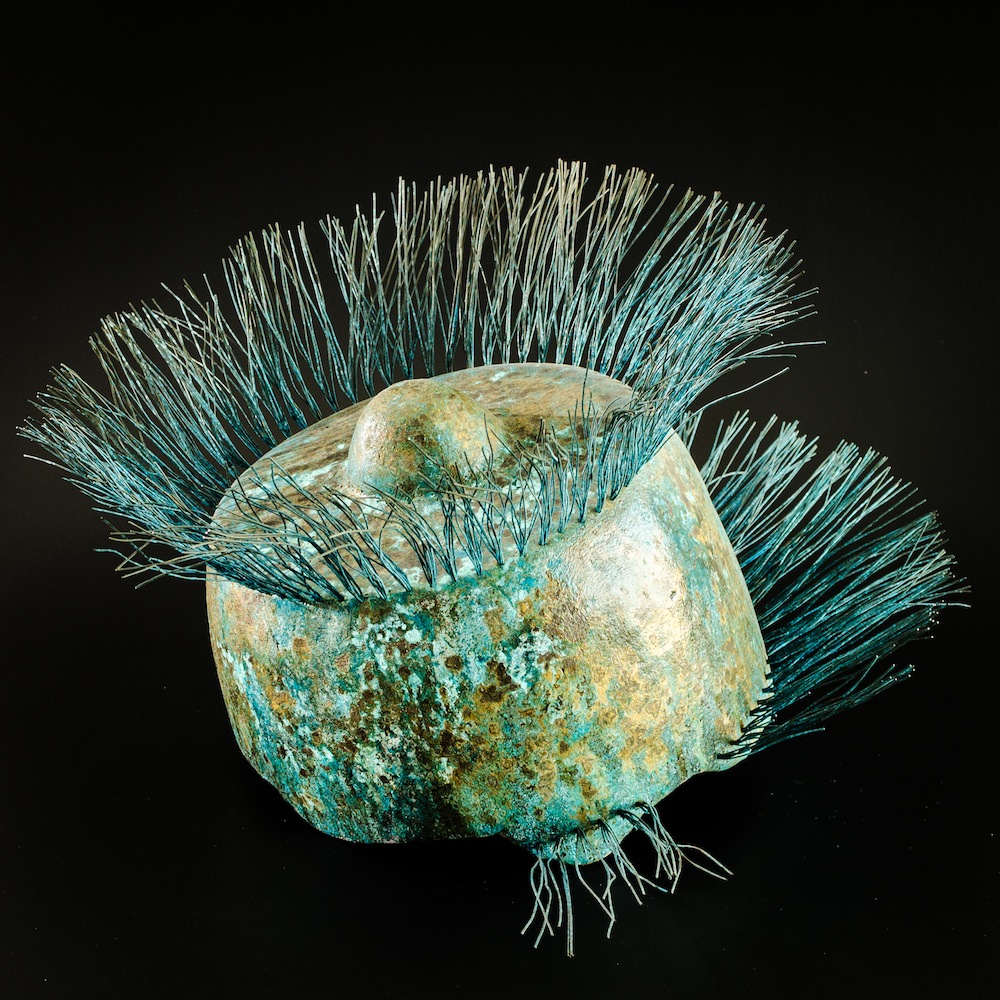
Didinium
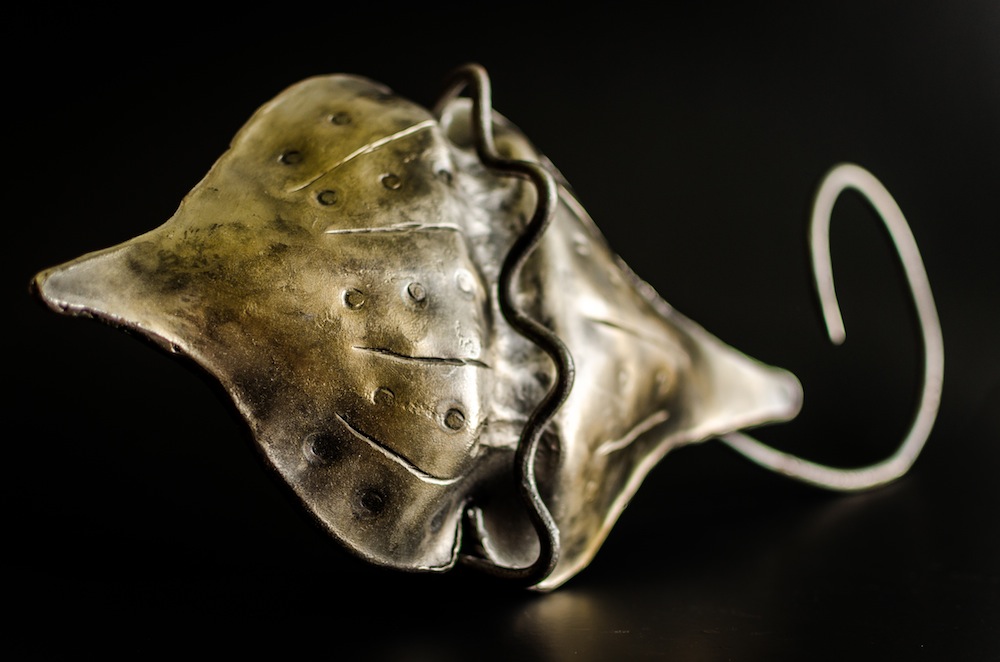
Dinoflagellate

Euglena
By Erick James. Via Beaty Biodiversity Museum
November 27, 2013
Children from around the world and where they sleep.
I always find this kind of photojournalism incredibly compelling (for instance, one of my favourite books to give as a present is Menzel D’Aluisio’s Hungry Planet). It’s alway an eye opener to see the breadth of privilege versus basic needs in the world.

Ahkohxet, 8, Amazonia, Brazil

Nantio, 15, Lisamis, Northern Kenya

Joey, 11, Kentucky, USA

Bilal, 6, Wadi Abu Hindi, The West Bank

Anonymous, 9, Ivory Coast

Alex, 9, Rio de Janeiro, Brazil
By James Mollison. Book available for purchase here. Via My Modern Met
November 25, 2013
Testing Galileo’s idea IN SPACE!
This is so awesome…
This comes by way of the Futility Closet, which also outlines a really great thought experiment that convinced Galileo that he was right, and Aristotle was wrong (his was the prevailing theory at the time).
November 25, 2013
Drawable (is that a word?) electrical circuits. Very cool.

The folks over at Urbana-based Electroninks Incorporated just launched a Kickstarter project for a new kind of pen that draws fuctional electronic circuits instantly. Called the Circuit Scribe, the handy little device works like a regular ballpoint pen and releases a non-toxic conductive silver ink that dries instantly.
November 15, 2013
Seriously considering using this Calvin & Hobbes cartoon for a kindergarten session on the Scientific Method

Apart from the obvious, I wonder what kind of awesome, far out, crazy, but ultimately testable, hypotheses can one come up with?
November 15, 2013




November 13, 2013
This. Spot on visual commentary on our incessant need to stay connected via social media…
… but at what cost. Going outside to play some basketball now…
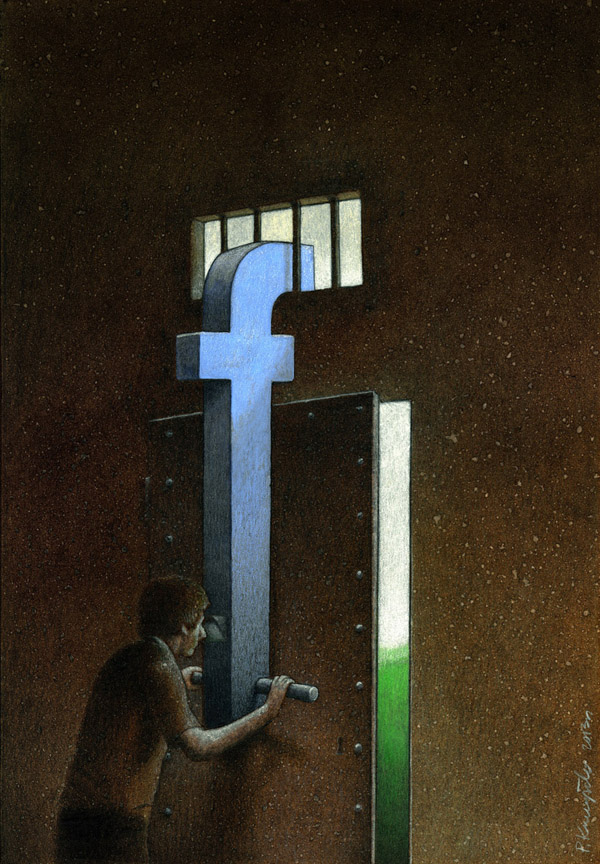
By Pawel Kuczynski, via My Modern Met.
November 13, 2013
The Bear and the Hare. Beautiful 2D stop motion animation. #biodiversity
Wow… (also the Lily Allen Keane cover is pretty good)
By Adam&Eve/DDB. Via Colossal.
 popperfont.net